兰氏小油鲶 · False Adolfoi
概要
| 字段 | 值 |
|---|---|
| 类别 | 鱼 |
| 学名 | Brachyrhamdia rambarrani |
| 别名 | 蘭氏小油鯰 |
| 分类 | 鲶形目 Siluriformes › 七鳍鲶科 Heptapteridae › Brachyrhamdia |
| 水体 | 淡水 |
| 原产地 | 巴西 |
| 成体体长 | 5.5 cm |
| 饲养难度 | 中等 |
| 最小水体 | 72 L |
| 最小缸长 | 80 cm |
| 群居方式 | 群游 |
| 外部数据 | seriouslyfish brachyrhamdia-rambarrani;fishbase 48516 |
| 性情 | 温和 |
水质参数
| 参数 | 耐受范围 | 最适范围 | 单位 |
|---|---|---|---|
| 水温 | 24–28 | — | °C |
| pH | 4–7 | — | — |
| 总硬度 | 0–10 | — | dGH |
概述
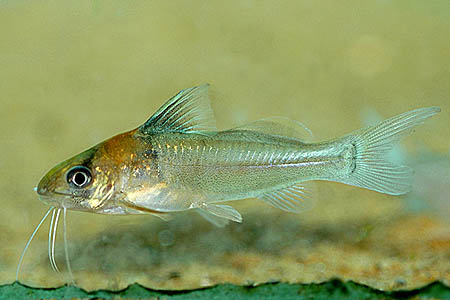
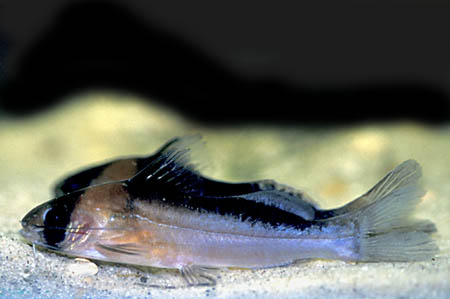
兰氏小油鲶(Brachyrhamdia rambarrani)会模仿同域鼠鱼的花纹,贸易中也可能作为其他鱼货中的混入个体出现。它的须明显更长、身体没有鼠鱼的骨板,外观相似不代表喂养和混养需求完全一样。
分布与栖息地
描述地点是巴西亚马孙州内格罗河下游支流乌尼尼河,并非内格罗河上游。当地属于典型黑水系统,矿物与营养含量低、水软而酸,腐烂植物释放的物质使水色深。
饲养环境
底面至少参考 80 × 30 厘米,细砂搭配树根和沉木枝条,可加橡叶、山毛榉叶或榄仁叶等干落叶。耐阴水草也可点缀。要保持水质清洁,不能积累有机废物,每周部分换水与规律维护不可省略。
食性与喂食
属内天然以底栖无脊椎动物为主要食物。人工可用丰年虾、水蚤、红虫等活饵和冷冻饵,搭配能沉底的干饲料,不应仅因拟态鼠鱼就忽略其独立的取食需求。
习性与混养
通常不凶,但很小的鱼可能被吃,花纹不同而体形相似的底栖鲶鱼可能受骚扰。较合适的安排是与花纹相近的鼠鱼群搭配,避免再加入其他底栖鱼;上层伙伴选足够大、不易被吞食的温和鱼。
同属鱼不算特别群居,缸足够大时通常可养多尾,不要把它与拟态对象组成的群体误认为必须同种成大群。
雌雄区分
成熟雌鱼预计比雄鱼身体更饱满。
繁殖
本种人工繁殖尚未记录,近亲与同缸鼠鱼产卵先后相随的观察只能作行为参考,不能直接当作本种诱产流程。
补充说明
拟态可能用于躲避捕食,也可能与利用鼠鱼翻出的食物有关,具体作用尚未确定。商品名相似也不代表那些鼠鱼一定在野外与本种共同分布。
图片
图片来自 SeriouslyFish,版权归各摄影者所有。
English
Overview
A mimic of co-occurring armored catfish, Brachyrhamdia rambarrani sometimes appears as an incidental fish in mixed shipments. Longer barbels and an unarmored body distinguish it from the fish it resembles. Similar color does not guarantee identical care requirements.
Distribution & habitat
It was described from the Unini, a tributary of the lower Negro in Amazonas, Brazil, rather than the upper Negro. This is a black-water system with soft, acidic, nutrient-poor water darkened by decomposing vegetation.
Aquarium setup
Use at least an 80 by 30 cm footprint. Fine sand, roots, branches, and dried oak, beech, or Indian almond leaves create a suitable setting; tolerant plants can be added. Prevent organic buildup through weekly partial water changes and disciplined maintenance.
Diet & feeding
Natural feeding in the genus centers on benthic invertebrates. Regular live or frozen Artemia, daphnia, and bloodworms can be supplemented with sinking dry foods. Its resemblance to armored catfish should not substitute for checking its own feeding response.
Behaviour & compatibility
It is generally nonaggressive, although tiny fish may be eaten and similarly shaped catfish with different patterns may be harassed. A similarly patterned armored-catfish group is the preferred association, without additional bottom species. Choose upper-water companions beyond swallowing size.
The genus is not strongly gregarious with its own kind, though more than one can often be maintained in adequate space.
Sexual dimorphism
Mature females are expected to be fuller-bodied than males.
Breeding
Aquarium reproduction is unrecorded. Observations of a congener spawning after its armored-catfish companions are only a comparison, not an established method for this species.
Notes
The mimicry may offer protection or an advantage in exploiting food disturbed by armored-catfish groups, but its function remains unresolved. A common name based on resemblance does not establish natural co-occurrence with the named fish.
来源
- https://www.seriouslyfish.com/species/brachyrhamdia-rambarrani(抓取于 2026-10-10)
brachyrhamdia-rambarrani · 文件: data/species/brachyrhamdia-rambarrani.md · 状态: 草稿