扁线戈斯油鲶 · Slobbering Catfish
概要
| 字段 | 值 |
|---|---|
| 类别 | 鱼 |
| 学名 | Brachyplatystoma platynemum |
| 别名 | 扁線戈斯油鯰 |
| 分类 | 鲶形目 Siluriformes › 长须鲶科 Pimelodidae › Brachyplatystoma |
| 水体 | 淡水 |
| 原产地 | 巴西、哥伦比亚、委内瑞拉 |
| 成体体长 | 100 cm |
| 饲养难度 | 中等 |
| 群居方式 | 独居 |
| 外部数据 | seriouslyfish brachyplatystoma-platynemum;fishbase 12116 |
| 食性 | 肉食 |
| 特征 | 吃小鱼: 是 |
水质参数
| 参数 | 耐受范围 | 最适范围 | 单位 |
|---|---|---|---|
| 水温 | 22–28 | — | °C |
| pH | 6–8 | — | — |
| 总硬度 | 1–20 | — | dGH |
概述
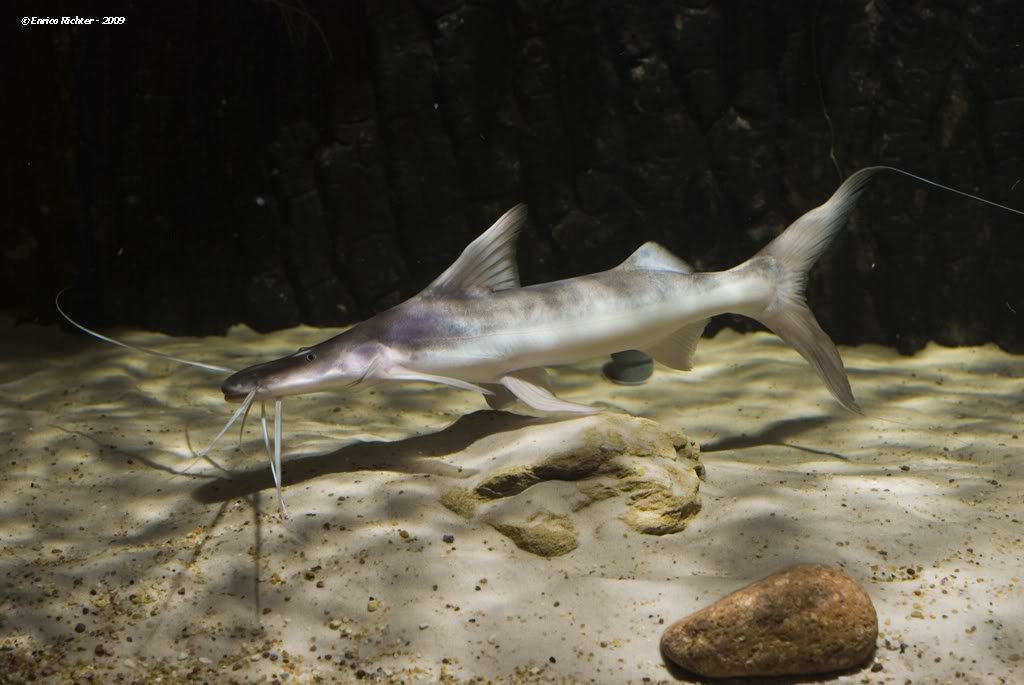
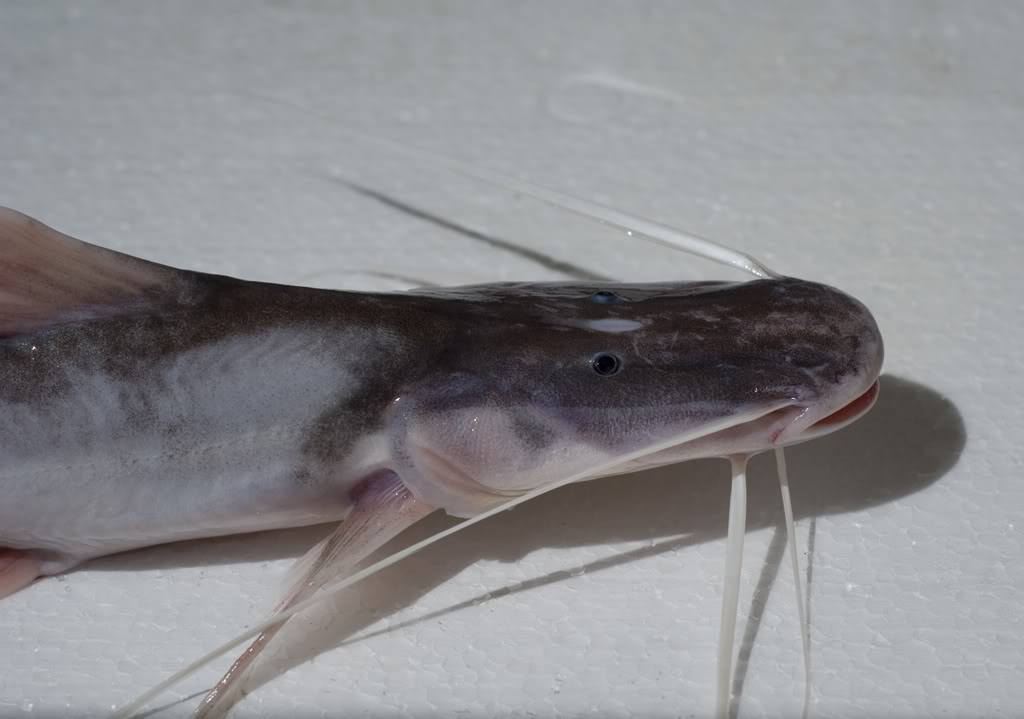
扁线戈斯油鲶(Brachyplatystoma platynemum)的须宽而扁,看起来像嘴边垂下的带子;成体无明显斑点条纹,尾鳍延长丝仍保留。它是大型洄游鲶,适养设施远超一般家庭缸,不能只按幼鱼体形作购买决定。
分布与栖息地
广布于亚马孙、奥里诺科及众多支流水系,模式地点为巴西帕拉。较少进入小支流,偏好深且流动的河道。雨季三角洲淡水扩展时,幼鱼及未成熟鱼进入利用食物,盐水回归后再上溯;这些未成熟鱼的移动更可能与觅食和扩散有关。马德拉河上游曾记录成熟个体,离河口约 3000 千米。
饲养环境
仅适合公共水族馆或少数具备足够设施的私人饲养者。砂底、大块沉木或简洁裸缸均可考虑,精细草景不实际。避免过亮灯光,优先投入巨大、可靠的过滤系统,并长期严格维护水质。
食性与喂食
天然几乎以鱼为食,会捕食甲鲶和其他底栖鱼,多数个体能够适应虾、贝肉、鱿鱼和鱼肉条等非活饵。成鱼每周最多一餐,喂食频率不应随体形盲目增加。
习性与混养
伙伴必须足够大而无法被吞食,小鱼不适合作陪游。
补充说明
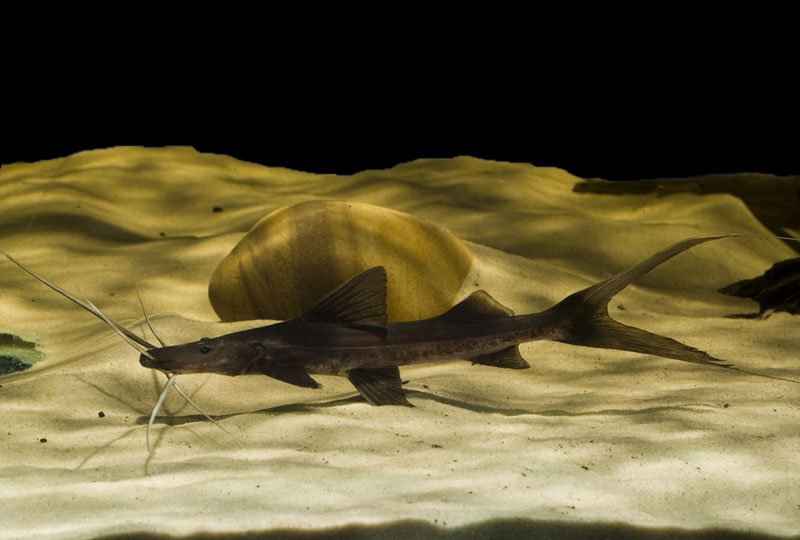
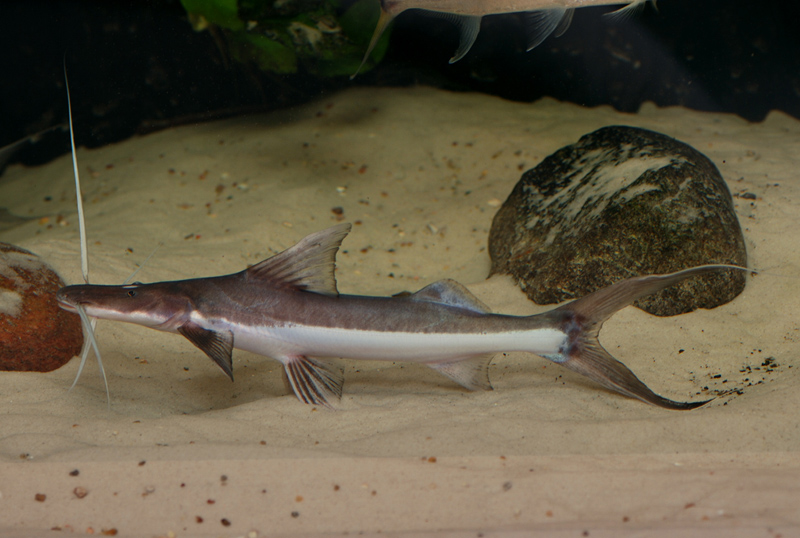
背部灰至褐色,向浅色腹面逐渐过渡,幼鱼和成鱼都没有斑点条纹。成年尾鳍深叉、两叶较窄且近等长,宽扁的上颌须约到背鳍起点,有助与相似巨型鲶区分。
图片
图片来自 SeriouslyFish,版权归各摄影者所有。
English
Overview
Broad flattened barbels and an unspotted body distinguish Brachyplatystoma platynemum, a large migratory catfish. Adults retain tail filaments. Its long-term facilities exceed ordinary home aquariums, so the manageable appearance of a juvenile is a poor basis for purchase.
Distribution & habitat
It is widespread through Amazon and Orinoco drainages, with Pará as the type locality. Deep moving channels are favored over small tributaries. Young and immature fish exploit delta feeding grounds when seasonal freshwater displaces salt, then migrate upstream as saline water returns. These movements appear connected to feeding and dispersal rather than spawning. Mature fish have been recorded in the upper Madeira about 3,000 km from the estuary.
Aquarium setup
Suitable care is largely restricted to public aquariums and unusually equipped private keepers. Sand and substantial wood or a sparse bare layout are practical options. Intricate planting is unsuitable. Keep lighting restrained and prioritize enormous, dependable filtration backed by rigorous routine maintenance.
Diet & feeding
Natural feeding is almost entirely piscivorous, including bottom-dwelling catfish. Most specimens adapt to appropriate shrimp, shellfish, squid, or fish pieces. Adult feeding should be no more frequent than once weekly.
Behaviour & compatibility
Only fish too large to swallow are plausible companions. Small dither fish are food rather than reassurance.
Notes
Both juveniles and adults lack spots and stripes, with gray or brown upper coloration fading toward the belly. Adults have a deeply forked tail with narrow, near-equal lobes and unusually broad barbels extending toward the dorsal origin. These features help separate it from other large catfish.
来源
ID:brachyplatystoma-platynemum · 文件: data/species/brachyplatystoma-platynemum.md · 状态: 草稿