Brachyplatystoma capapretum
概要
| 字段 | 值 |
|---|---|
| 类别 | 鱼 |
| 学名 | Brachyplatystoma capapretum |
| 分类 | 鲶形目 Siluriformes › 长须鲶科 Pimelodidae › Brachyplatystoma |
| 水体 | 淡水 |
| 原产地 | 巴西、秘鲁 |
| 成体体长 | 88 cm |
| 饲养难度 | 中等 |
| 群居方式 | 独居 |
| 外部数据 | seriouslyfish brachyplatystoma-capapretum;fishbase 62217 |
| 食性 | 肉食 |
| 特征 | 吃小鱼: 是 |
水质参数
| 参数 | 耐受范围 | 最适范围 | 单位 |
|---|---|---|---|
| 水温 | 22–28 | — | °C |
| pH | 6–8 | — | — |
| 总硬度 | 1–20 | — | dGH |
概述
Brachyplatystoma capapretum 是大型食鱼性油鲶科鱼,实际饲养只适合公共水族馆或极少数具备大型设施的个人。它与近缘的大型鲶鱼(Brachyplatystoma filamentosum)很相似,选鱼时应注意须长、尾鳍形状和体色,而非仅凭幼鱼斑点判断。
分布与栖息地
广布于亚马孙河流域,从河口附近的巴西贝伦一带延伸至秘鲁伊基托斯,多个主要支流也有记录。通常生活在较大、较深的河道中。
饲养环境
重点是庞大而可靠的过滤系统与严格维护。灯光不宜过强,造景可用砂底配大块沉木,也可采用方便清理的裸缸;精细水草造景并不适合。仅提供临时容纳幼鱼的空间,不能解决成鱼安置问题。
食性与喂食
野外几乎专吃鱼类,包括异型等底栖鱼。人工多能适应虾、贻贝、鱿鱼、小鱼以及较大白肉鱼的切条等非活体食物。成鱼喂食频率很低,每周至多一餐。
习性与混养
混养对象必须大到不会被吞食。伙伴是否温和,不能代替体形上的防捕食条件。
繁殖
尚无人工繁殖记录。同属其他种有与繁殖相关的远距离迁移,但不能据此认定本种也采用同样方式。
补充说明
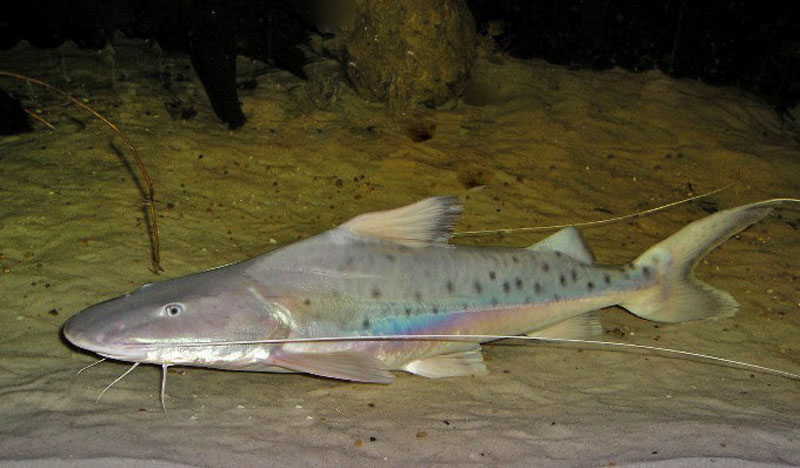
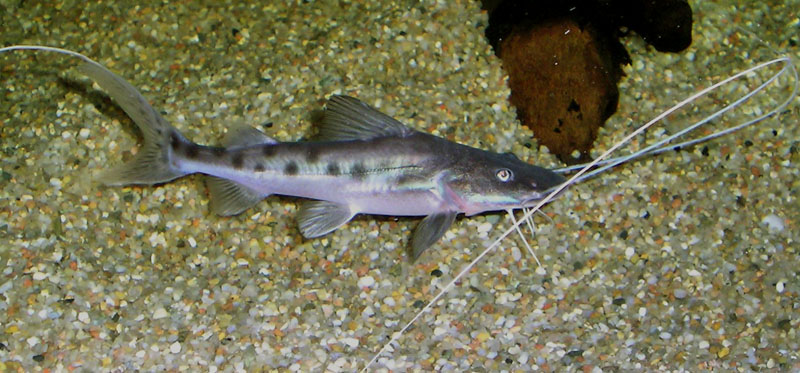
与上述近缘种相比,本种上颌须较短,不超过脂鳍基部;尾鳍分叉相对浅,两叶长度相近。成鱼背部很暗,体侧由暗转浅的界限较突然。幼鱼侧线处及上方的黑斑较大;尾鳍丝状延伸会随成熟缩短或消失。
图片
图片来自 SeriouslyFish,版权归各摄影者所有。
English
Overview
The fish-eating pimelodid Brachyplatystoma capapretum requires facilities available mainly to public aquaria and very few private keepers. It resembles Brachyplatystoma filamentosum, making correct identification important before planning adult accommodation.
Distribution & habitat
Its Amazonian range extends from the vicinity of Belém in Brazil upstream to at least Iquitos, Peru, with records in numerous major tributaries. Large, deep river channels are its usual environment.
Aquarium setup
Reliable filtration on a very large scale and rigorous maintenance are fundamental. Keep illumination subdued. Sand and substantial wood or a simple bare layout are workable choices; delicate planted arrangements are inappropriate. Space adequate for a juvenile does not resolve the need for adult housing.
Diet & feeding
Wild prey is overwhelmingly fish, including loricariids and other bottom dwellers. Most aquarium specimens accept nonliving shrimp, mussel, squid, small fish, and pieces of larger white fish. Adults need no more than one meal weekly.
Behaviour & compatibility
Companions must be too large to swallow. A peaceful disposition in another species offers no protection against being treated as food.
Breeding
Captive reproduction is unrecorded. Some congeners undertake long spawning migrations, but those accounts do not establish the reproductive movements of this species.
Notes
Compared with B. filamentosum, the upper-jaw barbels stop at or before the adipose-fin base. The tail is less deeply divided, with approximately equal lobes, and the dark adult back meets the lighter flanks more abruptly. Juvenile spots on and above the lateral line are comparatively large. Filamentous tail extensions shorten or disappear with maturity.
来源
ID:brachyplatystoma-capapretum · 文件: data/species/brachyplatystoma-capapretum.md · 状态: 草稿