Brachygobius mekongensis · Mekong Bumblebee Goby
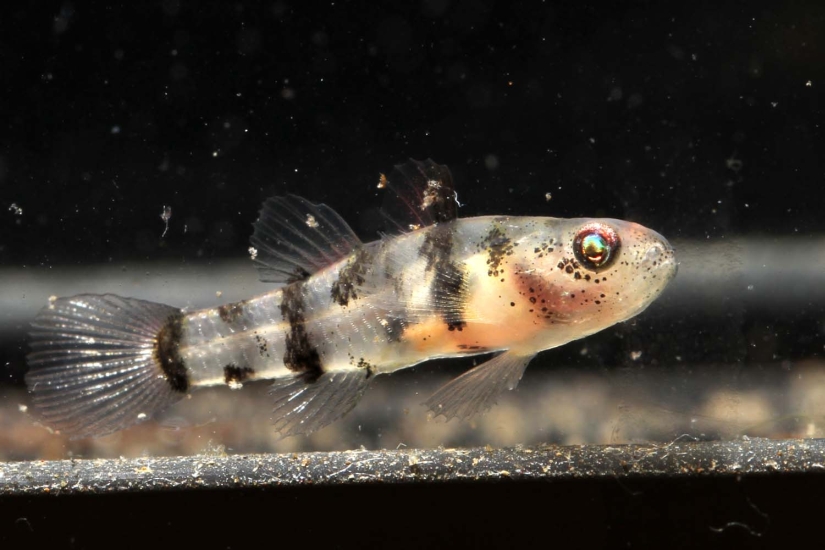
概要
| 字段 | 值 |
|---|---|
| 类别 | 鱼 |
| 学名 | Brachygobius mekongensis |
| 分类 | 虾虎鱼目 Gobiiformes › 虾虎鱼科 Gobiidae › Brachygobius |
| 水体 | 淡水 |
| 原产地 | 柬埔寨、老挝、泰国 |
| 成体体长 | 1.8 cm |
| 饲养难度 | 中等 |
| 最小水体 | 41 L |
| 最小缸长 | 45 cm |
| 群居方式 | 群游 |
| 水流偏好 | 低 |
| 外部数据 | seriouslyfish brachygobius-mekongensis;fishbase 58067 |
| 食性 | 肉食 |
| 领地性 | 是 |
| 繁殖方式 | 附着产卵 |
水质参数
| 参数 | 耐受范围 | 最适范围 | 单位 |
|---|---|---|---|
| 水温 | 22–28 | — | °C |
| pH | 5.5–7.5 | — | — |
| 总硬度 | 0–5 | — | dGH |
概述
Brachygobius mekongensis 是湄公河流域的微型淡水虾虎,体侧深纹较窄、常断裂。它在贸易中容易被其他同属鱼冒名,不能只凭蜂纹外观就添加盐分或套用其他品种的饲养方式。
分布与栖息地
记录横跨湄公河中下游,从老挝万象和泰国廊开一带向南至越南、柬埔寨,也包括洞里萨湖和相连河道。模式产地位于老挝沙湾拿吉省 Xe Champhon 河附近。
似乎限于缓流或静止淡水,如沼泽、季节性湿地和泛滥平原,水草及淹水草丛浓密。一处略带茶色、苦草茂密的沼泽采点中,它偏好约 30~50 cm 浅水,并主要摄食小型水生昆虫与浮游动物。
饲养环境
密植水草缸配浮水植物、根木与细枝较适合。过滤要温和,气动海绵是可行选择,不能放入尚未成熟的新缸。
食性与喂食
以小型水生动物为食,丰年虾、小水蚤等活饵应视为基本需求。部分个体会学会吃冷冻替代饵,通常忽略干粮,不能仅靠投放微粒干粮等待它适应。
习性与混养
更适合专养,或与体形相仿、温和且环境需求相近的微型鱼谨慎同养。
雄鱼尤其会相互守地盘,但建议至少六条,足够同伴能分散冲突,也让鱼更大胆、表现更自然。领地性不意味着只留一条就是最合适安排。
繁殖
人工缸中已有产卵记录,约三十枚卵附着于硬表面,由雄鱼照看,但鱼苗是否成功育成尚不清楚。
野生研究显示性成熟很早,旱季样本最年轻成熟雌鱼约五十四日龄,湿季约三十六日龄。两季都见抱卵雌鱼,因此推测可全年繁殖,但这不是保证每一批幼鱼都会按固定天数成熟。
补充说明
与 Brachygobius nunus 相比,本种深色竖纹较窄、常中断,两背鳍间有短斜纹。头部、鳃盖和部分腹面无鳞,但身体其余部分有栉鳞,不能称为全身无鳞鱼。
同属鱼分类和贸易标签常有混淆,应结合花纹细节与可靠产地,不把照片近似当作最终鉴定。
图片
图片来自 SeriouslyFish,版权归各摄影者所有。
English
Overview
The minute freshwater Brachygobius mekongensis has narrow, frequently interrupted dark bars. Other bumblebee gobies are sometimes sold under its name. A striped appearance alone is insufficient reason to add salt or transfer another species' care routine.
Distribution & habitat
Records extend along the middle and lower Mekong from Vientiane and Nong Khai south to Vietnam and Cambodia, including Tonlé Sap. The type area lies near the Xe Champhon in Savannakhet, Laos.
It appears restricted to slow or standing fresh water in marshes, seasonal wetlands, and floodplains with dense aquatic vegetation or flooded grasses. At one lightly stained, Vallisneria-rich marsh, fish favored water around 30–50 cm deep and fed mainly on small aquatic insects and zooplankton.
Aquarium setup
Dense plants, floating cover, roots, and fine branches provide an appropriate setting. Keep filtration gentle; an air-powered sponge is suitable. The aquarium must be mature before introduction.
Diet & feeding
Small aquatic animals form its diet. Live Artemia and tiny water fleas should be considered basic provisions. Some individuals learn to take frozen alternatives, whereas dry foods are usually ignored. Offering microgranules alone is not a dependable acclimation strategy.
Behaviour & compatibility
A dedicated aquarium is preferable, with any companions limited to similarly tiny, gentle fishes needing compatible conditions.
Males in particular defend space against each other, yet six or more are recommended. A sufficient group distributes conflict and promotes confidence and natural behavior; territoriality does not automatically make solitary housing preferable.
Breeding
Aquarium spawning has been recorded, with roughly thirty eggs attached to a hard surface and tended by the male. Successful rearing of the fry remains uncertain.
Wild growth studies found very early maturity: the youngest mature females were about fifty-four days old in dry-season samples and thirty-six days in wet-season samples. Gravid females in both seasons suggest year-round spawning, rather than guaranteeing a fixed maturation age for every brood.
Notes
Compared with Brachygobius nunus, the bars are narrower and often broken, with a short oblique mark between the dorsal fins. Parts of the head and underside are naked, but the remaining body bears ctenoid scales; this is not a wholly scaleless fish.
Identification within the genus and trade labeling remain problematic. Assess pattern details and reliable locality information together.
来源
- https://www.seriouslyfish.com/species/brachygobius-mekongensis(抓取于 2026-10-10)
brachygobius-mekongensis · 文件: data/species/brachygobius-mekongensis.md · 状态: 草稿