道氏短鰕虎鱼 · Bumblebee Goby
概要
| 字段 | 值 |
|---|---|
| 类别 | 鱼 |
| 学名 | Brachygobius doriae |
| 别名 | 道氏短鰕虎魚、Gobius doriae、Hypogymnogobius doriae |
| 分类 | 虾虎鱼目 Gobiiformes › 虾虎鱼科 Gobiidae › Brachygobius |
| 水体 | 淡水 |
| 原产地 | 婆罗洲西部的马来西亚、文莱和印度尼西亚部分水系,以及纳土纳群岛 |
| 成体体长 | 3.5 cm |
| 饲养难度 | 中等 |
| 最小水体 | 41 L |
| 最小缸长 | 45 cm |
| 群居方式 | 群游 |
| 水流偏好 | 低 |
| 外部数据 | seriouslyfish brachygobius-doriae;fishbase 25066 |
| 领地性 | 是 |
| 繁殖方式 | 附着产卵 |
水质参数
| 参数 | 耐受范围 | 最适范围 | 单位 |
|---|---|---|---|
| 水温 | 22–28 | — | °C |
| pH | 7–8.5 | — | — |
| 总硬度 | 8–20 | — | dGH |
概述
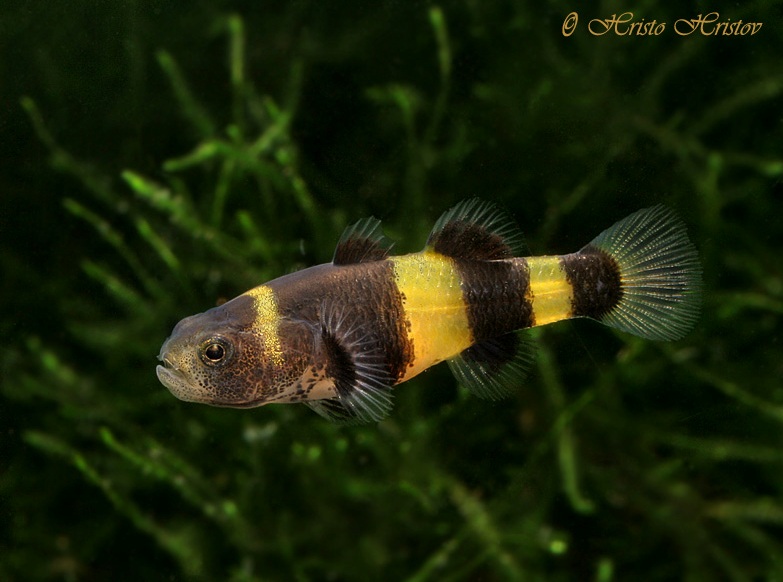
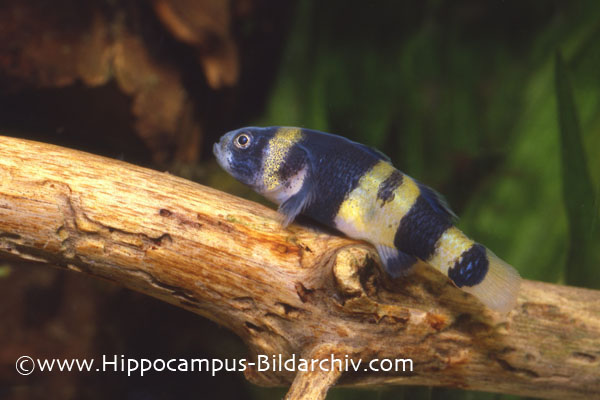
道氏短鰕虎鱼(Brachygobius doriae)是常被称作“蜜蜂鱼”的小型虾虎鱼之一,黑黄体带醒目。它容易与近似种混淆,最好单种饲养,备好小型活饵,并利用遮蔽分散雄鱼之间的领域冲突。
分布与栖息地
来自婆罗洲西部及纳土纳群岛,记录涉及砂拉越、文莱和印度尼西亚西加里曼丹;新加坡记录似乎属于误认。
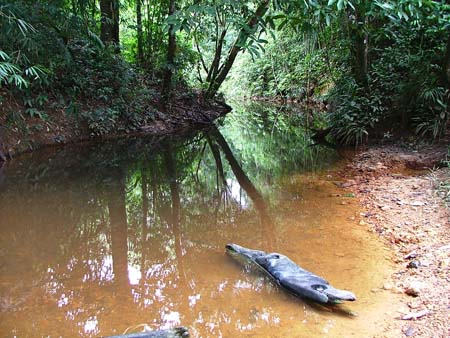
自然环境既有淡水,也有半咸水,常见于沿海低地红树林、河口和受潮汐影响的溪流。底部多为泥、砂或淤泥,上有落叶、树根和沉木。部分种群也生活在软而强酸、茶色很深的泥炭沼泽,不能把所有来源都视作同一种水环境。
饲养环境
底面积从约 45 × 30 cm 起步,多设洞穴和遮蔽,并阻断视线,让弱势个体能避开强势鱼。过滤宜轻柔,海绵过滤很合适。需要增加缓冲能力时可考虑珊瑚砂;半咸水布置可使用海盐,但是否适用应结合个体来源和已适应的环境,不能把加盐视为所有种群的统一要求。
食性与喂食
小型活饵应作为基本准备,如适口丰年虾、水蚤。部分个体可接受冷冻替代品,干饲料通常被忽略,购入前应确认能持续获得合适饵料。
习性与混养
普通混养缸并不理想,以单种缸较合适。雄鱼尤其会互相守域,建议至少六条,借人数和大量遮蔽分散追逐压力,也能让它们更大胆。
雌雄区分
成熟雌鱼较圆,抱卵时更明显。繁殖状态的雄鱼整体泛红,黑带变淡;雌鱼第一条黄色带更亮。
繁殖
在小洞内产卵,陶管、小花盆、贝壳等可作巢。雄鱼选好巢位后向雌鱼展示,雌鱼产下约一百至二百粒卵便离开,由雄鱼守护和照料。
为降低幼鱼被捕食的风险,可移走其他鱼,或将带卵洞穴和雄鱼一并转至水质相同的繁殖缸。卵约七至九天孵化,幼鱼自由游动后先吃草履虫、轮虫等微型饵,够大后再吃丰年虾无节幼体。生命最初数周会在水中漂游,之后才逐渐转向底部生活。
补充说明
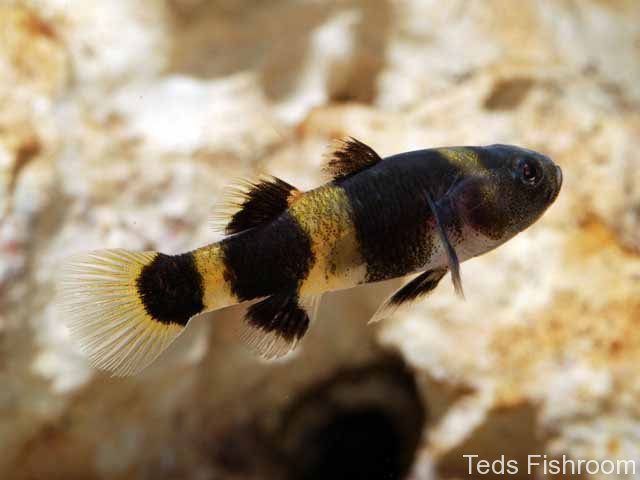
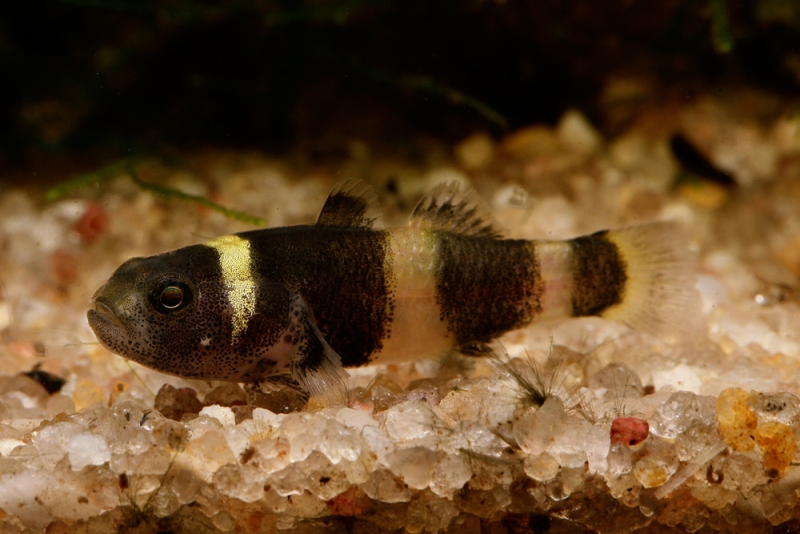
本种第一背鳍大部分呈黑色,胸鳍基部约三分之二也黑。近似种和中间型个体容易混杂,结合鳍色、体带及产地判断,不能仅凭“蜜蜂鱼”标签确定种类。
图片
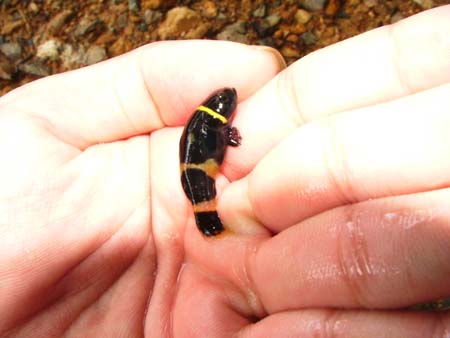
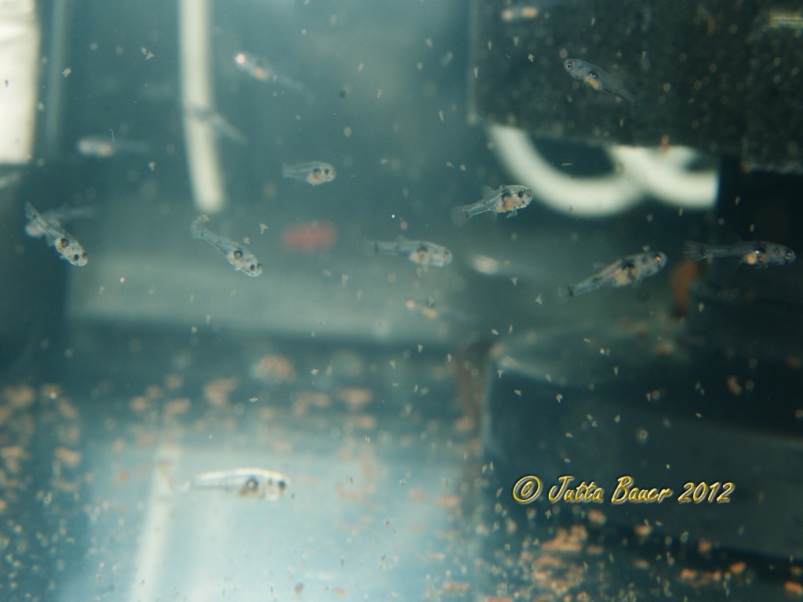
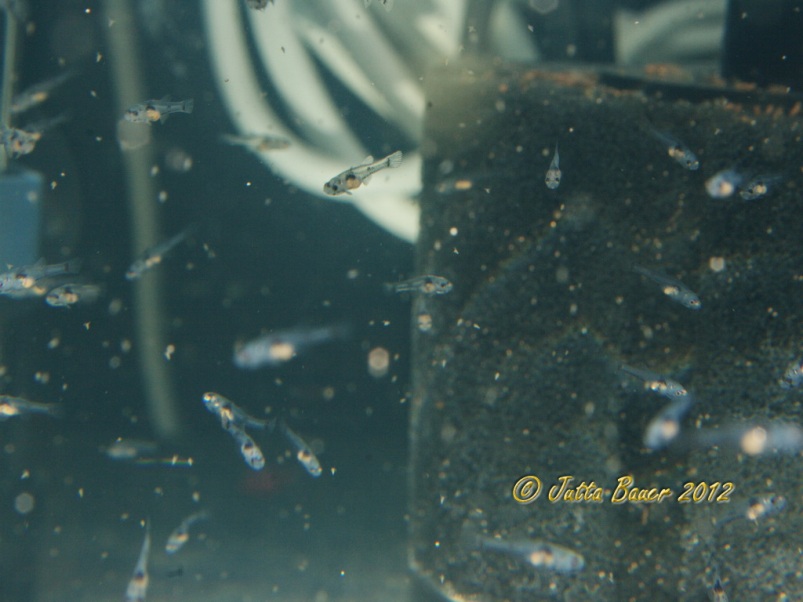
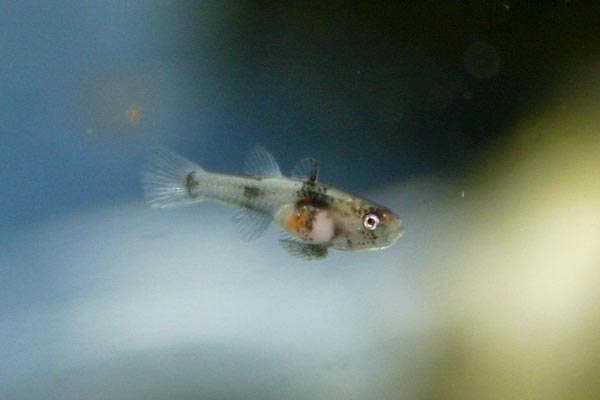
图片来自 SeriouslyFish,版权归各摄影者所有。
English
Overview
Brachygobius doriae is one of the familiar black-and-yellow bumblebee gobies. Similar species are often confused. A dedicated setup, a dependable supply of tiny live foods, and abundant cover to disperse male rivalry are central to keeping it.
Distribution & habitat
Records come from western Borneo and the Natuna Islands, including Sarawak, Brunei, and West Kalimantan. Reports from Singapore appear to be mistaken.
Both fresh and brackish habitats are occupied, chiefly coastal lowlands such as mangroves, estuaries, and tidal streams. Mud, sand, and silt are overlain by leaves, roots, and wood. Some populations instead inhabit deeply stained peat swamps with very soft, acidic water, so origins should not be assumed environmentally identical.
Aquarium setup
Start with a footprint around 45 × 30 cm. Supply numerous caves and visual barriers so weaker fish can avoid dominant individuals. Gentle sponge filtration is appropriate. Coral material can provide buffering where needed, while marine salt may be used for a brackish setup; neither should be treated as a universal requirement regardless of origin and previous conditions.
Diet & feeding
Plan to supply small live foods, including appropriately sized brine shrimp and water fleas. Some fish learn to accept frozen alternatives, but dried foods are usually ignored. Confirm access to suitable food before acquiring them.
Behaviour & compatibility
A species-only aquarium is preferable to a general community. Males in particular defend areas against one another. Keeping at least six, together with plentiful cover, distributes attention and encourages confidence.
Sexual dimorphism
Mature females are rounder, especially when carrying eggs. Breeding males develop a reddish cast and fading dark bars, while the first yellow bar becomes brighter in females.
Breeding
Eggs are laid inside small cavities such as ceramic tubes, pots, or shells. A male selects a site and courts nearby females. Following a clutch of roughly one hundred to two hundred eggs, the female leaves and the male remains to guard and tend them.
To reduce fry predation, remove other fishes or transfer the cave, eggs, and guarding male to identical water in a separate tank. Hatching takes about seven to nine days. Free-swimming young need infusoria or rotifers before progressing to brine shrimp nauplii. They spend their first weeks swimming in the water column, later settling toward the bottom.
Notes
Much of the first dorsal fin and roughly the basal two-thirds of the pectoral fins are dark. Intermediate-looking fish occur, so fin pigmentation, bars, and locality should be considered together rather than relying on a bumblebee label.
来源
- https://www.seriouslyfish.com/species/brachygobius-doriae(抓取于 2026-10-10)
brachygobius-doriae · 文件: data/species/brachygobius-doriae.md · 状态: 草稿