Brachychalcinus orbicularis · Discus Tetra
概要
| 字段 | 值 |
|---|---|
| 类别 | 鱼 |
| 学名 | Brachychalcinus orbicularis |
| 别名 | Tetragonopterus orbicularis、Ephippicharax orbicularis、Poptella orbicularis、Brachychalcinus guianensis |
| 分类 | 脂鲤目 Characiformes › 脂鲤科 Characidae › Brachychalcinus |
| 水体 | 淡水 |
| 原产地 | 圭亚那、苏里南沿海水系;巴西和委内瑞拉亦有可能属于近似种的记录 |
| 成体体长 | 9 cm |
| 饲养难度 | 入门 |
| 最小水体 | 108 L |
| 最小缸长 | 120 cm |
| 群居方式 | 群游 |
| 性情 | 温和 |
| 外部数据 | seriouslyfish brachychalcinus-orbicularis;fishbase 10693 |
| 食性 | 杂食 |
水质参数
| 参数 | 耐受范围 | 最适范围 | 单位 |
|---|---|---|---|
| 水温 | 20–27 | — | °C |
| pH | 5–7.5 | — | — |
| 总硬度 | 1–12 | — | dGH |
概述
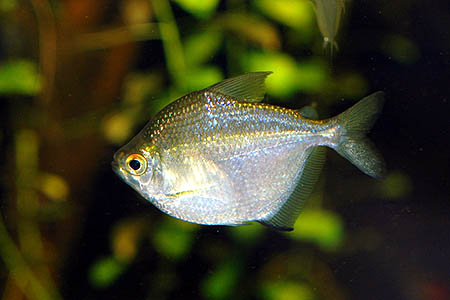
Brachychalcinus orbicularis 是体高、游动有力的灯鱼,虽然通常温和,进食时的活跃表现仍会压迫小型或安静伙伴。适合宽敞群养环境,选购时还需留意近似种可能共用商品名称。
分布与栖息地
一般认为原生于圭亚那及苏里南沿海水系,模式产地在埃塞奎博河。巴西内格罗河和委内瑞拉奥里诺科河的近年记录,可能属于本种,也可能是相似未定种。多见低地河流、溪流和支流,池塘及蓄水区较少。
饲养环境
可用圆滑石块、砂和细砾模拟河道,配较大石块及根枝。水草可种,软叶品种可能被啃。保持较高溶氧和适度水流,不需要激流;每周约三至五成换水应作为规律维护。
食性与喂食
天然胃内容物显示它是机会性杂食鱼,摄食水生无脊椎动物、昆虫、藻类和植物物质,不过植物部分有多少随猎物胃内容物进入仍不清楚。缸中搭配优质薄片颗粒、小型活饵和冷冻饵,并保留含植物或藻类的饲料。
习性与混养
以八至十尾以上成群更理想,可降低受惊并让等级互动主要留在群体内部。适合体型相称、性情温和的大型混养缸伙伴,过小或过于安静的鱼可能受其活动和抢食影响。
雌雄区分
成年雌鱼略大,抱卵时腹部明显圆,雄鱼臀鳍条有很小的钩状突起。
繁殖
据报道可在大缸产卵,一尾雌鱼单次可能产到约两千枚,但不宜把这一数量当作稳定产量。可用昏暗繁殖缸,底部隔卵网让卵落下而亲鱼够不到,或大量布置细叶植物。产后移走亲鱼,幼鱼据报约第六天起游。
补充说明
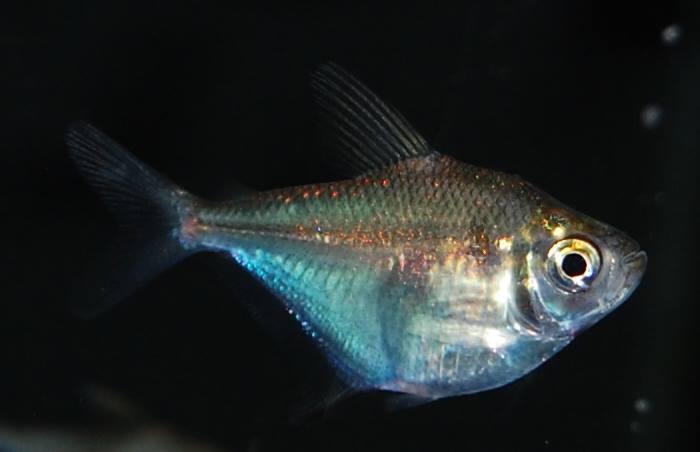
同属鱼外形接近,单凭圆高体形或商品标签难以准确识别,来源可靠比套用通用商品名更有价值。
图片
图片来自 SeriouslyFish,版权归各摄影者所有。
English
Overview
Deep-bodied and vigorous, Brachychalcinus orbicularis is usually peaceful but can overwhelm smaller or quieter companions, especially during feeding. It suits a spacious group aquarium, with identification complicated by similar fishes sharing trade names.
Distribution & habitat
The accepted core range is coastal Guyana and Suriname, with the Essequibo as type locality. Records from the Negro in Brazil and Orinoco in Venezuela may represent this species or a similar unidentified congener. Lowland rivers, creeks, and tributaries are typical; pools and impoundments are less frequent.
Aquarium setup
A river-style layout can combine rounded stones, sand, fine gravel, larger rocks, and roots. Plants are usable, although soft leaves may be nibbled. Maintain high oxygen and moderate movement rather than torrent conditions, with routine weekly changes of roughly 30–50%.
Diet & feeding
Wild stomach analyses identify an opportunistic omnivore taking aquatic invertebrates, insects, algae, and plant material, though some plant matter may arrive inside prey. Combine quality flakes or granules with small live and frozen foods, including prepared products containing algae or other plant ingredients.
Behaviour & compatibility
Eight to ten or more provide a more settled group and help keep hierarchy-related interactions within it. Choose similarly sized, peaceful companions in a large community. Much smaller or very quiet fishes can be intimidated by its movement and feeding activity.
Sexual dimorphism
Adult females become slightly larger and noticeably rounder when gravid. Males have tiny hooklike extensions on the anal-fin rays.
Breeding
Breeding in large aquaria has been reported, with a female potentially depositing around two thousand eggs; this is not a guaranteed yield. A dim spawning setup can use egg-separating mesh or abundant fine-leaved plants. Remove adults afterward. Fry are reported to swim freely after about six days.
Notes
Closely related fishes can look similar. Deep body shape or a shared sales label alone is insufficient for secure identification, making reliable provenance useful.
来源
ID:brachychalcinus-orbicularis · 文件: data/species/brachychalcinus-orbicularis.md · 状态: 草稿