侧带鲍氏脂鲤 · Striped Pike 'Characin'
概要
| 字段 | 值 |
|---|---|
| 类别 | 鱼 |
| 学名 | Boulengerella lateristriga |
| 别名 | 側帶鮑氏脂鯉、Xiphostoma lateristriga |
| 分类 | 脂鲤目 Characiformes › 梭子脂鲤科 Ctenoluciidae › Boulengerella |
| 水体 | 淡水 |
| 原产地 | 巴西、哥伦比亚、委内瑞拉 |
| 成体体长 | 25.8 cm |
| 饲养难度 | 中等 |
| 最小水体 | 1944 L |
| 最小缸长 | 240 cm |
| 群居方式 | 群游 |
| 特征 | 吃小鱼: 是;会跳缸: 是 |
| 外部数据 | seriouslyfish boulengerella-lateristriga;fishbase 12404 |
| 食性 | 肉食 |
水质参数
| 参数 | 耐受范围 | 最适范围 | 单位 |
|---|---|---|---|
| 水温 | 22–28 | — | °C |
| pH | 4–7 | — | — |
| 总硬度 | 1–10 | — | dGH |
概述
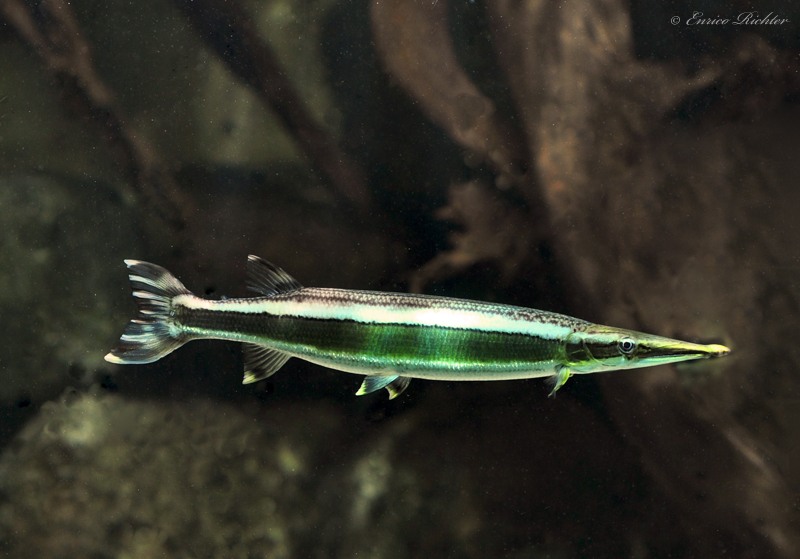
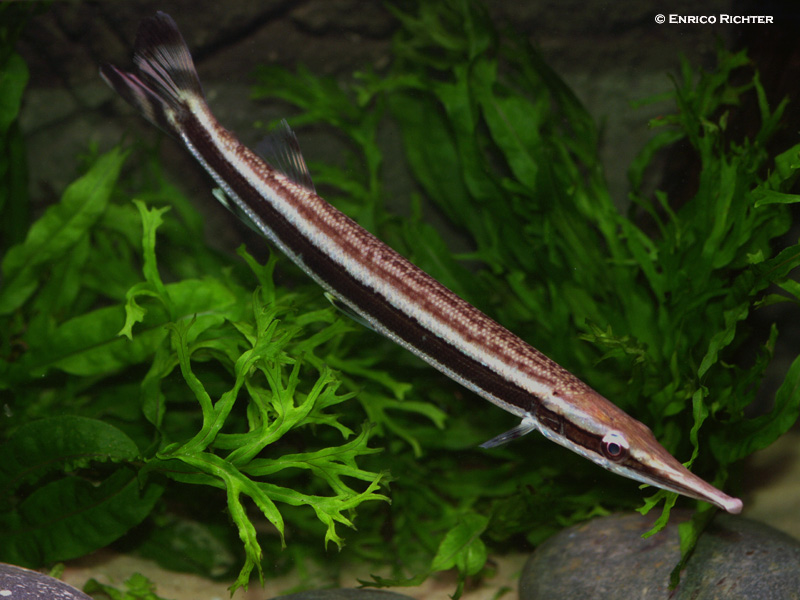
侧带鲍氏脂鲤(Boulengerella lateristriga)来自南美黑水水系,细长吻和捕食习性决定了它不是小鱼社区缸的成员。眼后至尾柄的细暗纵线、尾鳍叶上的深色横纹,是识别时很有用的线索。
分布与栖息地
分布在巴西和哥伦比亚的内格罗河流域,以及委内瑞拉奥里诺科河上游部分地区。似乎限于黑水河流和支流,腐殖质让水呈深色,天然水体矿物含量很低且酸性明显。
饲养环境
底面至少参考 240 × 90 厘米,水面可有浮水或悬垂植被,保持较高溶氧和中等流动。成熟过滤与每周 30%–50% 换水有助稳定,不能放进刚建立的生物过滤系统。
缸盖要严密,背面和侧面可适当遮挡以降低受惊撞玻璃的机会。不要因为它喜欢水面遮蔽就把空间布满障碍。
食性与喂食
野外主要吃小鱼和昆虫,多数能适应非活饵。幼鱼可喂红虫、小蚯蚓、碎虾肉,成鱼增加适口鱼肉、整虾、贝肉和较大蚯蚓。蟋蟀等昆虫投喂前先用鱼粮或蔬菜喂饱,可改善营养。
不要用牛心和禽肉作常规饵料,也避免长期依赖活饵鱼,以减少不合适脂肪、病原和寄生虫的风险。
习性与混养
对不能吞食的鱼通常平和,可与相似体型、较温和的鱼搭配,避开领地强或竞争激烈的伙伴。同种间通常不攻击,幼鱼群游更明显,成鱼较独立但仍会聚集,建议至少四尾。
补充说明
与外观相似的花斑鲍氏脂鲤(Boulengerella maculata)相比,本种细纵线延伸更长、尾鳍横纹明显,而身体上部没有随机散布的暗色斑点。两者体侧都可能有较宽暗带,不能只凭这一条宽带判种。
图片
图片来自 SeriouslyFish,版权归各摄影者所有。
English
Overview
A predator associated with South American black waters, Boulengerella lateristriga is unsuitable for a community of small fish. A narrow dark line from behind the eye toward the tail, together with dark crossbars on the tail lobes, helps distinguish it from similar species.
Distribution & habitat
Records place it in the Negro basin of Brazil and Colombia and parts of the upper Venezuelan Orinoco. It appears restricted to black-water channels and tributaries, with dark organic staining, little dissolved mineral content, and strongly acidic conditions.
Aquarium setup
Provide at least a 240 by 90 cm footprint, with floating or overhanging cover. Maintain high oxygen and moderate water movement. Mature filtration, stable chemistry, and weekly changes of 30–50% are central to care.
Use a tight lid and consider screening the back and sides to reduce startled collisions. Surface cover should coexist with adequate swimming room.
Diet & feeding
In nature it takes mainly small fish and insects, but usually adapts to dead foods. Scale offerings from bloodworms, small earthworms, and chopped shrimp up to suitable fish strips, whole shrimp, mussels, and larger worms. Feed insects such as crickets beforehand with appropriate fish food or vegetables.
Avoid mammalian or avian meat and routine feeder fish because of unsuitable fats and disease or parasite risks.
Behaviour & compatibility
It is generally peaceful toward fish too large to swallow. Select similarly sized, placid companions rather than territorial or highly competitive fish. Conspecific aggression is not typical; juveniles school more readily than adults, although older fish still gather. At least four are suggested.
Notes
Compared with Boulengerella maculata, this species has a longer narrow lateral line, distinct tail crossbars, and no scattered dark spotting over the upper body. Both can show a broader midlateral band, so that feature alone is insufficient.
来源
- https://www.seriouslyfish.com/species/boulengerella-lateristriga(抓取于 2026-10-10)
boulengerella-lateristriga · 文件: data/species/boulengerella-lateristriga.md · 状态: 草稿