长吻鲍氏脂鲤
概要
| 字段 | 值 |
|---|---|
| 类别 | 鱼 |
| 学名 | Boulengerella cuvieri |
| 别名 | 長吻鮑氏脂鯉、Xiphostoma cuvieri、Xiphostoma ocellatum、Xiphostoma oseryi、Xiphostoma longipinne |
| 分类 | 脂鲤目 Characiformes › 梭子脂鲤科 Ctenoluciidae › Boulengerella |
| 水体 | 淡水 |
| 原产地 | 巴西、哥伦比亚、法属圭亚那、圭亚那、秘鲁、苏里南、委内瑞拉 |
| 成体体长 | 80 cm |
| 饲养难度 | 中等 |
| 群居方式 | 群游 |
| 特征 | 吃小鱼: 是;会跳缸: 是 |
| 外部数据 | seriouslyfish boulengerella-cuvieri;fishbase 27228 |
| 食性 | 肉食 |
水质参数
| 参数 | 耐受范围 | 最适范围 | 单位 |
|---|---|---|---|
| 水温 | 22–28 | — | °C |
| pH | 5–7.5 | — | — |
| 总硬度 | 1–12 | — | dGH |
概述
长吻鲍氏脂鲤(Boulengerella cuvieri)成年体型很大,结合游动习性,更适合公共展示或极大型私人设施,通常不适合普通家庭缸。幼鱼的体形不能代表长期空间需求,购买前必须有成年设施。
分布与栖息地
分布广及亚马孙流域,从秘鲁到巴西东北部,也见于委内瑞拉、哥伦比亚的奥里诺科河以及圭亚那地区沿海河流。成年鱼在开阔水域活动,常见于白水和黑水大河、较大支流的流水段,也利用洪泛平原湖泊。
饲养环境
布置可较简洁,水面安排浮水植物或悬垂植被遮蔽。保持高溶氧和中等水流,按设施配置过滤、造流及增氧。对水质稳定的要求很高,只放入过滤成熟的环境,每周换水 30%–50%。
严密缸盖不可缺;背面和两侧适当遮挡可减少受惊冲撞玻璃,尤其不能用狭窄空间迫使它转身。
食性与喂食
天然主要捕食小鱼和昆虫,多数能适应非活饵。幼鱼可用红虫、小蚯蚓和切碎虾肉,成鱼可喂适口鱼肉条、整虾、贝肉及较大蚯蚓,保持变化。不要喂牛心或禽肉;普通活饵鱼会增加疾病、寄生虫和营养不均衡风险,也没有必要长期依赖。
习性与混养
对大到吞不下的鱼一般平和,避开强领地或抢食很强的伙伴,可考虑相似体型的大型慈鲷或鲶类。其他水面鱼尽量不混养,个别成功组合不能视为普遍安全。幼鱼同种群游明显,成鱼更独立但仍偶尔聚集,建议至少四尾,并先评估整群所需空间。
繁殖
野外繁殖季在水位最高的 11 月至次年 3 月。这个季节记录并不代表已有成熟的人工繁殖方法。
补充说明
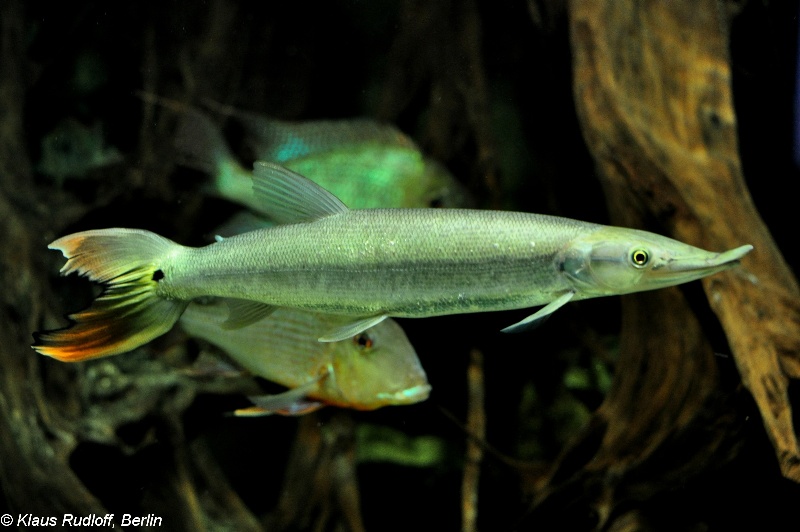
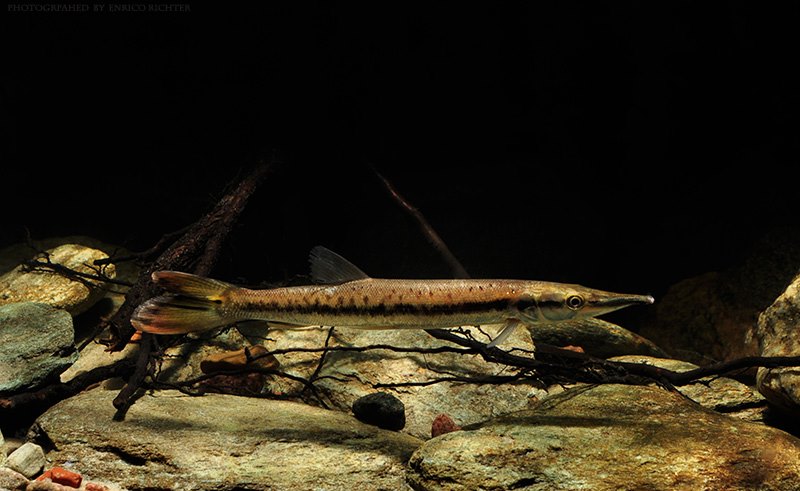
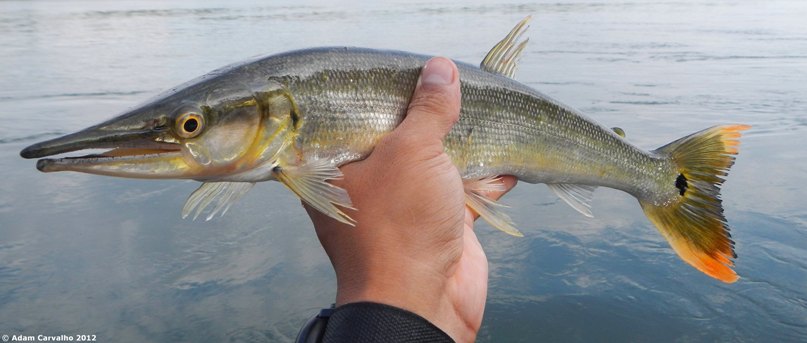
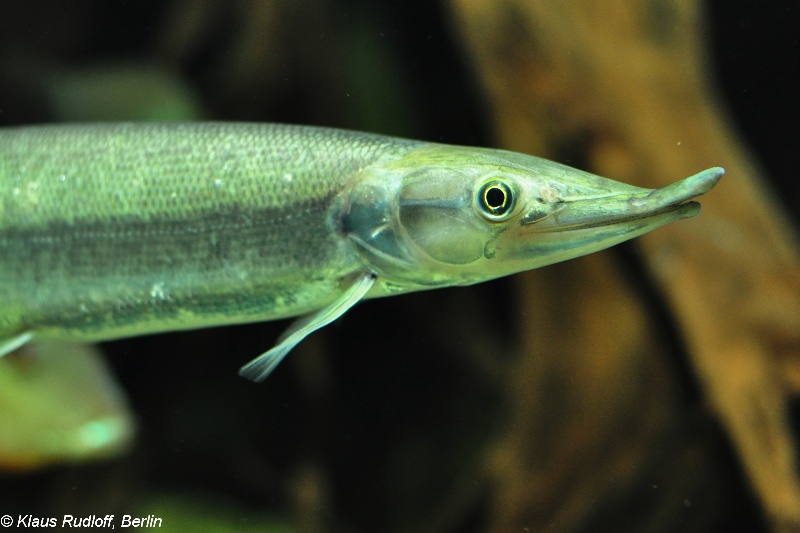
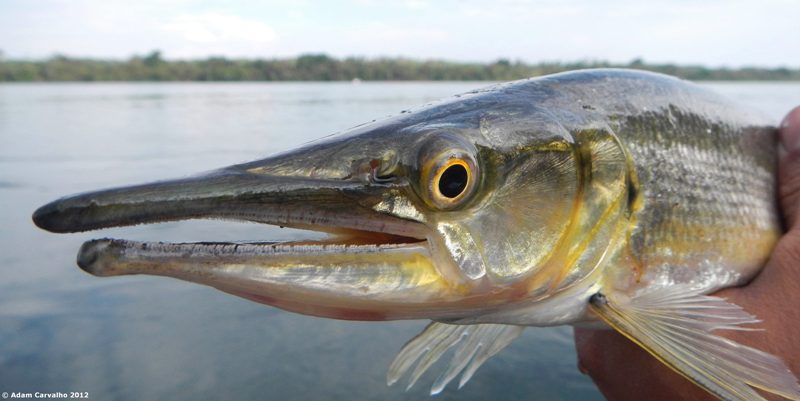
背鳍基部整体位于臀鳍起点之前,尾鳍中央鳍条基部有深斑,体侧可能有较模糊暗带。不同产地外观有变化,辨认不宜只依赖颜色深浅。
图片
图片来自 SeriouslyFish,版权归各摄影者所有。
English
Overview
Adult size and swimming behavior make Boulengerella cuvieri a fish for public exhibits or exceptionally large private facilities. Ordinary home aquaria are generally unsuitable. A small juvenile should only be acquired with its eventual accommodation already addressed.
Distribution & habitat
The range spans much of the Amazon from Peru to northeastern Brazil, the Colombian and Venezuelan Orinoco, and coastal Guiana drainages. Adults use open water in flowing main channels and large tributaries of both white- and black-water rivers, as well as floodplain lakes.
Aquarium setup
A simple layout with floating or overhanging vegetation provides useful surface cover. Maintain high oxygen availability and moderate movement through suitable filtration and aeration. Introduce fish only to a mature system, and support stable chemistry with weekly 30–50% changes.
Fit a secure cover. Screening the rear and sides may reduce collisions in this skittish fish, particularly where surrounding activity causes alarm.
Diet & feeding
Natural prey consists mainly of smaller fish and insects, with dead foods usually accepted after acclimation. Offer juveniles small worms and chopped shrimp, progressing to suitable fish strips, whole shrimp, mussels, and larger worms. Avoid mammalian or avian meat and routine feeder fish because of unsuitable fats, pathogens, and nutritional concerns.
Behaviour & compatibility
It generally leaves fish beyond swallowing size alone. Choose similarly sized companions without strong territorial or competitive habits, such as suitable large cichlids or catfish. Other surface-dwellers are best avoided. Juveniles school more closely than adults, but older fish still gather; groups of at least four are suggested where facilities can support them.
Breeding
Wild reproduction is associated with high water from November through March. This seasonal information does not establish an aquarium breeding procedure.
Notes
The dorsal-fin base sits entirely ahead of the anal-fin origin. A dark mark occurs at the central caudal-fin base, with a diffuse lateral band. Appearance varies across the range, so overall darkness alone is a poor identification guide.
来源
- https://www.seriouslyfish.com/species/boulengerella-cuvieri(抓取于 2026-10-10)
boulengerella-cuvieri · 文件: data/species/boulengerella-cuvieri.md · 状态: 草稿