帝王鼠 · Emperor Botia
概要
| 字段 | 值 |
|---|---|
| 类别 | 鱼 |
| 学名 | Botia udomritthiruji |
| 分类 | 鲤形目 Cypriniformes › 沙鳅科 Botiidae › Botia |
| 水体 | 淡水 |
| 原产地 | 缅甸 |
| 成体体长 | 15 cm |
| 饲养难度 | 中等 |
| 最小水体 | 243 L |
| 最小缸长 | 120 cm |
| 群居方式 | 群游 |
| 特征 | 会跳缸: 是 |
| 外部数据 | seriouslyfish botia-udomritthiruji;fishbase 63558 |
| 别名 | Botia udomritthiruji |
水质参数
| 参数 | 耐受范围 | 最适范围 | 单位 |
|---|---|---|---|
| 水温 | 23–28 | — | °C |
| pH | 6–7.5 | — | — |
| 总硬度 | 1–8 | — | dGH |
概述
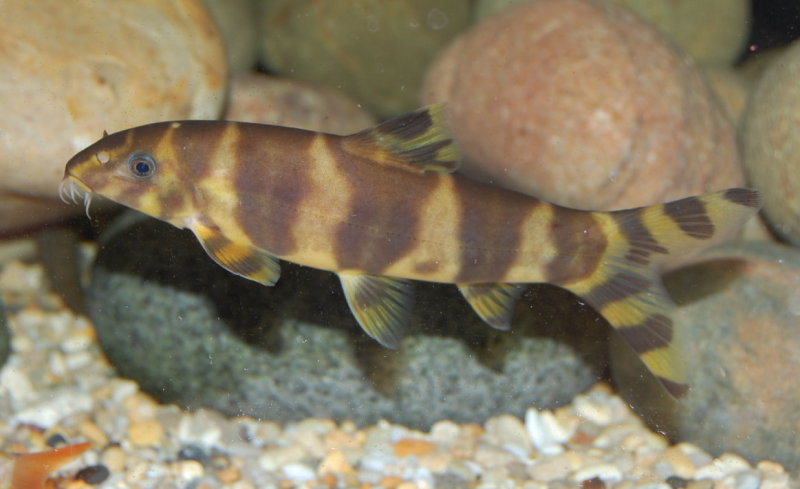
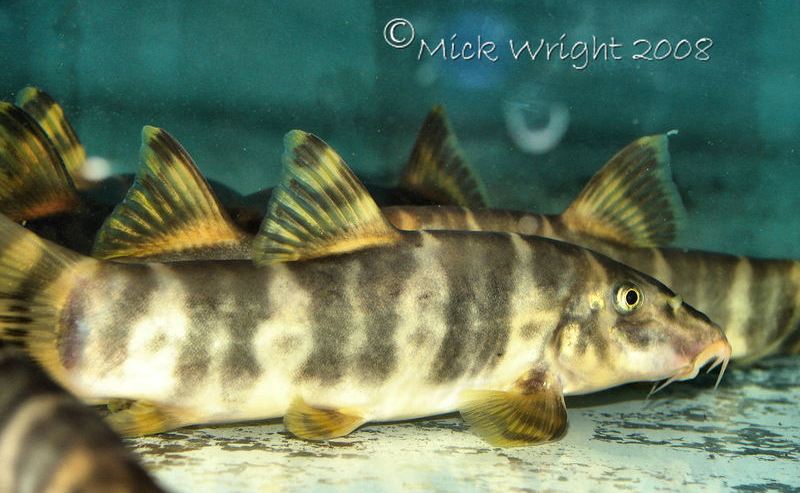
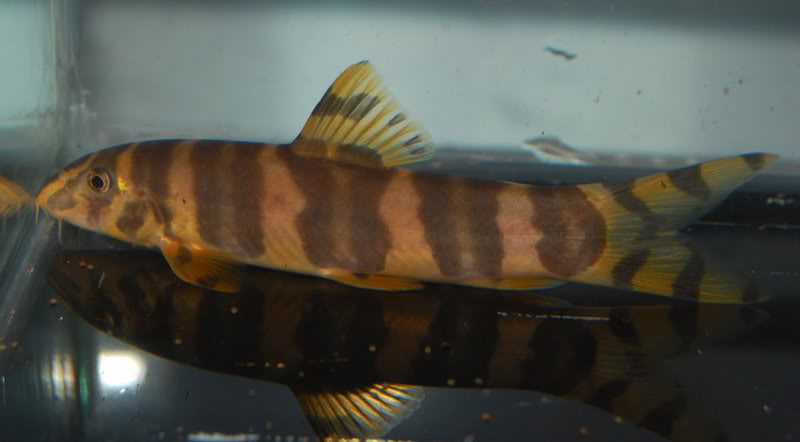
帝王鼠(Botia udomritthiruji)是一种来自缅甸南部的群居鳅,身体较深,宽阔暗色竖带在成鱼身上仍然保留。它需要足够大的成熟缸和稳定同种群体,不能只因外形有趣而孤养一条。
分布与栖息地
已知仅见于缅甸南部 Tanintharyi 河流域,早期以 Tenasserim 名义流通,模式地点在 Same 附近。具体野外生境未确定,不能把近亲的河流照片直接当作它的采集环境。
饲养环境
建议底面积至少约 120 × 45 cm,以砂或细砾、平滑石块和沉木根枝组成结构丰富的环境。设置多个遮阴洞隙,植物可用附着于造景的铁皇冠、莫丝及水榕类。
鳅会主动钻进窄缝,须清除尖边并封闭可能卡鱼的孔洞,缸盖严密防跳。无需猛烈湍流,但溶氧和适当循环不可少。只放入生物过滤成熟的稳定缸,避免有机废物累积,每周约换水 30–50%。
食性与喂食
同属鱼摄食软体动物、昆虫、蠕虫等,也会吃植物,软叶水草可能被啃。人工菜单应包括优质干粮、小型活饵或冻饵,如红虫、水丝蚓和丰年虾,再配黄瓜、瓜类或烫菠菜。混合天然原料的凝胶饲料也适用,切碎蚯蚓只作少量补充。
近亲虽吃水螺,却不是专门的除螺鱼。适应后的抢食积极性,不应掩盖对弱势个体是否吃饱的观察。
习性与混养
至少五至六条,空间允许时十条以上更好。同属群体形成等级;孤养可能退缩或攻击形似伙伴,仅两三条则可能让弱势鱼长期受压甚至停食。
本种不算特别凶猛,但活跃行为可能惊扰远小于它的鱼,慢游长鳍鱼也有咬鳍风险。较适合体形相当、平和的开阔水域鱼;其他底部鱼要综合体形、活动程度和空间选择。同属鱼争位时褪色、幼鱼贴身跟随大鱼、集体绕缸或发出咔哒声,都有观察记录,不能简单归结为一种原因。特殊角度侧躺休息也可能正常。
雌雄区分
成熟雌鱼体形较厚实、吻部较圆,雄鱼吻部拉长、嘴唇更厚。
补充说明
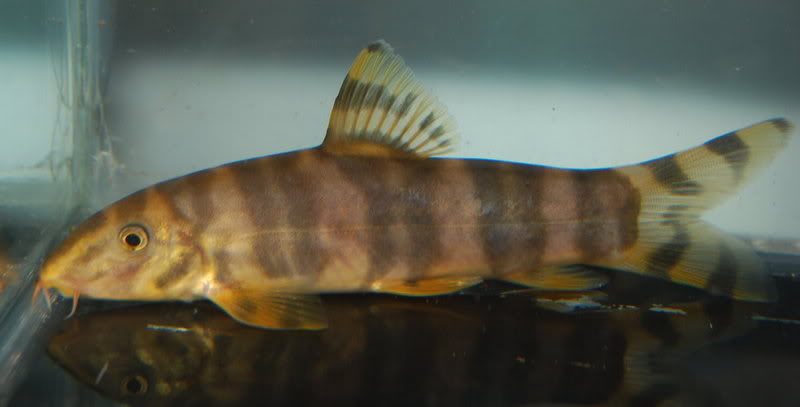
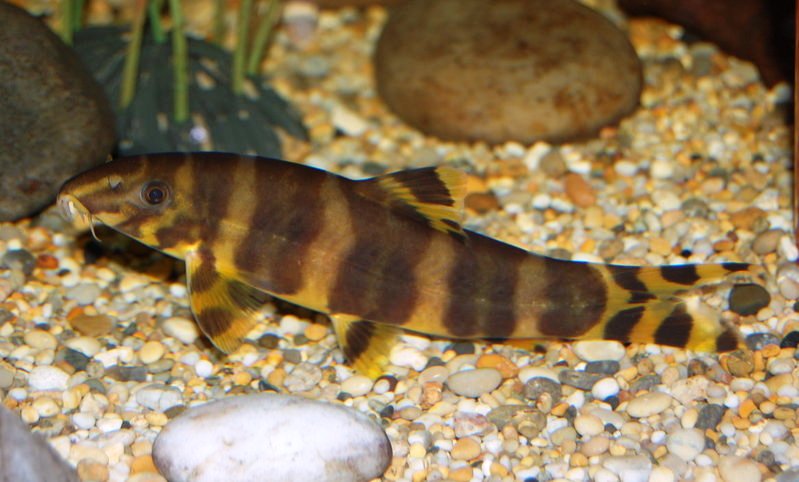
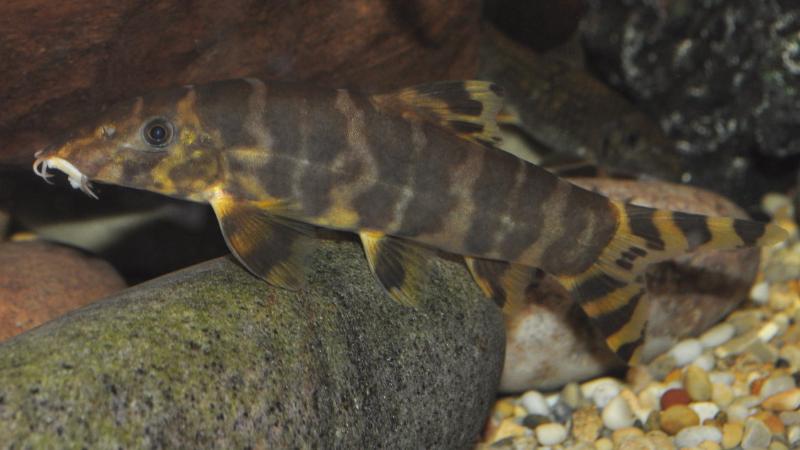
本种的五条宽暗带中央可较浅,随年龄增长边缘更不规则、间隙出现斑点,但宽带不会像 Botia histrionica 那样明显破碎消失。贸易旧称 Botia sp. 'Tenasserim' 有助于追溯旧记录,并不代表另一个已确定物种。
其他近亲的商业催产记录不能视作帝王鼠自身已有稳定繁殖方法。搬运时留意眼下棘挂网或伤手,新入缸个体持续消瘦也应重视。
图片
图片来自 SeriouslyFish,版权归各摄影者所有。
English
Overview
Botia udomritthiruji, the emperor botia, is a deep-bodied social loach from southern Myanmar. Broad dark vertical bands remain evident in adults. It needs a spacious mature aquarium and an adequate group rather than being kept alone as a novelty.
Distribution & habitat
The known range is restricted to the Tanintharyi drainage of southern Myanmar, with the type locality near Same. It circulated under the name Tenasserim before formal description. Its precise wild habitat is unconfirmed; photographs of related species cannot establish its own collection environment.
Aquarium setup
Provide at least about 120 × 45 cm. Sand or fine gravel, smooth stones, wood, and roots should form a complex arrangement with multiple shaded refuges. Attached Java fern, mosses, and anubias can add cover.
Loaches investigate narrow openings, so remove sharp edges and seal holes capable of trapping them. Cover the aquarium securely. Violent turbulence is unnecessary, but oxygenation and circulation matter. Use a stable, biologically mature system, prevent organic-waste accumulation, and change about 30–50% of the water weekly.
Diet & feeding
Related Botia consume mollusks, insects, worms, and plant matter and may damage soft leaves. Offer quality dry food with small live or frozen bloodworms, Tubifex, and brine shrimp, supplemented by cucumber, melon, or blanched spinach. Mixed natural ingredients in gel foods are another option; chopped earthworms should be occasional additions.
Relatives eat aquatic snails but are not dedicated snail-control animals. Once fish feed boldly, continue checking that subordinate individuals obtain enough food.
Behaviour & compatibility
Maintain at least five or six, preferably ten or more where space allows. Hierarchies develop within the genus. Isolated fish may withdraw or attack similar companions, while a pair or trio can leave weaker individuals persistently suppressed and eventually refusing food.
The species is not particularly aggressive, but its activity may intimidate much smaller fishes and trailing fins can be nipped. Appropriately sized peaceful open-water fish are preferable. Assess other bottom dwellers against space, size, and activity. Paling during contests, youngsters closely following adults, group swimming circuits, and clicking sounds are recorded in related loaches without a single established explanation. Unusual sideways resting positions can also be normal.
Sexual dimorphism
Mature females are fuller with a rounded snout. Males develop an elongated snout and noticeably fleshier lips.
Notes
The five broad dark bars may have paler centers. Their edges become less regular with age and spots appear between them, but the bars persist instead of breaking apart as extensively as in Botia histrionica. The old label Botia sp. 'Tenasserim' helps trace historical records rather than identifying a separate species.
Commercial spawning of relatives does not establish a reliable breeding method for emperor botia. Take care with eye spines that can snag nets or injure hands, and pay attention to persistent wasting in newly acquired fish.
来源
- https://www.seriouslyfish.com/species/botia-udomritthiruji(抓取于 2026-10-10)
botia-udomritthiruji · 文件: data/species/botia-udomritthiruji.md · 状态: 草稿