双耳丽鲷 · Cupid Cichlid
概要
| 字段 | 值 |
|---|---|
| 类别 | 鱼 |
| 学名 | Biotodoma cupido |
| 别名 | 雙耳麗鯛、Geophagus cupido |
| 分类 | 慈鲷目 Cichliformes › 慈鲷科 Cichlidae › Biotodoma |
| 水体 | 淡水 |
| 原产地 | 玻利维亚、巴西、圭亚那、秘鲁 |
| 成体体长 | 10 cm |
| 饲养难度 | 中等 |
| 最小水体 | 304 L |
| 最小缸长 | 150 cm |
| 群居方式 | 群游 |
| 性情 | 温和 |
| 外部数据 | seriouslyfish biotodoma-cupido;fishbase 12291 |
| 繁殖方式 | 附着产卵 |
| 特征 | 翻底砂: 是 |
水质参数
| 参数 | 耐受范围 | 最适范围 | 单位 |
|---|---|---|---|
| 水温 | 20–30 | — | °C |
| pH | 5–7 | — | — |
| 总硬度 | 1–5 | — | dGH |
概述
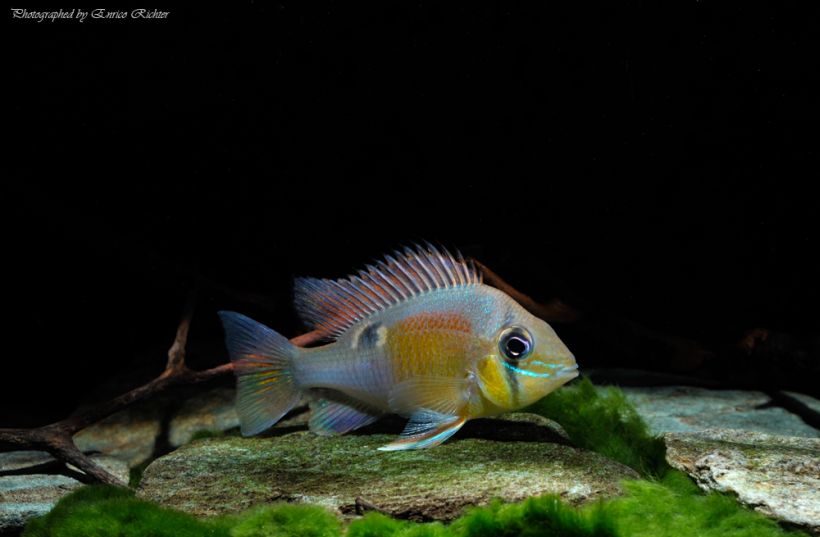
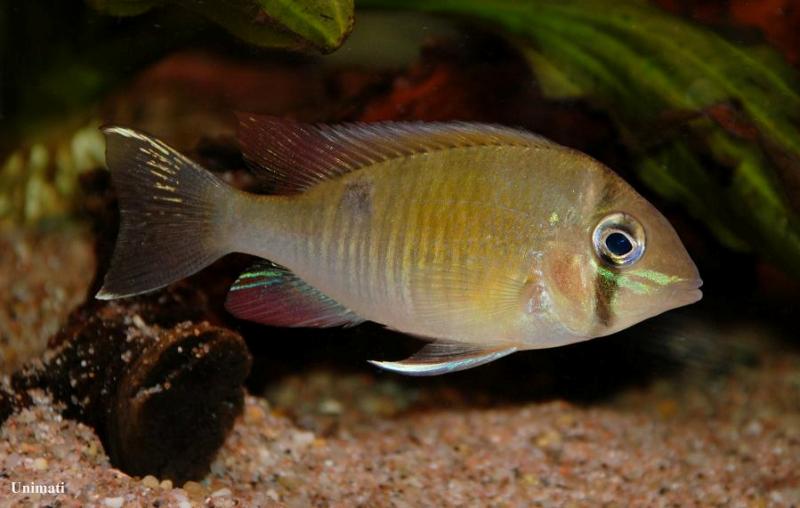
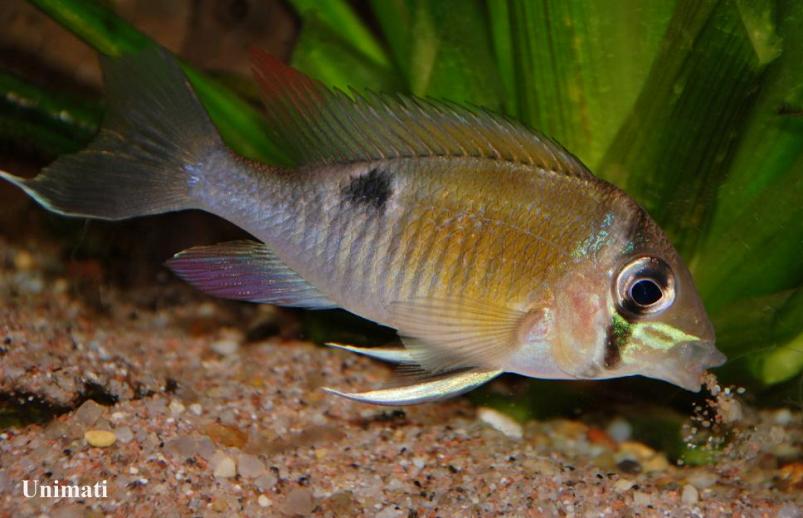
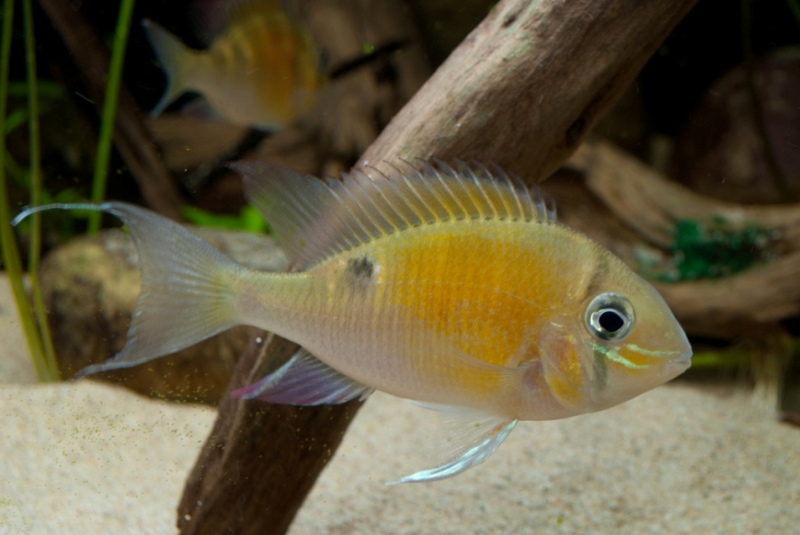
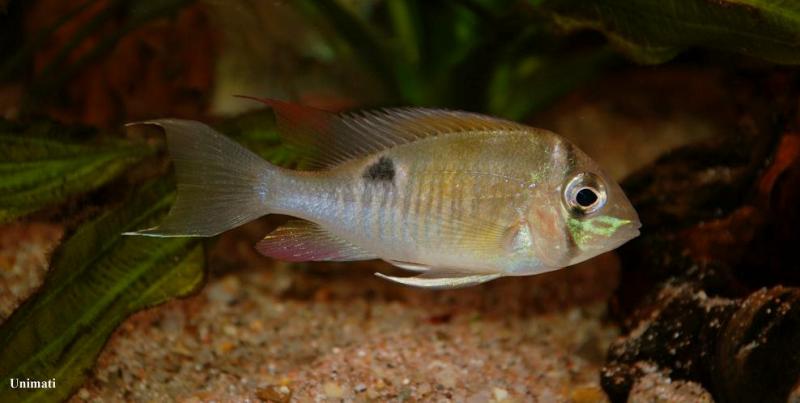
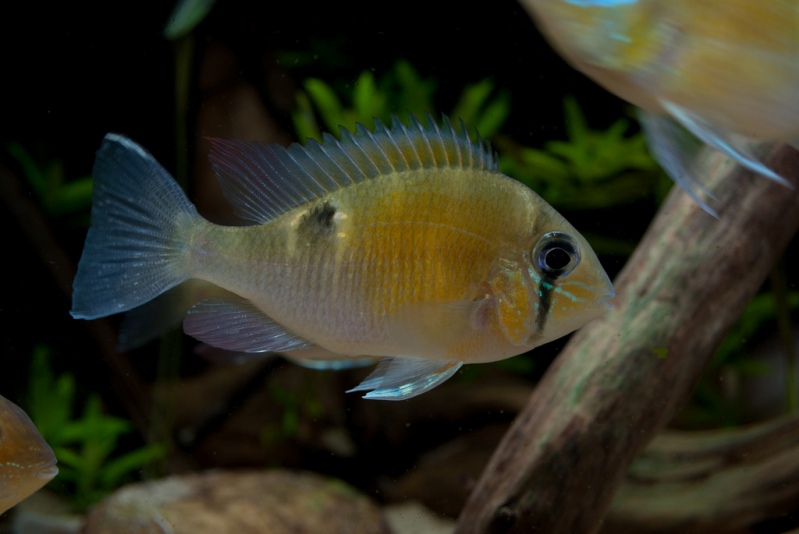
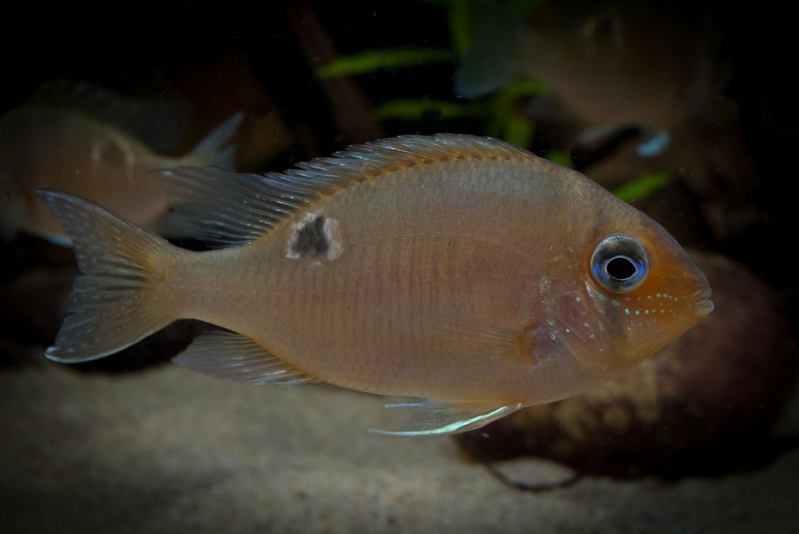
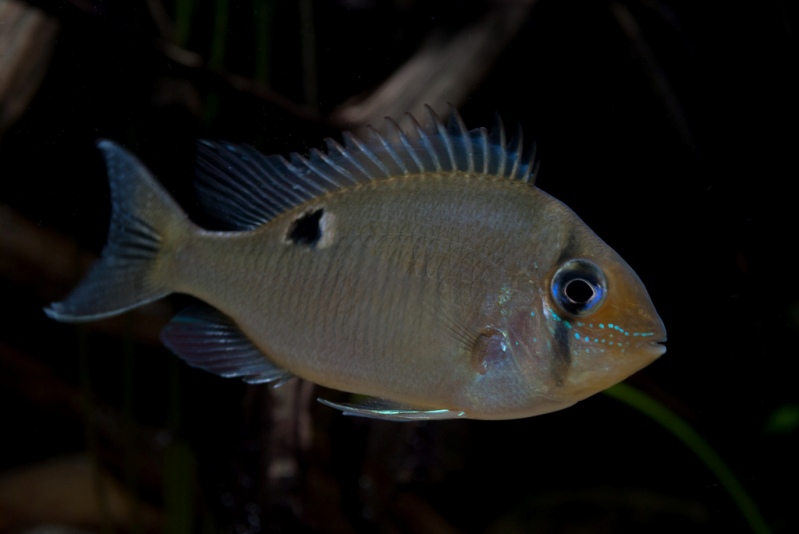
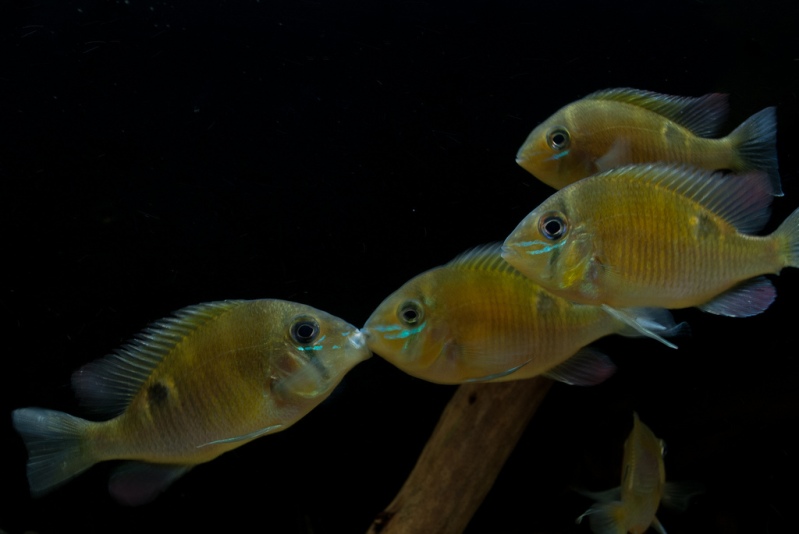
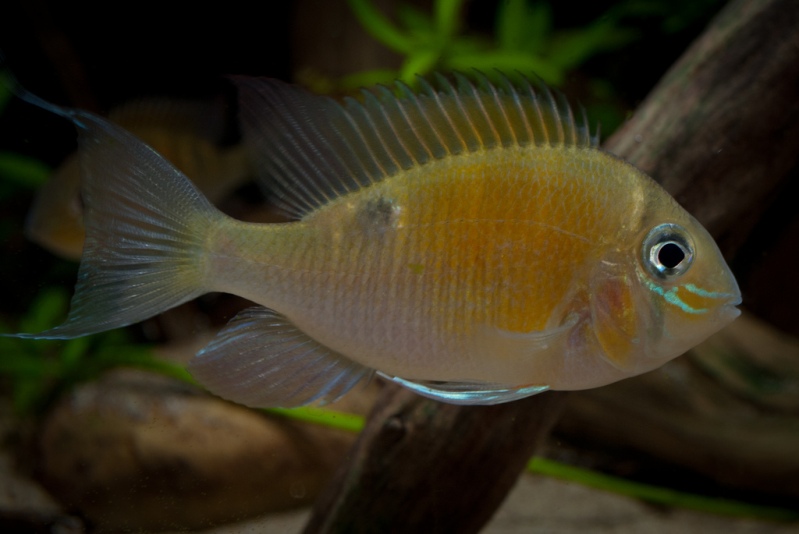
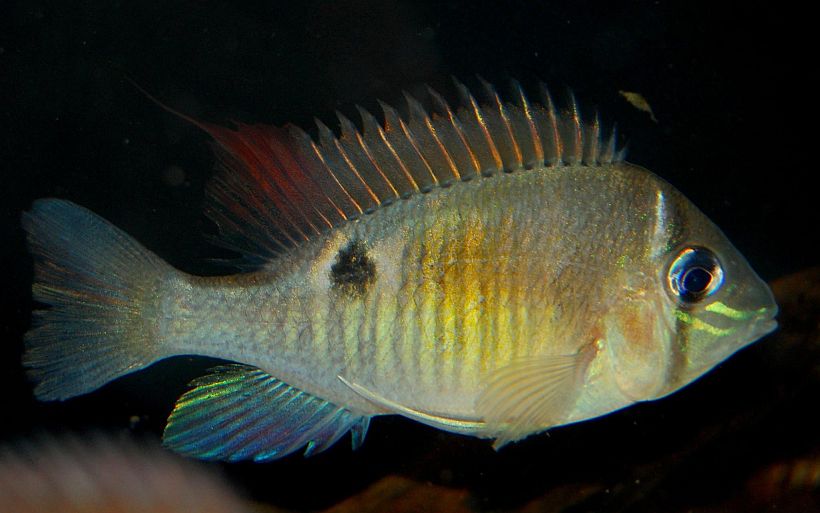
双耳丽鲷(Biotodoma cupido)平时相当温和,繁殖时会转为护区护幼。身体较紧凑,后半体侧暗斑位于上侧线之上。群体、细沙和高水质是重点,不能只因体长不大就忽视所需底面积。
分布与栖息地
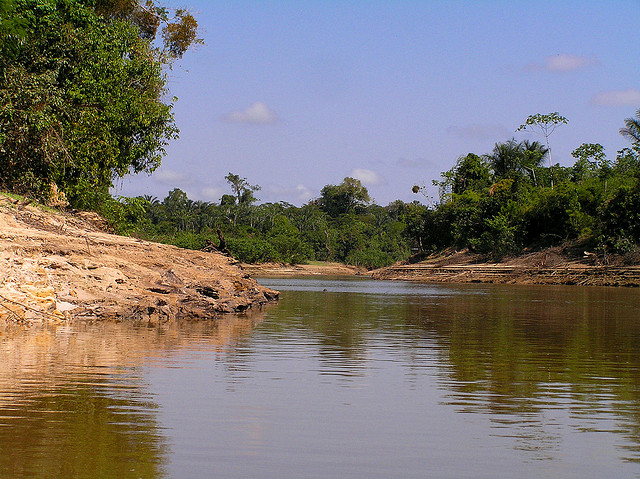
广布亚马孙流域,范围从秘鲁向东至托坎廷斯河,北到圭亚那、南到玻利维亚。不同产地体色与形态有差异,多数贸易鱼来自巴西圣塔伦一带。栖地随洪水周期改变,部分记录为清澈而染茶色的软水溪流。
饲养环境
底面至少 150 × 45 厘米。用柔软细沙方便底部觅食,弱光、沉木、根枝及一两块平滑石头即可。需成熟过滤系统与每周约 50%~70% 换水;机械过滤应拦住扬起颗粒,避免砂粒长期进入泵造成磨损或堵塞。维护和饮食不足可能导致生长停滞、头部和侧线侵蚀。
食性与喂食
以适口细颗粒搭配红虫、丰年虾、蚊幼虫等活饵或冷冻饵料,部分干粮应含较多植物成分。鱼粮、贝肉和果蔬组成的凝胶饲料也可用。每天 3~4 次小餐更接近其持续采食方式。
习性与混养
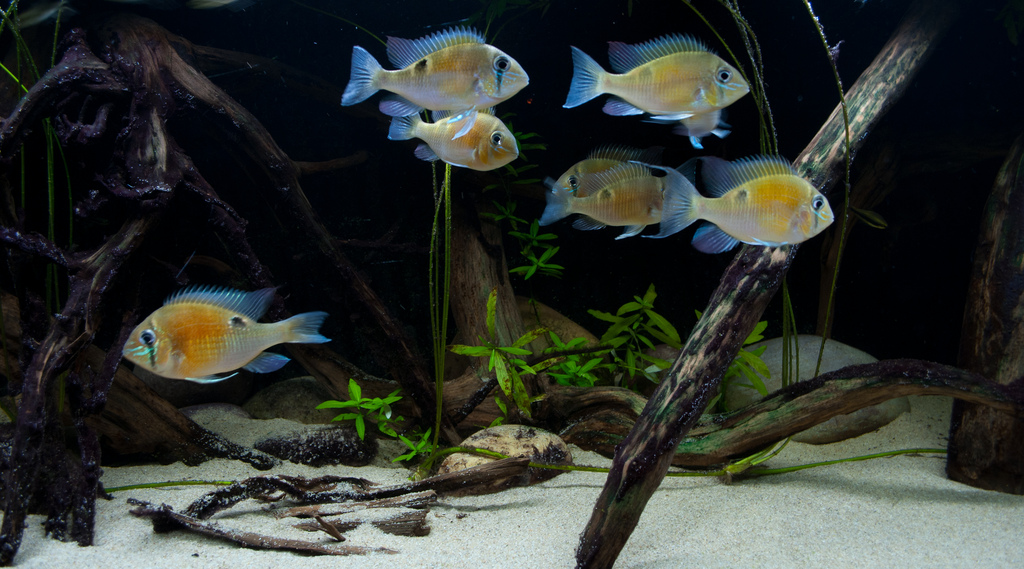
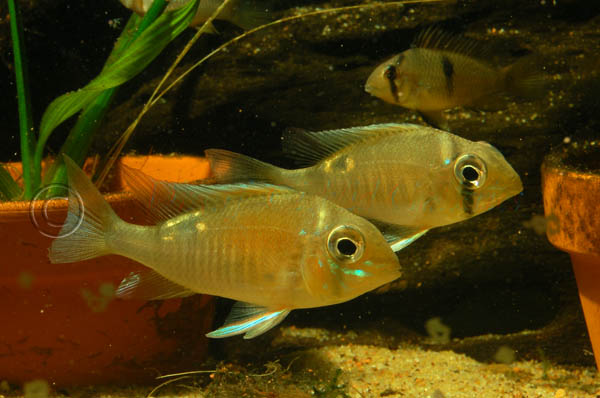
建议至少 5~8 条,群体内会形成等级;数量太少时弱鱼可能被持续压制,或全群紧张。除繁殖期外温和,一般不捕食长于几毫米的鱼;避免强领地、好斗或需要硬水的伙伴。
雌雄区分
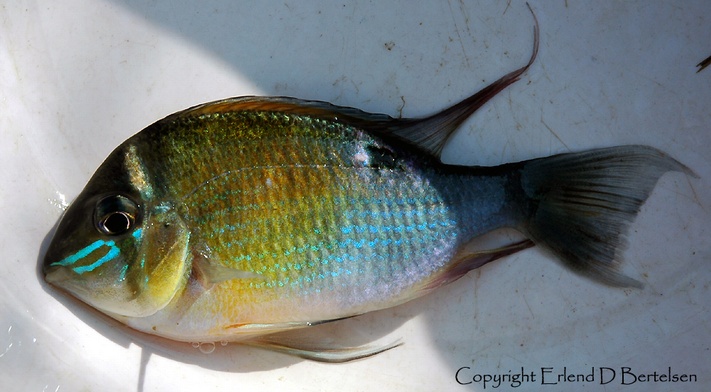
不能可靠地用头部蓝色条纹是否连续分性别,两性都可能有条纹。繁殖者观察雄鱼常略大、体高更深,背鳍与尾鳍丝状延长更明显;幼鱼可能要等成熟后才好判断。
繁殖
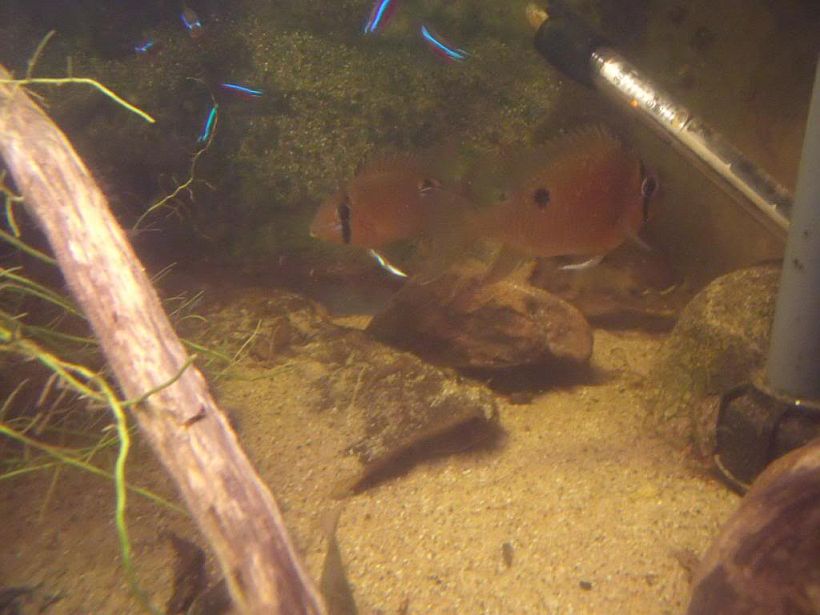
双亲护幼的基面产卵鱼,偏好部分埋入沙中的石块,挖坑往往是为了露出石面。性成熟似需 18~24 个月;模拟旱雨季转换可能有帮助,但仍以稳定水质为前提。雌鱼常先清理并守住石头,产完一批卵才让雄鱼受精。一次观察在 23~24 °C 下约 3~4 天孵化,幼鱼移入坑内再待约四天吸收卵黄,随后双亲共同护幼,约六周后再次繁殖。平游苗能接受细粉粮和丰年虾无节幼体。
补充说明
产地商品名可能混用,不同地域型是否包含额外物种仍未正式确认,繁殖记录最好连同来源保存。
图片
图片来自 SeriouslyFish,版权归各摄影者所有。
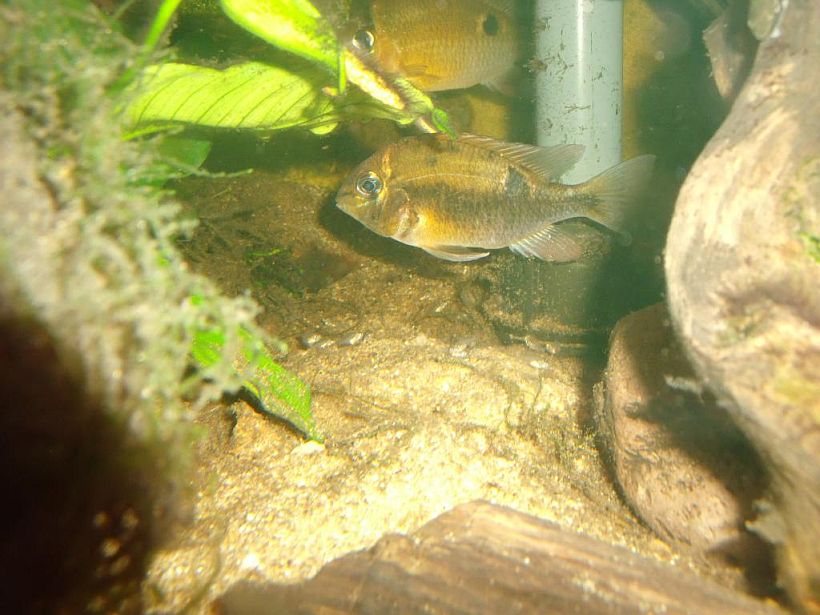
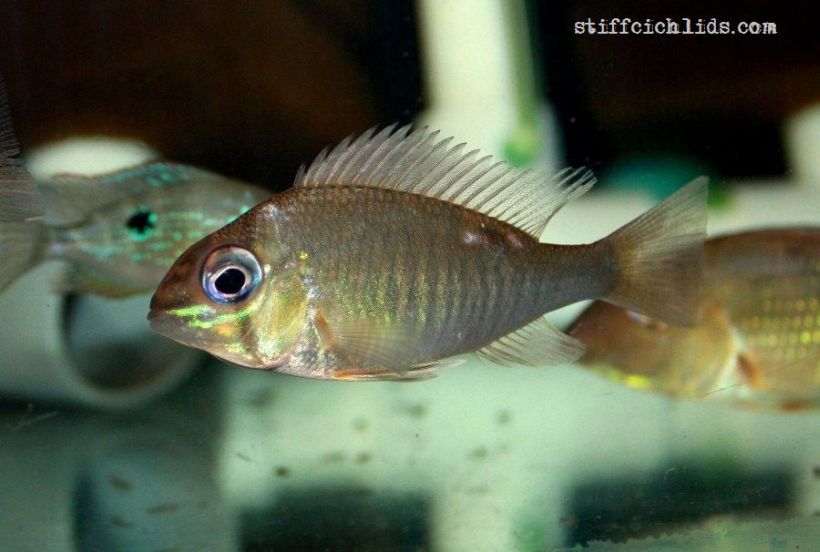
English
Overview
Usually peaceful outside breeding, Biotodoma cupido becomes protective around a brood. A compact body and a flank blotch above the upper lateral line aid identification. Plan around social group space, fine sand and excellent water quality rather than adult length alone.
Distribution & habitat
Records span much of the Amazon basin, extending north into Guyana and south into Bolivia. Local forms differ, and Santarém supplies much traded stock. Seasonal flooding alters habitat conditions; documented sites include clear tannin-stained tributaries.
Aquarium setup
Provide at least a 150 by 45 cm footprint with fine sand, subdued lighting and restrained woodwork. Smooth rocks offer spawning surfaces. Established filtration and weekly changes of about fifty to seventy percent help maintain stability. Capture stirred-up particles before they damage equipment. Inadequate diet or maintenance can contribute to poor growth and head or lateral-line erosion.
Diet & feeding
Vary fine prepared foods with small live or frozen invertebrates and a substantial plant-containing component. Mixed gel foods can also work. Three or four small daily meals support browsing and condition.
Behaviour & compatibility
Keep five to eight or more. A hierarchy develops, and undersized groups may concentrate pressure on weaker fish or remain unsettled. Outside breeding it is peaceful toward suitably sized companions. Avoid aggressive species and those requiring harder water.
Sexual dimorphism
Head stripes are not a reliable sexing rule because both sexes may possess them. Breeders report somewhat larger, deeper-bodied males with longer fin filaments. Immature fish may remain difficult to sex.
Breeding
Both parents care for a substrate-spawned brood, typically on a partly buried rock. Digging may uncover that surface rather than create an all-sand nest. Maturity apparently takes eighteen to twenty-four months. Breeder observations describe female-led site preparation, followed by deposition of a full batch before male fertilization. One account recorded hatching after three to four days at 23–24 °C and another four days in a nursery pit. Both adults then guarded swimming fry for several weeks. Fine prepared fry food and brine-shrimp nauplii were accepted.
Notes
Trade locality names can be confusing, and possible additional species remain unresolved. Preserve origin information with breeding records.
来源
- https://www.seriouslyfish.com/species/biotodoma-cupido(抓取于 2026-10-10)
biotodoma-cupido · 文件: data/species/biotodoma-cupido.md · 状态: 草稿