Betta uberis
概要
| 字段 | 值 |
|---|---|
| 类别 | 鱼 |
| 学名 | Betta uberis |
| 分类 | 攀鲈目 Anabantiformes › 丝足鲈科 Osphronemidae › Betta |
| 水体 | 淡水 |
| 原产地 | 印度尼西亚 |
| 成体体长 | 3.6 cm |
| 饲养难度 | 中等 |
| 最小水体 | 41 L |
| 最小缸长 | 45 cm |
| 群居方式 | 成对 |
| 水流偏好 | 低 |
| 外部数据 | seriouslyfish betta-uberis;fishbase 62731 |
| 繁殖方式 | 吐泡筑巢 |
| 特征 | 会跳缸: 是 |
水质参数
| 参数 | 耐受范围 | 最适范围 | 单位 |
|---|---|---|---|
| 水温 | 22–27 | — | °C |
| pH | 4–6 | — | — |
| 总硬度 | 1–5 | — | dGH |
概述
Betta uberis 是婆罗洲泥炭沼泽森林中的小型泡巢斗鱼,适合由能稳定维持极软酸水的饲养者单独照料。它属于 coccina 近缘组,背鳍软条较多,不能仅凭红色或体侧绿色斑识别。
分布与栖息地
主要记录位于印度尼西亚中加里曼丹的 Arut 河下游与 Kumai 河之间,另见于 Sampit 河流域及西加里曼丹 Sukadana 地区。它依赖泥炭沼泽森林及相连溪流,林冠遮阴,水被腐解物染深,矿物含量极低。
底部多落叶、枝条和树根。季节性缺水可能迫使它在湿落叶中维持生命数周,这不是水族箱应主动安排的干旱过程。
饲养环境
至少约 45 × 30 cm 底面积,沉木、根枝、陶罐及短管组成多处藏身位。干叶提供遮蔽与微生物附着面,仔鱼可利用其中的小型食物;不必使用天然泥炭。弱光、耐阴水草和浮水植物较合适。
水需偏酸、碳酸盐硬度几乎可忽略、总硬度很低,可能要用反渗透水或其他软水来源。过滤保持轻柔,气动海绵即可。严密盖板与水面之间留温暖湿润空气,防跳并供迷鳃呼吸。
食性与喂食
野外可能捕食水生及陆生小型无脊椎动物。缸内通常能逐渐接受干粮,仍宜定期提供水蚤、丰年虾或红虫等小型活饵、冻饵,控制份量避免肥胖。
习性与混养
多数情况下单种饲养更可靠。多对或一雄多雌的共处经验并不一致:有些群体只有轻微追逐,另一些会受到优势鱼持续攻击。因此不能以某次成功群养保证其他缸也安全,成对饲养并准备分隔较容易管理。
雌雄区分
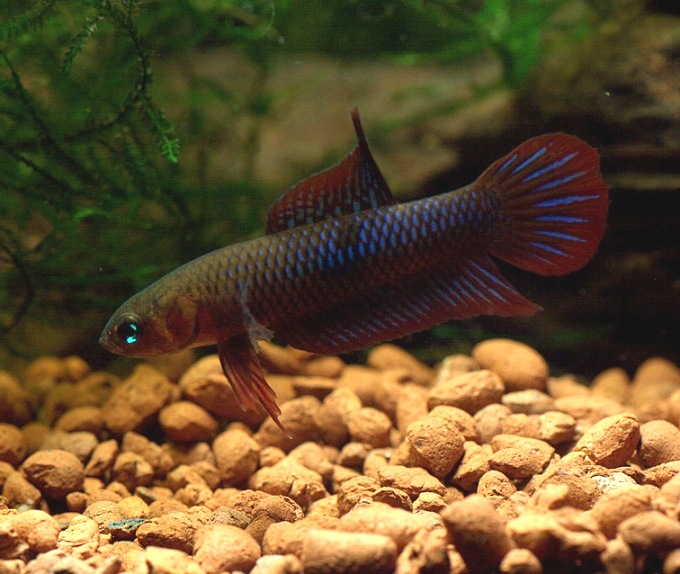
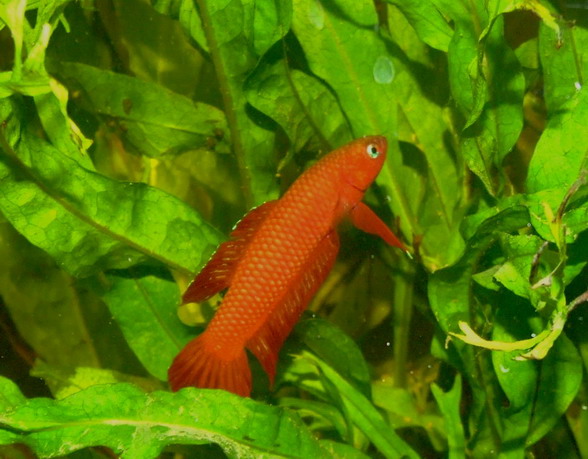
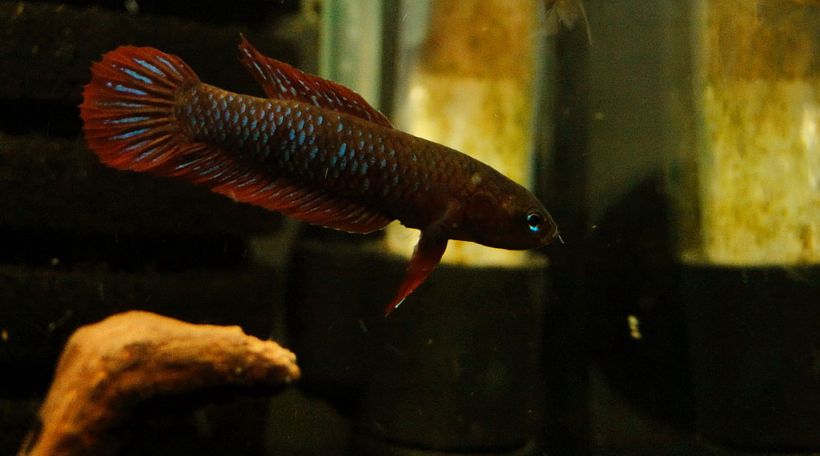
雄鱼成熟后颜色较鲜艳,鳍条延长更多。雄鱼体侧绿色虹彩斑可有可无。
繁殖
雄鱼筑泡巢,可用短管、小容器、宽叶下方或水面细叶植物作地点,必须给雌鱼充分退避处。盖板应保住仔鱼发育所需的温暖湿润空气。巢完成前雄鱼通常排斥靠近的雌鱼。
临产雌鱼变淡并出现深色体侧条纹,亲鱼拥抱产卵后把卵送进巢。常见窝卵少于 20 粒,也可达约 50 粒。雄鱼独自照顾巢,成鱼通常可留原处。约 24–48 小时孵化,再留巢 3–4 天吸收卵黄;自由游动后雄鱼停止看护,成鱼通常不吃仔鱼。
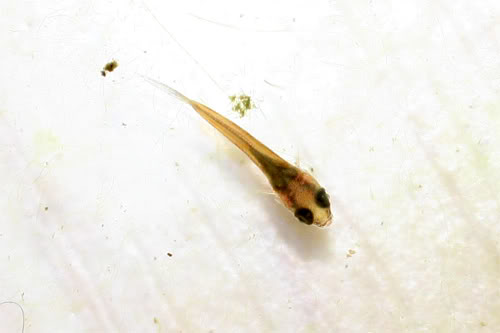
幼鱼可立即吃微虫或丰年虾无节幼体,但避免过量依赖后者。换水宜规律、少量。
补充说明
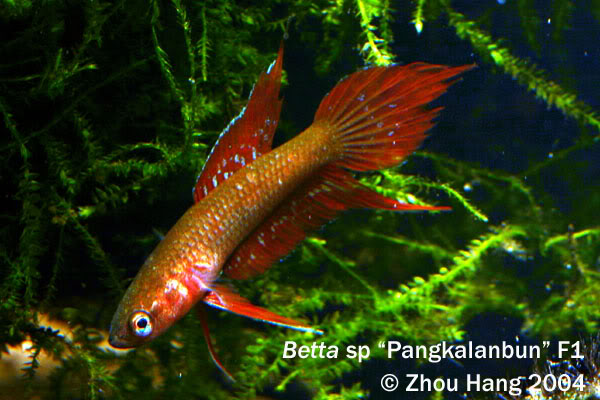
旧记录中的 Sukadana、Pangkalanbun 暂名可能指本种。背鳍软条 14–17 条是区别于近邻 Betta hendra 的重要特征,后者较少;体色变化不能取代鳍条和种源核对。
图片
图片来自 SeriouslyFish,版权归各摄影者所有。
English
Overview
Betta uberis is a small bubble-nesting fish from Bornean peat-swamp forest, suited to keepers able to maintain stable, extremely soft acidic water. It belongs to the coccina group. Its relatively high dorsal-ray count is more useful than red coloration or an optional green flank blotch alone.
Distribution & habitat
Most records lie between the lower Arut and Kumai rivers in Central Kalimantan, Indonesia. Others come from the Sampit basin and Sukadana in West Kalimantan. It depends on shaded peat forests and associated streams with dark, mineral-poor water.
Leaves, branches, and roots cover the bottom. Seasonal water loss may force survival in moist litter for weeks, but this should not be deliberately reproduced in an aquarium.
Aquarium setup
Allow at least about 45 × 30 cm of floor space. Wood, roots, pots, and pipes provide several refuges. Dried leaves add cover and microbial surfaces that supply supplementary fry food; natural peat is unnecessary. Subdued lighting, shade-tolerant plants, and floating cover are suitable.
Water needs to be acidic, with negligible carbonate hardness and very low general hardness. Reverse-osmosis water or another soft-water source may be necessary. Use gentle sponge filtration and a tight lid, leaving warm humid air above the water for breathing and preventing jumps.
Diet & feeding
Small aquatic and terrestrial invertebrates are probable natural prey. Captive fish generally learn to accept dry food but should receive small live or frozen Daphnia, brine shrimp, or bloodworms regularly. Avoid overfeeding.
Behaviour & compatibility
A species aquarium is usually the dependable choice. Accounts of multiple pairs or one-male groups differ: some show little injury, while others suffer sustained dominant-fish aggression. Successful group housing elsewhere does not guarantee compatibility. Pairs with separation options are easier to manage.
Sexual dimorphism
Mature males become brighter and develop longer fins. Their iridescent green flank blotch may be present or absent.
Breeding
The male builds a bubble nest in a tube, small container, beneath a leaf, or among surface plants. Provide ample escape cover for the female, whom he usually excludes until completion. A tight cover retains humid warmth for developing fry.
Females pale and acquire dark bars before spawning embraces. Eggs are transferred into the nest; fewer than twenty are typical, although broods can reach around fifty. The male takes over care, and adults can usually remain. Hatching takes about 24–48 hours, followed by another three to four days in the nest. Care declines after free swimming, and adults generally leave young uneaten.
Fry immediately take microworms or brine shrimp nauplii, without excessive reliance on the latter. Make regular small water changes.
Notes
Sukadana and Pangkalanbun are historical provisional labels. Fourteen to seventeen dorsal-fin rays help distinguish it from nearby Betta hendra, which has fewer. Check fin characters and provenance alongside color.
来源
- https://www.seriouslyfish.com/species/betta-uberis(抓取于 2026-10-10)
betta-uberis · 文件: data/species/betta-uberis.md · 状态: 草稿