绿宝抟鱼 · Emerald Betta
概要
| 字段 | 值 |
|---|---|
| 类别 | 鱼 |
| 学名 | Betta smaragdina |
| 别名 | 綠寶摶魚 |
| 分类 | 攀鲈目 Anabantiformes › 丝足鲈科 Osphronemidae › Betta |
| 水体 | 淡水 |
| 原产地 | 老挝、泰国 |
| 成体体长 | 6 cm |
| 饲养难度 | 中等 |
| 最小水体 | 41 L |
| 最小缸长 | 45 cm |
| 群居方式 | 成对 |
| 水流偏好 | 低 |
| 外部数据 | seriouslyfish betta-smaragdina;fishbase 12047 |
| 特征 | 会跳缸: 是 |
| 繁殖方式 | 吐泡筑巢 |
水质参数
| 参数 | 耐受范围 | 最适范围 | 单位 |
|---|---|---|---|
| 水温 | 22–28 | — | °C |
| pH | 5.5–7.5 | — | — |
| 总硬度 | 1–10 | — | dGH |
概述
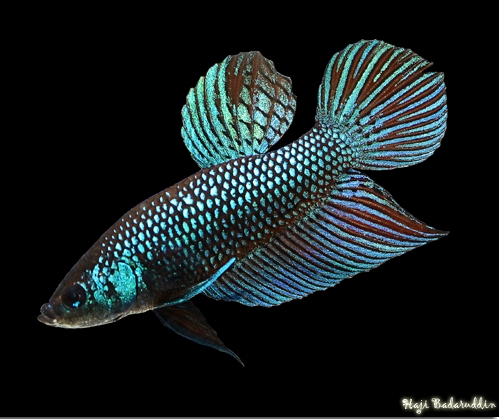
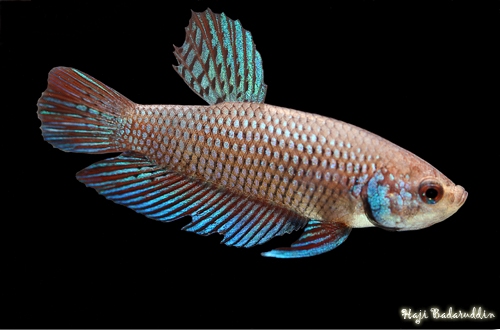
绿宝抟鱼(Betta smaragdina)是泡巢斗鱼,鳃盖上有绿色虹彩,野生种群的红、绿花纹比例随产地变化。人工选育及杂交产生了许多非自然色型,购买和繁殖时应区分野生来源与观赏血系。
分布与栖息地
原生于泰国东部呵叻高原及老挝中部湄公河支流。栖息于稻田、沼泽、沟渠、溪流和池塘等静水或缓流水体,常有水草、浮叶和岸边植被遮蔽,部分地点溶氧较低。
季风季节水况变化快,底部可为落叶、泥、沙或厚沉积物。观赏斗鱼及其他斗鱼的引入,已经影响部分野生种群的遗传完整性。
饲养环境
一对至少约 45 × 30 cm 底面积,设置茂密水草、遮阴及水面覆盖。沉木、花盆和管道提供进一步庇护,落叶增加隐蔽并培养供鱼苗取食的微生物。
避免强烈水流,轻缓气动海绵过滤即可。牢靠缸盖防跳,水面上留温暖湿润空气层供呼吸。
食性与喂食
野外可能摄取水生和陆生无脊椎动物。人工通常可学会吃干粮,仍应经常提供水蚤、丰年虾、红虫等小型活饵或冻饵,控制食量以免肥胖。
习性与混养
一般单养优于普通混养,选择其他同伴时要非常温和且环境相容。遮蔽充分时可以尝试多雄同缸,不过繁殖最好单独安置一对。
雌雄区分
雄鱼更鲜艳,成熟后鳍也更延长。
繁殖
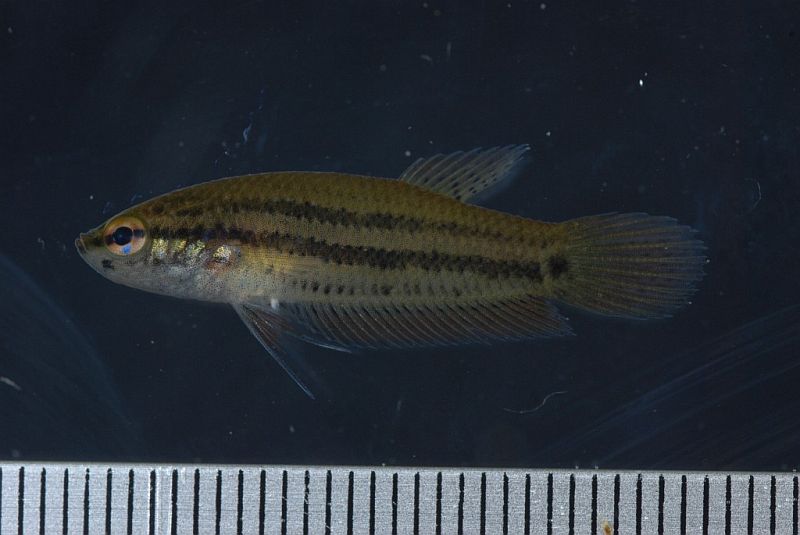
雌鱼必须有躲避空间。雄鱼在管道、容器、宽叶下或浮水植被间筑泡巢,巢未完成前通常驱赶雌鱼。雌鱼临产时体色变淡、体侧显暗纹,双方巢下环抱,分批产卵,雌鱼腹鳍接卵,雄鱼送入巢,雌鱼拾回散卵。
产后亲鱼通常可留缸,但由雄鱼单独照料。卵约 24~48 小时孵化,幼体再留巢约 3~4 天吸收卵黄,雄鱼捡回掉落幼体,受威胁时还可能转移整个巢。自由游动后雄鱼不再关心,亲鱼通常不吃后代。
鱼苗最初几天需要草履虫等微小开口饵,随后再转微虫和丰年虾无节幼体;不要把较大开口饵提前套用。丰年虾不宜大量单一投喂,换水少量规律进行。缸盖下温暖湿润的空气有利于迷鳃器官发育。
补充说明
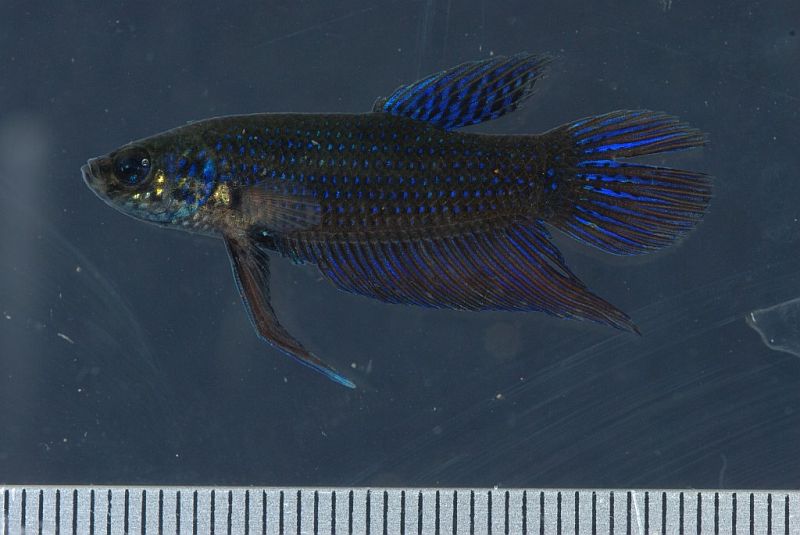
本种既曾为斗鱼活动选育攻击性,也曾与其他斗鱼杂交培育观赏色型。已知产地的野生鱼宜保留产地标签并维持血系。自然鉴别特征包括绿色鳃盖鳞、尾鳍横纹,以及尾鳍末端不具有红色新月状带。
图片
图片来自 SeriouslyFish,版权归各摄影者所有。
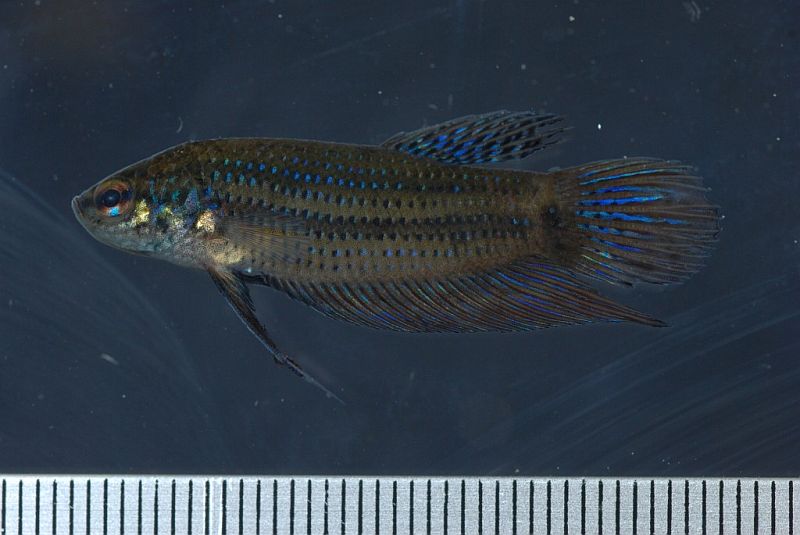
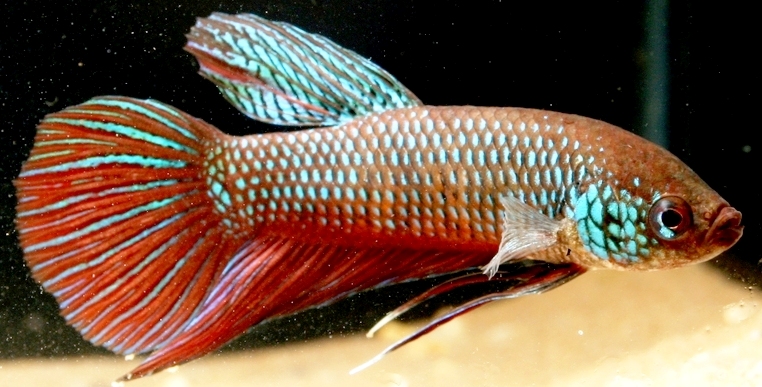
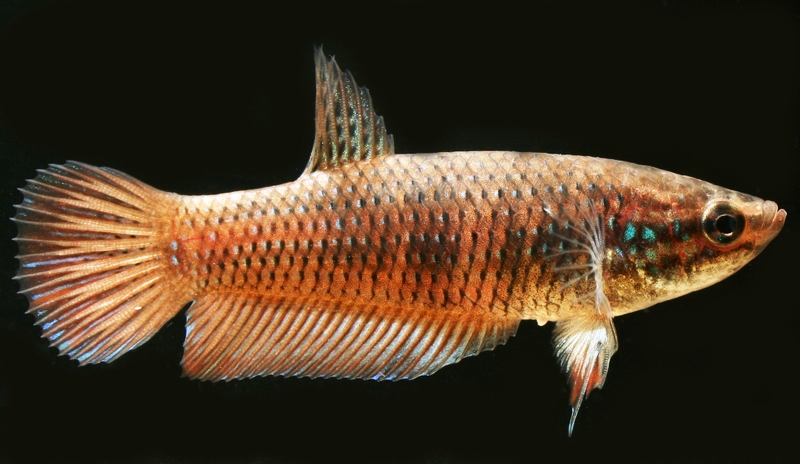
English
Overview
Green gill-cover iridescence is characteristic of Betta smaragdina, a bubble-nesting betta with locality-dependent red and green patterning. Selective breeding and hybridization have produced ornamental forms absent from nature, making population and lineage information valuable.
Distribution & habitat
The species is native to the Khorat Plateau in eastern Thailand and Mekong tributaries in central Laos. It occupies rice fields, swamps, ditches, streams, and ponds with still or slow water, often under aquatic or marginal vegetation. Some sites have little dissolved oxygen.
Monsoon conditions can change rapidly, over bottoms ranging from leaves to mud, sand, or deep sediment. Releases of ornamental and other bettas have affected the genetic integrity of some wild populations.
Aquarium setup
Allow at least approximately 45 × 30 cm of floor space for a pair. Dense plants, shade, and surface cover suit it. Wood, pots, and pipes add retreats, while leaves encourage microorganisms useful for fry.
Avoid strong currents; gentle sponge filtration is sufficient. A secure lid prevents jumping, with warm, humid air left above the water for breathing.
Diet & feeding
Aquatic and terrestrial invertebrates are likely wild prey. Captive fish generally recognize dry foods after acclimation, alongside regular live or frozen Daphnia, Artemia, and bloodworms. Limit portions to avoid obesity.
Behaviour & compatibility
Dedicated keeping is usually preferable to an ordinary community. Other species must be exceptionally peaceful and environmentally compatible. Several males may coexist with sufficient cover, although a separate pair is preferable for reproduction.
Sexual dimorphism
Males show stronger color and increasingly extended fins at maturity.
Breeding
Female refuges are essential. The male builds in a container or tube, under a broad leaf, or among floating plants, generally excluding her until completion. A receptive female pales and develops dark flank bars. Repeated embraces beneath the nest release eggs, caught by her pelvic fins and transferred upward by the male; she also retrieves stray eggs.
Adults can usually remain after spawning, but the male takes sole responsibility. Hatching occurs in roughly 24–48 hours, with larvae staying in the nest another 3–4 days while absorbing yolk. He retrieves fallen young and may relocate the entire nest if threatened. Interest fades after free swimming, and adults generally spare the offspring.
Initially the fry need infusoria-sized foods for several days, followed by microworms and Artemia nauplii. Avoid excessive reliance on Artemia. Regular small water changes and warm, moist air beneath a close-fitting cover support development.
Notes
Some lines have been selected for aggression, while ornamental breeding has included crosses with other bettas. Keep locality information for wild populations and preserve separate lines. Natural identification features include green gill-cover scales, tail crossbars, and absence of a red crescent-shaped band at the tail margin.
来源
- https://www.seriouslyfish.com/species/betta-smaragdina(抓取于 2026-10-10)
betta-smaragdina · 文件: data/species/betta-smaragdina.md · 状态: 草稿