Betta renata
概要
| 字段 | 值 |
|---|---|
| 类别 | 鱼 |
| 学名 | Betta renata |
| 分类 | 攀鲈目 Anabantiformes › 丝足鲈科 Osphronemidae › Betta |
| 水体 | 淡水 |
| 原产地 | 印度尼西亚 |
| 成体体长 | 8.5 cm |
| 饲养难度 | 困难 |
| 最小水体 | 81 L |
| 最小缸长 | 90 cm |
| 群居方式 | 成对 |
| 水流偏好 | 低 |
| 外部数据 | seriouslyfish betta-renata;fishbase 52521 |
| 繁殖方式 | 口孵 |
| 特征 | 会跳缸: 是 |
水质参数
| 参数 | 耐受范围 | 最适范围 | 单位 |
|---|---|---|---|
| 水温 | 23–27 | — | °C |
| pH | 4–6 | — | — |
| 总硬度 | 0–5 | — | dGH |
概述
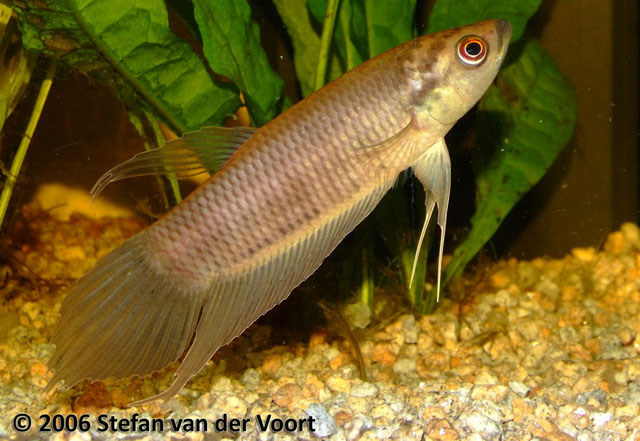
Betta renata 是苏门答腊泥炭沼泽中的口孵斗鱼。喉部清楚的肾形深斑与黑色下颌彼此分离,是识别重点。它需要安静、弱流、有遮蔽的环境,繁殖由雄鱼含卵育仔。
分布与栖息地
已知来自印度尼西亚苏门答腊岛的占碑、南苏门答腊及廖内省,包括因德拉吉里河流域。它与森林泥炭沼泽、相连黑水溪流关系密切。
密集林冠令水面光照很少,腐解物把水染深,矿物含量极低且酸性强。底部多落叶、枝条及沉水根系,某些季节水体消退,鱼可能被迫在潮湿落叶间生存数周。这是恶劣季节的生存方式,不能当作水族箱应主动模拟的干养步骤。
饲养环境
一对或小群至少约 90 × 30 cm 底面积。可用沉木根枝、陶罐和短管组成阴影与藏身处;繁殖者也可采用易清理的裸底。干叶进一步提供遮蔽,分解时的微生物群可补充仔鱼食物。
弱光下可种耐阴水草,并用浮水植物遮光。气动海绵过滤轻柔循环即可。缸盖要严密,水面与盖之间保留温暖湿润空气层,既方便迷鳃呼吸,也防止跳出。
食性与喂食
野外可能捕食昆虫和其他小型无脊椎动物。缸内通常能逐渐识别干粮,仍应定期提供水蚤、丰年虾、红虫等小型活饵或冻饵。小昆虫也可使用,先用鱼粮或植物性食物喂好昆虫再投喂。斗鱼容易因过量喂食而肥胖,控制每次份量。
习性与混养
更适合单种缸,或仅配极温和、适应相同环境的伙伴。体型大、争食快的鱼可能让它紧张或吃不到食物。可以成对或小群饲养,群体会展现更多互动,但需要充分遮蔽。
雌雄区分
成年雄鱼更鲜艳,鳍条较长,头部也更宽。
繁殖
雄性口孵。繁殖缸应有严密盖板和温暖湿润的水面空气,幼鱼迷鳃发育依赖这一条件。长时间求偶后,亲鱼拥抱产卵,可能先有数次不排卵的拥抱。雌鱼拾起受精卵再吐给雄鱼接住,反复直到含卵完成。
含卵雄鱼受惊或经验不足时可能吞卵或提前吐出,因此不要为了繁殖而突然移走原来同缸的雌鱼或其他鱼。孵育约 17–20 天,雄鱼释放已能自由游动的幼鱼。幼鱼可移到育苗空间,也能留在亲鱼身边,但后一方式可能损失部分仔鱼。
仔鱼可立即吃微虫及丰年虾无节幼体,每日 2–3 次少量、多样投喂,避免长期过量依赖丰年虾。少量、规律换水比间隔很久后一次大换水更合适。
补充说明
它属于 waseri 近缘组,喉部肾形斑始终不与下颌深色连接;背鳍和尾鳍膜可有淡纵带,臀鳍没有深色外缘带。迷鳃使它能利用水面空气,但不代替清洁水质。
图片
图片来自 SeriouslyFish,版权归各摄影者所有。
English
Overview
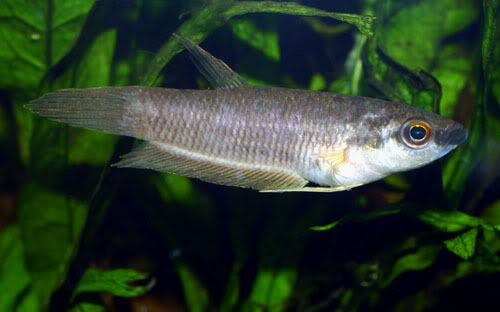
Betta renata is a mouthbrooding fighting fish from Sumatran peat swamps. Its distinct kidney-shaped throat blotch remains separate from the dark lower jaw. Quiet surroundings, gentle circulation, and abundant cover suit this species, whose male carries the brood.
Distribution & habitat
Records come from Jambi, South Sumatra, and Riau in Indonesia, including the Indragiri drainage. It is associated with forest peat swamps and connected black-water streams.
Dense canopy limits light, while decomposing material darkens extremely soft, acidic water. Leaves, branches, and submerged roots cover the bottom. Seasonal drying can force fish to survive in damp leaf litter for weeks; this is a survival response, not a husbandry procedure to reproduce deliberately.
Aquarium setup
Allow a footprint of about 90 × 30 cm for a pair or small group. Wood, roots, pots, and short pipes provide shaded refuges. A bare bottom is an option for easier breeding-tank maintenance. Dried leaves add cover and support microorganisms that supplement fry feeding.
Use shade-tolerant plants and floating cover under subdued light. A gently operated sponge filter is adequate. Fit a secure lid and leave a warm, humid air space above the water for breathing while preventing escape by jumping.
Diet & feeding
Insects and other small invertebrates are probable natural prey. Aquarium fish usually learn to accept dry foods, but should also receive small live or frozen Daphnia, brine shrimp, and bloodworms regularly. Suitable small insects can be fed fish food or plant matter before being offered. Control portions because overfeeding can lead to obesity.
Behaviour & compatibility
A species aquarium is preferable, although very peaceful companions with matching requirements may work. Larger or vigorous fish can intimidate it or monopolize food. Pairs and small groups are possible with ample cover.
Sexual dimorphism
Adult males are brighter, longer-finned, and broader-headed.
Breeding
The male mouthbroods. A close-fitting cover retains the warm humid air needed for normal development of the young's labyrinth organ. Extended courtship leads to embraces, sometimes preceded by several without eggs. The female gathers fertilized eggs and spits them toward the male for collection until his brood is complete.
Stress or inexperience can cause swallowing or premature release, so avoid abruptly removing the female or established companions during incubation. After about 17–20 days, the male releases swimming young. They can be moved for rearing or left with their parents, with some losses possible in the latter arrangement.
Fry immediately take microworms and brine shrimp nauplii. Offer varied small meals two or three times daily without excessive reliance on brine shrimp. Regular small water changes suit them better than occasional large changes.
Notes
Within the waseri group, the separate kidney-shaped throat mark is especially useful. Faint fin-membrane bars and absence of a dark anal-fin edge provide additional clues. Air breathing does not replace clean water.
来源
- https://www.seriouslyfish.com/species/betta-renata(抓取于 2026-10-10)
betta-renata · 文件: data/species/betta-renata.md · 状态: 草稿