Betta raja
概要
| 字段 | 值 |
|---|---|
| 类别 | 鱼 |
| 学名 | Betta raja |
| 分类 | 攀鲈目 Anabantiformes › 丝足鲈科 Osphronemidae › Betta |
| 水体 | 淡水 |
| 原产地 | 印度尼西亚 |
| 成体体长 | 7 cm |
| 饲养难度 | 中等 |
| 最小水体 | 72 L |
| 最小缸长 | 80 cm |
| 群居方式 | 成对 |
| 水流偏好 | 低 |
| 外部数据 | seriouslyfish betta-raja;fishbase 63050 |
| 繁殖方式 | 口孵 |
| 特征 | 会跳缸: 是 |
水质参数
| 参数 | 耐受范围 | 最适范围 | 单位 |
|---|---|---|---|
| 水温 | 22–27 | — | °C |
| pH | 4–7 | — | — |
| 总硬度 | 0–10 | — | dGH |
概述
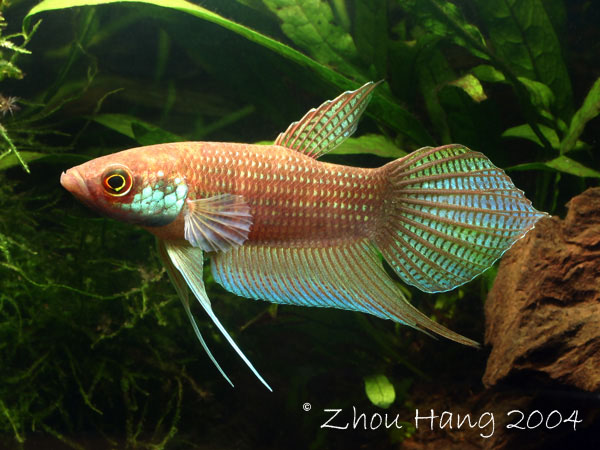
Betta raja 是苏门答腊的雄性口孵斗鱼,成熟雄鱼的腹鳍特别长,臀鳍和尾鳍下缘有黑边。它曾长期被误认成另一近缘种,保留来源和产地标签对繁殖群很重要。
分布与栖息地
特有于印度尼西亚苏门答腊部分地区,记录包括占碑巴当哈里河水系、廖内因德拉吉里河流域,以及南苏门答腊和西苏门答腊部分地点。
生活在低地森林沼泽,清水与黑水均有记录。它可能像多数近缘鱼一样偏好遮阴、安静且有密集岸边植物、落叶或沉木根系的角落,但微生境偏好的这部分仍是推测。
饲养环境
一对或小群至少需要约 80 × 30 cm 的缸底面积。沉木、枝条、陶盆或短管制造阴暗躲藏点,落叶增加遮蔽并滋养微生物,裸底可方便维护。
采用弱光、耐阴水草和浮水植物,海绵过滤保持温和循环。缸盖须可靠以防跳出,水面上保留潮湿空气层及上浮呼吸空间。
食性与喂食
自然可能以昆虫、小型无脊椎动物和浮游动物为主。缸养通常能逐渐接受干粮,仍应搭配水蚤、丰年虾、红虫等活饵或冷冻饵;小昆虫先喂饱再投喂。避免过量投食。
习性与混养
可成对或组群,但更适合单种缸或极温和、条件相近的伙伴。大型、活跃、抢食强的鱼容易造成紧迫并限制其进食。
雌雄区分
雄鱼通常更大,头较宽,头部亮鳞更多,各鳍更延长;成熟雄鱼极长的腹鳍尤其醒目。
繁殖
反复缠抱后分批排卵,卵先由雄鱼臀鳍承接,再由雌鱼拾起吐给雄鱼。雄鱼含孵约 9~16 天后,释放能自由游动的鱼苗。
含卵雄鱼受惊或缺乏经验时可能吞卵、提前吐卵,通常宜让雌鱼和其他鱼留在原位,减少捕捞干扰。幼鱼可另养或随亲鱼成长,但后者可能因捕食损失部分鱼苗。
育苗缸保持温暖潮湿的水面空气。鱼苗可吃微虫和丰年虾无节幼体,每日少量、多样喂 2~3 次,避免大量单一喂丰年虾;规律小量换水,避免突然的大幅替换。
补充说明
正式描述前常被误作相似近亲(Betta fusca)。不同地点种群应保留各自标记,不要只凭相同商品名混合繁殖。
图片
图片来自 SeriouslyFish,版权归各摄影者所有。
English
Overview
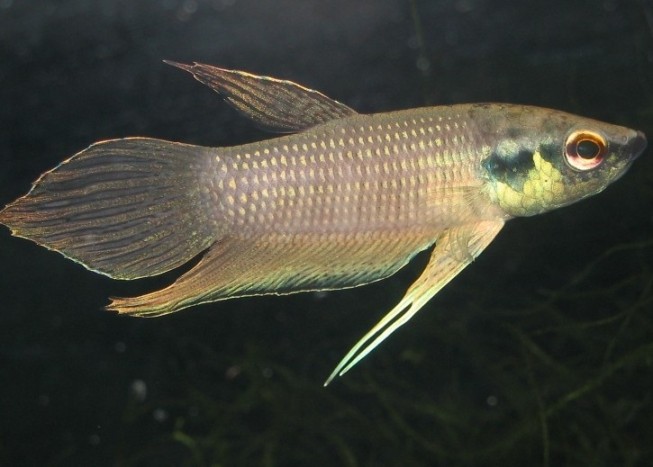
Betta raja is a Sumatran paternal mouthbrooder whose mature males develop exceptionally long pelvic fins and dark edges on the anal and lower caudal fins. Historical misidentification makes provenance particularly useful for breeding stock.
Distribution & habitat
It is endemic to parts of Sumatra, Indonesia, including the Batang Hari system in Jambi, the Indragiri drainage in Riau, and localities in South and West Sumatra.
Recorded habitats are lowland forest swamps with either clear or black water. A preference for shaded, quiet areas with dense marginal vegetation, leaves, or submerged roots is presumed from related fishes rather than fully established for every locality.
Aquarium setup
Provide at least an 80 × 30 cm footprint for a pair or small group. Wood, branches, pots, and short pipes make shaded retreats. Leaves add shelter and microorganisms, while a bare base eases cleaning.
Use subdued light, suitable plants, floating cover, and gentle sponge filtration. Fit a secure lid against jumping and retain humid air and breathing space above the water.
Diet & feeding
Insects, small invertebrates, and zooplankton are considered likely natural prey. Established fish normally accept dry foods, supplemented with water fleas, Artemia, bloodworms, and similar live or frozen items. Feed small insects beforehand and keep overall portions controlled.
Behaviour & compatibility
Pairs and groups are possible, preferably in dedicated accommodation or with exceptionally gentle companions sharing its requirements. Large or competitive feeders can intimidate it and restrict food access.
Sexual dimorphism
Males generally grow larger and broader-headed, with more reflective head scales and longer fins. Extremely long pelvic fins are particularly conspicuous in mature males.
Breeding
Repeated embraces release eggs onto the male's anal fin. The female retrieves and passes them to him for oral incubation. Swimming fry emerge after approximately 9–16 days.
Stress or inexperience may trigger swallowing or premature release, so avoid disrupting the aquarium to catch the female or other fish. Fry can be reared separately or with their parents, although leaving them together can result in some predation.
Maintain warm, humid nursery air. Microworms and Artemia nauplii are suitable initial foods. Offer varied small meals two or three times daily without excessive dependence on the latter, and make regular modest water changes.
Notes
Before its description it was widely confused with Betta fusca. Keep locality labels attached to breeding groups rather than mixing fish merely because their sales names match.
来源
- https://www.seriouslyfish.com/species/betta-raja(抓取于 2026-10-10)
betta-raja · 文件: data/species/betta-raja.md · 状态: 草稿