好斗搏鱼
概要
| 字段 | 值 |
|---|---|
| 类别 | 鱼 |
| 学名 | Betta pugnax |
| 别名 | 印尼搏鱼、大眼抟鱼、印度尼西亚搏鱼、好鬥搏魚、印尼搏魚、大眼摶魚、Macropodus pugnax、Betta bleekeri、Betta macrophthalma、Betta brederi |
| 分类 | 攀鲈目 Anabantiformes › 丝足鲈科 Osphronemidae › Betta |
| 水体 | 淡水 |
| 原产地 | 马来西亚、新加坡 |
| 成体体长 | 7 cm |
| 饲养难度 | 中等 |
| 最小水体 | 72 L |
| 最小缸长 | 80 cm |
| 群居方式 | 成对 |
| 水流偏好 | 低 |
| 外部数据 | seriouslyfish betta-pugnax;fishbase 12042 |
| 特征 | 会跳缸: 是 |
| 繁殖方式 | 口孵 |
水质参数
| 参数 | 耐受范围 | 最适范围 | 单位 |
|---|---|---|---|
| 水温 | 22–28 | — | °C |
| pH | 4–7.5 | — | — |
| 总硬度 | 1–10 | — | dGH |
概述
好斗搏鱼(Betta pugnax)虽名称带“好斗”,实际并非斗鱼中最强势的一类,可成对或小群饲养。它由雄鱼口孵,适合安静、有遮蔽的环境,不能仅凭中文名推断混养表现。
分布与栖息地
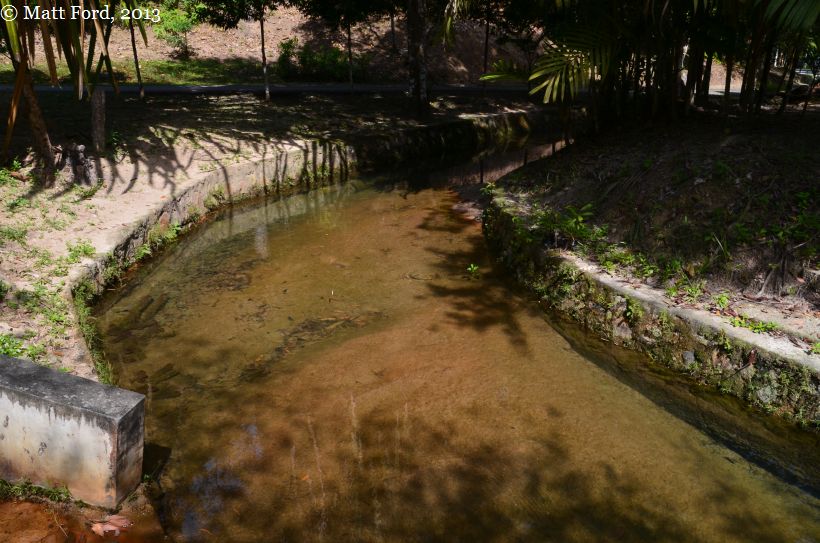
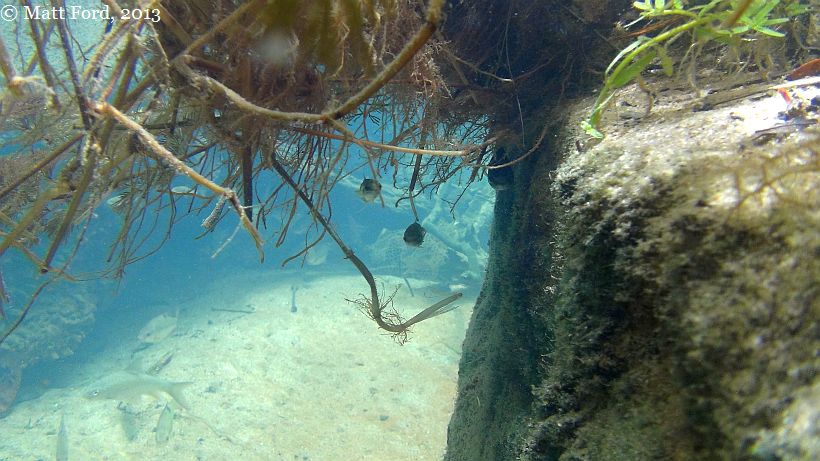
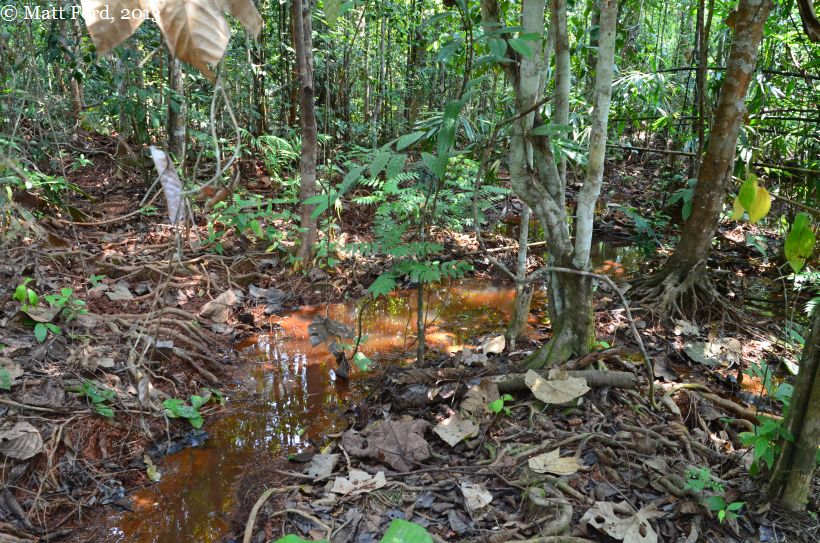
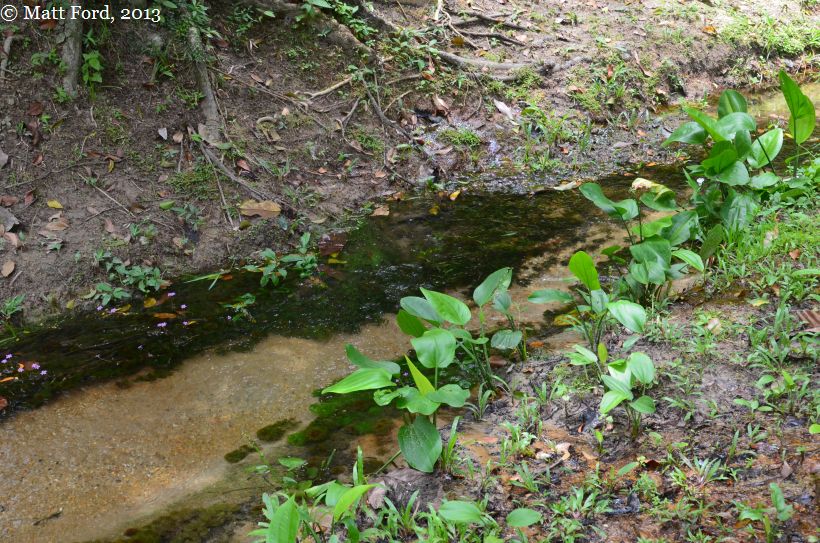
广泛分布于马来半岛多州及新加坡,模式地点是槟城。槟城种群常见于浅而清澈的流水山溪,底部多沙,利用落叶、岸边植物及树根躲藏;柔佛也有植被较多的流水环境记录。
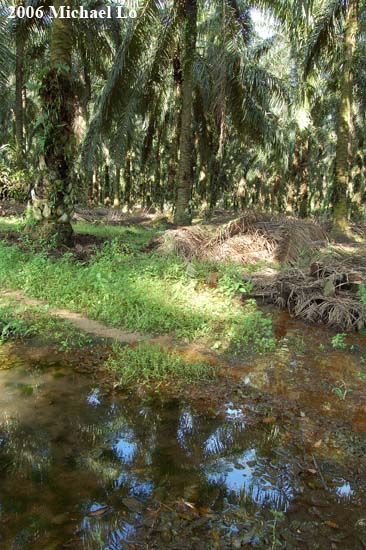
其他种群生活在较静的森林沼泽和支流,林冠浓密,水受腐殖质染色、偏酸且很软。原生林被油棕种植替代后,部分鱼也出现于种植区沟渠。
饲养环境
至少约 80 × 30 cm 底面积可供一对或小群。沉木根枝、花盆和管道构成阴影与退避点,落叶增加遮蔽并滋生微生物供鱼苗补充取食,不必使用天然泥炭。
照明偏暗,耐阴植物和浮水植物均可搭配。采用软水、轻缓过滤,盖好缸盖防跳,并在水面上留湿润空气层。不要因为具有空气呼吸能力就忽略水体维护。
食性与喂食
自然食物可能包括水生及陆生无脊椎动物。通常经适应会吃干粮,仍需经常补充水蚤、丰年虾和红虫等小型活饵或冻饵。避免长期过量投喂。
习性与混养
一般以专门饲养较好,不推荐普通混养缸。若有其他鱼,应非常温和,并满足相似环境需求。它不属于本属攻击性特别强的种类,可成对或群养。
雌雄区分
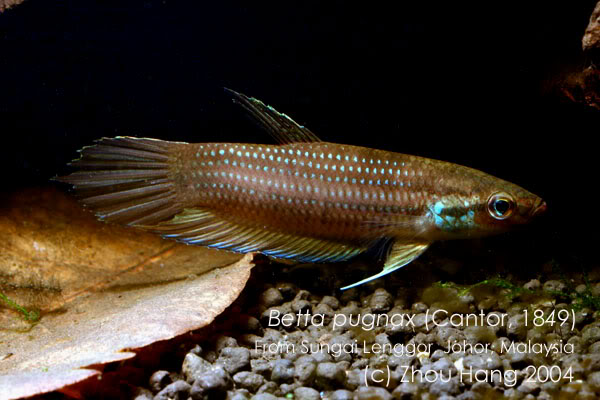
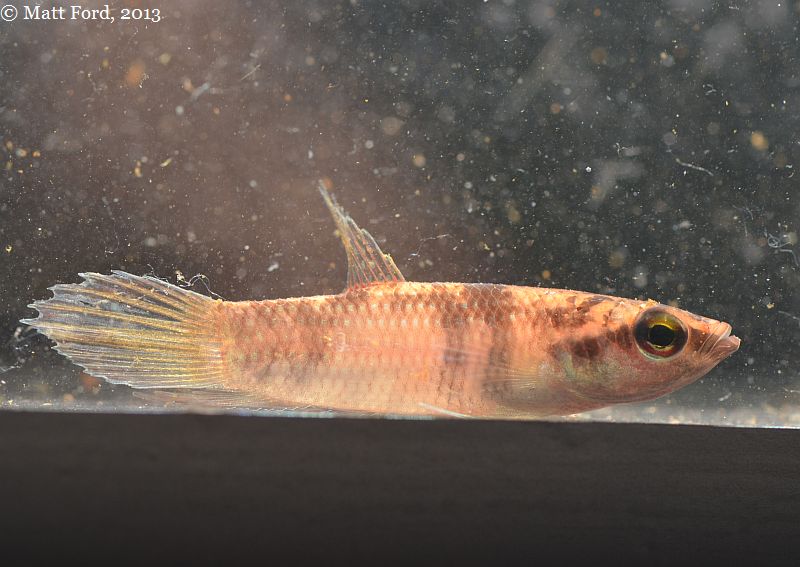
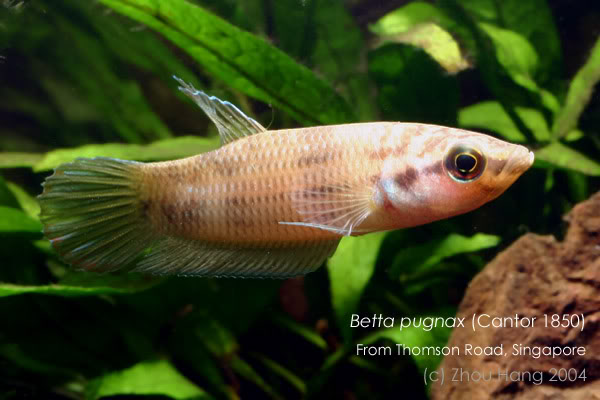
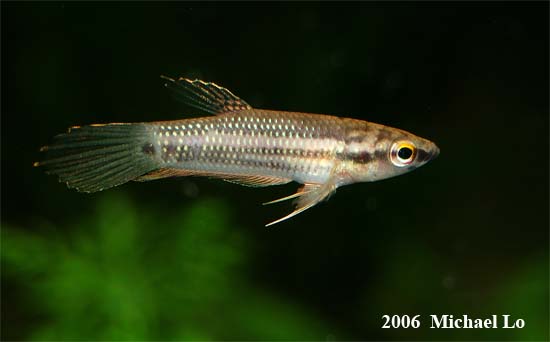
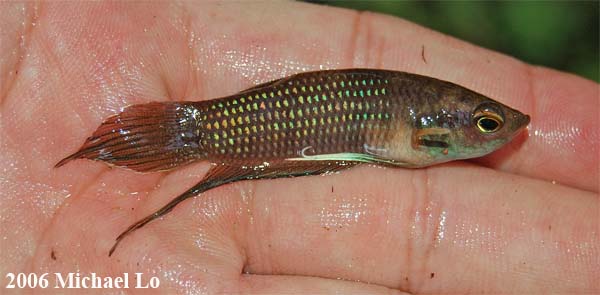
雄鱼通常更大,头较宽,头部虹彩更多,鳍的延伸更明显。
繁殖
专门繁殖缸应配贴合缸盖,保留温暖湿润空气供鱼苗发育。求偶后双方多次环抱,可能先出现几次未产卵动作。受精卵先留在雄鱼臀鳍上,由雌鱼拾入口中、吐回水里,再由雄鱼接住;反复完成全部产卵后由雄鱼含卵。
雄鱼受惊或缺乏经验时可能吞卵或过早吐卵,通常不急于移走雌鱼与原有同伴,避免额外干扰。口孵约 9~16 天后释放自由游动鱼苗。可另养或随亲鱼成长,后者仍可能出现部分捕食损失。
鱼苗可立即吃微虫和丰年虾无节幼体,但大量单一投喂后者有幼斗鱼健康问题的报道。采用少量、规律换水。
补充说明
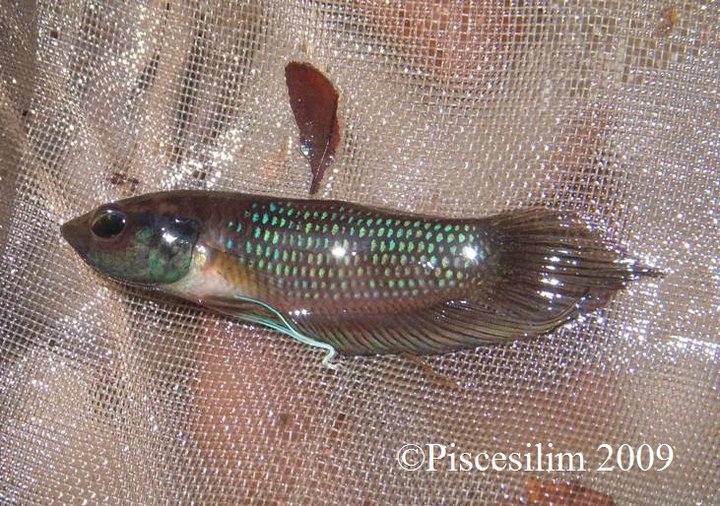
雄鱼鳃盖有蓝色虹彩,尾鳍较宽、呈披针状并有横纹,臀鳍近边缘处带红色条带及黑边。这些特征有助于和近似口孵斗鱼区分。迷鳃器官支持辅助空气呼吸。
图片
图片来自 SeriouslyFish,版权归各摄影者所有。
English
Overview
Despite its combative name, Betta pugnax is not among the most aggressive bettas. It can be kept as a pair or small group and reproduces through paternal mouthbrooding. A quiet aquarium with ample cover is preferable to judging its needs from the name alone.
Distribution & habitat
The species occurs through much of Peninsular Malaysia and in Singapore; Penang is the type locality. Penang populations occupy shallow, clear flowing streams with sandy floors, sheltering among leaves, roots, and overhanging plants. Vegetated streams are also used in Johor.
Other populations live in quieter forest swamps and tributaries, where dense shade, humic staining, acidity, and low mineral content are typical. Some survive in plantation ditches following conversion of forest to oil palm.
Aquarium setup
Provide at least approximately 80 × 30 cm of floor space for a pair or small group. Roots, branches, pots, and tubes create sheltered areas. Leaves add cover and microbial growth that can supplement fry feeding; natural peat is unnecessary.
Use subdued light with floating and shade-tolerant plants. Soft water and gentle filtration are appropriate. Secure the lid to prevent jumping while retaining humid air above the surface. Air breathing does not replace normal water maintenance.
Diet & feeding
Aquatic and terrestrial invertebrates are likely wild foods. Captive fish usually learn to eat dry preparations, with regular small live or frozen Daphnia, Artemia, and bloodworms providing variety. Avoid persistent overfeeding.
Behaviour & compatibility
Dedicated keeping generally suits it better than a standard community. Companions, if used, must be very peaceful and share compatible environmental needs. Pairs or groups are possible because this is not one of the genus's more forceful species.
Sexual dimorphism
Males tend to be larger, with broader heads, more head iridescence, and greater fin extension.
Breeding
A dedicated breeding tank should retain warm, moist air under a close-fitting cover. Courtship leads to repeated embraces, sometimes with several attempts before eggs appear. Fertilized eggs rest briefly on the male's anal fin, are collected by the female, and are released into the water for him to catch. He retains the entire brood as this sequence repeats.
A disturbed or inexperienced male may swallow eggs or release them too early. Leaving the female and existing companions undisturbed is usually preferable to disruptive removal. Free-swimming fry emerge after around 9–16 days. They can be moved to separate accommodation or left with the adults, though some may be eaten in the latter arrangement.
Microworms and Artemia nauplii can be taken immediately. Excessive reliance on Artemia has been associated with problems in young bettas. Maintain water quality through small, regular changes.
Notes
Blue gill-cover iridescence, a broadly lance-shaped tail with crossbars, and a reddish band inside the dark anal-fin edge help identify males. The labyrinth organ permits supplementary air breathing.
来源
- https://www.seriouslyfish.com/species/betta-pugnax(抓取于 2026-10-10)
betta-pugnax · 文件: data/species/betta-pugnax.md · 状态: 草稿