仙抟鱼
概要
| 字段 | 值 |
|---|---|
| 类别 | 鱼 |
| 学名 | Betta persephone |
| 别名 | 仙摶魚 |
| 分类 | 攀鲈目 Anabantiformes › 丝足鲈科 Osphronemidae › Betta |
| 水体 | 淡水 |
| 原产地 | 马来西亚 |
| 成体体长 | 3.5 cm |
| 饲养难度 | 中等 |
| 最小水体 | 41 L |
| 最小缸长 | 45 cm |
| 群居方式 | 成对 |
| 水流偏好 | 低 |
| 外部数据 | seriouslyfish betta-persephone;fishbase 52394 |
| 特征 | 会跳缸: 是 |
| 繁殖方式 | 吐泡筑巢 |
水质参数
| 参数 | 耐受范围 | 最适范围 | 单位 |
|---|---|---|---|
| 水温 | 22–28 | — | °C |
| pH | 4–6 | — | — |
| 总硬度 | 1–5 | — | dGH |
概述
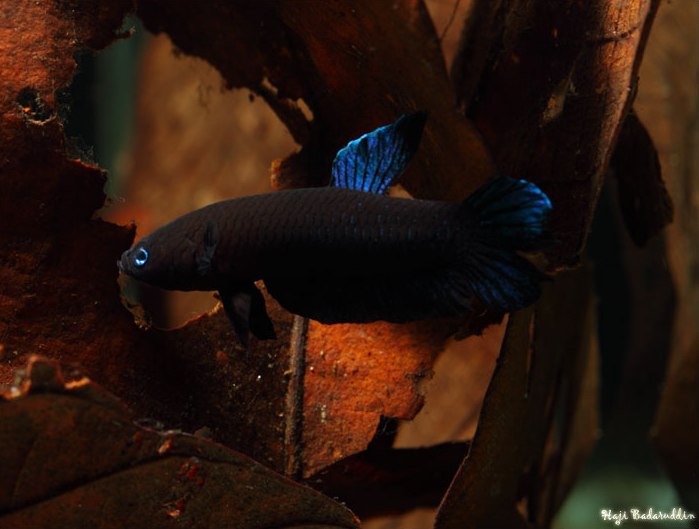
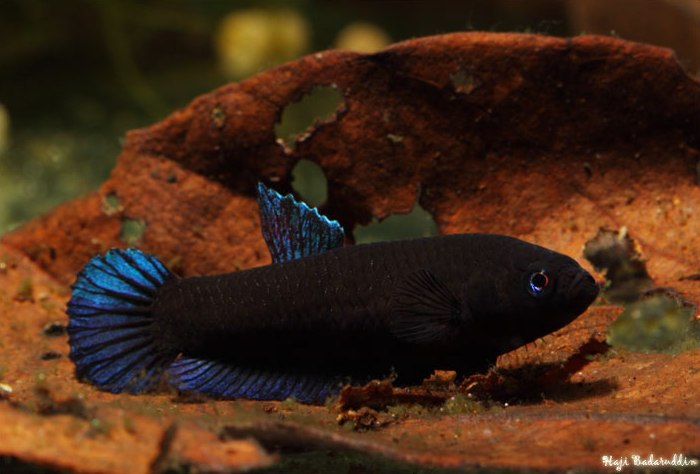
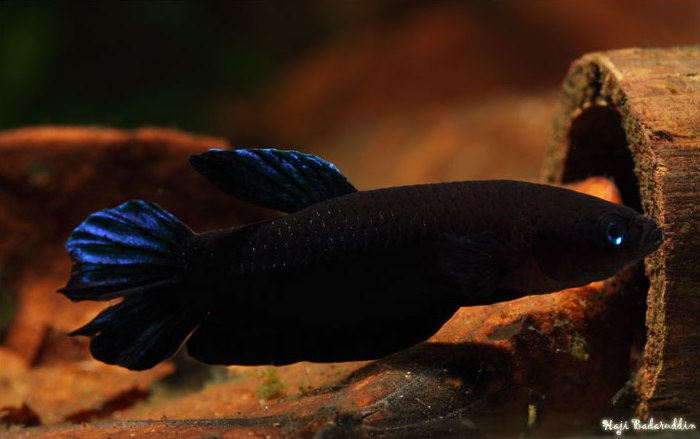
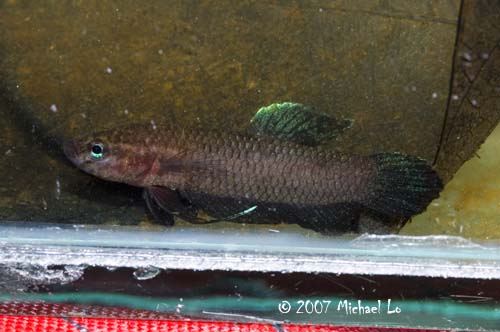
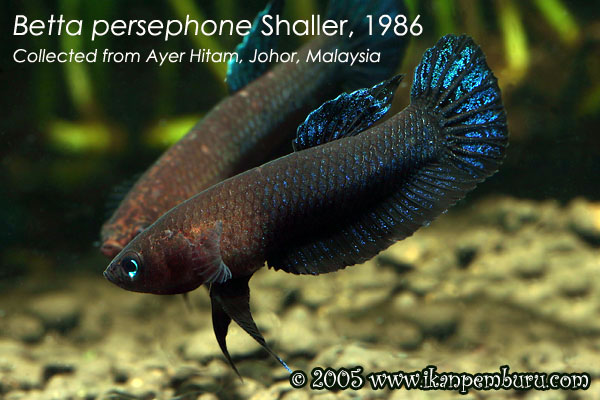
仙抟鱼(Betta persephone)是暗色的小型泡巢斗鱼,身体比近似种稍高,腹鳍偏黑至暗红。它对生境专一,需要很软的酸性水、阴暗环境与温和水流,更适合专门管理的单养缸。
分布与栖息地
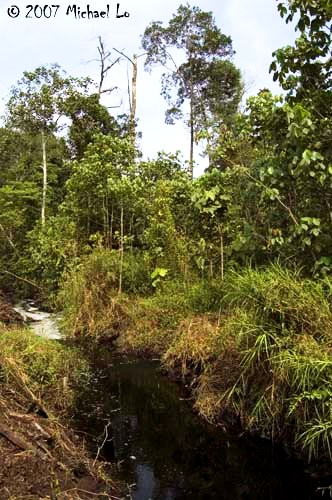
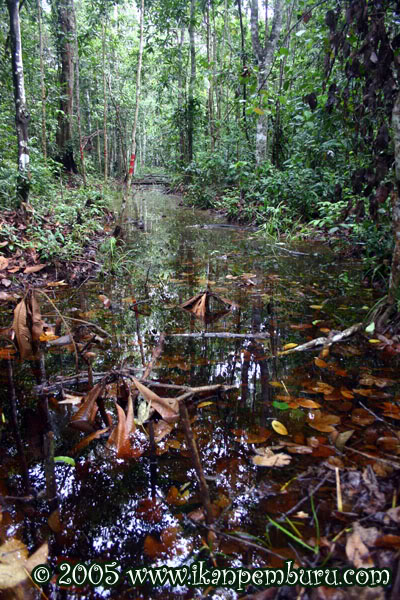
似乎仅见于马来半岛柔佛州西南部,地点包括 Ayer Hitam、Muar 和 Kluang 周围林地。栖息于泥炭沼泽森林及相连溪流,浓密林冠遮光,水中腐殖质使其颜色很深,矿物含量很低,底部有落叶、枝木与沉水树根。
季节性缺水时,鱼可能在潮湿落叶中维持数周。大面积油棕种植使原生境发生改变,剩余适宜沼泽林已十分零碎。
饲养环境
一对或遮蔽充分的小群,至少需要约 45 × 30 cm 底面积。沉木根枝、花盆和管道可构成阴影与退避点,干落叶还能滋生微生物,为鱼苗提供辅助食物。自然泥炭不是必需品。
用较暗照明,配耐阴水草或浮水植物。水需酸性、极低碳酸盐硬度及很低总硬度,必要时采用反渗透水等软水来源。过滤轻缓即可。缸盖需可靠防跳,水面上留湿润空气层供呼吸。
食性与喂食
自然食物可能是小型水生和陆生无脊椎动物。通常经适应可吃干粮,但仍应经常提供水蚤、丰年虾、红虫等小型活饵或冻饵,注意避免过量造成肥胖。
习性与混养
不适合普通混养,通常单养更稳妥。有其他同伴时,必须足够温和且适应同样环境。躲藏处多时可养群体,繁殖则优先单独安置一对。
雌雄区分
成熟雄鱼颜色更浓,鳍的延伸更明显。
繁殖
无需预先把亲鱼分开,但需给雌鱼丰富躲藏处。雄鱼可在管道、容器、宽叶下或浮水植被间筑巢,未完工前通常会驱赶靠近的雌鱼。雌鱼准备产卵时颜色变淡,体侧显暗纹,双方在巢下环抱并分批产卵。雌鱼以腹鳍接卵,雄鱼将卵送入泡巢,雌鱼也拾回散卵。
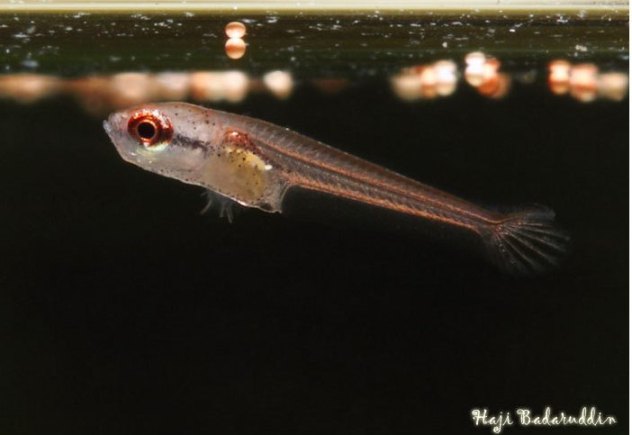
常见卵数不足 20 枚,也可能达到约 50 枚。双亲通常可留缸并共同参与照料。卵约 24~72 小时孵化,幼体再留巢约 3~4 天吸收卵黄,掉落的幼体会被雄鱼捡回。自由游动后雄鱼逐渐不再照料,亲鱼通常不会吃自己的鱼苗。
鱼苗需要缸盖下温暖湿润的空气,以便迷鳃器官正常发育。开口可用微虫和丰年虾无节幼体,不过大量单一喂丰年虾有幼斗鱼健康问题的报道。换水宜少量规律进行。
补充说明
与红鳍抟鱼(Betta miniopinna)相比,本种体形不那么修长,头部背缘较凸,腹鳍不呈持续鲜红色。迷鳃器官使它能辅助呼吸空气。
图片
图片来自 SeriouslyFish,版权归各摄影者所有。
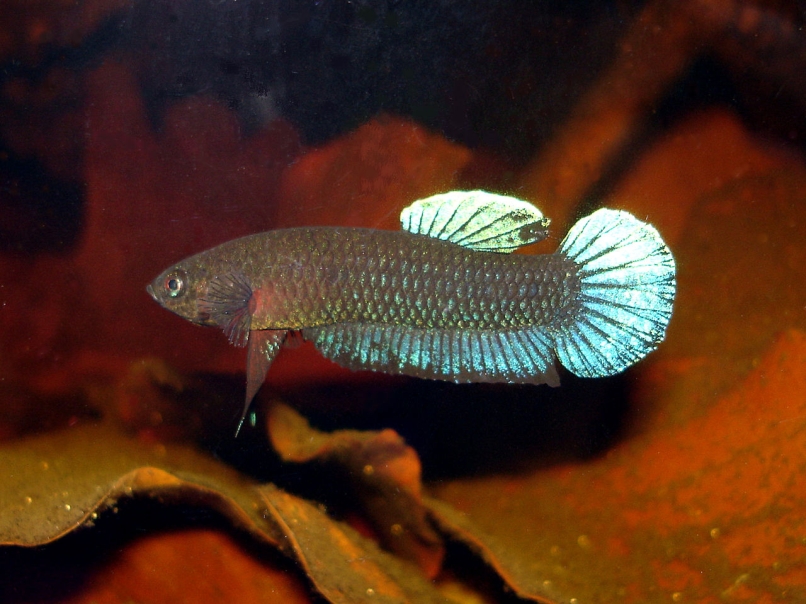
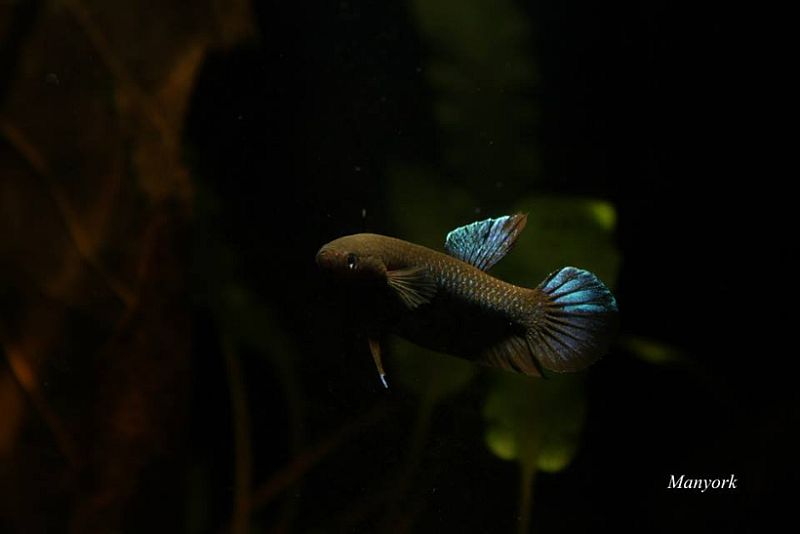
English
Overview
Betta persephone is a dark, small bubble-nesting betta with a relatively deep body and dusky to dull-red pelvic fins. Its specialized habitat calls for very soft acidic water, subdued lighting, and a sheltered aquarium with little current.
Distribution & habitat
It appears restricted to forest around Ayer Hitam, Muar, and Kluang in southwestern Johor, Peninsular Malaysia. Peat-swamp forest and connected streams provide dense shade, dark humic water with few dissolved minerals, and accumulations of leaves, wood, and roots.
During seasonal water loss, fish may persist in damp litter for weeks. Conversion to oil-palm plantations has fragmented the remaining suitable swamp forest.
Aquarium setup
Allow at least about 45 × 30 cm of floor space for a pair or a well-sheltered small group. Wood, pots, and tubes offer shaded retreats. Dried leaves add cover and support microorganisms that can supplement fry feeding; natural peat is unnecessary.
Use dim lighting with floating or shade-tolerant plants. Acidic water with negligible carbonate hardness and very low general hardness may require reverse-osmosis preparation. Gentle filtration is sufficient. Fit a secure lid against jumping while leaving humid air above the water for breathing.
Diet & feeding
Small aquatic and terrestrial invertebrates are likely natural food. Dry products are usually accepted after recognition, but regularly offer small live or frozen Daphnia, Artemia, and bloodworms. Avoid excessive intake and obesity.
Behaviour & compatibility
Dedicated keeping is usually preferable to a conventional community. Any other species must be very peaceful and compatible with the same conditions. Groups are possible with plentiful cover, while a separate pair is preferable for breeding.
Sexual dimorphism
Adult males become more intensely colored and develop longer fin extensions.
Breeding
Prior separation is unnecessary, but female retreats are essential. The male may build under a leaf, inside a tube or container, or among floating plants. He generally excludes the female until construction ends. A receptive female becomes pale with dark flank bars. Repeated embraces release small batches of eggs, which she catches with her pelvic fins. The male transfers them to the nest, and she retrieves loose eggs.
Broods often contain fewer than 20 eggs, though approximately 50 is possible. Both parents can usually remain and assist. Eggs hatch in about 24–72 hours; larvae then stay in the nest for another 3–4 days while absorbing yolk. The male returns fallen larvae before losing interest at free swimming. The adults usually leave their offspring unharmed.
Warm, humid air beneath a close-fitting cover supports labyrinth development. Microworms and Artemia nauplii are suitable early foods, but excessive Artemia feeding has been associated with health problems in young bettas. Change small amounts of water regularly.
Notes
Compared with Betta miniopinna, it is less elongated, has a more convex upper head outline, and lacks consistently bright-red pelvic fins. Its labyrinth organ enables supplementary air breathing.
来源
- https://www.seriouslyfish.com/species/betta-persephone(抓取于 2026-10-10)
betta-persephone · 文件: data/species/betta-persephone.md · 状态: 草稿