佩氏搏鱼
概要
| 字段 | 值 |
|---|---|
| 类别 | 鱼 |
| 学名 | Betta patoti |
| 别名 | 佩氏搏魚 |
| 分类 | 攀鲈目 Anabantiformes › 丝足鲈科 Osphronemidae › Betta |
| 水体 | 淡水 |
| 原产地 | 印度尼西亚 |
| 成体体长 | 10 cm |
| 饲养难度 | 中等 |
| 最小水体 | 72 L |
| 最小缸长 | 80 cm |
| 群居方式 | 成对 |
| 水流偏好 | 低 |
| 外部数据 | seriouslyfish betta-patoti;fishbase 25134 |
| 特征 | 会跳缸: 是 |
| 繁殖方式 | 口孵 |
水质参数
| 参数 | 耐受范围 | 最适范围 | 单位 |
|---|---|---|---|
| 水温 | 21–27 | — | °C |
| pH | 4–7 | — | — |
| 总硬度 | 0–10 | — | dGH |
概述
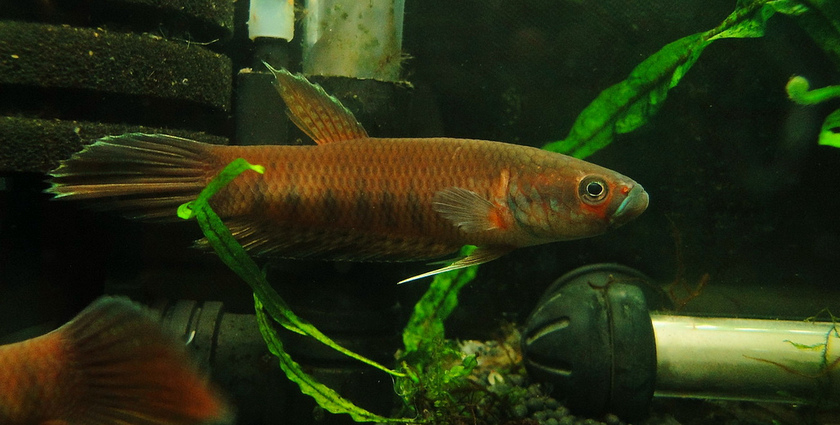
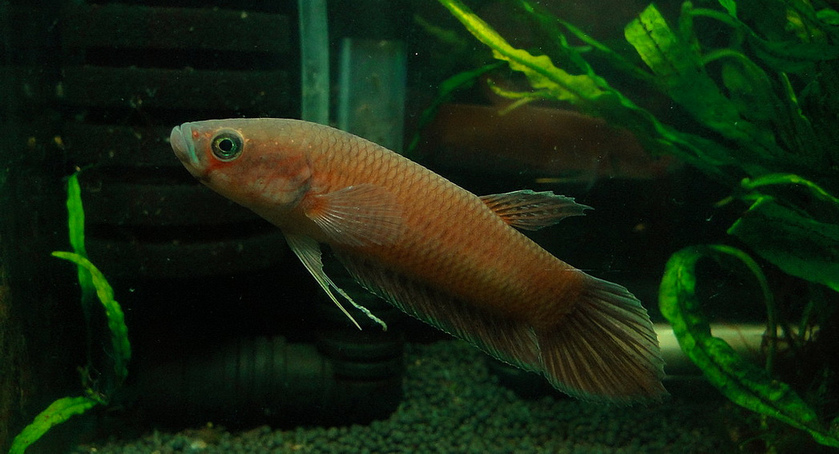
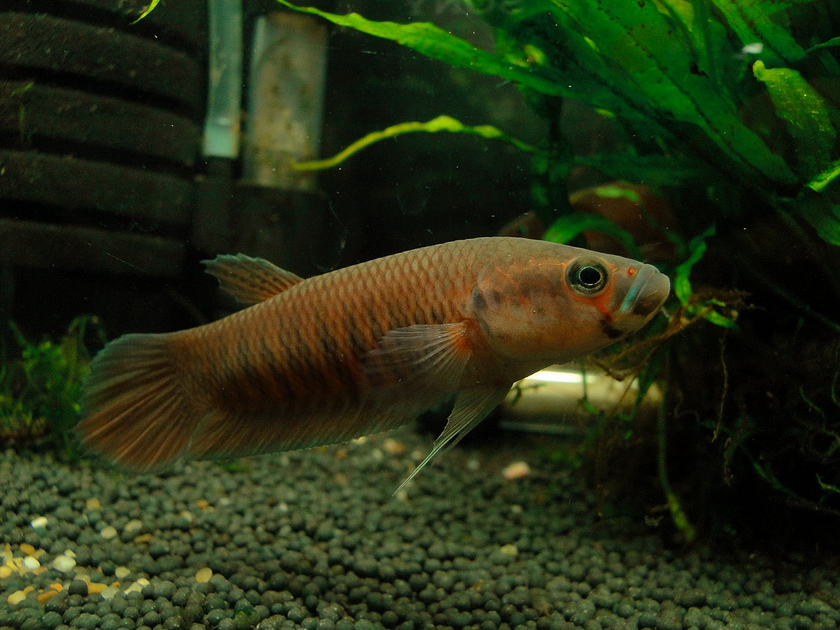
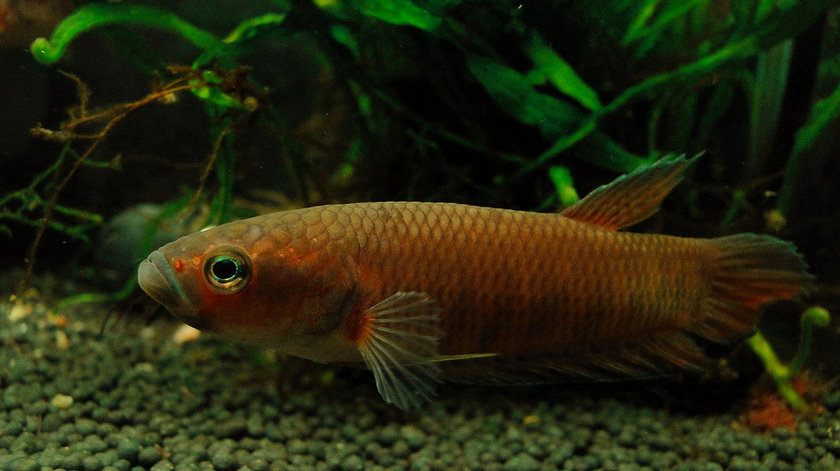
佩氏搏鱼(Betta patoti)是体形较大的父系口孵斗鱼,由雄鱼含卵育幼。不同产地有不同体色,下半身的暗色竖带是其特征之一。建立相容配对、减少含卵雄鱼受惊,是繁殖管理的关键。
分布与栖息地
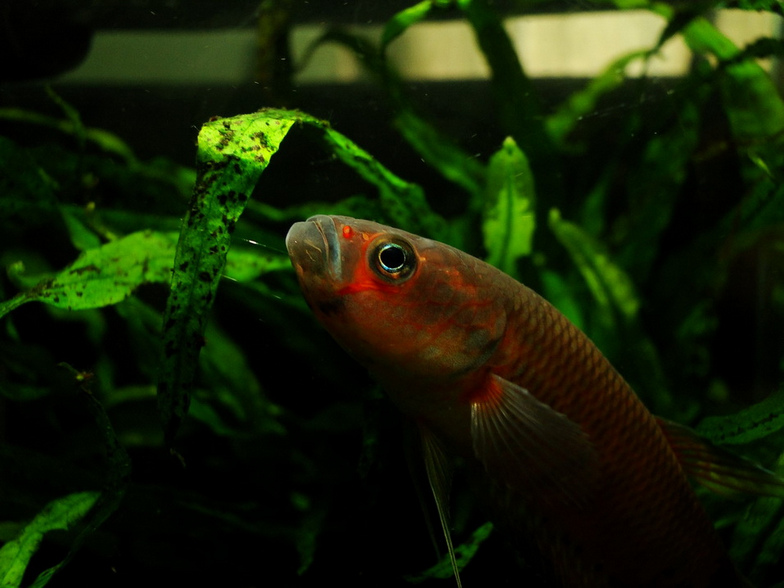
来自印度尼西亚婆罗洲东加里曼丹,模式地点是巴厘巴板附近的 Mangar 河,分布似乎向北延伸至 Kutai Kartanegara。巴厘巴板一带个体偏黑色竖带,较北种群更偏红;据称来自 Samarinda 附近的类型还带绿色虹彩。
饲养环境
一对至少需要约 80 × 30 cm 底面积。可用完整布景,也可为清洁方便采用裸底;沉木、根枝、花盆和管道提供阴影及躲藏处。落叶可增加隐蔽,并滋生供鱼苗取食的微生物。
灯光偏暗,耐阴水草和浮水植物有助于遮光。过滤水流宜轻缓,气动海绵过滤即可。缸盖要牢靠,水面上留湿润空气层,兼顾防跳和空气呼吸。
食性与喂食
野外可能捕食昆虫、小型无脊椎动物及浮游动物。人工个体通常能学会吃干粮,仍应搭配水蚤、丰年虾、红虫等活饵或冻饵,大个体偶尔可吃蚯蚓。勿因体型较大而过量投喂。
习性与混养
不适合普通混养缸,体型大或过度活跃的鱼可能使它紧张并抢食。以单养为优先,若混养,应选温和且环境需求相近的小鱼。繁殖宜成对,空间足够时可养群体。
雌雄区分
雄鱼通常更大、颜色更鲜明,头部更宽,鳍也更为延伸。
繁殖
尽量让鱼在群体中自然配对,任意组合一雄一雌未必相容,弱势鱼甚至可能死亡。稳定配对在空间充分时一般少有冲突。繁殖缸需贴合缸盖,保留温暖湿润空气供鱼苗迷鳃器官发育。
雄鱼张口展鳍接近雌鱼,求偶可持续较久。双方环抱,分批产卵,有时会先经历几次未真正产卵的动作。两条鱼都可能拾卵,雌鱼拾到的卵会吐给雄鱼,最终由雄鱼全部含入口中。
含卵后尽量减少干扰,雄鱼受惊可能在数日后吞卵。是否移出雌鱼须看实际情况:移鱼本身会惊动雄鱼,但小缸中雌鱼也可能持续骚扰或吃鱼苗。口孵约 12~17 天,释放的幼鱼已能自由游动,单独养、随父鱼或随双亲养都有成功例子。
鱼苗通常已达约 5 mm,可吃微虫和丰年虾无节幼体。每天少量多次、食物多样,避免过饱导致肠道问题;每天约 5%~10% 的小换水有助于控制有机废物。
补充说明
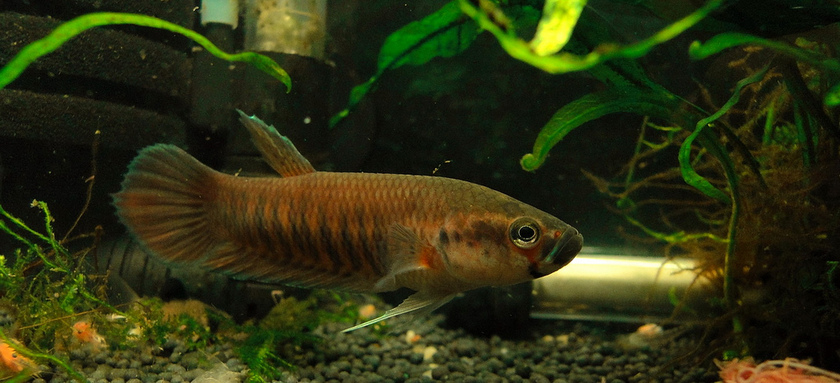
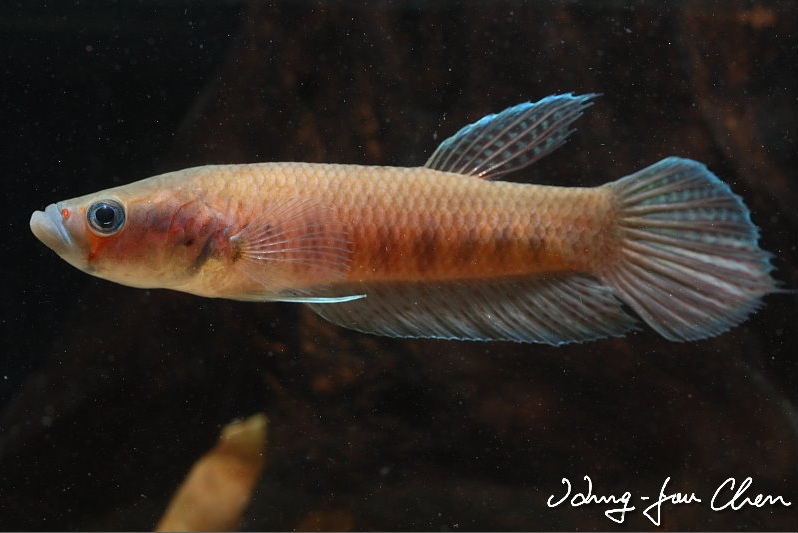
本种属于 Betta unimaculata 近缘组,下半身通常有 10~14 条暗竖纹,尾鳍呈披针状。迷鳃器官可辅助从空气中吸氧。
图片
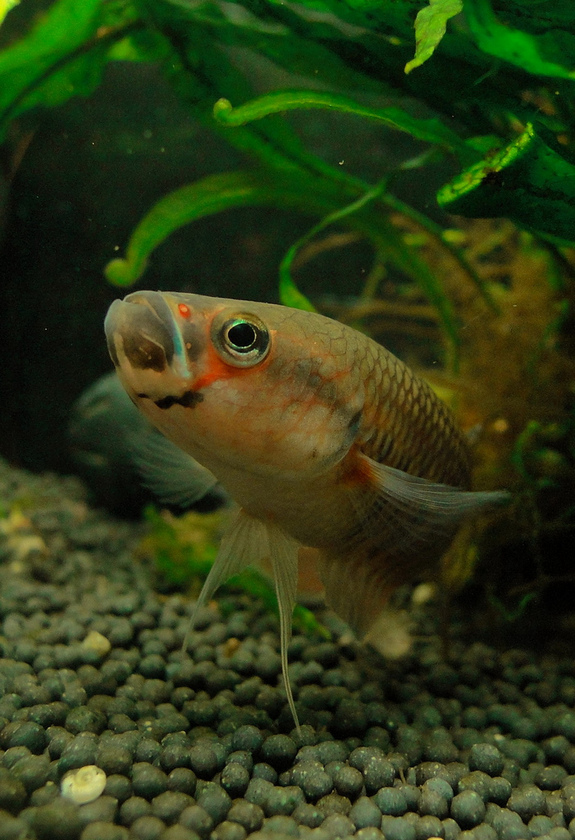
图片来自 SeriouslyFish,版权归各摄影者所有。
English
Overview
Male Betta patoti incubate eggs in the mouth. This relatively large betta varies in color between localities and shows dark bars on the lower body. Successful reproduction depends particularly on a compatible pair and an undisturbed brooding male.
Distribution & habitat
It comes from East Kalimantan in Indonesian Borneo. The type locality is the Mangar near Balikpapan, with the range apparently extending north into Kutai Kartanegara. Balikpapan fish tend toward blackish bars, while northern populations are redder. A form reportedly from near Samarinda shows green iridescence.
Aquarium setup
A pair needs a footprint of at least approximately 80 × 30 cm. Furnished tanks or easily cleaned bare-bottom breeding setups are both possible. Roots, branches, pots, and tubes create shade and retreats. Dried leaves add cover and support microbial growth useful as supplementary fry food.
Subdued light, shade-tolerant plants, and floating vegetation suit the fish. Keep filtration gentle, for example with a slowly running sponge filter. A secure lid prevents jumping, while a gap above the water retains humid breathing air.
Diet & feeding
Insects, small invertebrates, and zooplankton are likely wild prey. Dry foods are generally accepted after recognition, but regular live or frozen Daphnia, Artemia, and bloodworms remain useful. Large individuals can occasionally receive an earthworm. Avoid excessive feeding.
Behaviour & compatibility
Large or highly active companions may intimidate this fish and monopolize food. A dedicated aquarium is preferable to a standard community; any companions should be mild and share its requirements. Keep a pair for breeding, or a group only with ample room.
Sexual dimorphism
Males tend to be larger and more colorful, with broader heads and longer fin extensions.
Breeding
Let partners select each other where possible. An arbitrarily chosen male and female may prove incompatible, sometimes fatally for the weaker fish. Established pairs generally coexist well when space is sufficient. Close-fitting covers preserve the warm, moist air required by developing fry.
Courtship can be lengthy, involving gaping and fin display before repeated embraces. Some initial embraces produce no eggs. Both adults may collect the fertilized eggs, with those taken by the female passed into the male's mouth until he holds the full brood.
Minimize disturbance afterward. Males may swallow eggs after several days, particularly when unsettled. Removing the female is a judgment call: capture can disturb him, while leaving her in a small tank may expose him to harassment or the fry to predation. Incubation lasts about 12–17 days. Young have been raised separately, with the male, or with both parents.
Released fry are usually at least about 5 mm and accept microworms and Artemia nauplii. Give small, varied meals several times daily; overeating readily causes intestinal problems. Daily changes of around 5–10% help prevent waste accumulation.
Notes
Within the Betta unimaculata group, this species is characterized in part by 10–14 dark lower-body bars and a lance-shaped tail. A labyrinth organ supports supplementary air breathing.
来源
- https://www.seriouslyfish.com/species/betta-patoti(抓取于 2026-10-10)
betta-patoti · 文件: data/species/betta-patoti.md · 状态: 草稿