Betta ocellata
概要
| 字段 | 值 |
|---|---|
| 类别 | 鱼 |
| 学名 | Betta ocellata |
| 分类 | 攀鲈目 Anabantiformes › 丝足鲈科 Osphronemidae › Betta |
| 水体 | 淡水 |
| 原产地 | 印度尼西亚、马来西亚 |
| 成体体长 | 9 cm |
| 饲养难度 | 中等 |
| 最小水体 | 72 L |
| 最小缸长 | 80 cm |
| 群居方式 | 成对 |
| 水流偏好 | 低 |
| 外部数据 | seriouslyfish betta-ocellata;fishbase 56315 |
| 繁殖方式 | 口孵 |
| 特征 | 会跳缸: 是 |
水质参数
| 参数 | 耐受范围 | 最适范围 | 单位 |
|---|---|---|---|
| 水温 | 21–25 | — | °C |
| pH | 5.5–7.5 | — | — |
| 总硬度 | 0–10 | — | dGH |
概述
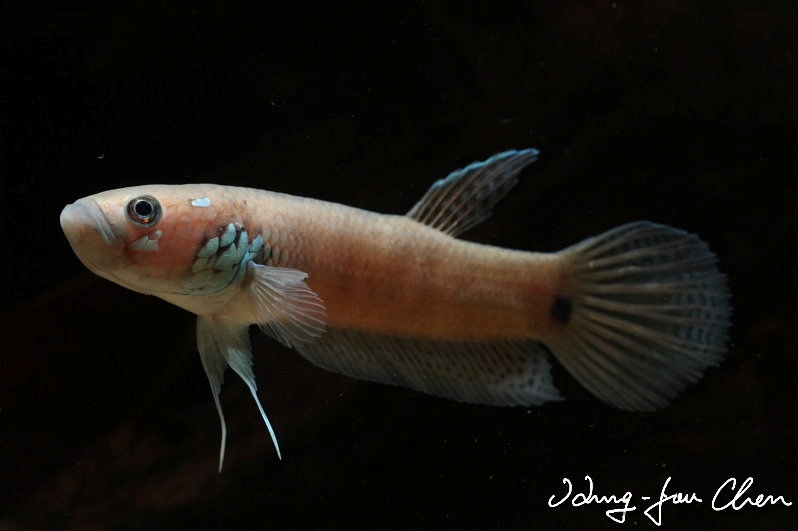
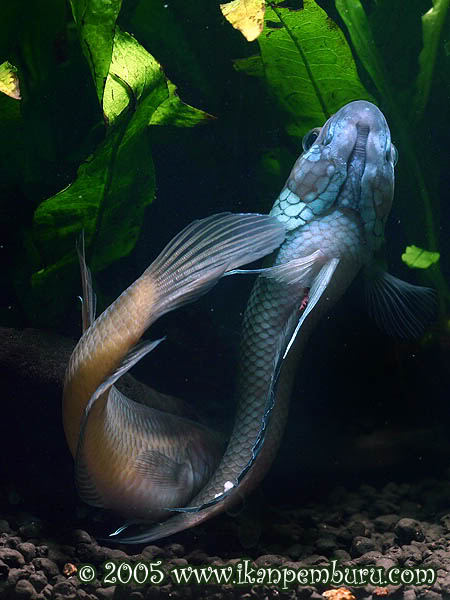
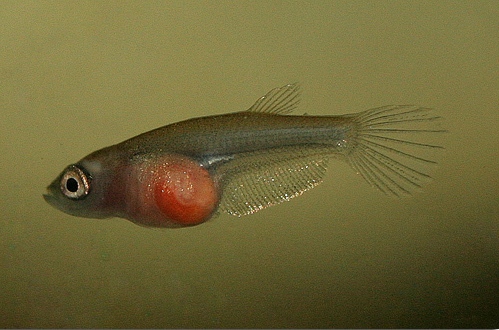
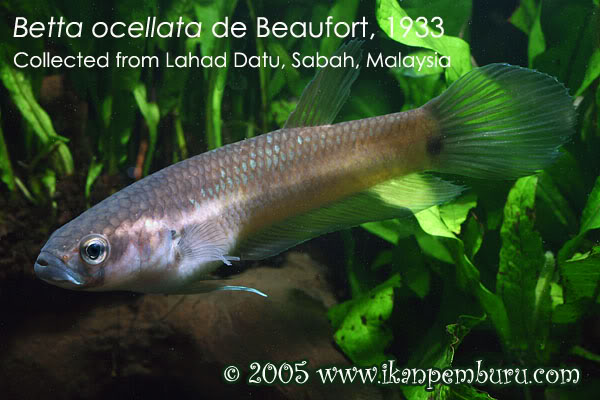
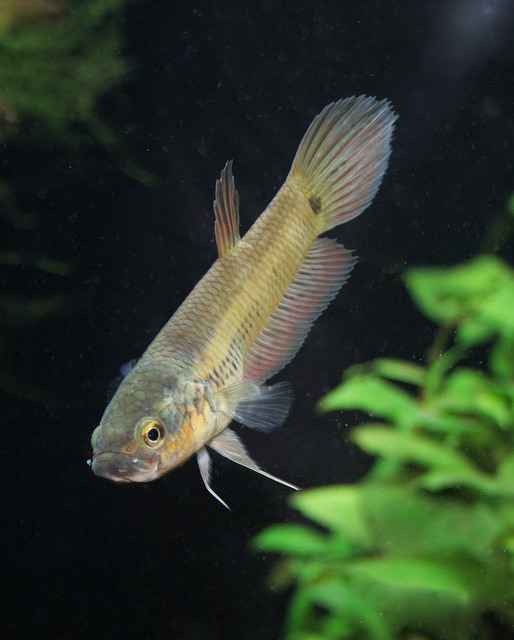
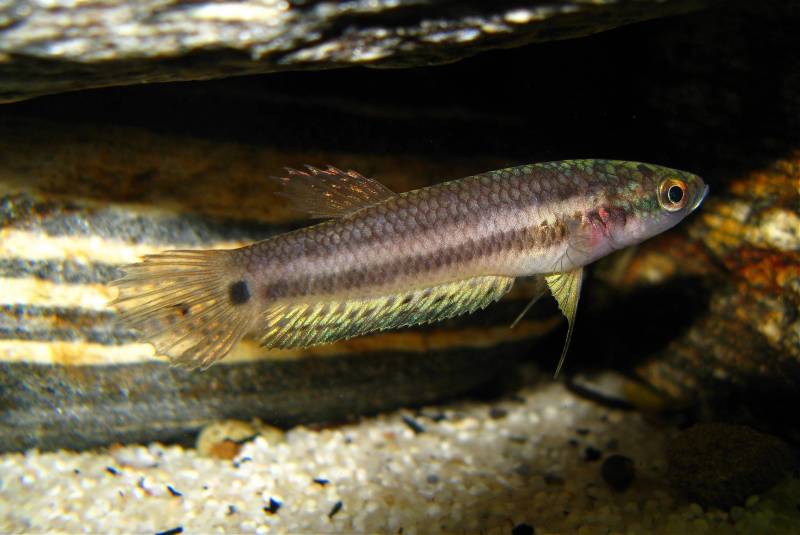
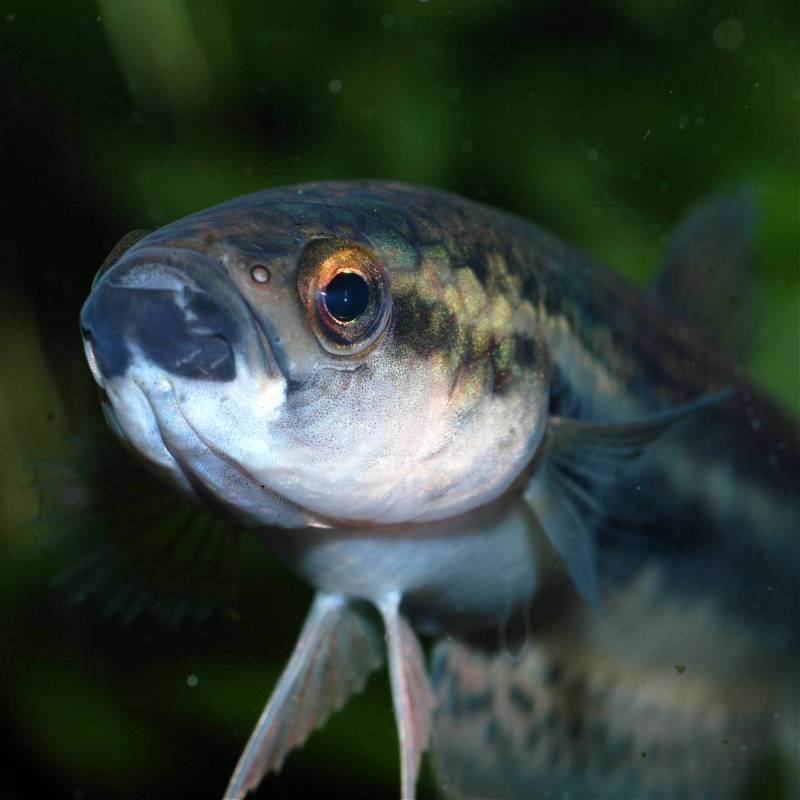
Betta ocellata 是体形较大的雄性口孵斗鱼,头部略尖、呈锥形。不同产地个体颜色有差异,保存采集地标签比仅按蓝绿或黄褐体色认种可靠。
分布与栖息地
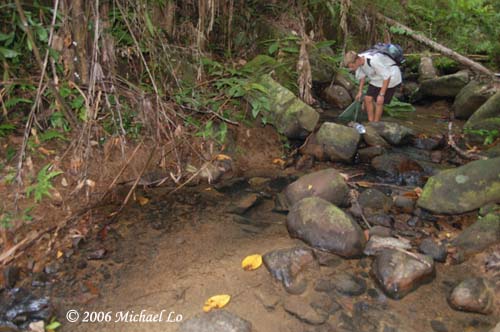
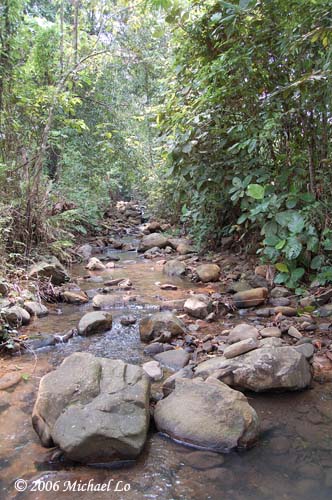
分布涉及马来西亚婆罗洲东北部沙巴,以及印度尼西亚东加里曼丹北端的瑟布库河流域。已见于清澈溪流、源头孤立水潭、较浑浊森林溪流、牛轭湖和油棕种植区水塘。
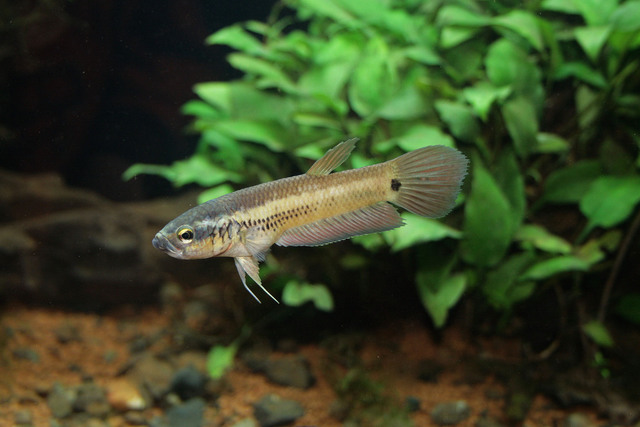
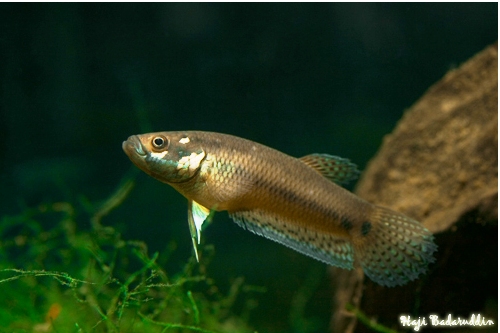
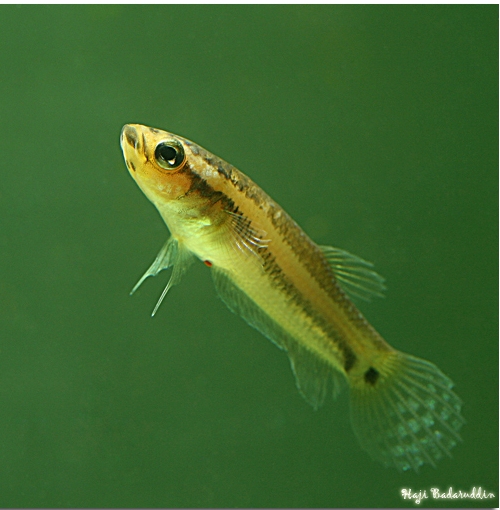
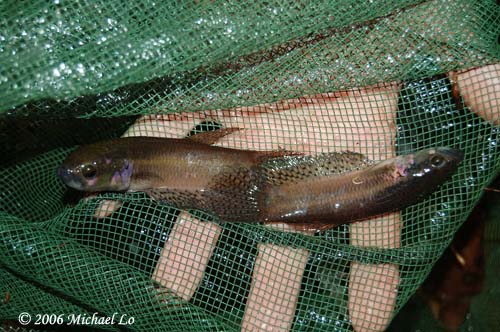
即使周围有流水,也多躲在慢流或静水潭,或岸边水草、落叶和树根之间。清水采点个体偏蓝绿,浑水个体偏黄褐;高处水潭可能通过跳跃进入的解释仍属推测。
饲养环境
一对至少需要约 80 × 30 cm 的缸底面积。沉木、枝条、陶盆或短管制造阴暗藏身点,落叶增加遮蔽和微生物,裸底也可方便清理。
弱光、耐阴水草和浮水植物较合适,过滤维持温和循环。缸盖防跳,保留水面潮湿空气层与呼吸通道,不要将缸注满到盖下。
食性与喂食
自然可能主要吃昆虫、小型无脊椎动物和浮游动物。缸养通常可适应干粮,搭配水蚤、丰年虾、红虫等活饵或冷冻饵,大个体偶尔可吃蚯蚓。控制食量,幼鱼更应避免过喂。
习性与混养
以单种饲养较合适,繁殖用相容配对;足够大缸也可组群。大型、活跃或抢食强的伙伴容易压制它。自然择偶通常比任意组合雌雄更可靠,随机配对可能造成弱者受伤甚至死亡,配对后空间不足也会引发攻击。
雌雄区分
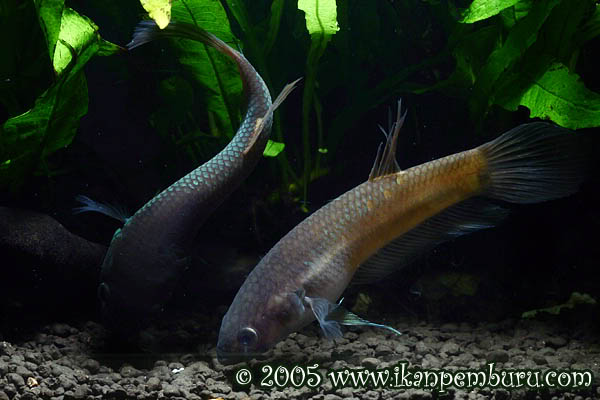
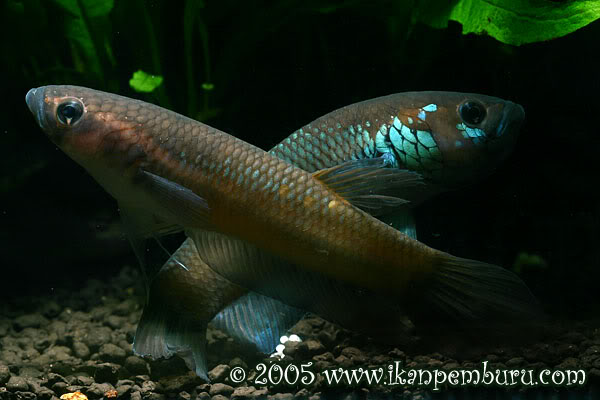
雄鱼通常较大、颜色较强,头更宽,鳍条延伸更明显。
繁殖
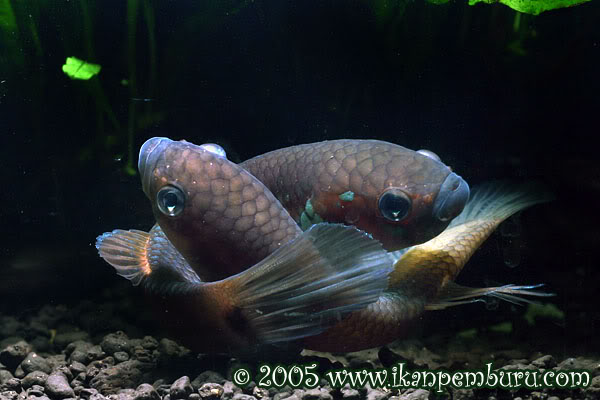
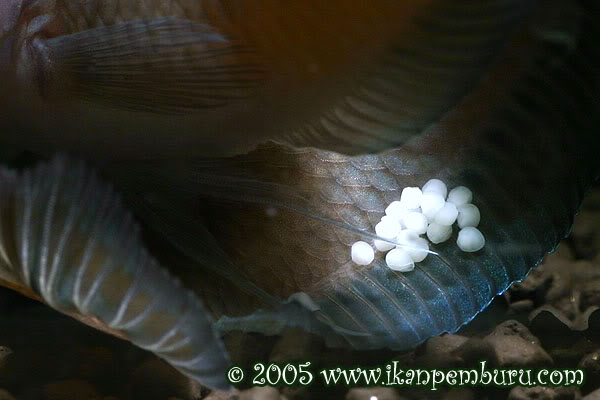
雄鱼张口展鳍求偶,随后反复缠抱、分批排卵。双亲均可拾卵,雌鱼把自己拾到的卵交给雄鱼含孵。
雄鱼约含孵 12~17 天,期间尽量保持安静。受扰易吞卵,可以先让雌鱼留缸以减少捕捞干扰;若她持续骚扰或吃苗,再小心分开。幼鱼另养、随雄鱼或随双亲成长均有成功经验。
育苗缸水面上保持温暖潮湿空气。鱼苗可吃微虫和丰年虾无节幼体,每日数次少量、多样喂食,过量容易引起肠道问题。每日换约 5%~10% 的水,减少有机废物积累。
补充说明
近缘种外形相似,略尖的锥形头只是部分辨识依据。不同地点的繁殖群应保留独立来源信息。
图片
图片来自 SeriouslyFish,版权归各摄影者所有。
English
Overview
Betta ocellata is a large paternal mouthbrooder with a somewhat pointed, conical head. Color varies between collection sites, making locality records more reliable than identifying fish from blue-green or yellow-brown coloration alone.
Distribution & habitat
It occurs in Sabah, northeastern Malaysian Borneo, and the Sebuku drainage near the northern end of East Kalimantan, Indonesia. Records cover clear streams, isolated headwater pools, turbid forest streams, oxbow lakes, and ponds in oil-palm plantations.
Within flowing systems it favors slow or stagnant pools, while elsewhere it shelters among edge vegetation, leaves, and roots. Clear-water specimens are more blue-green and murky-water fish more yellow-brown. Entry into elevated pools by jumping has been proposed but remains an interpretation.
Aquarium setup
Provide at least an 80 × 30 cm footprint for a pair. Wood, branches, pots, or short pipes can form shaded retreats. Leaves add shelter and microbial growth; a bare base is suitable when easier cleaning is useful.
Use low light, tolerant plants, floating vegetation, and gentle filtration. Prevent escape with a secure cover, retain humid air above the water, and preserve access for breathing.
Diet & feeding
Insects, small invertebrates, and zooplankton are likely natural foods. Acclimated fish normally accept dry food, supplemented with water fleas, Artemia, bloodworms, and similar live or frozen items. Large specimens can occasionally take earthworms. Limit portions, especially for young fish.
Behaviour & compatibility
Dedicated accommodation is preferable. A compatible pair suits breeding, while groups require much more space. Large or competitive tankmates may suppress it. Allowing partner selection is safer than forcing an arbitrary pair together; incompatible adults may kill the weaker fish, and even established pairs can become aggressive when cramped.
Sexual dimorphism
Males tend to grow larger and more colorful, with broader heads and longer fins.
Breeding
Gaping displays lead to repeated spawning embraces and batches of eggs. Both parents may retrieve eggs, but the female transfers hers to the male, which carries the brood.
Incubation lasts approximately 12–17 days. Quiet conditions are essential because disturbed males readily swallow eggs. Leaving the female present can avoid catching-related disruption, though persistent harassment or predation requires careful separation. Fry have been reared separately, with the male, or with both parents.
Keep nursery air warm and humid. Microworms and Artemia nauplii are suitable first foods. Feed varied small meals several times daily without overfeeding, which can cause intestinal problems. Daily water changes of about 5–10% help control organic waste.
Notes
The pointed head is only part of the identification process among similar relatives. Preserve separate locality information for breeding stocks.
来源
- https://www.seriouslyfish.com/species/betta-ocellata(抓取于 2026-10-10)
betta-ocellata · 文件: data/species/betta-ocellata.md · 状态: 草稿