Betta mandor
概要
| 字段 | 值 |
|---|---|
| 类别 | 鱼 |
| 学名 | Betta mandor |
| 分类 | 攀鲈目 Anabantiformes › 丝足鲈科 Osphronemidae › Betta |
| 水体 | 淡水 |
| 原产地 | 印度尼西亚 |
| 成体体长 | 6 cm |
| 饲养难度 | 中等 |
| 最小水体 | 54 L |
| 最小缸长 | 60 cm |
| 群居方式 | 成对 |
| 水流偏好 | 低 |
| 外部数据 | seriouslyfish betta-mandor;fishbase 62730 |
| 繁殖方式 | 口孵 |
| 特征 | 会跳缸: 是 |
水质参数
| 参数 | 耐受范围 | 最适范围 | 单位 |
|---|---|---|---|
| 水温 | 22–27 | — | °C |
| pH | 4–6.5 | — | — |
| 总硬度 | 1–5 | — | dGH |
概述
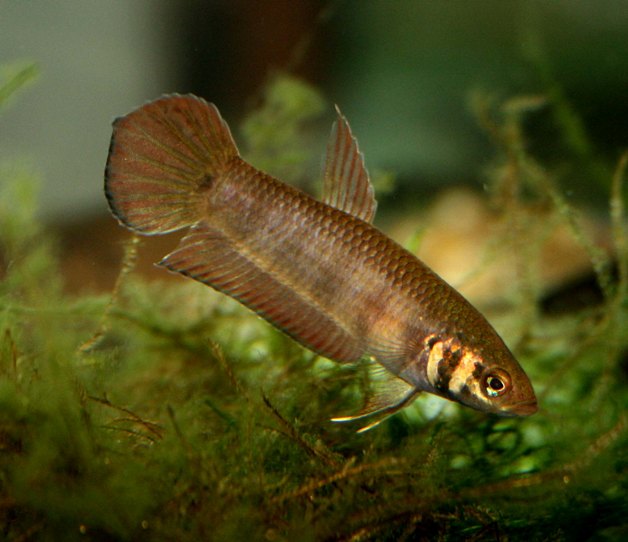
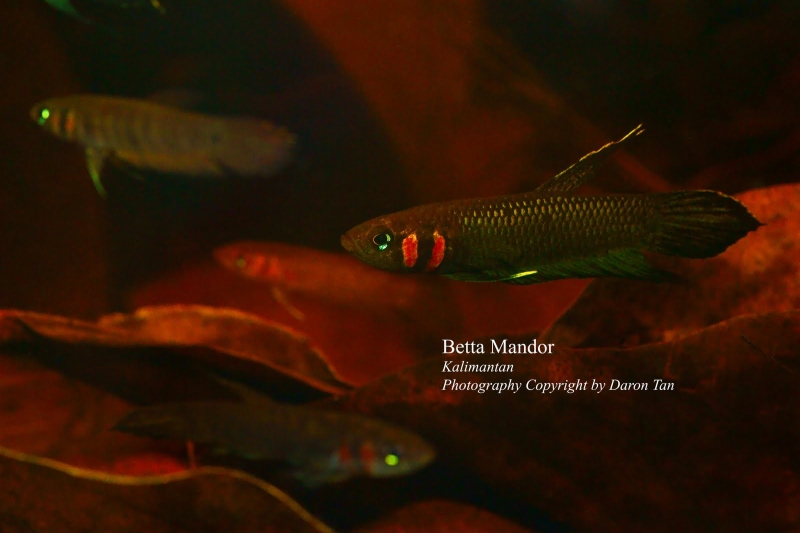
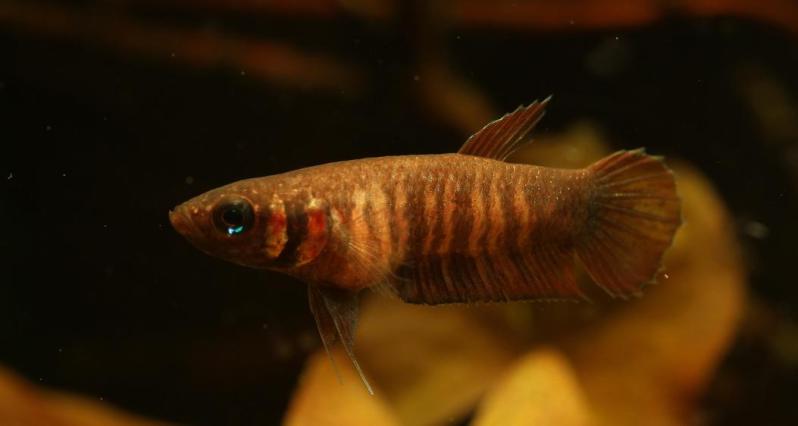
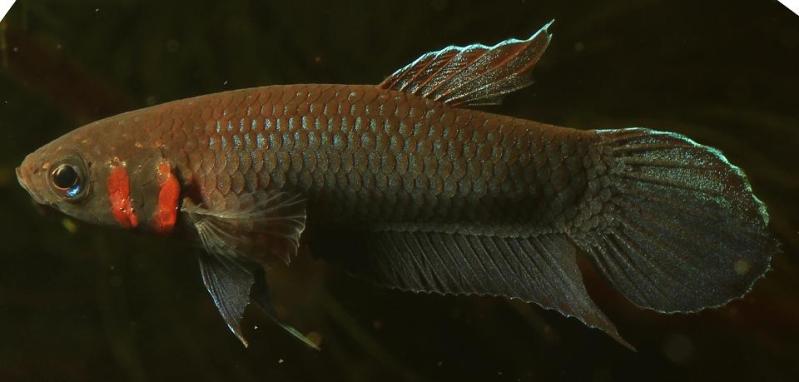
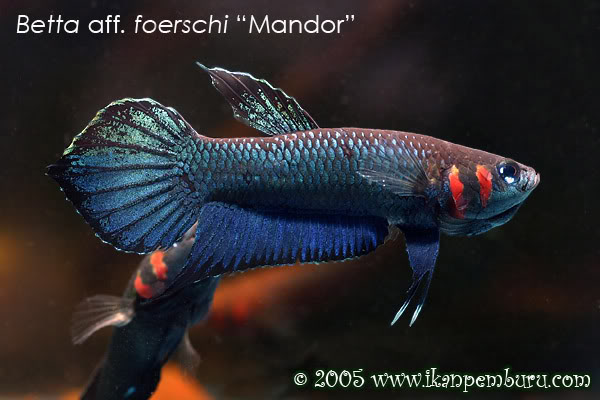
Betta mandor 是雄性口孵斗鱼,成雄身体偏黑,雌鱼偏褐,鳃盖有成对竖纹。它对有机废物和环境波动敏感,应使用成熟、稳定、遮蔽丰富的软水缸。
分布与栖息地
已知采集地在印度尼西亚婆罗洲西加里曼丹卡普阿斯河下游的万多和安戎岸附近。两个产地的鱼常分别标记,以维持来源准确。历史资料记载当地非法采伐造成干扰,种群可能承受压力。
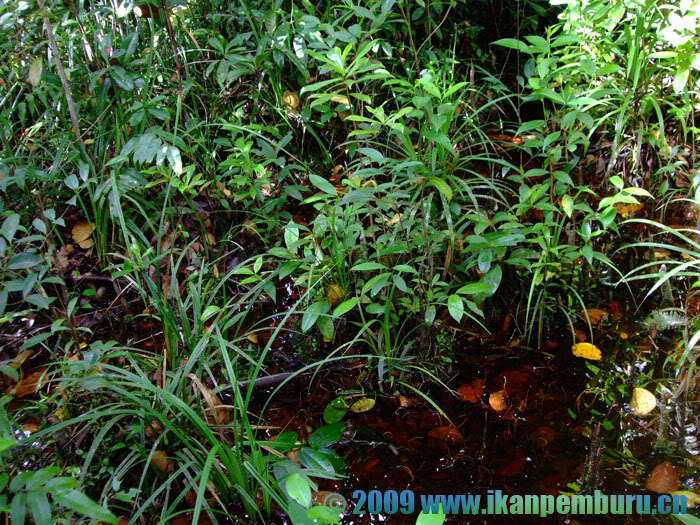
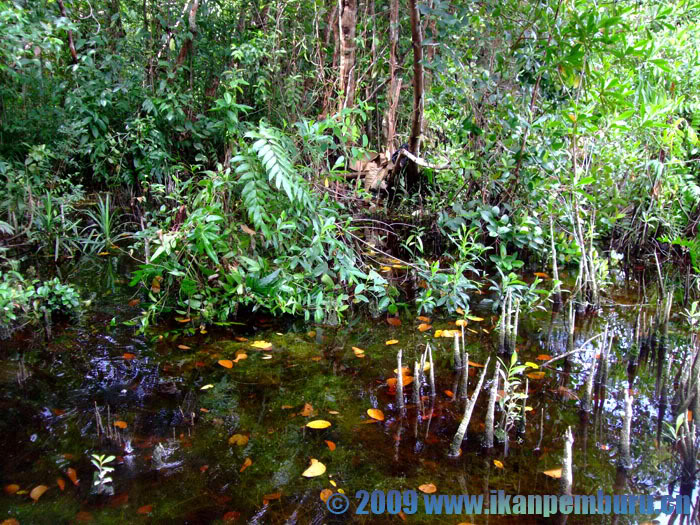
栖居森林沼泽溪流和水潭,部分地点很浅。树冠和岸边植被遮光,腐殖物常使水染色,矿物质少,底部多落叶、枝条和树根。
饲养环境
一对至少需要约 60 × 30 cm 的缸底面积,组群更大。沉木、枝条、陶盆和管道提供阴暗藏身处,落叶增加遮蔽及微生物来源,也可使用赤杨果。
采用弱光、耐阴植物、浮水植物和轻缓海绵过滤。水需很软、偏酸、碳酸盐硬度很低;必要时准备可靠软水来源。不能放进生物过滤尚未成熟的缸。盖好缸防跳,留出水面潮湿空气层及呼吸通道。
食性与喂食
自然可能以昆虫、小型无脊椎动物和浮游动物为主。适应后通常可吃干粮,但仍需搭配水蚤、丰年虾、红虫等活饵或冷冻饵。小昆虫先喂饱再投喂,避免总体过喂。
习性与混养
单种饲养较合适,体大、活跃、抢食强的鱼容易压制它,其他伙伴也可能干扰繁殖。多对或一雄多雌组群有不同经验:有的只追逐争地,有的优势鱼会持续攻击。不要把组群暂时无伤当作安全保证,繁殖可先考虑相容的一对。
雌雄区分
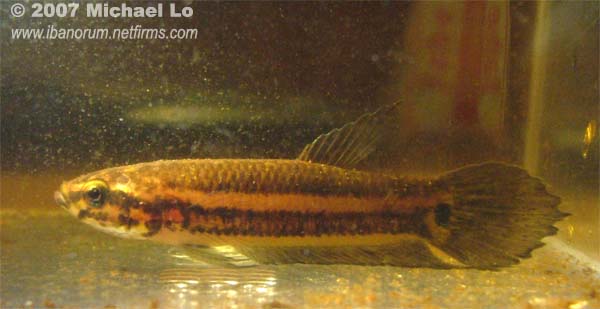
雄鱼颜色更强,背鳍、臀鳍和尾鳍延伸更明显。鳃盖竖纹在雄鱼通常偏橙红、边界较清,雌鱼偏金黄。
繁殖
反复缠抱后分批产卵,卵由雌鱼臀鳍承接,雄鱼直接拾入口中,最终承担口孵。受惊或缺乏经验时可能吞卵或提前吐卵,因此通常让雌鱼留缸,减少捕捞干扰。
含孵约 8~14 天后释放自由游动的幼鱼,可另养或随亲鱼成长;部分经验认为后者长得更快,尚非必然。鱼苗需温暖潮湿的水面空气,可用微虫和丰年虾无节幼体开口,每天少量多样喂 2~3 次,规律小量换水。
补充说明
曾使用 Betta sp. ‘Mandor’ 或 ‘ninja’ 的代号,也可能被当作相似近亲(Betta foerschi)出售。二者不易仅凭外观迅速区分,保留来源和产地标签很有价值。
图片
图片来自 SeriouslyFish,版权归各摄影者所有。
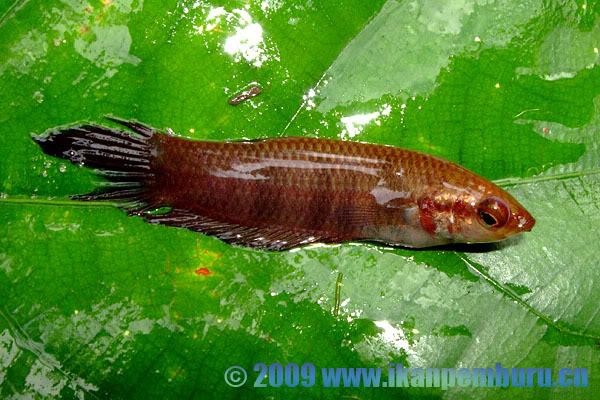
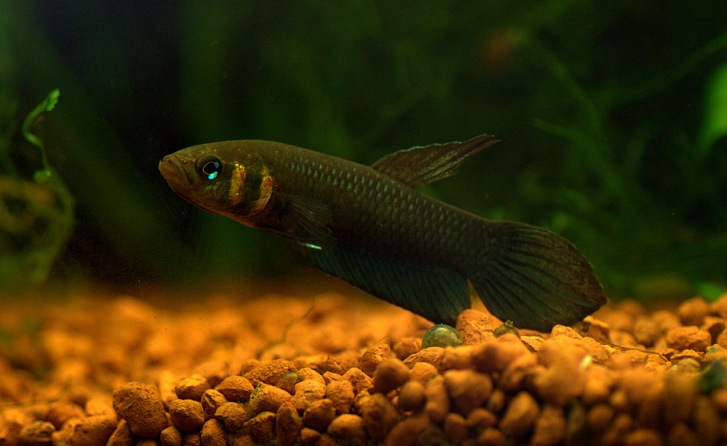
English
Overview
Betta mandor is a paternal mouthbrooder with dark males, browner females, and paired gill-cover bars. Sensitivity to organic waste and changing conditions makes a mature, stable, sheltered soft-water aquarium essential.
Distribution & habitat
Known collections come from near Mandor and Anjungan in the lower Kapuas drainage of West Kalimantan, Indonesian Borneo. The two origins are often labeled separately to preserve provenance. Historical accounts describe logging disturbance and possible pressure on local populations.
It occupies shaded forest-swamp streams and pools, sometimes in very shallow water. Decomposing vegetation commonly stains the mineral-poor water, with leaves, branches, and roots covering the bed.
Aquarium setup
Provide at least a 60 × 30 cm footprint for a pair and more room for a group. Wood, branches, pots, and pipes make dark retreats. Leaves supply cover and microorganisms; alder cones are another optional botanical addition.
Use subdued light, suitable plants, floating vegetation, and gentle mature sponge filtration. Water should be soft and acidic with little carbonate hardness, potentially requiring a dependable soft-water source. Never introduce fish to a biologically immature system. Secure the cover against jumping while retaining humid air and surface access.
Diet & feeding
Insects, small invertebrates, and zooplankton are likely natural foods. Acclimated fish normally accept dry products, supplemented with water fleas, Artemia, bloodworms, and other live or frozen items. Feed small insects beforehand and avoid excessive portions.
Behaviour & compatibility
Dedicated accommodation is preferable. Large, energetic, or competitive fishes may suppress it, while companions can disrupt breeding. Experiences with multiple pairs or one male and several females vary from limited territorial chasing to sustained bullying. Monitor individuals closely; a compatible pair is a practical starting point for breeding.
Sexual dimorphism
Males show stronger color and longer unpaired fins. Their gill-cover bars are generally better-defined orange-red, compared with gold-yellow bars in females.
Breeding
Repeated embraces produce batches of eggs on the female's anal fin. The male collects them directly and eventually carries the whole brood. Stress or inexperience may cause swallowing or early release, so leaving the female present usually avoids unnecessary catching-related disturbance.
Swimming fry appear after approximately 8–14 days. They can be raised separately or with adults; reports of faster growth beside parents are not guarantees. Maintain warm, humid air over the nursery. Offer microworms and Artemia nauplii in varied small meals two or three times daily, with regular modest water changes.
Notes
Earlier names include Betta sp. ‘Mandor’ and ‘ninja’. It is sometimes sold as the similar Betta foerschi, making collection and breeder provenance valuable when quick visual identification is inconclusive.
来源
- https://www.seriouslyfish.com/species/betta-mandor(抓取于 2026-10-10)
betta-mandor · 文件: data/species/betta-mandor.md · 状态: 草稿