新月搏鱼 · Crescent Betta
概要
| 字段 | 值 |
|---|---|
| 类别 | 鱼 |
| 学名 | Betta imbellis |
| 别名 | 新月搏魚 |
| 分类 | 攀鲈目 Anabantiformes › 丝足鲈科 Osphronemidae › Betta |
| 水体 | 淡水 |
| 原产地 | 可能原生于泰国南部、马来半岛及苏门答腊北部;新加坡等地为引入 |
| 成体体长 | 6 cm |
| 饲养难度 | 中等 |
| 最小水体 | 41 L |
| 最小缸长 | 45 cm |
| 群居方式 | 成对 |
| 水流偏好 | 低 |
| 外部数据 | seriouslyfish betta-imbellis;fishbase 12038 |
| 繁殖方式 | 吐泡筑巢 |
| 特征 | 会跳缸: 是 |
水质参数
| 参数 | 耐受范围 | 最适范围 | 单位 |
|---|---|---|---|
| 水温 | 20–28 | — | °C |
| pH | 5–7.5 | — | — |
| 总硬度 | 1–10 | — | dGH |
概述
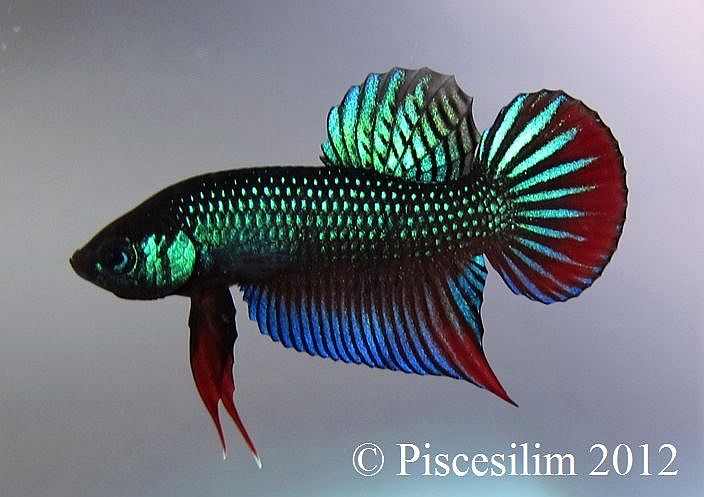
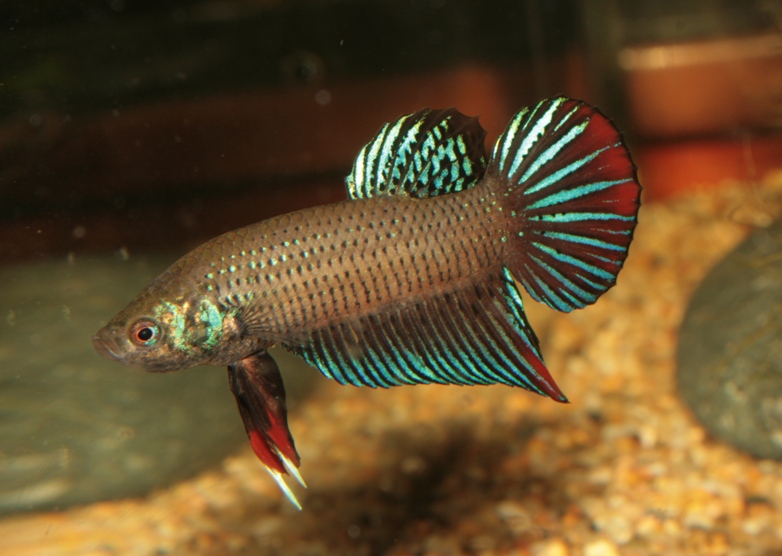
新月搏鱼(Betta imbellis)是泡巢型野生斗鱼,尾鳍边缘的红色新月带较有辨识度。虽然名字含有温和之意,部分人工血系曾按攻击性选育,也存在观赏杂交鱼,不能仅凭名称假定所有个体都能和平群养。
分布与栖息地
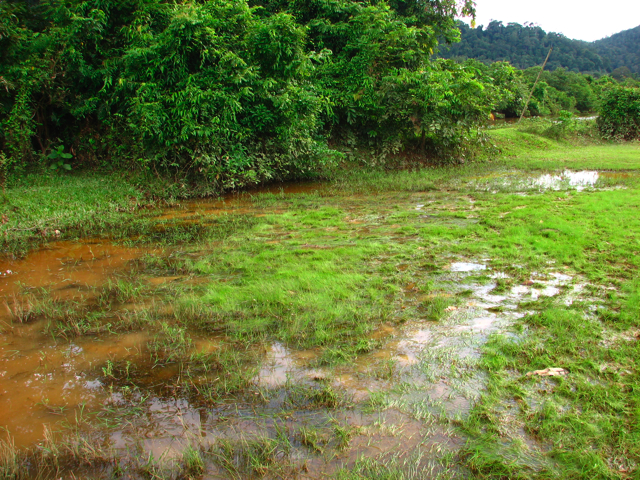
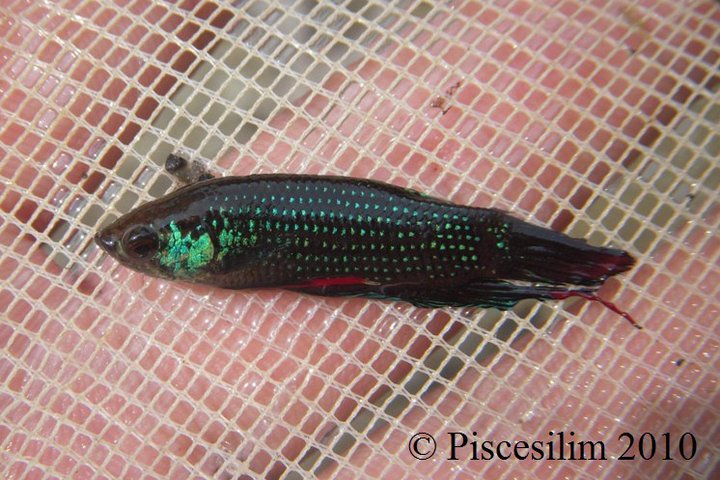
被认为原生于泰国南部、马来半岛和苏门答腊北部,新加坡等地有引入后建立的种群。栖息环境包括稻田、沼泽、沟渠、溪流和池塘,多为缓流或静水,植被常提供遮蔽,雨季条件变化明显。多数在淡水,也有沿海半咸水种群,但这不等于所有个体需要加盐。
饲养环境
密植、遮阴且水面覆盖丰富的缸较合适,可用高茎草、浮水植物和睡莲,沉木、陶盆或管道提供额外躲藏处。落叶支持微生物并增加遮蔽。避免强水流,用柔和气动过滤,缸盖盖严防跳并留湿暖空气层。
食性与喂食
野外可能捕食水生和陆生无脊椎动物。人工个体通常可学会接受干饲料,仍应经常搭配水蚤、丰年虾、红虫等活饵或冷冻饵,避免过量。
习性与混养
单种缸或极安静的同伴较合适。充分遮蔽下可能容纳多条雄鱼,但繁殖以单独一对更便于管理,不能把群养可行当作无条件保证。
雌雄区分
雄鱼色彩更鲜明,成熟后鳍更延长。临产雌鱼颜色变浅,出现深色竖纹。
繁殖
雄鱼在管道、宽叶下或水面植物间筑泡巢,雌鱼应有充足藏身处。抱合后卵分批转入巢内,产后通常可留亲鱼,雄鱼独自护巢。约一两天孵化,再留巢三四天;遇威胁时雄鱼可能转移整窝,幼鱼自由游动后通常不再照护,成鱼一般不吃幼鱼。
幼鱼最初几天需要草履虫等纤毛虫级别的微小食物,之后才逐步接受微虫和丰年虾无节幼体,不能把其他较大口孵鱼苗的开口直接套用。换水小量而规律,保持湿暖空气,避免丰年虾过量单喂。
补充说明
观赏杂交和人为引入正在影响部分野生种群的遗传完整性。保留已知产地及血系标签,有助于区分野生来源与人工选育表现。
图片
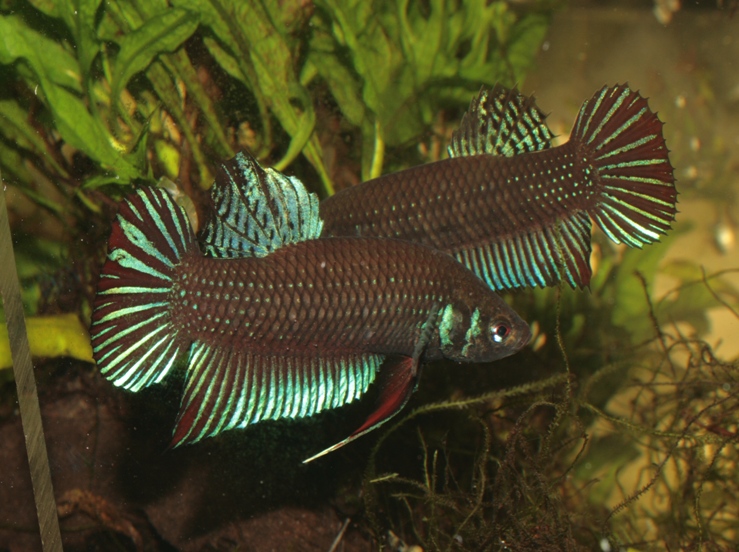
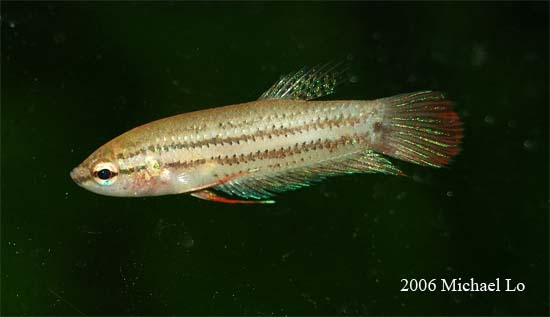
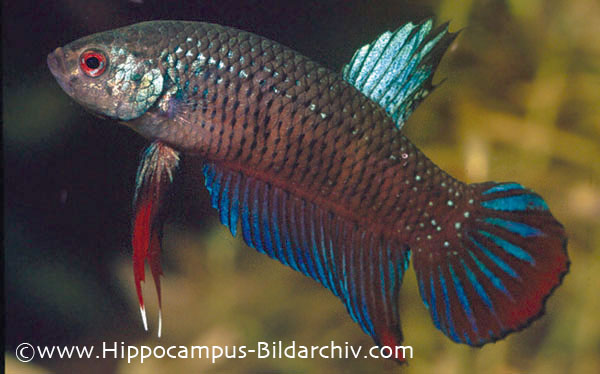
图片来自 SeriouslyFish,版权归各摄影者所有。
English
Overview
The red crescent at the tail edge helps identify Betta imbellis, a bubble-nesting betta. Its peaceful-sounding name is not a guarantee of universal compatibility: some captive lines have been selected for aggression, and ornamental hybrids also occur. Stocking decisions must account for the actual fish and its provenance.
Distribution & habitat
It is thought native to southern Thailand, Peninsular Malaysia, and northern Sumatra. Introduced populations occur elsewhere, including Singapore. Still or slow rice-field waters, swamps, ditches, streams, and ponds provide habitat, often with abundant vegetation. Most populations are freshwater, while some inhabit coastal brackish swamps; that does not establish a salt requirement for every aquarium fish.
Aquarium setup
Provide a planted, shaded aquarium with plentiful surface cover. Tall stems, floating plants, lilies, wood, pots, and pipes can create retreats. Leaves add cover and microorganisms. Avoid strong circulation, secure the lid against jumping, and retain warm humid air above the water.
Diet & feeding
Aquatic and terrestrial invertebrates are probable natural prey. Dry foods are usually learned, but live or frozen water fleas, brine shrimp, and bloodworms should provide regular variety. Avoid overfeeding.
Behaviour & compatibility
A species aquarium or very peaceful companions are preferable. Multiple males can sometimes coexist with abundant cover, but isolating a pair is the more manageable breeding arrangement.
Sexual dimorphism
Adult males are more colorful with longer fins. Receptive females become paler and develop dark vertical bars.
Breeding
The male builds a nest in a sheltered tube, beneath a leaf, or among surface vegetation. Females need escape cover. Eggs released during embraces are moved into the foam. Adults can usually remain afterward while the male alone tends the brood. Eggs hatch in one or two days, followed by three or four more days in the nest. A threatened male may relocate the entire brood. Parents generally leave free-swimming young unharmed.
For the first few days, fry require infusoria-sized food before progressing to microworms and brine shrimp nauplii. Do not assume the larger first foods suitable for some mouthbrooders will work immediately here. Maintain humid air and regular small water changes, with dietary variety rather than excessive brine shrimp alone.
Notes
Ornamental hybridization and introductions threaten the genetic integrity of some wild populations. Keep locality and lineage information where known.
来源
- https://www.seriouslyfish.com/species/betta-imbellis(抓取于 2026-10-10)
betta-imbellis · 文件: data/species/betta-imbellis.md · 状态: 草稿