Betta ideii
概要
| 字段 | 值 |
|---|---|
| 类别 | 鱼 |
| 学名 | Betta ideii |
| 分类 | 攀鲈目 Anabantiformes › 丝足鲈科 Osphronemidae › Betta |
| 水体 | 淡水 |
| 原产地 | 印度尼西亚 |
| 成体体长 | 11 cm |
| 饲养难度 | 中等 |
| 最小水体 | 81 L |
| 最小缸长 | 90 cm |
| 群居方式 | 成对 |
| 水流偏好 | 低 |
| 外部数据 | seriouslyfish betta-ideii;fishbase 62733 |
| 繁殖方式 | 口孵 |
| 特征 | 会跳缸: 是 |
水质参数
| 参数 | 耐受范围 | 最适范围 | 单位 |
|---|---|---|---|
| 水温 | 20–26 | — | °C |
| pH | 5.5–7.5 | — | — |
| 总硬度 | 0–10 | — | dGH |
概述
Betta ideii 是体形较大的雄性口孵斗鱼,旧贸易代号为 ‘Laut’。繁殖时相容配对和含卵雄鱼不受惊扰尤其重要,不能仅按性别把两尾成鱼直接合缸。
分布与栖息地
似乎仅分布于印度尼西亚婆罗洲南加里曼丹南部及劳特岛,已知采集水系流入劳特海峡。具体微生境资料有限,可能像同一近缘组其他鱼一样生活于较清澈的森林溪流,这一点仍属推测。
饲养环境
一对需要至少约 90 × 30 cm 的缸底面积,组群要更大。以沉木、枝条、陶盆或短管造出多个阴暗藏身处,落叶增加遮蔽及微生物来源;裸底方便维护。
灯光宜弱,可配耐阴水草和浮水植物,过滤只需温和循环。盖好缸防跳,水面上留潮湿空气层并保留上浮呼吸空间。
食性与喂食
野外可能以昆虫、小型无脊椎动物和浮游动物为食。缸养通常能学会吃干粮,仍需搭配水蚤、丰年虾、红虫等活饵或冷冻饵,大个体偶尔可吃蚯蚓。控制食量,幼鱼尤其容易因过喂出现肠道问题。
习性与混养
以单种饲养较合适,繁殖宜相容配对;足够大的空间也可组群。若混养,只考虑温和、条件相近的伙伴,大型或过于活跃的鱼会使其退缩并抢走食物。
自然择偶比随机组合更可靠,任意雌雄可能不和,弱者甚至被杀。配对后通常较稳定,但空间不足仍会引起攻击,应持续观察。
雌雄区分
雄鱼较大、颜色更强、头较宽,各鳍更延长。
繁殖
雄鱼张口展鳍求偶,雌鱼侧身回应,反复缠抱后分批排卵。双亲都可拾卵,雌鱼把拾到的卵吐给雄鱼,由雄鱼含孵。
含孵约 10~18 天。雄鱼受干扰容易吞卵,通常先让雌鱼留缸可减少捕捞造成的惊扰;若她持续骚扰雄鱼或吃苗,则仍需小心分开。幼鱼另养、随雄鱼或随双亲成长均有成功经验。
育苗缸水面空气需温暖潮湿。鱼苗可吃微虫和丰年虾无节幼体,每日数次少量、多样喂食,避免过量;每日约 5%~10% 的小量换水有助保持清洁。
补充说明
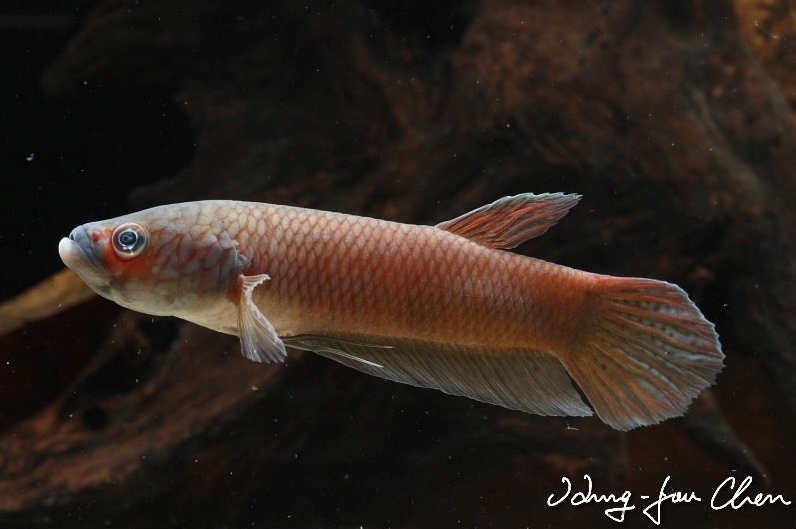
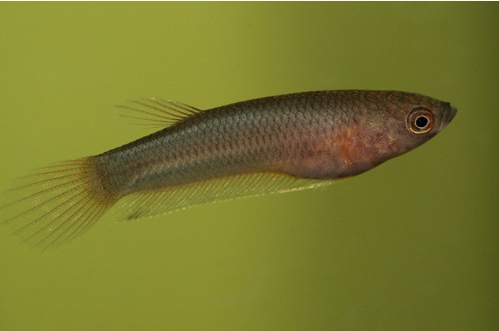
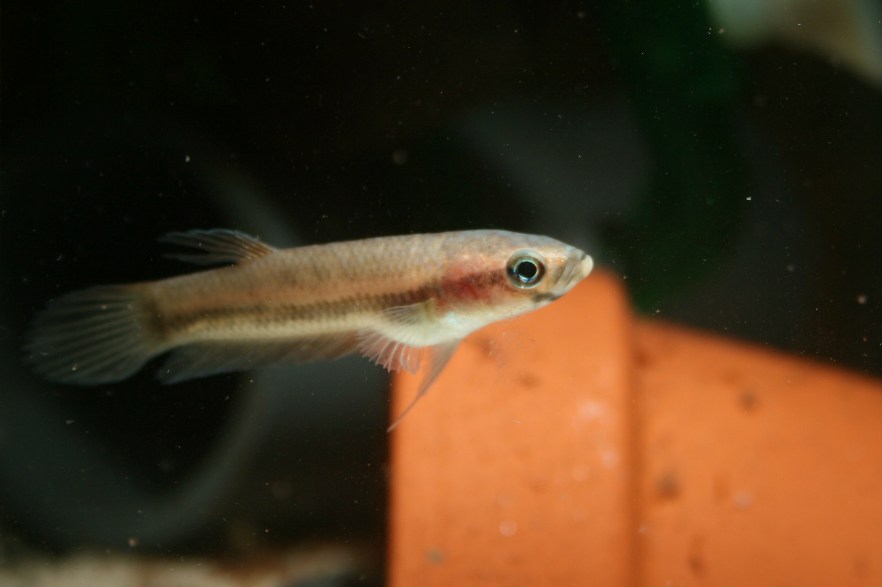
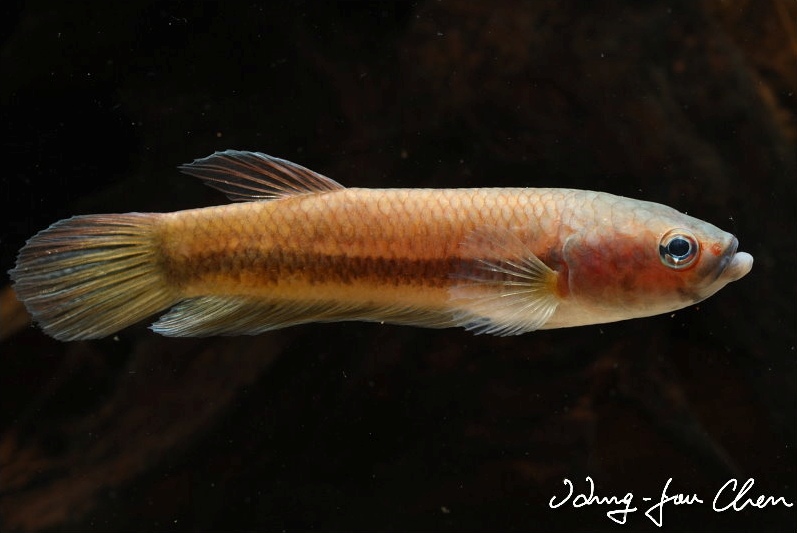
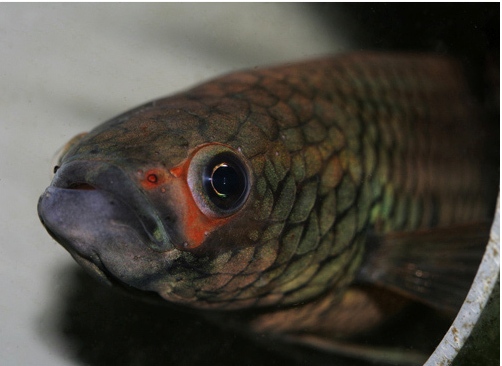
眼前至上唇连续的橙斑可辅助辨认。与近缘斗鱼(Betta patoti)相比,本种体侧没有暗色竖带,成熟雄鱼颜色也更深;仍应结合来源核对身份。
图片
图片来自 SeriouslyFish,版权归各摄影者所有。
English
Overview
Betta ideii, formerly traded with the label ‘Laut’, is a large paternal mouthbrooder. Compatible partners and minimal disturbance to incubating males are central to successful breeding; simply combining a male and female is unreliable.
Distribution & habitat
It appears limited to southern South Kalimantan and Laut Island in Indonesian Borneo. Recorded collection basins drain into the Laut Strait. Detailed habitat information is unavailable; relatively clear forest streams are presumed by comparison with close relatives, rather than documented as a complete species-specific description.
Aquarium setup
Allow a footprint of at least 90 × 30 cm for a pair, increasing it for groups. Arrange wood, branches, pots, or short pipes into separate shaded retreats. Leaves provide cover and microbial growth; a bare base is useful where easy cleaning takes priority.
Use subdued illumination, suitable low-light plants, floating cover, and gentle filtration. Fit a secure lid against jumping while keeping humid air and breathing space above the water.
Diet & feeding
Insects, small invertebrates, and zooplankton are probable natural foods. Established fish generally learn to accept dry products, supplemented with water fleas, Artemia, bloodworms, and similar live or frozen foods. Large fish can occasionally take earthworms. Control portions, especially for young prone to intestinal problems after overfeeding.
Behaviour & compatibility
Dedicated accommodation is preferable. A compatible pair suits breeding, while a group requires considerably more space. Any companions must be gentle and share its conditions; large or energetic fishes can intimidate and outcompete it.
Allowing partner choice is preferable to forcing an arbitrary pair together. Incompatible adults can kill the weaker fish. Established pairs are usually calmer, though restricted space can renew aggression.
Sexual dimorphism
Males become larger and more colorful, with broader heads and longer fins.
Breeding
Gaping and fin displays precede repeated embraces and small batches of eggs. Both parents can retrieve eggs, but those collected by the female are transferred to the male for oral incubation.
Swimming young emerge after roughly 10–18 days. Disturbance readily causes males to swallow broods. Leaving the female present can avoid catching-related disruption, but persistent harassment or predation requires careful separation. Young have been raised separately, with the male, or with both adults.
Maintain warm, humid air over the nursery. Microworms and Artemia nauplii are suitable starter foods. Give several small, varied meals daily without overfeeding, and replace about 5–10% of the water each day to limit waste buildup.
Notes
An orange mark extending from before the eye onto the upper lip helps recognition. Compared with Betta patoti, this fish lacks dark vertical flank bars and mature males are darker. Provenance remains useful when identifying similar relatives.
来源
- https://www.seriouslyfish.com/species/betta-ideii(抓取于 2026-10-10)
betta-ideii · 文件: data/species/betta-ideii.md · 状态: 草稿