马来搏鱼
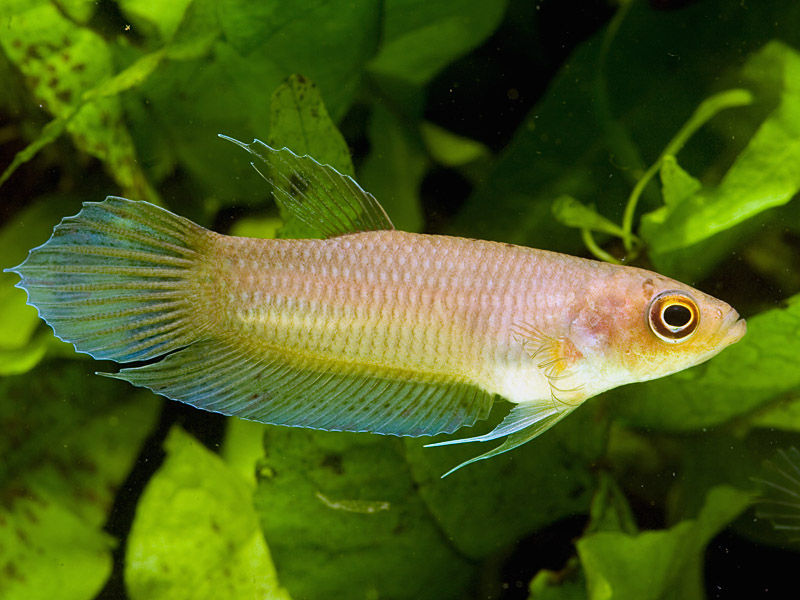
概要
| 字段 | 值 |
|---|---|
| 类别 | 鱼 |
| 学名 | Betta hipposideros |
| 别名 | 馬來搏魚 |
| 分类 | 攀鲈目 Anabantiformes › 丝足鲈科 Osphronemidae › Betta |
| 水体 | 淡水 |
| 原产地 | 马来半岛西部雪兰莪、霹雳,印度尼西亚苏门答腊廖内及廖内群岛 |
| 成体体长 | 8 cm |
| 饲养难度 | 中等 |
| 最小水体 | 72 L |
| 最小缸长 | 80 cm |
| 群居方式 | 成对 |
| 水流偏好 | 低 |
| 外部数据 | seriouslyfish betta-hipposideros;fishbase 27197 |
| 繁殖方式 | 口孵 |
| 特征 | 会跳缸: 是 |
水质参数
| 参数 | 耐受范围 | 最适范围 | 单位 |
|---|---|---|---|
| 水温 | 22–28 | — | °C |
| pH | 3.5–6 | — | — |
| 总硬度 | 0–5 | — | dGH |
概述
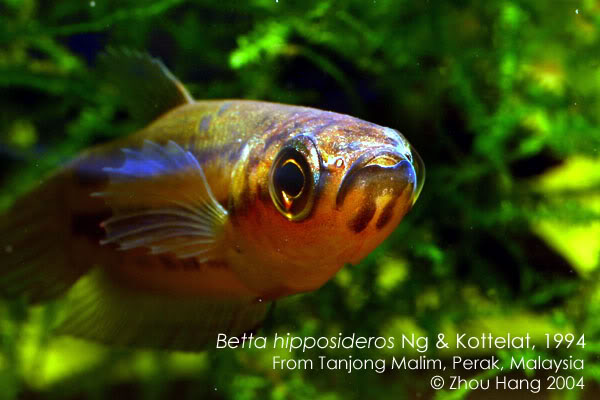
马来搏鱼(Betta hipposideros)是雄性口孵斗鱼,喉部黑色马蹄形斑纹是重要辨识点。它专门生活在泥炭沼泽黑水环境,对水质和遮蔽的要求不能按普通混养鱼处理。
分布与栖息地
来自马来半岛西部雪兰莪和霹雳,并延伸至苏门答腊东部廖内及廖内群岛。栖息于森林泥炭沼泽和相关黑水溪流,水流缓慢甚至停滞,腐叶物质使水色深、矿物质极少且偏酸。岸边植物、落叶和树根提供躲藏处,季节缺水时可能暂留湿润落叶间。
饲养环境
用沉木、根枝、陶盆或管道安排阴影和退避空间,落叶增加遮蔽并支持微生物。灯光宜暗,配耐阴植物与浮水遮蔽。保持与其黑水需求相符的软酸水,过滤轻柔即可。缸盖严密防跳,水面上留湿暖空气层。
食性与喂食
野外可能以昆虫、小型无脊椎动物和浮游动物为食。适应后通常接受干饲料,应经常搭配水蚤、丰年虾、红虫和适口小昆虫,避免过量喂食。
习性与混养
可成对或小群单种饲养,混养只宜考虑非常安静、环境需求相容的小鱼。较大或活跃的同伴会使它受压或抢走食物。
雌雄区分
成年雄鱼色彩更鲜明,头较宽,鳍较长。
繁殖
求偶和试抱后分批产卵,卵经雄鱼臀鳍短暂承接、雌鱼拾取,再交给雄鱼口孵。含卵约十至二十一天,受惊或经验不足可能导致吞卵或提前吐出,因此宜保持原有同伴不动,减少扰动。
幼鱼释放后可单独培育或与亲鱼同养,有报告认为与亲鱼一起长得较快,但不是必然结果。微虫、丰年虾无节幼体可直接开口,每日两三次少量多样,不要过量单喂丰年虾。育苗保持湿暖空气,小量规律换水。
补充说明
喉部斑纹与黑色下唇相连,背鳍和尾鳍有横纹,鳃盖鳞常带金光,这些特征应结合观察。迷鳃器官支持空气呼吸,并不意味着可以忽略水质与空气层条件。
图片
图片来自 SeriouslyFish,版权归各摄影者所有。
English
Overview
The black horseshoe-shaped throat marking is a useful identifying feature of Betta hipposideros. This paternal mouthbrooder is closely tied to peat-swamp blackwater, so its environmental needs should not be treated as those of a general community fish.
Distribution & habitat
It occurs in Selangor and Perak on the western Malay Peninsula, extending to Riau in eastern Sumatra and the Riau Archipelago. Slow or stagnant forest swamp waters are dark, acidic, and extremely low in dissolved minerals. Leaves, roots, and overhanging vegetation provide shelter; seasonal drying may confine fish to damp litter.
Aquarium setup
Use wood, roots, pots, or pipes to create shaded retreats. Leaves add cover and microorganisms. Subdued lighting, floating plants, soft acidic water, and gentle filtration suit the fish. A close-fitting lid prevents jumping and preserves humid air above the surface.
Diet & feeding
Insects, small invertebrates, and zooplankton are probable prey. Captive fish generally learn to accept dry food, but regular live or frozen water fleas, brine shrimp, bloodworms, and suitable insects should supply variety. Avoid overfeeding.
Behaviour & compatibility
Pairs and small groups can be maintained in a species aquarium. Any companions should be exceptionally quiet and suited to the same conditions. Large or vigorous fishes can intimidate it and monopolize food.
Sexual dimorphism
Mature males are more colorful, broader-headed, and longer-finned than females.
Breeding
After courtship and practice embraces, eggs are briefly supported by the male's anal fin, collected by the female, and passed to him for incubation. Mouthbrooding takes around ten to twenty-one days. Disturbance or inexperience can cause premature loss, so avoid disruptive changes to the established group during incubation.
Released fry may be moved or remain with parents. Faster growth alongside adults has been reported, but is not assured. Microworms and brine shrimp nauplii are suitable immediately. Offer small, varied meals several times daily without excessive brine shrimp alone. Maintain humid air and perform regular modest water changes.
Notes
The throat marking joins the dark lower lip, while bars on the dorsal and tail fins and typically golden opercular scales provide further clues. Supplementary air breathing does not remove the need for appropriate water and air conditions.
来源
- https://www.seriouslyfish.com/species/betta-hipposideros(抓取于 2026-10-10)
betta-hipposideros · 文件: data/species/betta-hipposideros.md · 状态: 草稿