Betta gladiator
概要
| 字段 | 值 |
|---|---|
| 类别 | 鱼 |
| 学名 | Betta gladiator |
| 分类 | 攀鲈目 Anabantiformes › 丝足鲈科 Osphronemidae › Betta |
| 水体 | 淡水 |
| 原产地 | 马来西亚 |
| 成体体长 | 9 cm |
| 饲养难度 | 中等 |
| 最小水体 | 81 L |
| 最小缸长 | 90 cm |
| 群居方式 | 成对 |
| 水流偏好 | 低 |
| 外部数据 | seriouslyfish betta-gladiator;fishbase 62602 |
| 繁殖方式 | 口孵 |
水质参数
| 参数 | 耐受范围 | 最适范围 | 单位 |
|---|---|---|---|
| 水温 | 22–27 | — | °C |
| pH | 4–6 | — | — |
| 总硬度 | 0–5 | — | dGH |
概述
Betta gladiator 是体形较大的雄性口孵斗鱼,据报道同种雄鱼之间冲突强烈。成对饲养也必须确认双方相容,随机挑选一雄一雌并不能保证安全。
分布与栖息地
推测特有于马来西亚婆罗洲沙巴的马廖盆地。该地为群山围合的平台,水系属于更大的京那巴当岸河流域。采集点在酸性水的石楠林环境,成鱼彼此间隔约一米,身旁往往有少数幼鱼。
饲养环境
一对也应预留至少约 90 × 30 cm 的缸底面积,用沉木、枝条、陶盆或管道分隔出阴暗藏身处。落叶能增加遮蔽和微生物来源,裸底可方便清洁。
弱光配耐阴水草及浮水植物,海绵过滤缓缓循环即可。缸盖要可靠,水面以上保留潮湿空气层供呼吸;本种可能也善跳,不宜留下外逃缝隙。
食性与喂食
野外可能捕食昆虫、小型无脊椎动物和浮游动物,也可能吃同域虾类,这些仍是推测。缸养适应后通常接受干粮,搭配水蚤、丰年虾、红虫等活饵或冷冻饵,大个体偶尔可吃蚯蚓。成鱼和幼鱼都不宜过量喂养。
习性与混养
以相容配对单养为宜,普通混养缸容易出现抢食和压制。让鱼自行择偶可能需要短期群养,但据报道雄鱼会持续争斗,狭小空间甚至可能致死。形成配对后通常较稳定,空间不足仍会改变相处情况,应有分隔条件。
雌雄区分
雄鱼通常更大、颜色更强,头较宽,鳍条延伸较长。
繁殖
求偶时雄鱼张口展鳍靠近雌鱼,雌鱼转身并可能回应。反复缠抱后分批排卵,双方可拾卵,雌鱼把拾到的卵交给雄鱼含孵。
含卵雄鱼特别需要安静,受惊后吞卵是常见失败原因。为避免捕捞干扰,可以先让雌鱼留缸;若她持续骚扰雄鱼或吃苗,则仍需小心移走,狭小缸尤其要观察。
含孵时长有约 14~35 天的不同报告,不宜按固定日期干预。幼鱼另养、随雄鱼或随双亲成长均有成功经验。保持水面空气温暖潮湿,初期可喂微虫和丰年虾无节幼体,每日数次、少量多样;过喂容易引起肠道问题。每日换约 5%~10% 水,防止废物积累。
补充说明
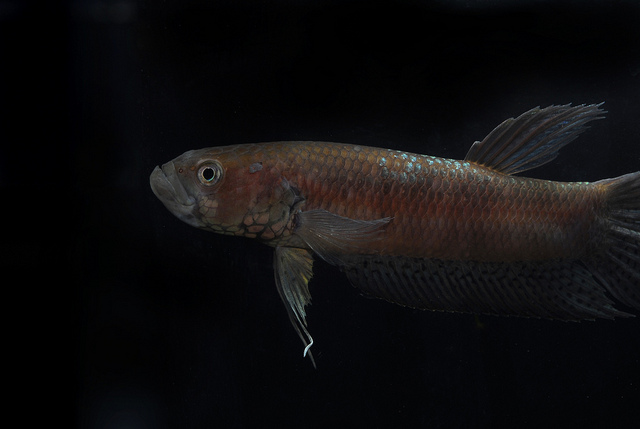
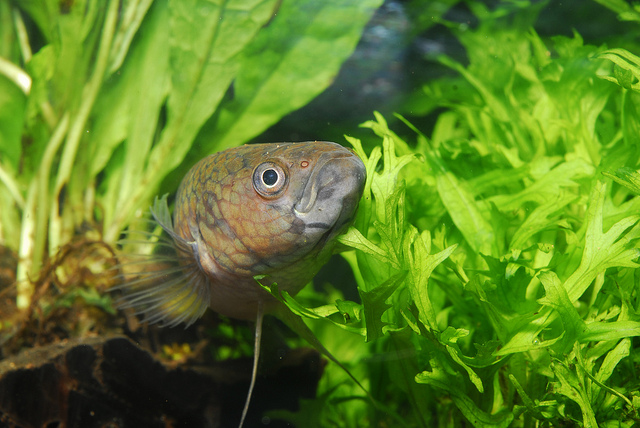
黄褐身体、带蓝色的鳃盖和素褐色尾鳍是外观线索,但近缘种鉴别需要多项特征结合,不能只凭颜色认种。
图片
图片来自 SeriouslyFish,版权归各摄影者所有。
English
Overview
Betta gladiator is a relatively large paternal mouthbrooder with a reputation for serious conflict between males. Even a male–female combination needs compatibility assessment; a randomly assembled pair can injure or kill the weaker fish.
Distribution & habitat
It is presumed restricted to the isolated Maliau basin in Sabah, Malaysian Borneo, within the larger Kinabatangan drainage. Collected fish inhabited acidic heath-forest water. Adults were roughly a meter apart and commonly accompanied by a few juveniles.
Aquarium setup
Plan at least a 90 × 30 cm footprint for a pair. Divide the space with wood, branches, pots, or pipes to form shaded shelters. Leaves add cover and microbial growth, while bare-bottom accommodation can simplify cleaning.
Keep lighting subdued, use suitable low-light plants and floating vegetation, and run mature sponge filtration gently. Retain humid air over the surface beneath a secure cover. Jumping ability is considered likely, so avoid escape gaps.
Diet & feeding
Insects, small invertebrates, and zooplankton are probable natural foods; consumption of local shrimp is also suggested rather than established. Acclimated fish generally accept dry food. Rotate small live or frozen water fleas, Artemia, and bloodworms, with an occasional earthworm for large individuals. Control portions carefully.
Behaviour & compatibility
A compatible pair in dedicated accommodation is preferable. Ordinary communities may intimidate it or outcompete it at meals. Temporary group housing can allow partner selection, but males reportedly fight persistently and cramped quarters can lead to deaths. Established pairs are generally less confrontational unless space is restricted; retain a way to separate them.
Sexual dimorphism
Males tend to become larger and more colorful, with broader heads and longer fins.
Breeding
Courtship includes gaping and fin displays, followed by repeated embraces and batches of eggs. Both parents may collect eggs, but the female transfers hers to the male, which incubates the entire brood.
Quiet conditions are critical because males frequently swallow broods, particularly after disturbance. Leaving the female in place avoids catching-related disruption. If she persistently harasses him or eats fry, however, careful removal becomes necessary.
Reported incubation spans approximately 14–35 days, so a rigid release deadline is inappropriate. Young have been reared separately, with the male, or with both parents. Maintain warm, humid air over the nursery. Start with microworms and Artemia nauplii, giving several small, varied meals daily. Overfeeding readily causes intestinal trouble; daily water changes of about 5–10% help prevent waste accumulation.
Notes
A yellow-brown body, bluish gill covers, and plain brown tail offer recognition clues. Distinguishing close relatives still requires several characters together rather than color alone.
来源
- https://www.seriouslyfish.com/species/betta-gladiator(抓取于 2026-10-10)
betta-gladiator · 文件: data/species/betta-gladiator.md · 状态: 草稿