伊氏抟鱼
概要
| 字段 | 值 |
|---|---|
| 类别 | 鱼 |
| 学名 | Betta enisae |
| 别名 | 伊氏摶魚 |
| 分类 | 攀鲈目 Anabantiformes › 丝足鲈科 Osphronemidae › Betta |
| 水体 | 淡水 |
| 原产地 | 印度尼西亚婆罗洲西加里曼丹卡普阿斯河部分流域 |
| 成体体长 | 6 cm |
| 饲养难度 | 中等 |
| 最小水体 | 41 L |
| 最小缸长 | 45 cm |
| 群居方式 | 成对 |
| 水流偏好 | 低 |
| 外部数据 | seriouslyfish betta-enisae;fishbase 27021 |
| 繁殖方式 | 口孵 |
| 特征 | 会跳缸: 是 |
水质参数
| 参数 | 耐受范围 | 最适范围 | 单位 |
|---|---|---|---|
| 水温 | 21–24 | — | °C |
| pH | 5.5–7 | — | — |
| 总硬度 | 0–5 | — | dGH |
概述
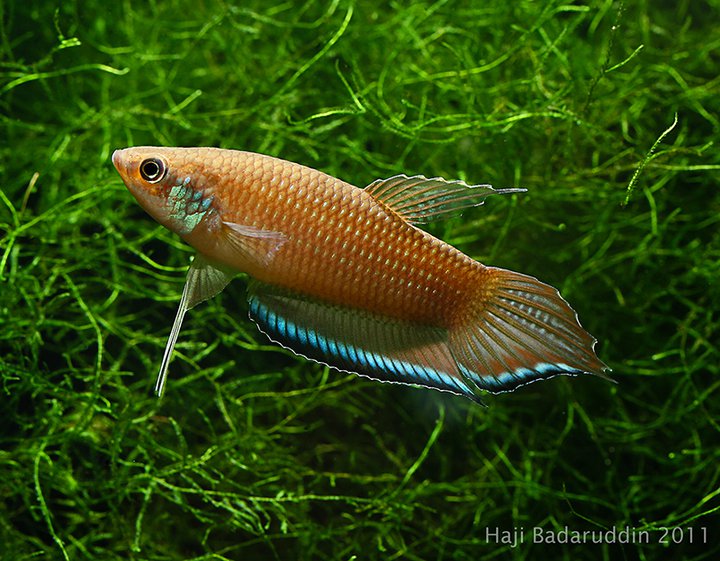
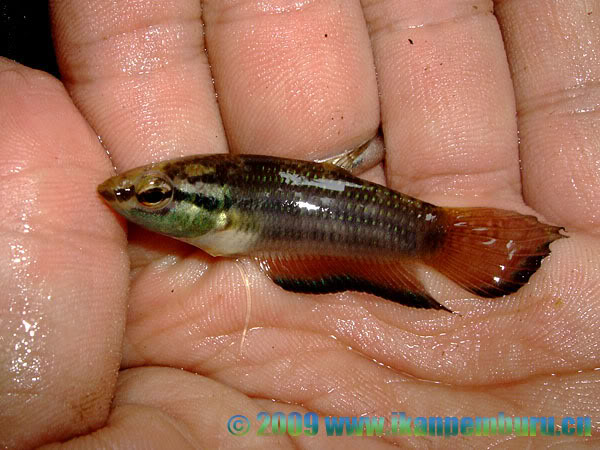
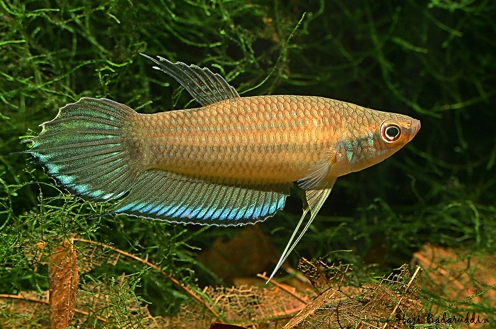
伊氏抟鱼(Betta enisae)是来自卡普阿斯河流域的雄性口孵斗鱼,雌雄尾鳍都可见横纹。它生活在较凉的林荫水域,不能把所有野生斗鱼都按相同的高温环境安排。
分布与栖息地
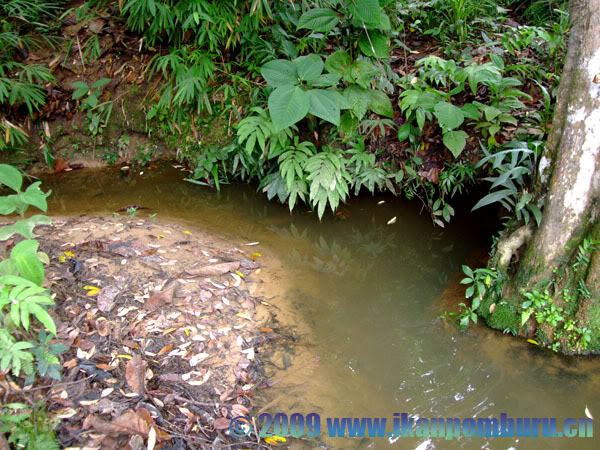
仅知分布于印度尼西亚婆罗洲西加里曼丹卡普阿斯河部分流域,从桑高向东、略向北延伸至普图西包。常见于凉爽的森林沼泽流溪及相关水潭,林冠和岸边植被浓密,水受腐叶物质染色,矿物质少、偏酸,底部有落叶、枝条和树根。
饲养环境
用沉木、根枝、陶盆或管道安排阴影与躲藏处,落叶可增加微生物和幼鱼辅助食物。较暗灯光配耐阴与浮水植物,过滤水流温和即可。缸盖盖严防跳,水面上留湿暖空气,育苗时尤需保持稳定。
食性与喂食
野外可能捕食昆虫、小型无脊椎动物和浮游动物。缸中识别后多能吃干饲料,仍应经常搭配水蚤、丰年虾、红虫等活饵或冷冻饵,少量多样,避免肥胖。
习性与混养
适合单种缸,或与非常安静且环境需求一致的小鱼相处。较大或抢食积极的同伴容易压制它。可成对或群养,但群体需要比一对更大的空间。
雌雄区分
雄鱼体形较大,头更宽,虹彩鳞更多,鳍也更延长。
繁殖
经过较长求偶和试抱后才产卵,卵先由雄鱼臀鳍承接,经雌鱼拾取吐给雄鱼含孵。含卵约九至十二天,受惊或经验不足时可能吞卵、提前吐出,因此宜少扰动原有雌鱼和同伴。
幼鱼释放后可另养或留在亲鱼身边,有报告认为同养长得较快,但不是固定结果。微虫和丰年虾无节幼体可作开口食物,少量多样、每日两三次,避免丰年虾过量。严密缸盖维持湿暖空气,小量勤换水。
补充说明
近似种之间难以仅凭外观区分,不同产地群体在花纹和体形上也有差别,建议保留普图西包、森塔伦等来源标签。尾鳍横纹是观察线索,不能代替完整鉴定。
图片
图片来自 SeriouslyFish,版权归各摄影者所有。
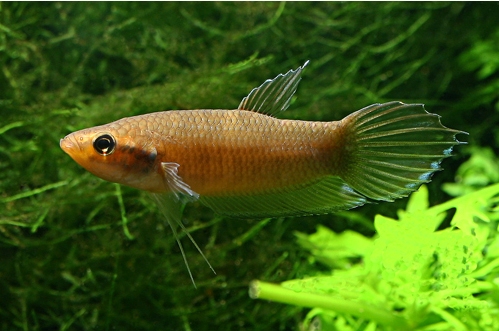
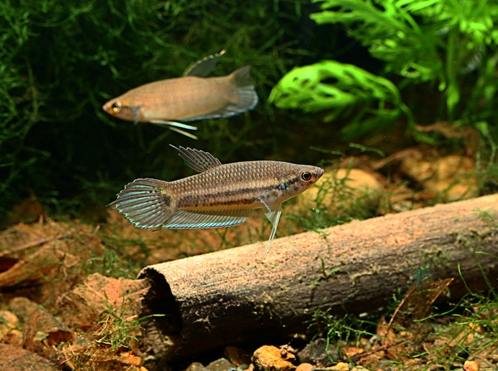
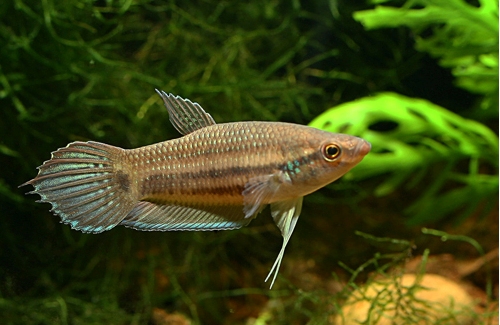
English
Overview
Betta enisae is a paternal mouthbrooder from the Kapuas system, with dark crossbars on the tail in both sexes. Its association with cool, shaded waters matters when planning care; a single warm-water routine should not be assumed suitable for every wild betta.
Distribution & habitat
The known range runs through parts of West Kalimantan's Kapuas basin from Sanggau toward Putussibau. Cool forest streams and associated swamp pools are shaded by canopy and dense marginal vegetation. Water is acidic and low in minerals, often stained by decomposing leaves above a floor of wood and litter.
Aquarium setup
Provide shaded retreats using roots, branches, pots, or pipes. Leaves support microorganisms and may offer supplementary food for fry. Dim lighting, floating cover, and tolerant plants complement gentle filtration. A secure lid prevents jumping and retains humid air above the water.
Diet & feeding
Probable prey includes insects, small invertebrates, and zooplankton. Fish usually learn to recognize dried food, but live or frozen water fleas, brine shrimp, and bloodworms should regularly add variety. Avoid overfeeding.
Behaviour & compatibility
A species aquarium or very quiet small companions with matching requirements are preferable. Larger or vigorous feeders may intimidate it. Pairs and groups are possible, but a group needs more space than a single pair.
Sexual dimorphism
Males are larger with broader heads, more iridescent head scales, and extended fins.
Breeding
Long courtship and practice embraces may precede actual laying. Eggs caught against the male's anal fin are collected by the female and passed to him. Mouthbrooding lasts about nine to twelve days. Stress or inexperience can result in premature loss, making minimal disturbance of the established group preferable during incubation.
Released fry can be moved or remain with parents. Faster growth alongside parents has been reported but is not guaranteed. Feed microworms and brine shrimp nauplii in small, varied portions several times daily, avoiding excess brine shrimp. Tight cover and regular small water changes maintain stable rearing conditions.
Notes
Related species are difficult to separate, and geographic forms vary in pattern and proportions. Retain locality labels such as Putussibau or Sentarum. Tail barring is useful, but does not replace a fuller identification.
来源
- https://www.seriouslyfish.com/species/betta-enisae(抓取于 2026-10-10)
betta-enisae · 文件: data/species/betta-enisae.md · 状态: 草稿