离搏鱼
概要
| 字段 | 值 |
|---|---|
| 类别 | 鱼 |
| 学名 | Betta dimidiata |
| 别名 | 離搏魚 |
| 分类 | 攀鲈目 Anabantiformes › 丝足鲈科 Osphronemidae › Betta |
| 水体 | 淡水 |
| 原产地 | 印度尼西亚婆罗洲西加里曼丹卡普阿斯河上游及森塔伦湖区(似为当地特有种) |
| 成体体长 | 4 cm |
| 饲养难度 | 中等 |
| 最小水体 | 41 L |
| 最小缸长 | 45 cm |
| 群居方式 | 成对 |
| 水流偏好 | 低 |
| 外部数据 | seriouslyfish betta-dimidiata;fishbase 25133 |
| 繁殖方式 | 口孵 |
| 特征 | 会跳缸: 是 |
水质参数
| 参数 | 耐受范围 | 最适范围 | 单位 |
|---|---|---|---|
| 水温 | 22–27 | — | °C |
| pH | 5.2–6.5 | — | — |
| 总硬度 | 1–5 | — | dGH |
概述
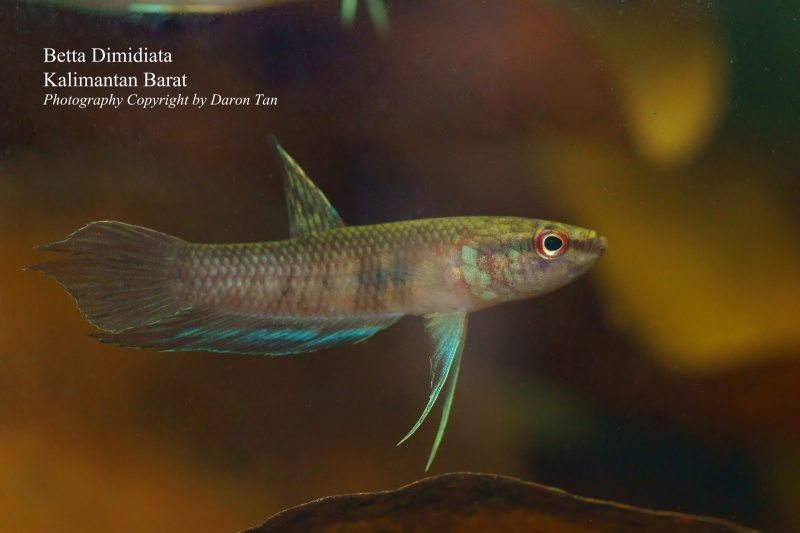
离搏鱼(Betta dimidiata)是小型雄性口孵斗鱼,成年鱼尾鳍呈延长的铲形,是辨识常见近似种的重要线索。它需要安静、柔流、软酸水环境,含卵雄鱼应尽量少受干扰。
分布与栖息地
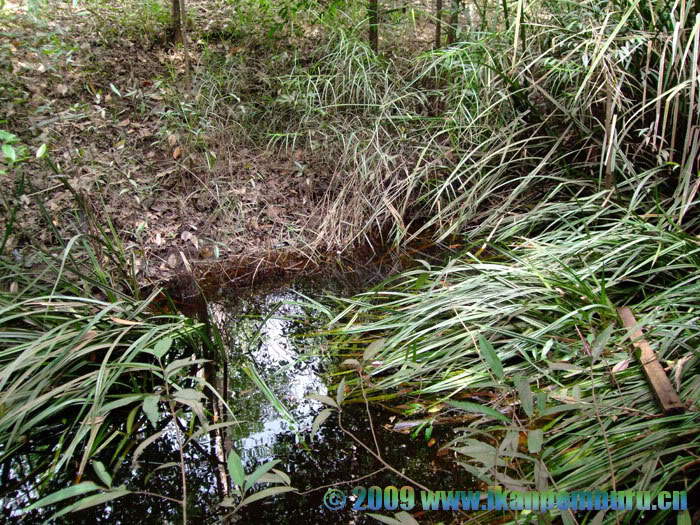
似为印度尼西亚西加里曼丹卡普阿斯河上游的特有种,包括森塔伦湖区。生活在遮阴森林沼泽溪流与水潭,有些水很浅,矿物质含量低,底部覆盖落叶、枝条和树根。缺水时可能躲入湿叶层或河床孔洞,属于应对季节变化的生存方式。
饲养环境
用根枝、陶盆或管道提供多个藏身处,落叶增加遮蔽并支持微生物。灯光宜暗,搭配耐阴和浮水植物。水质偏酸、极软且低缓冲,过滤只需柔和水流。缸盖严密防跳,水面上方留湿暖空气。
食性与喂食
野外可能捕食昆虫与小型无脊椎动物。缸中通常可逐渐接受干饲料,应经常用水蚤、丰年虾和红虫等活饵或冷冻饵补充变化,避免过量造成肥胖。
习性与混养
成对或小群单种饲养较合适。若混养,只考虑很安静且环境需求相容的小鱼,较大或抢食积极的种类容易压制它。
雌雄区分
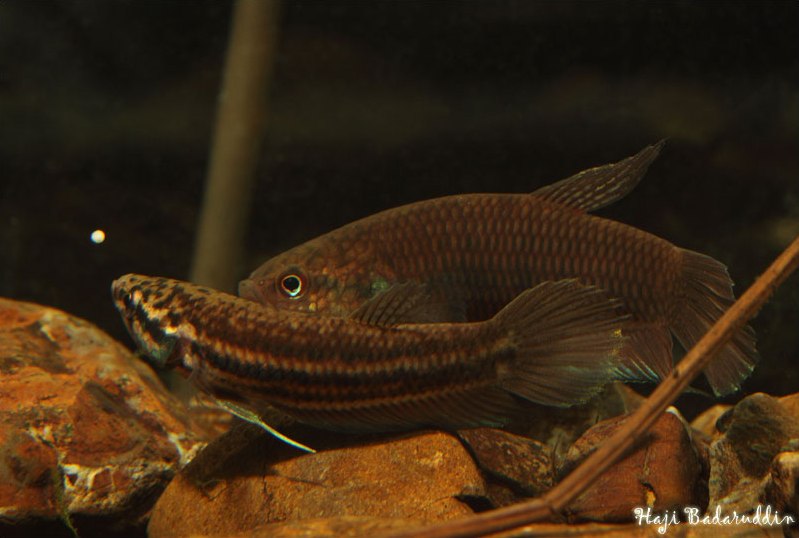
雄鱼较大,头部更宽、虹彩鳞更多,鳍也更长。
繁殖
求偶与试抱后才实际产卵。卵落在雄鱼臀鳍处,经雌鱼拾入口中、吐出,再转给雄鱼含孵。雄鱼受惊或经验不足可能吞卵或提前吐出,因此含卵期宜维持原状,减少搬动雌鱼与其他同伴造成的扰动。
约十至十四天后释放自由游动幼鱼。可分开育苗,也可留在亲鱼旁,有报告认为与亲鱼同养长得更快,但不能作为保证。鱼苗可吃微虫和丰年虾无节幼体,每日两三次少量多样,不要过量单喂丰年虾。保持湿暖空气层,换水以小量规律为宜。
补充说明
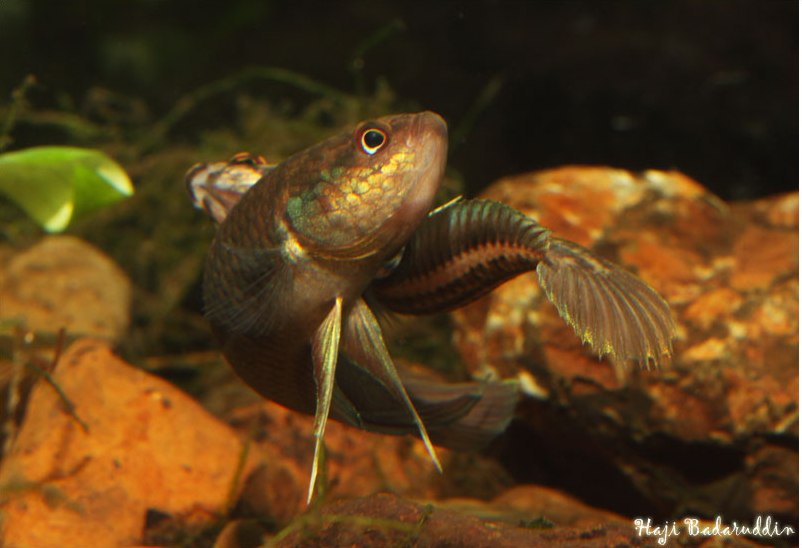
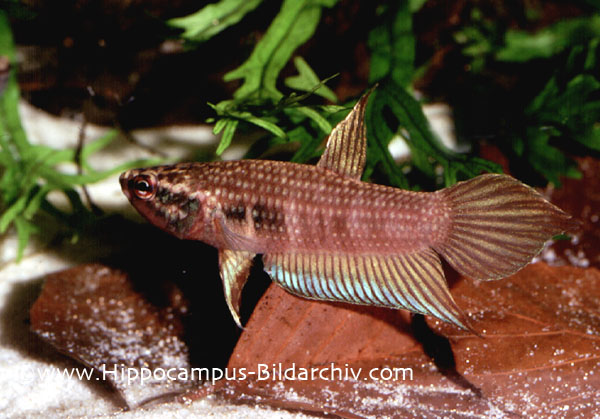
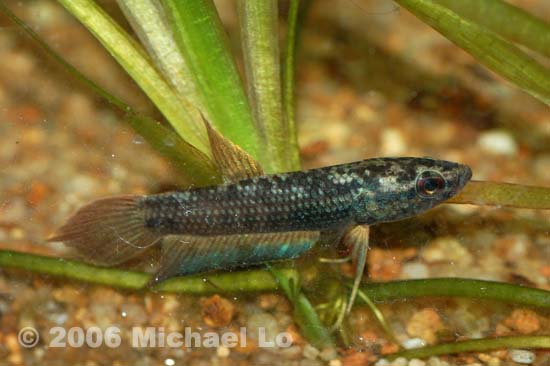
本种活体鳃盖鳞偏金色,身体和鳍偏红褐,成年尾鳍延长为铲形;常混淆的近似型尾鳍较圆、色调更偏黄褐。应综合成熟鱼特征,避免仅凭旧商品标签确认身份。
图片
图片来自 SeriouslyFish,版权归各摄影者所有。
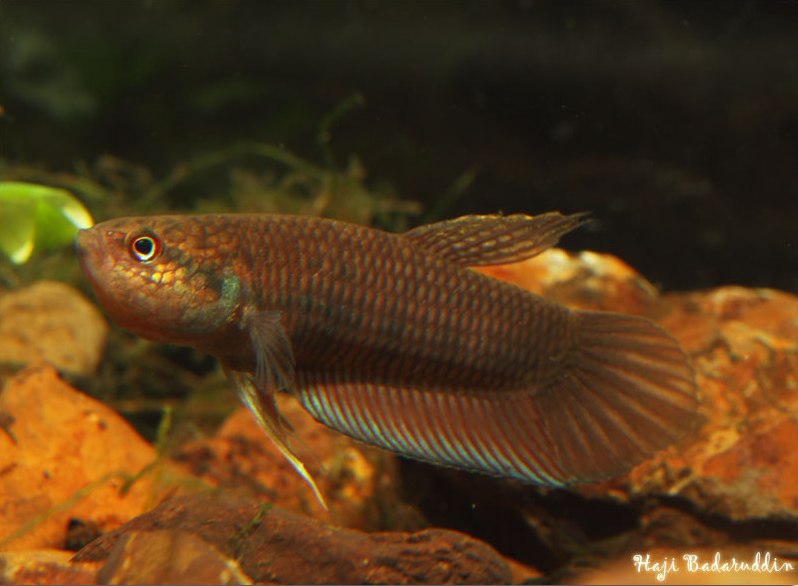
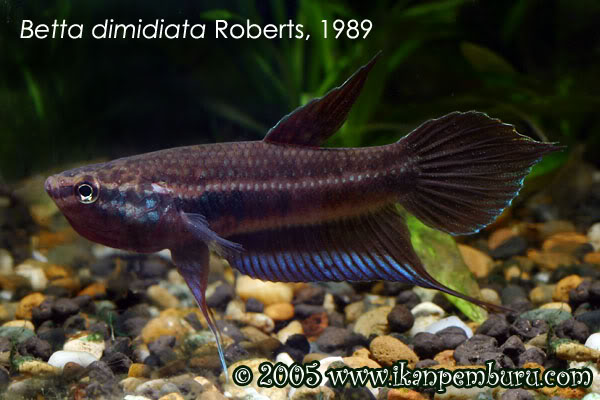
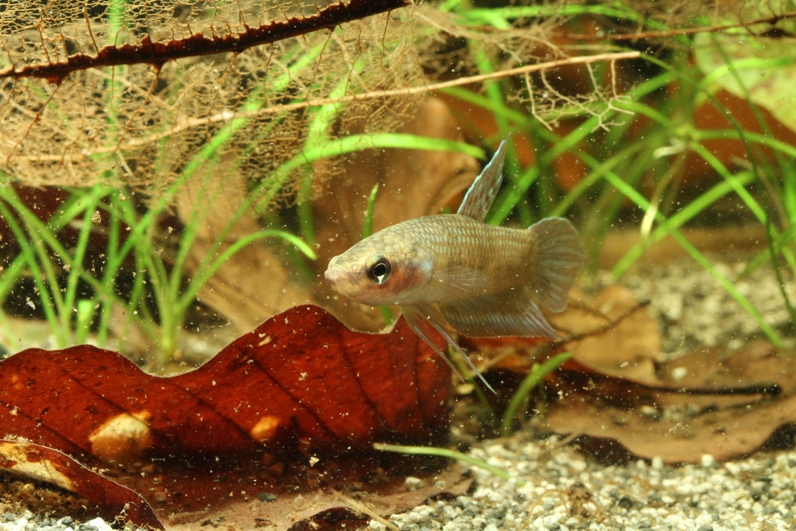
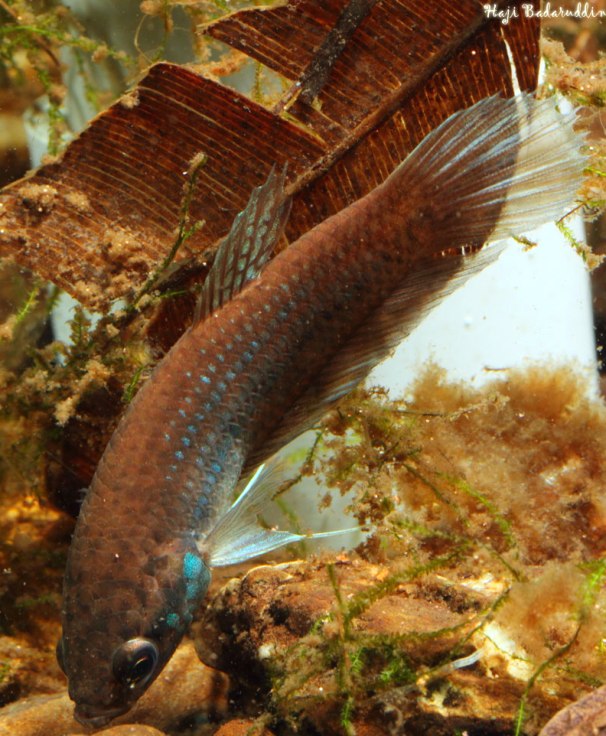
English
Overview
The extended spade-shaped tail of adult Betta dimidiata is a useful distinction from a commonly confused rounded-tailed relative. This small paternal mouthbrooder benefits from soft acidic water, quiet surroundings, and minimal disturbance while the male incubates the brood.
Distribution & habitat
It appears restricted to the upper Kapuas drainage, including the Sentarum lakes region, in West Kalimantan. Shaded forest swamp streams and pools may be extremely shallow. Low-mineral water lies above leaves, branches, and roots. During drying, fish can retreat into damp litter or holes in the riverbed.
Aquarium setup
Provide multiple retreats with wood, roots, pots, or tubing. Leaves support microorganisms and add cover under dim lighting and floating plants. Maintain very soft acidic water with little carbonate hardness and gentle filtration. Secure the lid against jumping and preserve a humid air layer above the water.
Diet & feeding
Insects and other small invertebrates are likely natural prey. Dry foods are often accepted after learning, but regular small live or frozen water fleas, brine shrimp, and bloodworms should supply variety. Avoid overfeeding.
Behaviour & compatibility
Pairs or small groups suit a species setup. Only exceptionally quiet small companions with matching requirements merit consideration. Larger or vigorous fishes can intimidate it and intercept meals.
Sexual dimorphism
Males grow larger, develop broader heads and longer fins, and show more iridescent head scales.
Breeding
Courtship and practice embraces precede egg release. Eggs caught against the male's anal fin are gathered by the female and transferred to him for incubation. A stressed or inexperienced male may swallow or release the brood, so maintaining the established arrangement is preferable to disruptive removal of companions during brooding.
Free-swimming young emerge after about ten to fourteen days. They can be reared separately or remain with their parents; reports of faster growth in the latter situation should be treated as observations rather than a guarantee. Fry immediately take microworms and brine shrimp nauplii. Feed small varied portions several times daily, avoid excessive brine shrimp alone, and use frequent modest water changes under a humid, tightly covered air space.
Notes
Gold-toned opercular scales, reddish-brown coloration, and the adult tail shape aid identification. Historical trade names alone cannot reliably separate similar forms.
来源
- https://www.seriouslyfish.com/species/betta-dimidiata(抓取于 2026-10-10)
betta-dimidiata · 文件: data/species/betta-dimidiata.md · 状态: 草稿