绿咽搏鱼 · Green Throat Mouthbrooder
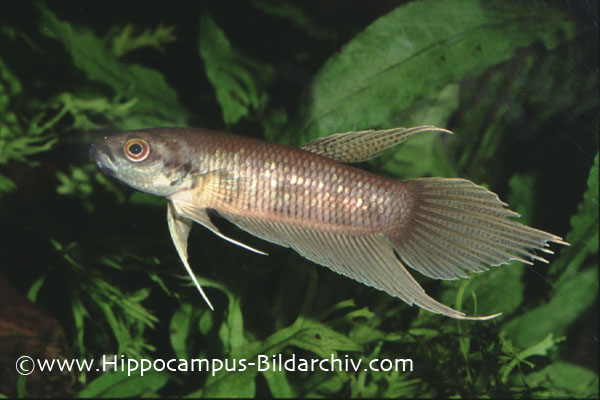
概要
| 字段 | 值 |
|---|---|
| 类别 | 鱼 |
| 学名 | Betta chloropharynx |
| 别名 | 綠咽搏魚 |
| 分类 | 攀鲈目 Anabantiformes › 丝足鲈科 Osphronemidae › Betta |
| 水体 | 淡水 |
| 原产地 | 印度尼西亚苏门答腊东岸外的邦加岛 |
| 饲养难度 | 中等 |
| 最小水体 | 72 L |
| 最小缸长 | 80 cm |
| 群居方式 | 成对 |
| 水流偏好 | 低 |
| 外部数据 | seriouslyfish betta-chloropharynx;fishbase 27011 |
| 繁殖方式 | 口孵 |
| 特征 | 会跳缸: 是 |
水质参数
| 参数 | 耐受范围 | 最适范围 | 单位 |
|---|---|---|---|
| 水温 | 24–28 | — | °C |
| pH | 3.5–6 | — | — |
| 总硬度 | 0–5 | — | dGH |
概述
绿咽搏鱼(Betta chloropharynx)是雄鱼口孵的野生斗鱼,喉部较浅纹路近似横放的数字八,可帮助识别近似种。它通常需要幽暗、低水流的环境,含卵和幼鱼释放后的同伴管理应分阶段处理。
分布与栖息地
来自印度尼西亚邦加岛。苏门答腊巨港附近曾被并作本种的群体后来被描述为另一种,不应把该地点继续算入确定分布。主要生活在泥炭沼泽及黑水溪流,浓密林冠下水色深、矿物质少、偏酸,底部覆盖落叶、枝条和根部。模式标本所在清水池受人为改造影响,不代表典型环境。
饲养环境
用根枝、沉木、陶盆或管道形成阴影和隐蔽处,落叶增加遮蔽并支持微生物。较暗灯光配合耐阴植物和浮水植物,过滤保持柔和。盖严防跳,水面上方留湿暖空气层,尤其育苗时不可忽略。
食性与喂食
野外可能捕食昆虫、小型无脊椎动物和浮游动物。缸中多能逐渐接受干饲料,仍宜经常提供水蚤、丰年虾、红虫或适口小昆虫。避免过量喂食。
习性与混养
适合单种缸,或与十分安静、需求相容的小鱼谨慎相处。较大、过度活跃的同伴容易使它受压和吃不到食物。可成对或群养,但幼鱼释放后,亲鱼之外的同伴可能构成风险。
雌雄区分
成年雄鱼颜色更鲜明,鳍更长,头部也比雌鱼宽。
繁殖
抱合后卵先落在雄鱼臀鳍处,经雌鱼拾取和吐出,再由雄鱼接入口中。含卵约十至二十一天,受惊或经验不足可能导致吞卵、提前吐卵,因此这一阶段宜减少搬动,让原有同伴留在原位。
幼鱼释放后可与亲鱼同养,有报告认为这样长得更快,但其他鱼,包括其他同种个体,应移出以降低幼鱼风险。含卵雄鱼也有进食记录,不能一概认为绝对禁食。鱼苗可吃微虫和丰年虾无节幼体,少量多样、每日两三次,小量规律换水,保持缸盖下湿暖空气。
补充说明
喉纹比单看体色更适合区分近似种。迷鳃器官让它能呼吸空气,但幼鱼的正常发育仍需要合适的水面上方环境。
图片
图片来自 SeriouslyFish,版权归各摄影者所有。
English
Overview
The lighter throat pattern of Betta chloropharynx resembles a sideways figure eight and helps distinguish this paternal mouthbrooder from close relatives. Quiet cover and gentle water movement suit it. Companion management changes once incubation ends, so one rule should not be applied throughout breeding.
Distribution & habitat
It was described from Bangka, Indonesia. A population near Palembang on Sumatra once assigned here was later recognized as a different species. Peat swamps and blackwater streams are typical habitat, with heavy shade, low mineral content, acidic water, and a floor of leaves and wood. The clear type-locality pool resulted from human modification.
Aquarium setup
Roots, branches, pots, and tubing provide sheltered spaces. Leaves add cover and microorganisms. Use subdued lighting, tolerant plants, floating vegetation, and mild filtration. A secure lid prevents jumping while retaining a humid air layer, especially important for fry.
Diet & feeding
Insects, small invertebrates, and zooplankton are likely natural foods. Dry products may be accepted after recognition, but offer regular live or frozen water fleas, brine shrimp, bloodworms, or suitable small insects. Avoid overfeeding.
Behaviour & compatibility
A species setup or very quiet, compatible small companions are preferable. Larger or vigorous fishes may intimidate it and monopolize food. Pairs and groups are possible, but fish other than the parents can threaten released fry.
Sexual dimorphism
Mature males show stronger colors, longer fins, and a broader head.
Breeding
After embraces, eggs held against the male's anal fin are gathered by the female and passed to him. Incubation lasts about ten to twenty-one days. Stress or inexperience can cause swallowing or premature release, so avoid disruptive removals during brooding.
Once fry emerge, they may remain with their parents; some reports suggest faster growth this way. Other fishes, including additional conspecifics, should then be removed. Brooding males have also been observed accepting food, so complete fasting is not universal. Fry take microworms and brine shrimp nauplii. Feed small varied portions several times daily, maintain humid air, and change water in modest regular amounts.
Notes
Throat markings are more informative than general body color for separating related species. Air breathing does not remove the developing fry's need for suitable air conditions above the water.
来源
- https://www.seriouslyfish.com/species/betta-chloropharynx(抓取于 2026-10-10)
betta-chloropharynx · 文件: data/species/betta-chloropharynx.md · 状态: 草稿