加里曼丹搏鱼
概要
| 字段 | 值 |
|---|---|
| 类别 | 鱼 |
| 学名 | Betta balunga |
| 别名 | 加里曼丹搏魚 |
| 分类 | 攀鲈目 Anabantiformes › 丝足鲈科 Osphronemidae › Betta |
| 水体 | 淡水 |
| 原产地 | 婆罗洲马来西亚沙巴斗湖至印度尼西亚塞布库河与马哈坎河水系 |
| 成体体长 | 5 cm |
| 饲养难度 | 中等 |
| 最小水体 | 54 L |
| 最小缸长 | 60 cm |
| 群居方式 | 成对 |
| 水流偏好 | 低 |
| 外部数据 | seriouslyfish betta-balunga;fishbase 52329 |
| 繁殖方式 | 口孵 |
| 特征 | 会跳缸: 是 |
水质参数
| 参数 | 耐受范围 | 最适范围 | 单位 |
|---|---|---|---|
| 水温 | 22–27 | — | °C |
| pH | 5–7 | — | — |
| 总硬度 | 1–5 | — | dGH |
概述
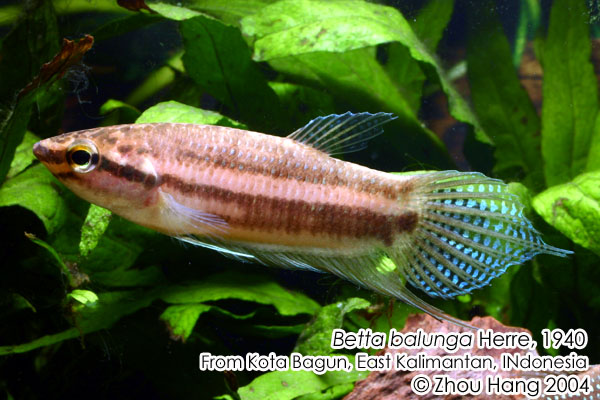
加里曼丹搏鱼(Betta balunga)是婆罗洲的雄性口孵斗鱼,活体虹膜呈红橙色。需要安静、遮蔽充足的软酸水环境,不适合让强势同伴争抢食物或不断追赶。
分布与栖息地
范围从马来西亚沙巴斗湖向南延伸到印度尼西亚东加里曼丹的塞布库河和马哈坎河水系。在塞布库河流溪中躲于极浅岸边根部和落叶间;马哈坎河群体则多见于缓慢黑水溪流的淹水植被中。
饲养环境
可用完整布景,也可为便于维护采用裸底,根枝、陶盆和管道应形成足够躲藏处。落叶和浮水植物提供遮蔽,灯光保持较暗。水质偏酸、低硬度且缓冲度很低,过滤水流要柔和。水面上方保留湿暖空气,缸盖严密防跳。
食性与喂食
野外可能捕食昆虫、小型无脊椎动物和浮游动物。缸中多能逐渐接受干饲料,应经常补充水蚤、丰年虾、红虫等小型活饵或冷冻饵,也可用适口小昆虫。投喂少量多样,避免肥胖。
习性与混养
单种饲养更稳妥,也可谨慎考虑相同环境需求的安静小鱼。较大或非常活跃的同伴容易使它受压并抢走食物。可成对或小群饲养,群体互动需要有遮蔽配合。
雌雄区分
雄鱼较大,头部更宽,虹彩鳞更多,鳍也更延长。
繁殖
雌鱼常主动求偶并防守周边,抱合后分批产卵,再由雌鱼拾卵吐给雄鱼。雄鱼口孵约十四至二十一天,随后释放能自由游动的幼鱼。
亲鱼可能不伤幼鱼,也可能吃掉整窝,经验存在差别。可在产卵数日后谨慎移出雌鱼及其他同伴,但应避免惊扰含卵雄鱼导致吞卵或提前吐卵。释放后的鱼苗能吃微虫和丰年虾无节幼体,每日两三次少量多样投喂,避免过量单喂丰年虾。育苗需严密缸盖维持湿暖空气,小量规律换水。
补充说明
马哈坎河与斗湖群体某些计数特征不同,但因比较材料有限仍被归在本种下,不能自行把产地差异当作已经确认的种级区别。
图片
图片来自 SeriouslyFish,版权归各摄影者所有。
English
Overview
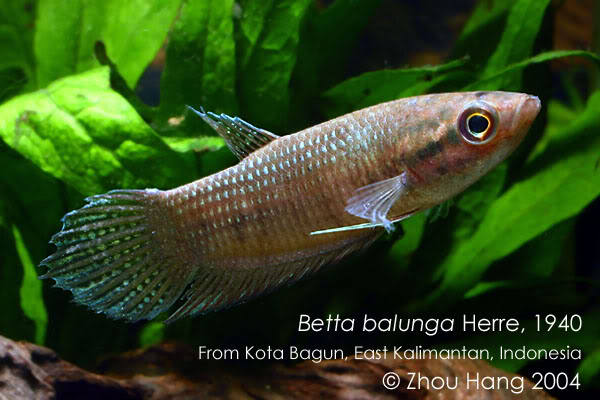
The reddish-orange iris of Betta balunga is one useful clue to this Bornean mouthbrooder. It benefits from quiet, sheltered housing with soft acidic water. Protecting access to food and avoiding disturbance are more useful than placing it in a lively community display.
Distribution & habitat
Its range extends south from Tawau in Sabah to the Sebuku and Mahakam systems of East Kalimantan. Sebuku fish occupy extremely shallow stream margins among roots and leaves. Mahakam fish are found in slow blackwater among submerged marginal vegetation.
Aquarium setup
Either a decorated or easily cleaned bare-bottom aquarium can work. Arrange roots, pots, or pipes into secure retreats. Dried leaves and floating plants add cover under subdued lighting. Keep water acidic, very soft, and low in carbonate hardness, with gentle filtration. A close-fitting lid prevents jumping and retains humid air above the water.
Diet & feeding
Insects, small invertebrates, and zooplankton are probable natural foods. Captive fish often learn to accept dry products, but small live or frozen water fleas, brine shrimp, bloodworms, and suitable insects should provide regular variety. Do not overfeed.
Behaviour & compatibility
A species aquarium or exceptionally peaceful companions with matching requirements are preferable. Larger, vigorous fish can intimidate it and monopolize food. Pairs and small groups are possible when the layout offers sufficient shelter.
Sexual dimorphism
Males are larger with broader heads, more iridescent head scales, and longer fins.
Breeding
Females commonly initiate courtship and defend the immediate area. Eggs released during embraces are collected by the female and passed to the male. His incubation lasts about fourteen to twenty-one days before fully developed fry are released.
Accounts differ over whether parents eat their young. Some breeders remove the female and other companions several days after spawning, but removal must not frighten the male into swallowing or releasing the brood prematurely. Young take microworms and newly hatched brine shrimp immediately. Offer small, varied meals several times daily instead of excessive brine shrimp alone. Tight cover and frequent small water changes support development.
Notes
Some counts differ between Mahakam and Tawau populations. Limited comparative material has prevented those differences from settling their taxonomic status, so locality variation should not automatically be interpreted as separate species.
来源
- https://www.seriouslyfish.com/species/betta-balunga(抓取于 2026-10-10)
betta-balunga · 文件: data/species/betta-balunga.md · 状态: 草稿