特氏深丽鱼
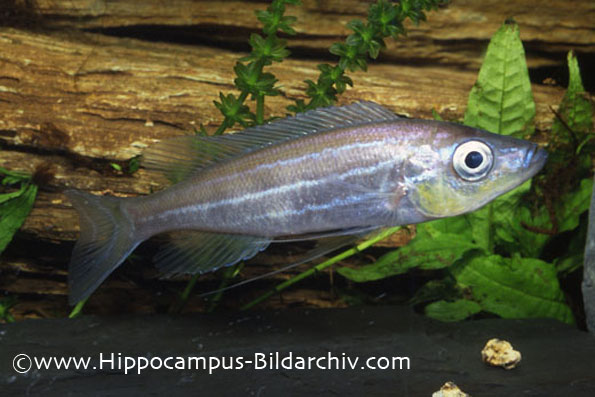
概要
| 字段 | 值 |
|---|---|
| 类别 | 鱼 |
| 学名 | Benthochromis tricoti |
| 别名 | 特氏深麗魚、Haplotaxodon tricoti |
| 分类 | 慈鲷目 Cichliformes › 慈鲷科 Cichlidae › Benthochromis |
| 水体 | 淡水 |
| 原产地 | 布隆迪、刚果民主共和国、坦桑尼亚、赞比亚 |
| 成体体长 | 16.5 cm |
| 饲养难度 | 中等 |
| 最小水体 | 540 L |
| 最小缸长 | 150 cm |
| 群居方式 | 群游 |
| 性情 | 温和 |
| 特征 | 会跳缸: 是 |
| 外部数据 | seriouslyfish benthochromis-tricoti;fishbase 8148 |
| 食性 | 浮游生物食性 |
| 游动层 | 上层、中层 |
| 繁殖方式 | 口孵 |
水质参数
| 参数 | 耐受范围 | 最适范围 | 单位 |
|---|---|---|---|
| 水温 | 24–27 | — | °C |
| pH | 7.5–9 | — | — |
| 总硬度 | 10–25 | — | dGH |
概述
特氏深丽鱼(Benthochromis tricoti)是坦噶尼喀湖深水开放水域鱼,饲养需要长而宽敞、光线柔和的缸。它温和但易受强势伙伴压迫,历史上还有近似种以其名称出售,繁殖记录需谨慎理解。
分布与栖息地
坦噶尼喀湖特有,沿湖四国均有记录。它生活在远离岩岸的深水开放区,模式标本来自 100~125 米深处,其他有深度记录的馆藏多在 40~85 米采到。
饲养环境
群养至少考虑 150 × 60 × 60 厘米。缸内多在上半部游动,至少上方三分之二保持无障碍;受惊时大眼容易撞伤,避免尖锐岩景。底部可少量低岩堆配细沙,留适度水流,缸盖严密防跳。
食性与喂食
野外吃浮游动物,主要是小型甲壳类。嘴小,丰年虾、糠虾、剑水蚤等适口活饵或冷冻饵料应占重要部分,配含少量植物成分的优质干粮;每天多次少量,确保实际吃到。
习性与混养
建议至少 5~6 条,条件允许时一雄配数雌。单种群养最稳妥,混养只选择安静的同湖鱼与较小鲶鱼;强势岩栖鱼或大型鲶鱼不合适。
雌雄区分
成年雄鱼更大、明显更艳,雌鱼多较素。
繁殖
雌性口孵,卵产出后即含入口中。水族箱有产卵报告,但育成困难,释放的幼鱼可能头大身小、发育较弱,通常尝试最细小的新孵丰年虾无节幼体。部分历史报告可能实际属于近似种,不能把其中的产仔数或孵育时间直接套用本种。
补充说明
与常被混淆的近似种相比,本种眼长通常等于或超过吻长,背鳍总鳍棘及鳍条多为 28~29。仅凭漂亮雄鱼照片或贸易名并不够。
图片
图片来自 SeriouslyFish,版权归各摄影者所有。
English
Overview
Benthochromis tricoti comes from deep open water in Lake Tanganyika. A long, dimly lit aquarium with unobstructed swimming space suits its needs. Calm company is essential, and historical confusion with a similar species complicates interpretation of breeding reports.
Distribution & habitat
It is endemic to Lake Tanganyika and recorded in all four bordering countries. Collections come from open water away from rocky shorelines, including deep trawl records. These depths explain the preference for subdued aquarium lighting rather than a heavily illuminated rock display.
Aquarium setup
A group needs at least 150 by 60 by 60 cm. Keep the upper two-thirds clear, as fish commonly swim in the upper half and can injure their large eyes against sharp structures when startled. Low bottom rockwork is optional over fine sand. Provide some circulation and a secure cover.
Diet & feeding
Zooplankton, chiefly small crustaceans, supplies the natural diet. Use small live or frozen prey as the staple, supplemented by suitable dry food with some vegetable matter. Several small daily feedings help these small-mouthed fish obtain enough food.
Behaviour & compatibility
Keep at least five or six, preferably with several females per male. A species setup is best. If adding companions, select calm Tanganyikan fishes and appropriately small catfishes; avoid boisterous or large competitors.
Sexual dimorphism
Adult males are larger and much more colorful; females are comparatively plain.
Breeding
Females collect newly laid eggs for mouthbrooding. Aquarium spawnings have been reported, but rearing success is limited and released fry may be weak and poorly developed. Very small newly hatched brine-shrimp nauplii are the usual first food. Some older accounts may concern a different species, so reliable brood-size and incubation figures cannot be assumed.
Notes
Eye proportions and dorsal-fin counts help resolve the historical confusion. The eye is generally at least as long as the snout, and the dorsal usually totals twenty-eight or twenty-nine spines and rays.
来源
- https://www.seriouslyfish.com/species/benthochromis-tricoti(抓取于 2026-10-10)
benthochromis-tricoti · 文件: data/species/benthochromis-tricoti.md · 状态: 草稿