梳尾格斗鱼 · Ceylonese Combtail
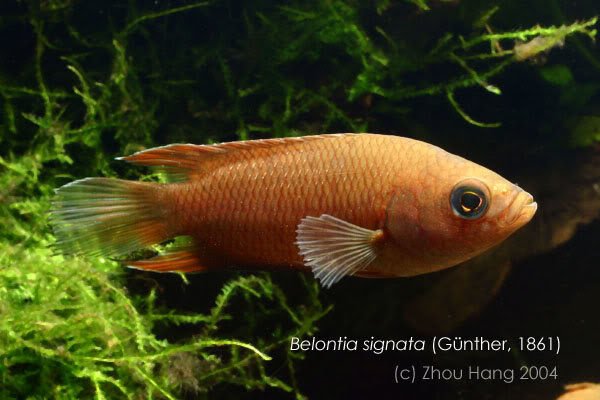
概要
| 字段 | 值 |
|---|---|
| 类别 | 鱼 |
| 学名 | Belontia signata |
| 别名 | 梳尾格鬥魚、Polyacanthus signatus、Macropodus signatus、Belontia signata jonklaasi |
| 分类 | 攀鲈目 Anabantiformes › 丝足鲈科 Osphronemidae › Belontia |
| 水体 | 淡水 |
| 原产地 | 斯里兰卡中部与南部河流 |
| 成体体长 | 12 cm |
| 饲养难度 | 中等 |
| 最小水体 | 108 L |
| 最小缸长 | 120 cm |
| 群居方式 | 成对 |
| 外部数据 | seriouslyfish belontia-signata;fishbase 6353 |
| 食性 | 肉食 |
| 性情 | 攻击性 |
| 繁殖方式 | 吐泡筑巢 |
水质参数
| 参数 | 耐受范围 | 最适范围 | 单位 |
|---|---|---|---|
| 水温 | 20–27 | — | °C |
| pH | 6–7.5 | — | — |
| 总硬度 | 1–12 | — | dGH |
概述
梳尾格斗鱼(Belontia signata)是斯里兰卡特有的迷鳃鱼,常见型偏红,尾鳍鳍条带延长丝状部分。它并非普通混养缸的温顺配角,同种和外形相似的鱼都可能遭到攻击。
分布与栖息地
分布在斯里兰卡中部和南部,包括马哈韦利河、凯拉尼河、卡卢河和尼尔瓦拉河水系。多见于清澈的浅水森林溪流,底部是砂与小石块,似乎偏好缓流段,常躲在岸边树根或植被间。不同产地的体形和花纹可能有差别。
饲养环境
柔软砂底较理想,重点仍是充足遮蔽。较暗灯光配合沉木、树根、枝条和浮水植物可形成阴影,也能按需要搭配其他水草。即使只养一对也要有足够底部空间。
食性与喂食
主要肉食,野外似乎以无脊椎动物和软体动物为主。可喂蚯蚓、贝类等较大活饵或冷冻饵,多数个体也会学会吃干饲料,颗粒通常比薄片更受欢迎。小个体可吃红虫和丰年虾,成鱼可能忽略这些过小食物。
习性与混养
只适合在较大环境中谨慎选择同伴,温和中型群游鲤科鱼较值得考虑。极小鱼可能被吞食,其他迷鳃鱼和部分慈鲷等近形鱼常不被容忍。成鱼不群居,雄鱼会攻击同种及未进入繁殖状态的雌鱼。新增个体有被杀死的风险,除非空间非常大,通常只保留确认性别的一对。
雌雄区分
成年雄鱼更大,奇鳍较长,尾鳍延长丝也更明显;幼鱼难以靠外观准确区分。
繁殖
为双亲照护的泡巢型,巢据说较简单。雌鱼照料和保护卵,雄鱼防守周边区域;产卵量似乎较大,但具体发育时间不宜固定化。
补充说明
至少有数种产地外观型,胸鳍基部亮斑、蓝色鳞光、体形和尾鳍丝颜色均可能不同,其中亚种划分存在争议,不应单凭色差随意拆成新种。迷鳃器官使它能够呼吸空气。
图片
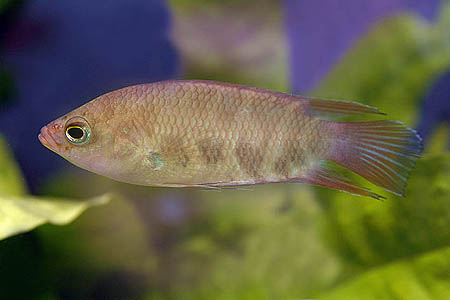
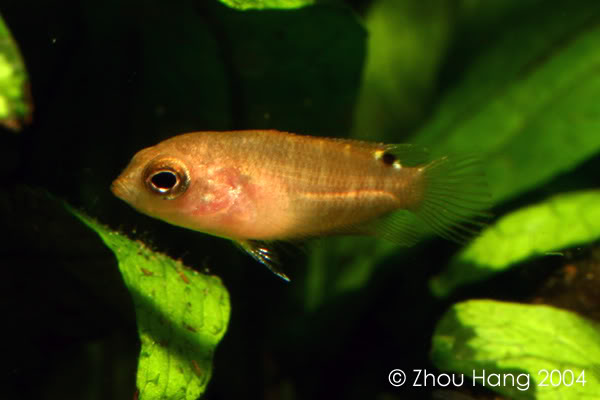
图片来自 SeriouslyFish,版权归各摄影者所有。
English
Overview
Belontia signata is a Sri Lankan labyrinth fish, often reddish and bearing elongated tail-fin filaments. It needs careful stocking decisions because adults can be hostile to their own kind and to similarly shaped fishes. It is not a routine choice for a peaceful community aquarium.
Distribution & habitat
Endemic to central and southern Sri Lankan drainages, it occurs in the Mahaweli, Kelani, Kalu, and Nilwala systems. Clear, shallow forest streams with sand and small stones are typical. Fish apparently favor slower sections among marginal roots and vegetation. Appearance varies with locality.
Aquarium setup
Soft sand is a useful choice, though abundant shelter matters more than the exact substrate. Dim light, wood, scattered roots and branches, and floating vegetation provide a suitable arrangement. Other plants can be included. Even a pair needs a generous footprint.
Diet & feeding
The diet is primarily carnivorous, apparently centered on invertebrates and mollusks in nature. Earthworms and shellfish are suitable larger live or frozen offerings. Most individuals can learn to take dry foods, with pellets often preferred to flakes. Smaller fish accept bloodworms and brine shrimp, but adults may disregard such tiny items.
Behaviour & compatibility
In a large setup, peaceful medium-sized schooling cyprinids are possible partners. Tiny fishes risk predation. Other labyrinth fishes and some cichlids are commonly rejected because of their similar shape. Adults do not form friendly groups: males attack conspecifics, including females outside spawning condition. Newly introduced individuals can be killed. A sexed pair is usually the practical limit unless the aquarium is exceptionally large.
Sexual dimorphism
Mature males are larger, have longer unpaired fins, and develop more pronounced tail filaments. Juveniles cannot be reliably sexed by appearance.
Breeding
Both parents participate in bubble-nest reproduction. The nest is reportedly simple; the female attends the eggs while the male defends the surrounding area. Broods appear large, but detailed reproductive timing is poorly established.
Notes
Several geographic forms differ in body depth, iridescence, pectoral-base markings, and tail-filament color. The status of a proposed subspecies is uncertain, so color variation alone does not justify a separate identification. A labyrinth organ supports air breathing.
来源
- https://www.seriouslyfish.com/species/belontia-signata(抓取于 2026-10-10)
belontia-signata · 文件: data/species/belontia-signata.md · 状态: 草稿