Baryancistrus sp. cf. xanthellus · Gold Nugget Pleco
概要
| 字段 | 值 |
|---|---|
| 类别 | 鱼 |
| 学名 | Baryancistrus sp. cf. xanthellus |
| 别名 | L081 |
| 分类 | 鲶形目 Siluriformes › 骨甲鲶科 Loricariidae › Baryancistrus |
| 水体 | 淡水 |
| 原产地 | 巴西 |
| 成体体长 | 18 cm |
| 饲养难度 | 中等 |
| 最小水体 | 243 L |
| 最小缸长 | 120 cm |
| 群居方式 | 独居 |
| 外部数据 | seriouslyfish baryancistrus-sp-cf-xanthellus |
| 领地性 | 是 |
水质参数
| 参数 | 耐受范围 | 最适范围 | 单位 |
|---|---|---|---|
| 水温 | 27–32 | — | °C |
| pH | 6.4–7.6 | — | — |
| 总硬度 | 3–15 | — | dGH |
概述
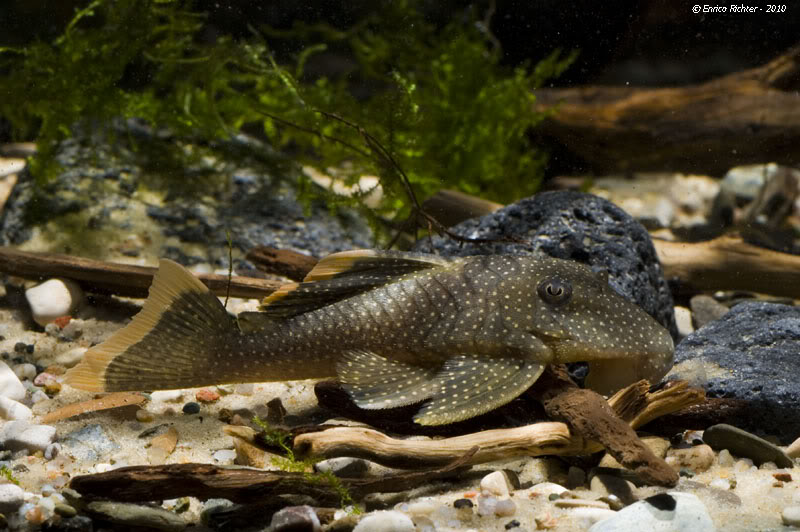
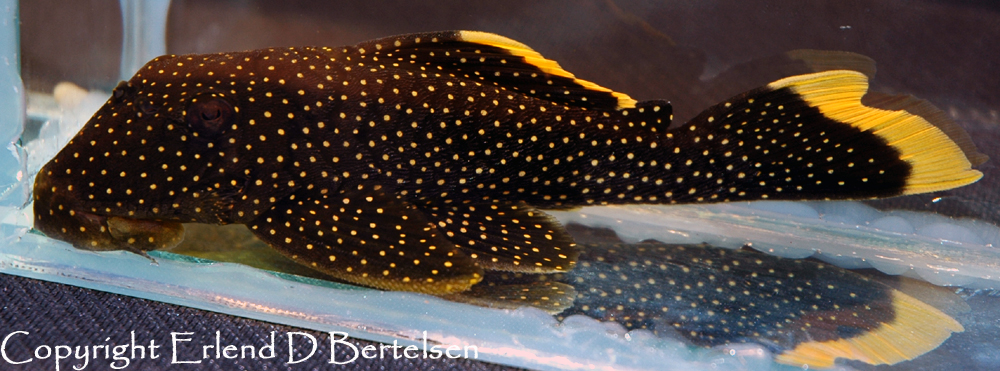
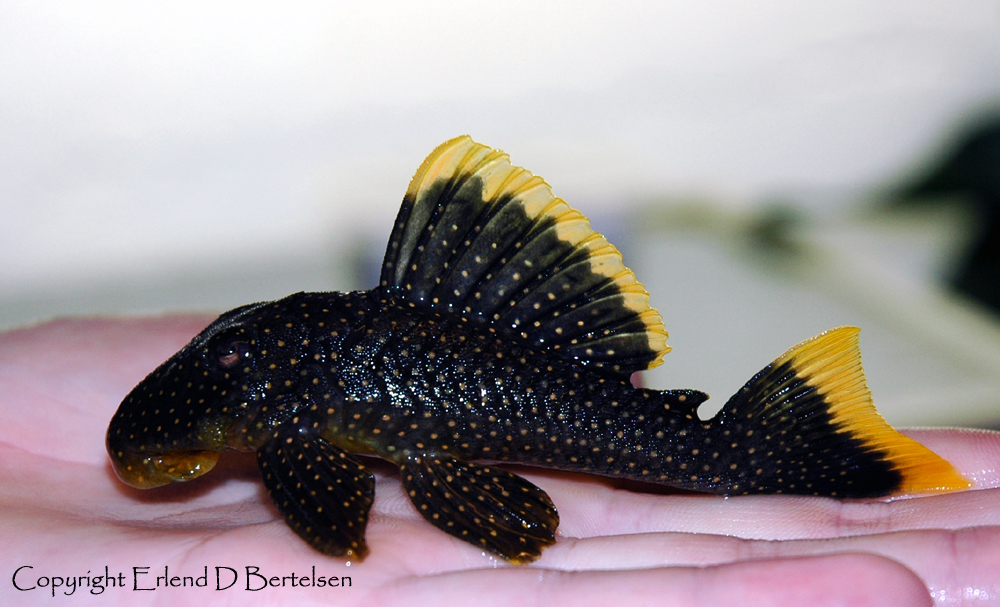
Baryancistrus sp. cf. xanthellus 即 L081,是身份尚未完全确定的斑点异型。它是否属于近缘种的色型仍未确认,购鱼和繁殖记录应保留编号及产地,而不是仅凭金黄色斑点合并。
分布与栖息地
来自巴西帕拉州欣古河流域,但具体产地报告互有矛盾:既有河口附近的说法,也有阿尔塔米拉以南及更上游圣费利斯的记录。不能把这些互有差异的地点当作已确认连续分布。
饲养环境
长期缸底至少约 120 × 45 cm。石块、砾石和大圆石构成流水河道,沉木、根系及结实附生水草补充遮蔽。光照可促进附着生物生长,但仍需提供能独占的阴暗藏身处。
水温不宜偏凉,溶氧和水流须充分,水质应保持清洁。每周换约 40%~70% 水,防有机废物累积。进口同属鱼可能消瘦或状态不佳,应隔离适应,初期可能每日多餐。
食性与喂食
近缘异型(Baryancistrus xanthellus)的胃肠分析发现藻类为主、少量无脊椎动物,这并非 L081 身份已确认后的直接食性记录。缸内可保留附着生物,并提供含植物成分的沉底粮、果蔬、适量红虫等,偶尔喂解冻虾肉。混合植物及动物食材的凝胶饵亦可使用。
习性与混养
幼鱼较温和,成年雄鱼会强烈排斥同种及被视作领地威胁的鱼。伙伴宜占用不同活动区,多尾或与其他异型共养需很大空间、独立领域及视线屏障。
雌雄区分
成熟雄鱼头较宽且略平,胸鳍棘较长。
繁殖
可能仅有一次人工繁殖记录,缺乏可据以重复的完整流程。较大空间、富氧水体和良好营养可能有助尝试,但没有成功保证。
补充说明
L081 没有列入近缘种原始描述所采用的其他编号中,是否同种仍待厘清。体斑通常更细,上游有极细斑个体曾被称作 ‘L081n’ 或 ‘stardust’,贸易代号不能自行解决分类问题。
图片
图片来自 SeriouslyFish,版权归各摄影者所有。
English
Overview
L081, recorded as Baryancistrus sp. cf. xanthellus, is a spotted pleco of unresolved identity. Whether it is a color form of a described relative remains uncertain, so keep the number and provenance attached to aquarium records.
Distribution & habitat
It comes from the Xingu watershed in Pará, Brazil, but locality accounts conflict. Some place it near the river mouth, others south of Altamira or much farther upstream at São Félix do Xingu. These reports do not establish a single confirmed continuous range.
Aquarium setup
Allow at least a 120 × 45 cm footprint for long-term care. Rocks, gravel, and rounded boulders can form a river setting, with wood, roots, and hardy attached plants adding shelter. Light encourages grazing growth, but fish still need separate shaded retreats.
Maintain warm, well-oxygenated water with adequate movement and minimal organic waste. Weekly changes of approximately 40–70% are recommended. Imported members of the genus may require quarantine, extended acclimation, and initially several meals daily to regain condition.
Diet & feeding
Gut samples from Baryancistrus xanthellus contained mostly algae with fewer invertebrates. This is comparative guidance, not direct evidence resolving L081's identity or diet. Preserve grazing surfaces and supplement with vegetable-containing sinking foods, fruit or vegetables, moderate bloodworm meals, and occasional thawed shrimp meat. Mixed gel foods are another option.
Behaviour & compatibility
Young fish are relatively tolerant. Adult males become strongly hostile toward conspecifics and other perceived territorial competitors. Choose companions using other areas. Multiple adults or mixed catfish housing requires a very large aquarium, distinct retreats, and visual barriers.
Sexual dimorphism
Mature males develop broader, somewhat flatter heads and longer pectoral-fin spines.
Breeding
There may have been only one successful aquarium breeding. A repeatable detailed method is not established; ample room, oxygen, and nutrition are considered important without guaranteeing success.
Notes
L081 was absent from the numbered forms cited in the description of its possible relative. Finer body spots, including an upstream form called L081n or stardust, add to identification questions. Trade designations alone do not resolve the taxonomy.
来源
ID:baryancistrus-sp-cf-xanthellus · 文件: data/species/baryancistrus-sp-cf-xanthellus.md · 状态: 草稿