Baryancistrus chrysolomus · Mango Pleco
概要
| 字段 | 值 |
|---|---|
| 类别 | 鱼 |
| 学名 | Baryancistrus chrysolomus |
| 别名 | L047 |
| 分类 | 鲶形目 Siluriformes › 骨甲鲶科 Loricariidae › Baryancistrus |
| 水体 | 淡水 |
| 原产地 | 巴西 |
| 成体体长 | 21.9 cm |
| 饲养难度 | 中等 |
| 最小水体 | 243 L |
| 最小缸长 | 120 cm |
| 群居方式 | 独居 |
| 外部数据 | seriouslyfish baryancistrus-chrysolomus;fishbase 66162 |
| 食性 | 杂食 |
| 领地性 | 是 |
水质参数
| 参数 | 耐受范围 | 最适范围 | 单位 |
|---|---|---|---|
| 水温 | 27–32 | — | °C |
| pH | 6–7.5 | — | — |
| 总硬度 | 2–12 | — | dGH |
概述
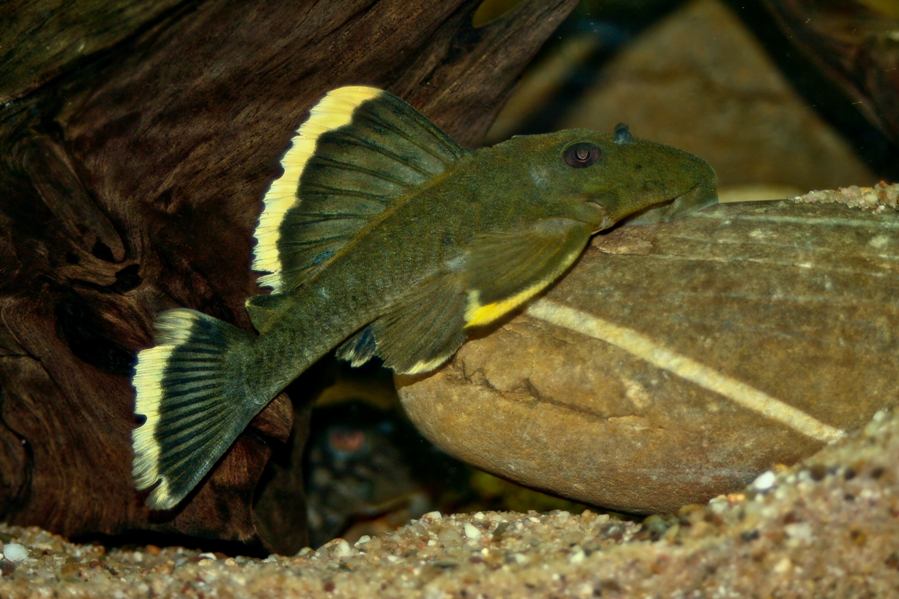
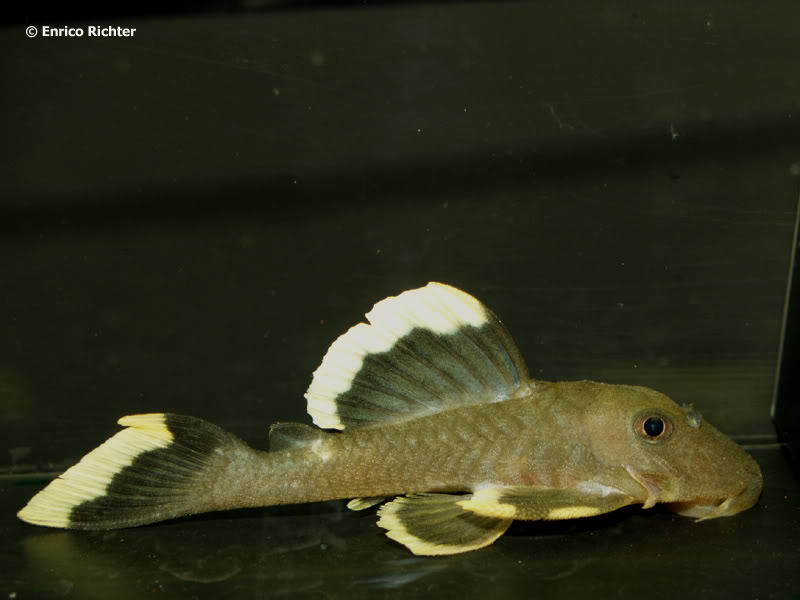
Baryancistrus chrysolomus 即 L047,背鳍和尾鳍终生保有较宽浅黄色边带。幼鱼较温和,长大后尤其雄鱼会强烈排斥同种及争夺空间的鱼,不应按幼鱼时期相处情况安排长期密度。
分布与栖息地
特有于巴西帕拉州欣古河流域,见于大拐弯河段,也有伊里里河支流库鲁阿河上游记录。常在急流附近采到,但似乎偏好相对安静处;幼鱼躲在岸边慢至中等水流的石下,成鱼在河床较大平石下。
饲养环境
长期缸底至少约 120 × 45 cm。用大小不一的石块、砾石、大圆石、沉木和根系组成流水环境,提供有间隔的藏身区和视线屏障。可附生结实水草,较强照明促进附着藻生长。
需要温暖、富氧、有充分水流的清洁水体,不适合偏凉环境。每周换约 40%~70%,避免有机废物累积。进口同属鱼可能消瘦或状态不佳,需隔离适应,初期可能每日多餐恢复体况。
食性与喂食
野外肠道内容物以硅藻和丝状藻为主,也有较少的摇蚊幼虫、苔藓虫等无脊椎动物。保留可刮食的附着生物,补充含植物成分的沉底粮、鲜果蔬,搭配适量红虫等动物饵,虾肉偶尔使用。植物和动物食材混合的凝胶饵也是选择。
习性与混养
幼鱼较温和,成雄对同种以及被视作领地竞争者的其他鱼可能很凶。伙伴宜占用不同活动区域;只有很大空间、足够独立领域及视线屏障下,才考虑多尾或与其他异型同养。
雌雄区分
较难辨别。成熟雌鱼前额和腹部通常比雄鱼略圆,需结合成熟状态观察。
繁殖
现有资料没有人工繁殖记录,不宜直接套用其他异型的繁殖流程。
补充说明
与近缘异型(Baryancistrus xanthellus)相比,本种成鱼鳍边带仍宽,后者成年后多只剩鳍尖小斑。本种即便有浅色体斑,也通常不如后者醒目,辨认要结合成长阶段。
图片
图片来自 SeriouslyFish,版权归各摄影者所有。
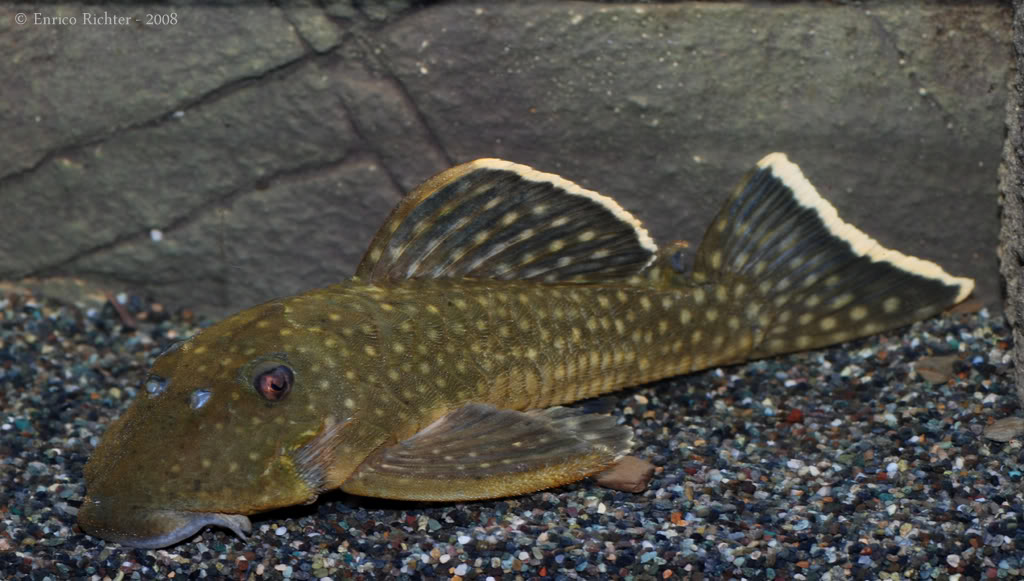
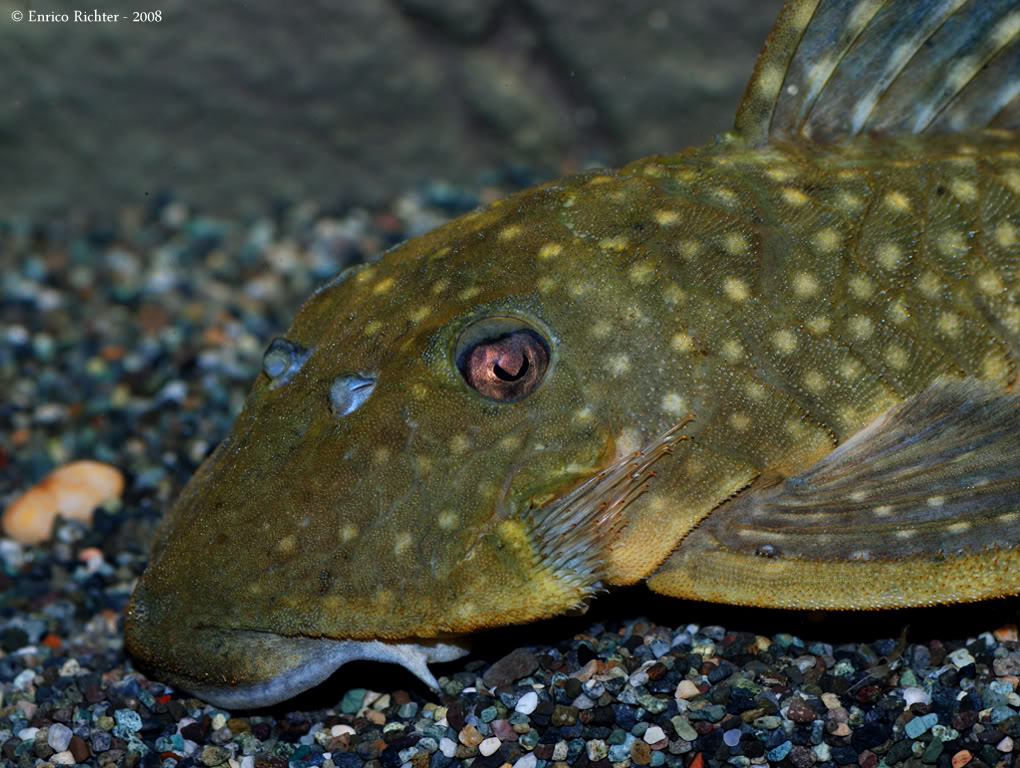
English
Overview
Baryancistrus chrysolomus, traded as L047, retains broad pale yellowish borders on the dorsal and caudal fins throughout life. Juvenile tolerance can disappear with age, especially in males, so early compatibility does not establish a safe adult stocking level.
Distribution & habitat
It is endemic to the Xingu drainage in Pará, Brazil, with records from the Volta Grande and the upper Curuá in the Iriri system. Although collected around rapids, it appears to favor quieter patches. Young shelter under rocks near slower margins, while adults use larger flat rocks on the riverbed.
Aquarium setup
Allow at least a 120 × 45 cm footprint for long-term housing. Combine varied rocks, gravel, rounded boulders, wood, and roots to create a river setting with separated shelters and visual barriers. Hardy attached plants are optional; brighter light encourages grazing growth.
Warm, well-oxygenated water and substantial movement are essential. It does not thrive in cool conditions. Replace roughly 40–70% of the water weekly and prevent organic accumulation. Newly imported members of the genus may be thin or unwell, requiring quarantine and an extended adjustment period, sometimes with several meals daily.
Diet & feeding
Wild gut contents were dominated by diatoms and filamentous algae, with smaller amounts of invertebrates including midge larvae and bryozoans. Preserve grazing surfaces and provide vegetable-containing sinking foods, fresh fruit or vegetables, and moderate animal supplements such as bloodworms. Thawed shrimp meat can be occasional food, and mixed gel preparations are another option.
Behaviour & compatibility
Young fish are relatively peaceful. Adult males can become highly intolerant of conspecifics and other perceived competitors for territory. Companions using different areas are preferable. Combining adults with other catfishes requires a very large aquarium, distinct retreats, and strong visual separation.
Sexual dimorphism
Sexing is difficult. Mature females tend to be slightly rounder across the forehead and abdomen.
Breeding
The account contains no reported aquarium reproduction, so a procedure from another pleco should not be presented as established for this species.
Notes
Broad adult fin borders distinguish it from Baryancistrus xanthellus, whose bands diminish to small tip markings. Any pale body spots are also less prominent, making age relevant when comparing specimens.
来源
- https://www.seriouslyfish.com/species/baryancistrus-chrysolomus(抓取于 2026-10-10)
baryancistrus-chrysolomus · 文件: data/species/baryancistrus-chrysolomus.md · 状态: 草稿