Baryancistrus beggini · L239
概要
| 字段 | 值 |
|---|---|
| 类别 | 鱼 |
| 学名 | Baryancistrus beggini |
| 别名 | Blue 'Panaque' |
| 分类 | 鲶形目 Siluriformes › 骨甲鲶科 Loricariidae › Baryancistrus |
| 水体 | 淡水 |
| 原产地 | 哥伦比亚、委内瑞拉 |
| 成体体长 | 8.1 cm |
| 饲养难度 | 中等 |
| 最小水体 | 72 L |
| 最小缸长 | 80 cm |
| 群居方式 | 独居 |
| 性情 | 温和 |
| 外部数据 | seriouslyfish baryancistrus-beggini;fishbase 64885 |
| 领地性 | 是 |
| 繁殖方式 | 附着产卵 |
水质参数
| 参数 | 耐受范围 | 最适范围 | 单位 |
|---|---|---|---|
| 水温 | 26–30 | — | °C |
| pH | 5.5–7.5 | — | — |
| 总硬度 | 1–10 | — | dGH |
概述
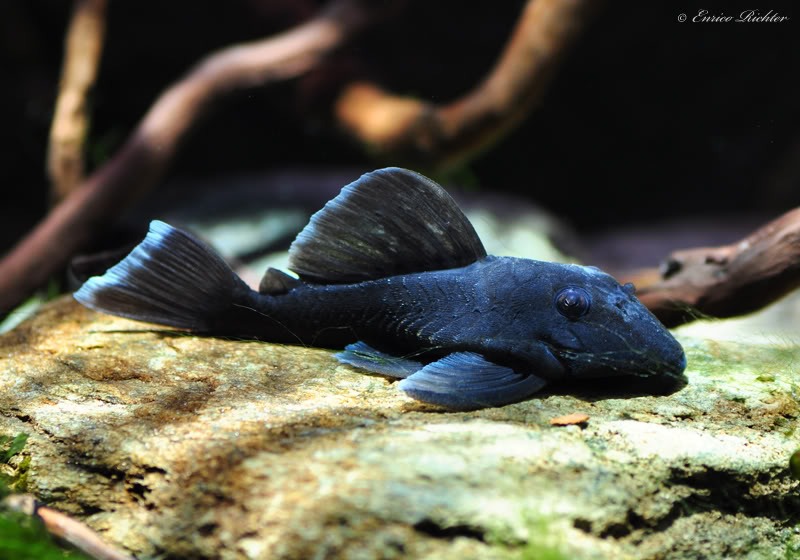
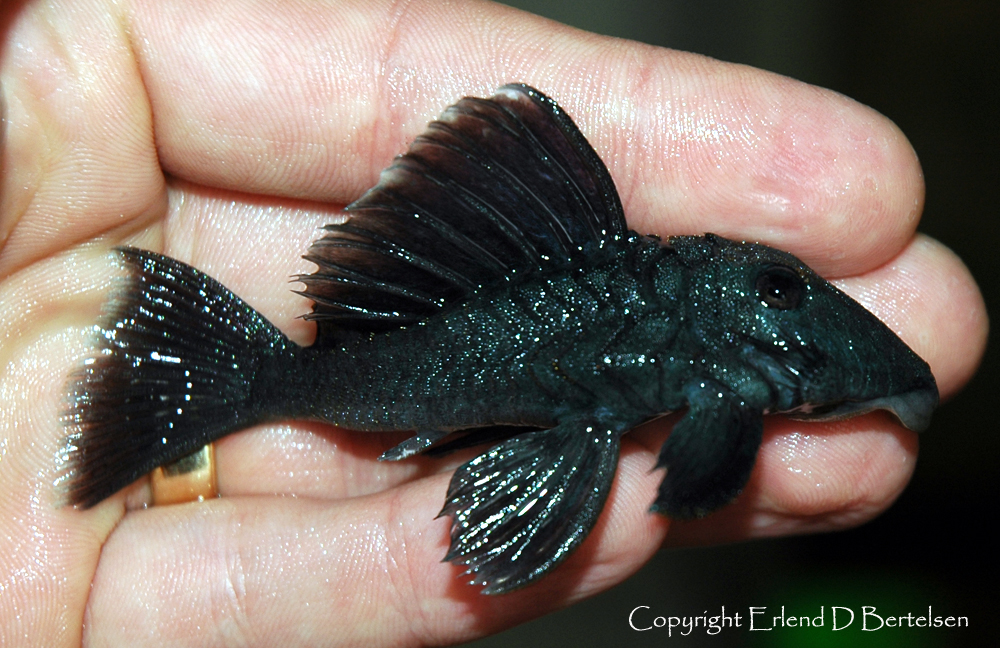
Baryancistrus beggini 即 L239,身体与鳍呈黑褐底色,带蓝至蓝绿色光泽。体形小不代表适合普通混养缸,它对水质要求高,同种特别是雄鱼之间有明显领地竞争。
分布与栖息地
已知来自委内瑞拉文图阿里河与奥里诺科河汇合处附近,以及哥伦比亚瓜维亚雷河下游。模式标本在花岗岩岩床与巨石间的缝隙中采到。
饲养环境
长期饲养缸底至少约 80 × 30 cm。以岩石、砾石和大圆石模拟流水河道,沉木、根系与附着在布景上的耐阴水草补充遮蔽。较强灯光可促进鱼能刮食的附着生物生长。
保持高溶氧、充分水流和清洁水质,对有机废物积累尤其要警惕。每周换水约 40%~70%,根据设备合理分配过滤和造流。进口鱼常需要较长隔离适应期,同属鱼初期可能需要每日多餐恢复体况。
食性与喂食
野生胃肠检查以附着生物及伴生微生物为主,并非单纯按藻类食物理解。保留观察面以外适量可刮食表面,同时补充含植物成分的优质沉底粮、红虫或蚊幼虫,偶尔给解冻虾肉。混合植物和动物食材的凝胶饵也可使用。
习性与混养
总体较温和,但体质较敏感,宜单养或配不争食、不争地的小型伙伴。对同种及外形相近鱼有领地意识,雄鱼尤明显;多尾共养必须有足够空间和独立退避处。
雌雄区分
成熟雄鱼鳃盖及胸鳍棘上的齿突较长,也可能蓝色更强。成熟雌鱼体形略宽,抱卵时更明显,颜色差异不能当作可靠单一判据。
繁殖
在洞中产卵,产后雌鱼被驱离,由雄鱼守护并照顾卵。
补充说明
L239 是正式描述前的编号。本种归属目前资料中带暂定性质,但不能凭外观自行改属。身体蓝光与胸鳍上方明显的侧棱可辅助辨认,编号也不总与物种一一对应。
图片
图片来自 SeriouslyFish,版权归各摄影者所有。
English
Overview
Baryancistrus beggini, known as L239, has dark brown to black coloration with a blue or turquoise sheen. Small size does not make it an uncomplicated community fish: water quality is critical, and territorial competition is pronounced between males.
Distribution & habitat
Records come from the Ventuari–Orinoco confluence area in Venezuela and the lower Guaviare in Colombia. Type specimens occupied gaps between granite bedrock and boulders.
Aquarium setup
Provide at least an 80 × 30 cm footprint for long-term care. Arrange rocks, gravel, and large rounded stones into a river setting. Wood, roots, and hardy attached plants add cover. Brighter lighting can encourage a grazing layer on surfaces.
Maintain strong oxygenation, adequate movement, and consistently clean water. Weekly changes of about 40–70% help control organic accumulation. Newly imported members of the genus often require extended quarantine and acclimation, sometimes with several meals daily while recovering condition.
Diet & feeding
Wild gut contents consisted mainly of periphyton and its associated microorganisms, so its food base should not be reduced to algae alone. Permit suitable growth on surfaces apart from the viewing pane. Supplement with quality sinking foods containing vegetables, bloodworms or mosquito larvae, and occasional thawed shrimp meat. Mixed vegetable and animal ingredients can also be offered in gel foods.
Behaviour & compatibility
Generally peaceful but somewhat delicate, it is best alone or with small companions that do not compete for food or space. Conspecific and similar-looking fishes provoke territoriality, especially among males. Multiple individuals require sufficient room and separate retreats.
Sexual dimorphism
Mature males develop longer gill-cover and pectoral-spine odontodes and may show stronger blue coloration. Mature females are slightly broader, particularly when carrying eggs; color is not a dependable standalone test.
Breeding
Eggs are laid in a cave. The female is driven away afterward, leaving the male to guard and tend the clutch.
Notes
L239 predates the formal description. Generic placement is treated as tentative in the account. Blue sheen and the distinctive ridge above the pectoral region help recognition, but an L-number is not always a one-to-one species identifier.
来源
- https://www.seriouslyfish.com/species/baryancistrus-beggini(抓取于 2026-10-10)
baryancistrus-beggini · 文件: data/species/baryancistrus-beggini.md · 状态: 草稿