黄带直线脂鲤 · Red-eye Tetra
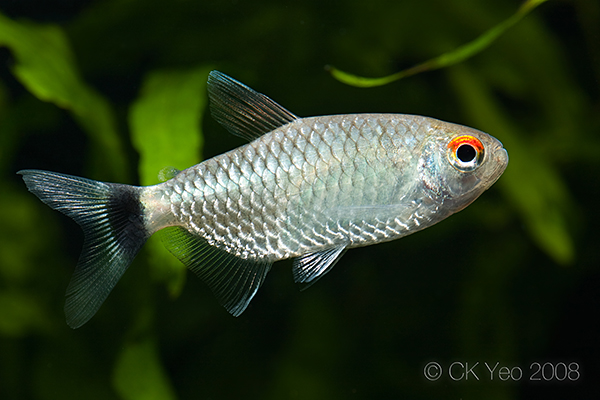
概要
| 字段 | 值 |
|---|---|
| 类别 | 鱼 |
| 学名 | Bario sanctaefilomenae |
| 别名 | 黃帶直線脂鯉、Moenkhausia sanctaefilomenae |
| 分类 | 脂鲤目 Characiformes › 脂鲤科 Characidae › Bario |
| 水体 | 淡水 |
| 原产地 | 巴西、巴拉圭 |
| 成体体长 | 7 cm |
| 饲养难度 | 中等 |
| 最小水体 | 103 L |
| 最小缸长 | 90 cm |
| 群居方式 | 群游 |
| 外部数据 | seriouslyfish bario-sanctaefilomenae;fishbase 10674 |
水质参数
| 参数 | 耐受范围 | 最适范围 | 单位 |
|---|---|---|---|
| 水温 | 22–26 | — | °C |
| pH | 6–8 | — | — |
| 总硬度 | 3–20 | — | dGH |
概述
黄带直线脂鲤(Bario sanctaefilomenae)是常见的红眼脂鲤,活动旺盛,对食物和水质的适应范围较宽。成群饲养能分散同种争执;混养时宜选择同样活跃、体型接近的鱼,过于安静的同伴容易受到压迫。
分布与栖息地
原生于巴西、巴拉圭和阿根廷,主要栖息于流入潘塔纳尔湿地的清水河流。当地可有大量浮水植物及成片沉水植物,植被为鱼提供遮蔽。市场供应主要来自大规模人工繁殖。
饲养环境
不喜欢过亮、空旷的布置,密植水草并保留足够游动区较合适。也可用细砂、沉木、根枝和少量落叶形成偏暗环境,定期处理腐败落叶以维持水质。虽然较能适应不同水质,仍需保持日常维护稳定,不能以耐受范围较宽代替清洁管理。
食性与喂食
薄片和颗粒通常容易接受,搭配红虫、水蚤、丰年虾等小型活饵或冷冻饵料。食谱中还应有植物性部分,例如菠菜叶或优质藻类薄片。
习性与混养
至少六至八条同养,数量不足时容易紧张,咬鳍和争执也更容易影响其他鱼。体型接近的活跃脂鲤、彩虹鱼、较大波鱼、鲃和斑马鱼类可供选择,鼠鱼、小型异型和适合条件的底栖鳅也能搭配。行动缓慢的迷鳃鱼或短鲷可能受惊扰;中等体型、温和慈鲷缸中,它也可作为陪游鱼。
雌雄区分
繁殖状态的雌鱼体形更圆、腹部更饱满。
繁殖
另设暗光繁殖缸,使用柔和海绵过滤和偏软偏酸的水,放细叶植物、产卵拖把或隔卵网。可用调养好的群体繁殖,也可先分开雌雄,再把腹部最饱满的雌鱼与颜色鲜明的雄鱼于傍晚合缸,通常次晨产卵。
亲鱼会吃卵,发现产卵后应移出。卵约二十四至三十六小时孵化,再过三四天幼鱼自由游动。开口阶段先喂纤毛虫等微小食物,之后再加入微虫和丰年虾无节幼体。
图片
图片来自 SeriouslyFish,版权归各摄影者所有。
English
Overview
The red-eye tetra, Bario sanctaefilomenae, brings considerable activity to a community aquarium. Farmed fish are widely available and adaptable in feeding and water chemistry. Its energetic behavior suits active companions better than sedate species.
Distribution & habitat
It is native to Brazil, Paraguay, and Argentina, mainly in clear rivers draining toward the Pantanal. Floating plant rafts and dense submerged vegetation can be prominent features. Commercial breeding supplies most aquarium stock.
Aquarium setup
Avoid harsh illumination and an exposed, sparsely furnished layout. Dense planting works well when space for swimming remains. Sand, roots, wood, and a modest layer of leaves offer another sheltered arrangement. Remove deteriorating leaves as necessary and maintain good water quality despite the fish's broad tolerance.
Diet & feeding
Flakes and granules are readily accepted. Add small live or frozen foods such as bloodworms, water fleas, and brine shrimp. Include a plant component, for example spinach or an algae-based flake.
Behaviour & compatibility
Keep at least six to eight. Adequate numbers help keep disputes within the group and reduce nervousness and fin nipping. Other active tetras, rainbowfishes, larger rasboras, barbs, and danionins can be suitable. Compatible bottom-dwelling catfishes and loaches are further options. Slower labyrinth fishes and dwarf cichlids may be intimidated. A group can also act as dither fish for peaceful, medium-sized cichlids.
Sexual dimorphism
Females become noticeably rounder when ready to spawn.
Breeding
Prepare a separate, dimly lit aquarium with soft, mildly acidic water and gentle sponge filtration. Fine plants, spawning mops, or mesh protect the spawning sites or eggs. A conditioned group can breed, or a ripe pair can be selected after the sexes have been conditioned separately. Evening introduction often leads to spawning the following morning.
Adults consume eggs and should be removed promptly. Eggs hatch after roughly twenty-four to thirty-six hours; free swimming follows another three or four days later. Start with infusoria-sized food, moving on to microworms and newly hatched brine shrimp as the fry develop.
来源
- https://www.seriouslyfish.com/species/bario-sanctaefilomenae(抓取于 2026-10-10)
bario-sanctaefilomenae · 文件: data/species/bario-sanctaefilomenae.md · 状态: 草稿