魔颊须鳅
概要
| 字段 | 值 |
|---|---|
| 类别 | 鱼 |
| 学名 | Barbucca diabolica |
| 别名 | 魔頰鬚鰍 |
| 分类 | 鲤形目 Cypriniformes › 颊须鳅科 Barbuccidae › Barbucca |
| 水体 | 淡水 |
| 原产地 | 印度尼西亚、马来西亚 |
| 成体体长 | 5 cm |
| 饲养难度 | 中等 |
| 最小水体 | 54 L |
| 最小缸长 | 60 cm |
| 群居方式 | 群游 |
| 外部数据 | seriouslyfish barbucca-diabolica;fishbase 22696 |
| 领地性 | 是 |
水质参数
| 参数 | 耐受范围 | 最适范围 | 单位 |
|---|---|---|---|
| 水温 | 20–25 | — | °C |
| pH | 5.5–7.5 | — | — |
| 总硬度 | 1–10 | — | dGH |
概述
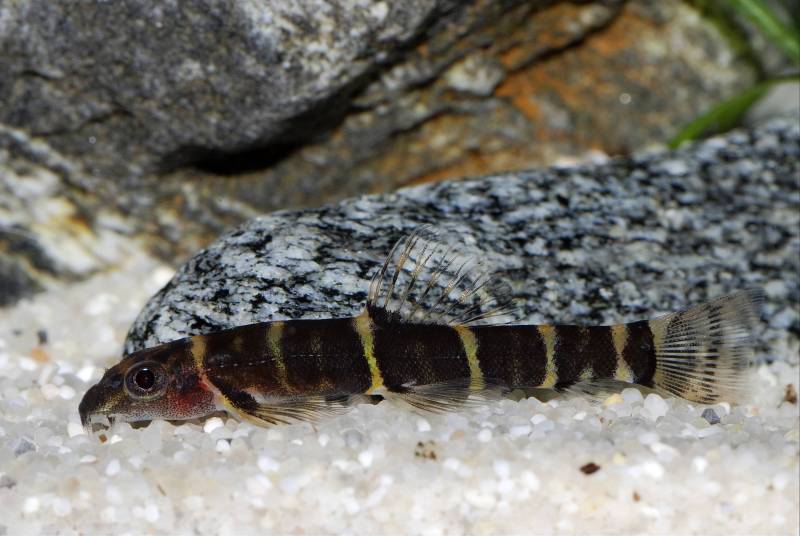
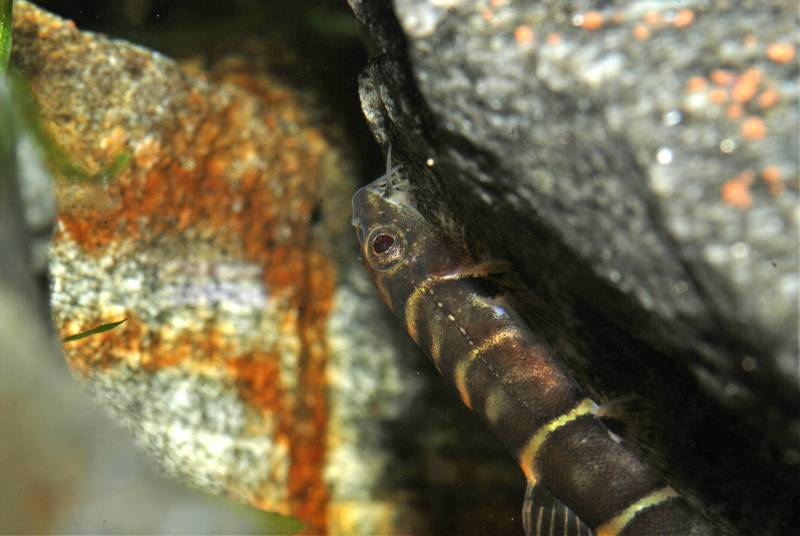
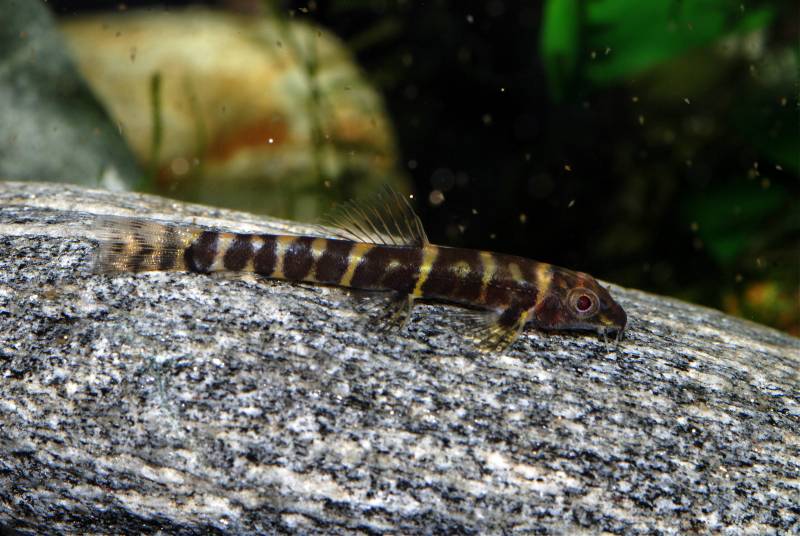
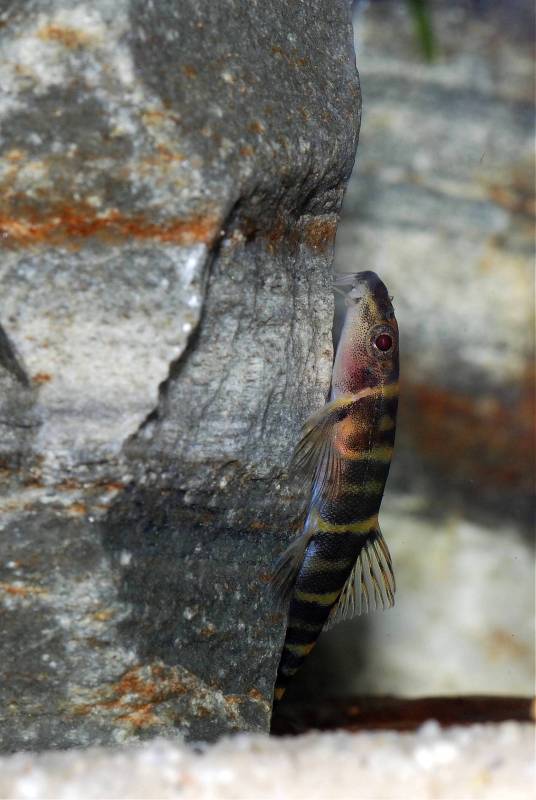
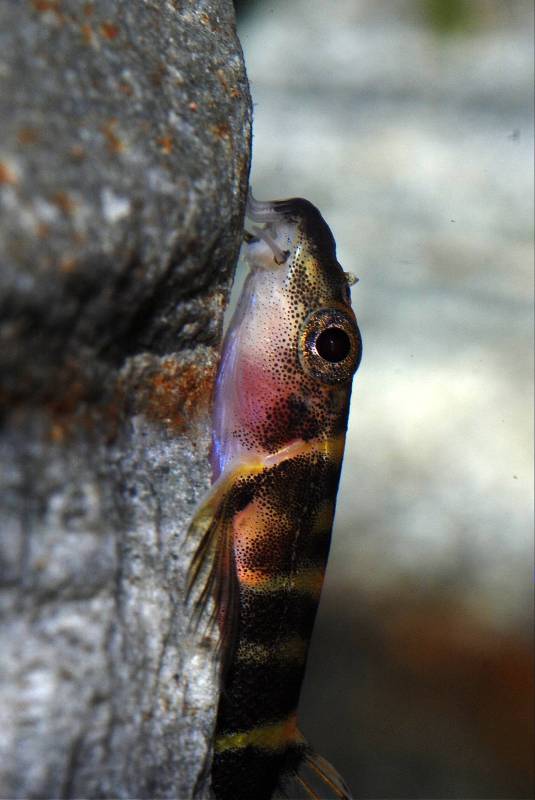
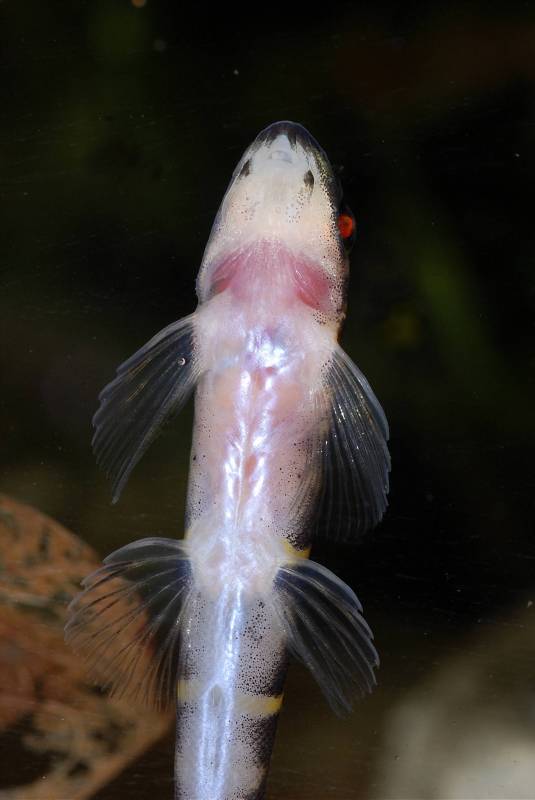
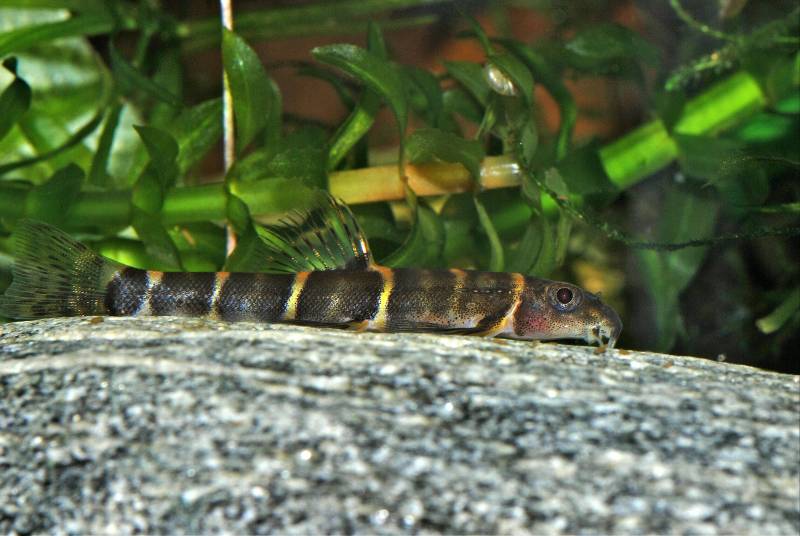
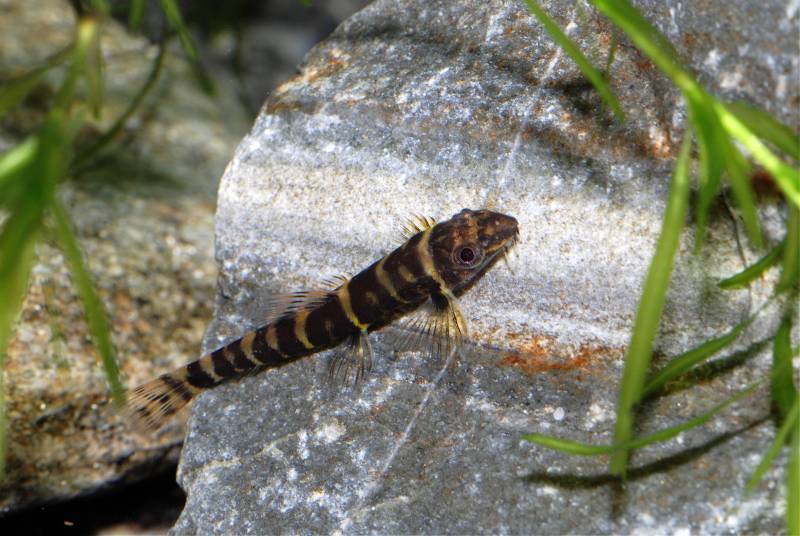
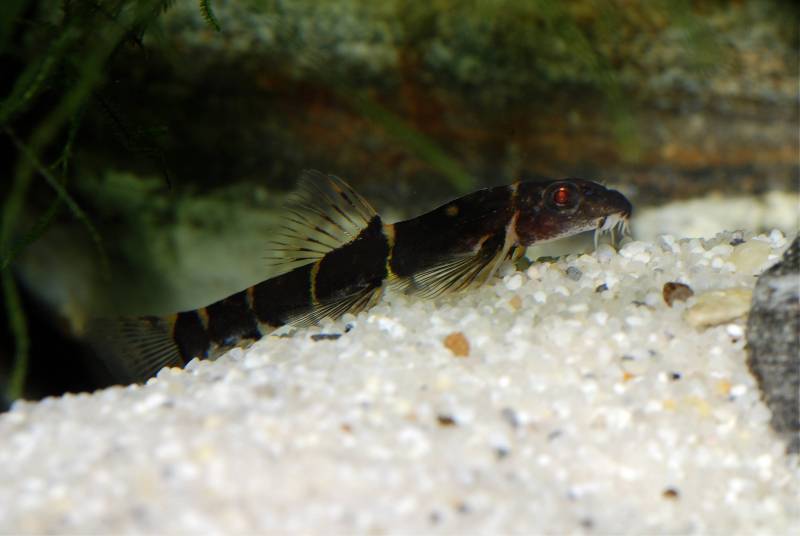
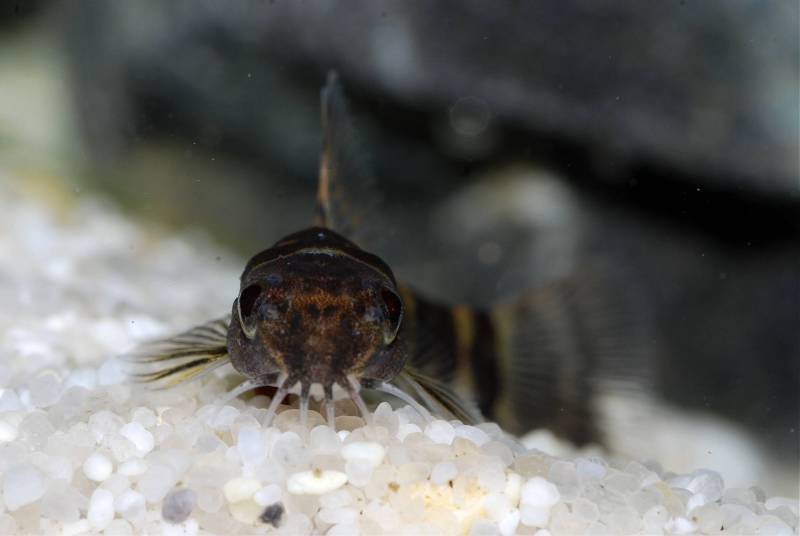
魔颊须鳅(Barbucca diabolica)体型小巧,常见个体有红眼及六条深色体纹。颊须鳅属鱼类常把腹部贴着石块、植物或沉木移动,甚至倒挂或竖直活动,观赏重点在布景表面的觅食和短距离互动。
分布与栖息地
多数模式标本来自印度尼西亚婆罗洲西加里曼丹卡普阿斯河中上游,新当至布都西包之间的支流,另有一个标本来自马来西亚柔佛州。婆罗洲标本采自小型森林溪流。
泰国南部、东部及苏门答腊也发现本属鱼类,但可能涉及未描述种,不能直接视为本种分布。马来西亚群体未来也可能被划为不同物种。其贴物移动的习性提示它可能偏好石块、沉木、落叶聚集的边缘区域,而非裸露河床,但这仍是推测。
饲养环境
可用沙或细砾底床,搭配大小不同的圆滑石块,形成裂隙、洞口及悬挑遮蔽。加入沉木根枝,水榕、铁皇冠和莫丝等可附生在布景上。光照可以较亮,以促进表面附着生物生长,供鱼梳理觅食。
水流较缓的缸可铺少量落叶,让其自然分解,逐渐形成的小型微生物群能补充食物。需要成熟稳定的过滤环境,不能放入尚未成熟的新缸;有机污物累积会影响状态。
只要供氧充分,不必强求急流,溪流缸布置同样可以。每周换水约 30%~50% 应作为常规维护。
食性与喂食
野外可能摄食小型甲壳动物、昆虫幼体及其他无脊椎动物,具体天然食谱尚未确认。缸中能接受干粮,也可喂活的或冷冻的丰年虾无节幼体、剑水蚤等,所有食物都需足够细小。
习性与混养
体质不算强健,应避开明显更大或抢食强的鱼。小型、温和的鲤科群游鱼较合适;不强调地域一致时,体型相近的小脂鲤或卵胎生鱼也可考虑。
它会短暂驱赶进入当前觅食区的鱼,通常是追逐而非咬伤,也不会继续追入开阔水域。对同类略有领地性,但同伴似乎又有利于状态,应至少考虑六至八条,而非孤养。
其他底栖鳅类需要按水流和性情筛选:缓流缸可考虑小型沙鳅类,溪流缸可考虑体型相近的爬鳅类。不能仅因同为鳅就忽略成年大小和攻击性。已有与在开阔水域活动的云南鳅属鱼及米虾属小型淡水虾和平共处的饲养经验,但不应把这种经验当成对所有搭配的保证。
雌雄区分
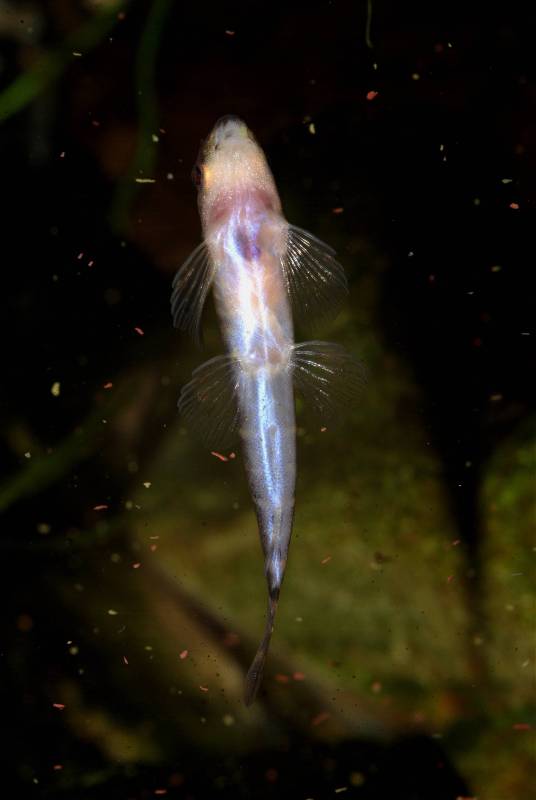
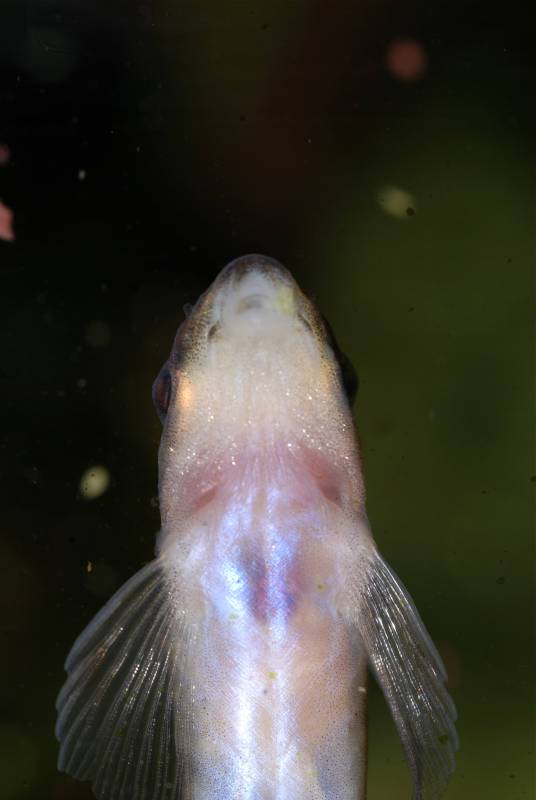
两性尾柄及臀鳍上方、前方均可有疣状突起,鳃盖也可能出现,不能单凭这些特征判雄。成熟雄鱼眼睛基部及后方有一片极细小的突起,是更有参考意义的区别。
繁殖
尚无可供采用的人工繁殖记录。
补充说明
本属贸易中并不常见,进口个体可能混有不同的未描述种,红眼和条纹数量也存在个体差异。2012 年颊须鳅属被单独置于颊须鳅科,依据包括特殊口部及鳔囊结构;选鱼时不宜只凭俗称或一项体纹认定身份。
图片
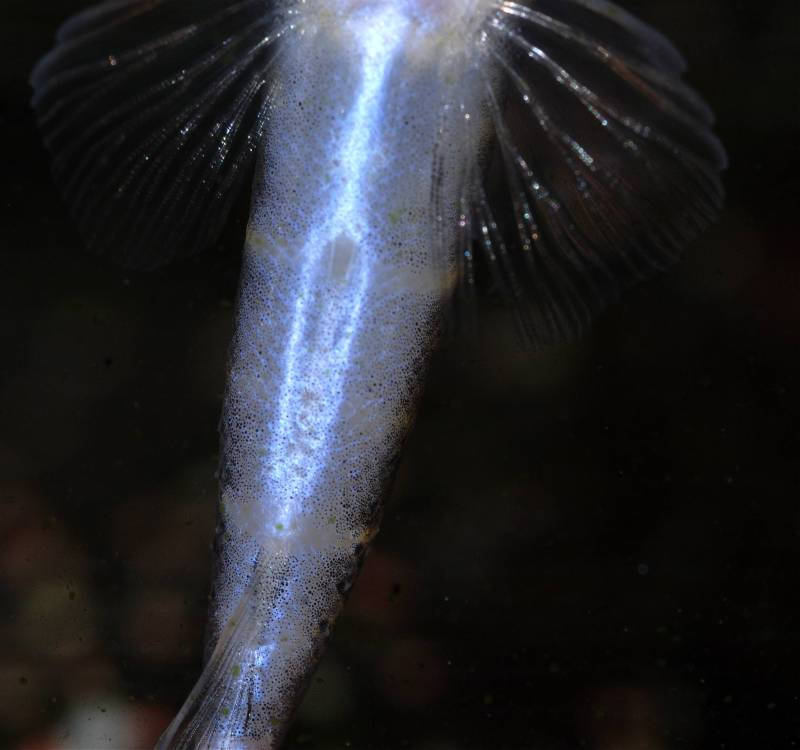
图片来自 SeriouslyFish,版权归各摄影者所有。
English
Overview
Red eyes and six dark body bars are typical of Barbucca diabolica, although appearance varies. Members of its genus travel with their bellies close to solid surfaces, sometimes upside down or vertically. A detailed layout lets their surface-foraging and brief social interactions become the focus of the aquarium.
Distribution & habitat
Most type specimens came from tributaries of the upper-middle Kapuas in West Kalimantan, Indonesian Borneo, between Sintang and Putussibau. One originated in Johor, Malaysia. The Bornean collections were from small forest streams.
Related fishes occur in southern and eastern Thailand and Sumatra, but potentially undescribed species prevent treating all those records as this species. Malaysian populations may also prove distinct. Surface-oriented movement suggests a preference for margins with accumulated rocks, wood, or leaves rather than exposed riverbeds; this habitat interpretation remains tentative.
Aquarium setup
Sand or fine gravel and rounded stones of different sizes can form numerous gaps and overhangs. Add roots and branches, with attached Anubias, Java fern, or mosses. Fairly bright light is suitable for encouraging surface growth through which fish appear to search for food.
In gentler-flowing arrangements, a small amount of leaf litter can decompose naturally and support microorganisms as supplementary food. A stable, biologically mature aquarium is essential, since accumulating organic waste is poorly tolerated.
Strong current is optional when oxygenation is sufficient, although stream-style aquariums also work. Routine weekly changes of roughly 30–50% of the water help maintain suitable conditions.
Diet & feeding
Small crustaceans, insect larvae, and other invertebrates are presumed natural foods, but the wild diet is not established. Aquarium fish accept suitably fine preparations as well as live or frozen Artemia nauplii, copepods, and similar items. Particle size matters for every food offered.
Behaviour & compatibility
Avoid substantially larger fish and forceful feeding competitors. Small peaceful schooling cyprinids are useful companions; comparable characins or livebearers are alternatives when geographical matching is unimportant.
A fish may briefly defend its current feeding patch. Disputes usually involve short chases rather than biting and end before an intruder reaches open water. Mild territorial behavior also occurs among its own kind, yet companionship appears beneficial. Consider six to eight as the minimum group.
Choose other loaches according to current, temperament, and adult size. Small sand-associated loaches may suit gentle flow, while appropriately sized hillstream forms can work in stream conditions. Shared classification alone does not ensure compatibility. Peaceful cohabitation with open-water Yunnanilus and small Neocaridina shrimp has been demonstrated, without guaranteeing every individual combination.
Sexual dimorphism
Both sexes can carry tubercles on the tail base and above and ahead of the anal fin; gill-cover tubercles may also occur in either sex. Mature males additionally develop a patch of minute tubercles around the base and rear of the eye, a more useful distinguishing feature.
Breeding
No aquarium breeding record is available to support a practical method.
Notes
Trade appearances are sporadic, and some exported fishes may belong to undescribed species. Eye color and stripe count should not be used in isolation for identification. The genus was assigned its own family, Barbuccidae, in 2012 on distinctive features including mouth and swim-bladder capsule structure.
来源
- https://www.seriouslyfish.com/species/barbucca-diabolica(抓取于 2026-10-10)
barbucca-diabolica · 文件: data/species/barbucca-diabolica.md · 状态: 草稿