Bagarius rutilus
概要
| 字段 | 值 |
|---|---|
| 类别 | 鱼 |
| 学名 | Bagarius rutilus |
| 分类 | 鲶形目 Siluriformes › 鮡科 Sisoridae › Bagarius |
| 水体 | 淡水 |
| 原产地 | 中国云南、越南北部;老挝部分水系的记录尚待确认 |
| 成体体长 | 100 cm |
| 饲养难度 | 中等 |
| 群居方式 | 独居 |
| 外部数据 | seriouslyfish bagarius-rutilus;fishbase 57784 |
| 食性 | 肉食 |
| 特征 | 吃小鱼: 是 |
| 繁殖方式 | 产卵 |
水质参数
| 参数 | 耐受范围 | 最适范围 | 单位 |
|---|---|---|---|
| 水温 | 18–23 | — | °C |
| pH | 6–7.5 | — | — |
| 总硬度 | 2–12 | — | dGH |
概述
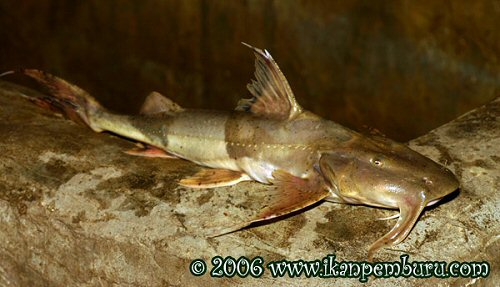
Bagarius rutilus 是能长至 100 cm 的大型急流鲶鱼,活体鱼鳍橙色。它的体形和自然习性使普通家庭鱼缸不适合长期饲养,只应在公共展示或极少数超大型专业设施中考虑。
分布与栖息地
已知分布包括中国云南和越南北部红河,以及越南太平江、淇穷江、马江和蓝江等水系;老挝部分流域的出现仍属可能。成鱼生活在大型河道的急流、湍流区,躲在大石和巨岩之间,幼鱼可能进入较小支流。
饲养环境
宜用较暗照明,沉木、大石或管道提供宽敞藏身处。需要规模足够且成熟的过滤系统、充分水流与很高溶氧,每周规律换水 50–70%,不能忽略大型捕食鱼造成的维护负担。
食性与喂食
天然专性捕食较小鱼、两栖动物、甲壳类及其他无脊椎动物,多数能适应非活饵。幼鱼可喂红虫、小蚯蚓及碎虾肉,成鱼可用鱼肉条、整虾、贝肉和较大蚯蚓等。
不喂牛心、鸡肉等陆生动物肉,也无需长期用饵料鱼。前者不适合其代谢,后者可能带入病原且营养不一定理想。
习性与混养
以单独饲养为宜。自然环境中会聚集到其他鱼的繁殖区域,利用当地丰富的猎物;不能把这种聚集误认为适合普通混养。
繁殖
水族箱繁殖尚无记录。野外成鱼在约 3–6 月河水上涨时进行繁殖迁徙,卵据称产在石缝中,黏性较强。亲鱼在孵化期间留下守护,防止卵被捕食。
图片
图片来自 SeriouslyFish,版权归各摄影者所有。
English
Overview
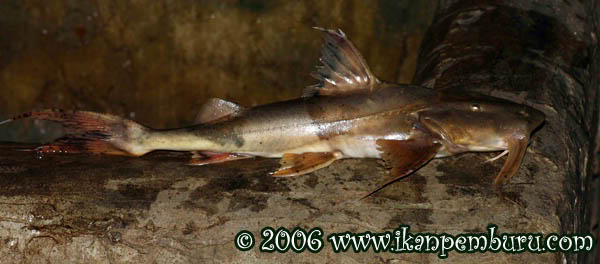
Orange fins distinguish living Bagarius rutilus, a large river catfish reaching 100 cm. Adult size and rapid-water habits rule out ordinary home aquariums. Long-term care requires public-display facilities or exceptionally large specialist installations.
Distribution & habitat
Records cover the Red River in Yunnan and northern Vietnam, plus several other Vietnamese drainages including the Thái Bình, Kỳ Cùng, Mã, and Lam. Occurrence in parts of Laos remains possible. Adults shelter among boulders in turbulent reaches of large rivers; juveniles may use smaller tributaries.
Aquarium setup
Use subdued light with spacious retreats formed by wood, large rocks, or piping. A substantial mature filter, vigorous movement, highly oxygenated water, and disciplined weekly changes of 50–70% are essential. Plan maintenance capacity around a large predator.
Diet & feeding
Its natural prey includes smaller fish, amphibians, crustaceans, and other invertebrates. Most adapt to nonliving food. Juveniles can receive bloodworms, small earthworms, and chopped shrimp; adults accept fish strips, whole shrimp, mussels, and larger worms.
Avoid beef heart, chicken, and similar terrestrial meats. Routine feeder-fish use is also unnecessary, with pathogen risks and potentially poor nutritional value.
Behaviour & compatibility
Solitary housing is recommended. In nature, fish may gather near other species’ breeding grounds to exploit abundant prey. Such aggregations are not evidence of ordinary community compatibility.
Breeding
Aquarium reproduction is unrecorded. Adults make spawning migrations as rivers rise around March–June. Adhesive eggs are apparently laid in rock crevices, and adults remain through incubation to protect them from predators.
来源
- https://www.seriouslyfish.com/species/bagarius-rutilus(抓取于 2026-10-10)
bagarius-rutilus · 文件: data/species/bagarius-rutilus.md · 状态: 草稿