Badis tuivaiei
概要
| 字段 | 值 |
|---|---|
| 类别 | 鱼 |
| 学名 | Badis tuivaiei |
| 分类 | 攀鲈目 Anabantiformes › 变色鱼科 Badidae › Badis |
| 水体 | 淡水 |
| 原产地 | 印度 |
| 成体体长 | 8.5 cm |
| 饲养难度 | 中等 |
| 最小水体 | 54 L |
| 最小缸长 | 60 cm |
| 群居方式 | 成对 |
| 领地性 | 是 |
| 外部数据 | seriouslyfish badis-tuivaiei;fishbase 61815 |
水质参数
| 参数 | 耐受范围 | 最适范围 | 单位 |
|---|---|---|---|
| 水温 | 20–24 | — | °C |
| pH | 6.5–7.5 | — | — |
| 总硬度 | 5–10 | — | dGH |
概述
Badis tuivaiei 是印度东北部的变色鲈,Wahumiam 河种群曾以 Terracotta 或 Wahumiam River 未定种名流通。它与若干近缘种外观接近,准确鉴定需综合产地和鳞列、鳍条等细节。
分布与栖息地
最初描述于曼尼普尔邦 Barak 水系的 Tuivai 和 Irang 河,Tuivai 流经米佐拉姆邦的河段也有记录。后来在梅加拉亚 Wahumiam 河和 Jaintia 丘陵 Wanapha 河发现,扩展了已知范围。
Wahumiam 采点水浅、清澈、流缓,底部是巨石、卵石和沙。周边山地降雨丰富,水深与流速可能随季节明显增加;Tuivai 也有石底、岸边植被较浓的相似环境。
饲养环境
一对或一雄配二至四雌可从 60 cm 长缸起步,多雄需更大空间。沙砾、圆滑石、根木和枝条形成多个藏处,浮水植物、落叶及附生 Microsorum、Taxiphyllum、Anubias 可增加遮挡。
照明和过滤保持温和,用椰壳或带入口的陶盆设置洞穴。多个雄鱼的洞应分开并阻断视线,不能把所有产卵点堆在一个区域。
食性与喂食
此属捕食小型水生甲壳类、蠕虫、昆虫幼体和浮游动物。干粮可能不被接受,即使驯食后仍需规律供应丰年虾、水蚤、玻璃虫等活、冻饵。
它进食较慢,要防止食物全被同伴抢走。红虫和颤蚓有增加肥胖和健康问题的风险,宜排除出日常菜单。
习性与混养
优先专养。它不需要大群,雄鱼之间可激烈争夺领域,多雄必须各有洞穴、领地及遮挡;较小环境采用一雄组合更合适。
若混养,可考虑温和中上层小鱼或适合的微型溪流鲶,避开体形大、过于活跃或猛烈抢食的伙伴,以免慢食个体长期处于劣势。
雌雄区分
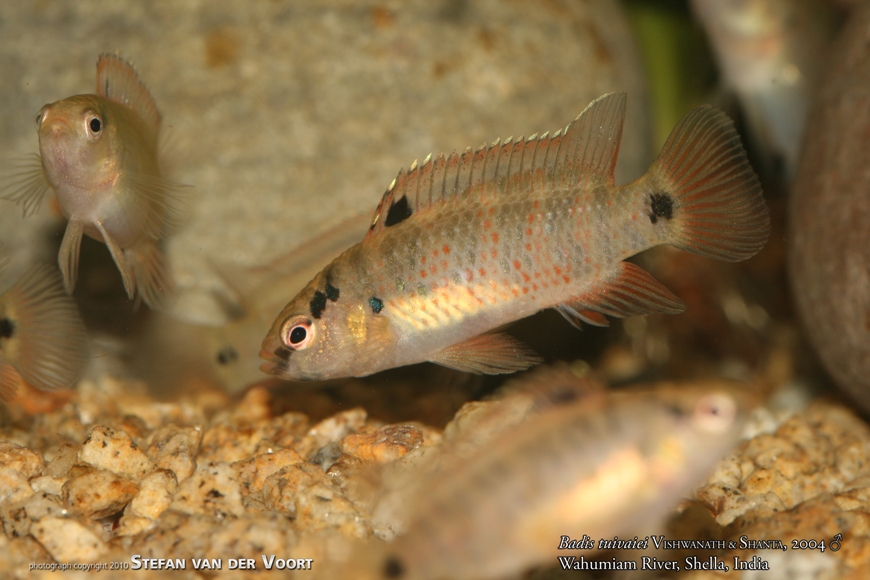
雌鱼明显小于雄鱼,体色淡、轮廓短圆。雄鱼成熟后鳍延长、体形更修长。
繁殖
2006~2007 年已有本种人工繁殖记录。此属洞穴产卵、临时配对,由雄鱼护育。若想增加鱼苗存活,宜排除其他种,并用活、冻饵调养成鱼,为各雄鱼独立提供洞穴。
属级常见过程包括雄鱼显色加强、争斗增多,可能锁口牵引雌鱼入洞;一窝约三十至一百枚卵。产后雌鱼被赶走,雄鱼独自守卵扇水。卵约两三天孵化,幼鱼约六至八日龄自由游动,还可能在洞旁停留约一周。
幼鱼散开后成鱼包括父鱼可能吃苗,宜分开。初期活动少,微虫适合作开口,游入水层后再增加丰年虾无节幼体。
补充说明
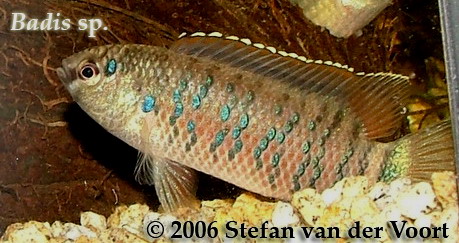
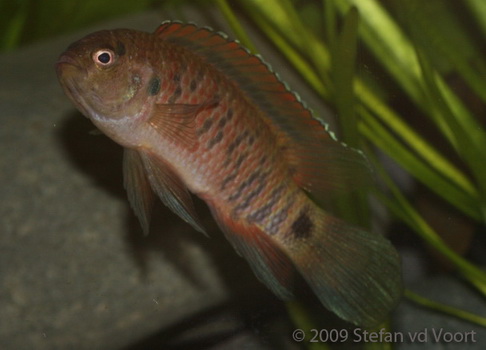
Wahumiam 河的鱼起初被认为是未描述种,后来形态与计数特征吻合本种。它与 Badis badis、Badis chittagongis、Badis kanabos 的区别包括眼间距、体高、鳞列、椎骨和鳍条数量,活体照片往往不足以稳妥区分,保留可靠产地尤其重要。
图片
图片来自 SeriouslyFish,版权归各摄影者所有。
English
Overview
The northeastern Indian badid Badis tuivaiei includes fishes once circulated as Terracotta or Wahumiam River. Several relatives look similar, so dependable identification combines collection history with scale, fin-ray, and other anatomical details.
Distribution & habitat
The original description concerned the Tuivai and Irang, tributaries of the Barak in Manipur. It also occurs along the Tuivai in Mizoram. Later records from the Wahumiam in Meghalaya and the Wanapha in the Jaintia Hills extended the known range.
At the Wahumiam collection site, shallow clear water moved slowly over boulders, pebbles, and sand. Heavy rainfall in the surrounding hills probably produces considerable seasonal increases in depth and flow. Rocky stretches with substantial bankside vegetation also occur in the Tuivai.
Aquarium setup
A pair or one male with two to four females can start in an aquarium 60 cm long. Several males require more room. Sand or gravel, smooth stones, roots, and branches should create separate retreats; floating plants, leaves, and attached Microsorum, Taxiphyllum, or Anubias add cover.
Keep light and filtration moderate. Coconut shells or clay pots with entrances can serve as caves. Separate male sites and interrupt sight lines rather than concentrating every potential spawning place in one area.
Diet & feeding
The genus takes small aquatic crustaceans, worms, insect larvae, and zooplankton. Dry foods may be refused, and regular live or frozen Artemia, Daphnia, or glassworms remain important even when acceptance improves.
Watch these slow feeders to ensure tankmates do not consume all available food. Bloodworms and Tubifex are associated with obesity and health problems and are best omitted from the everyday menu.
Behaviour & compatibility
A species aquarium is preferable. It does not need a large group, and males can fight intensely over space. Several males require independent caves, territories, and cover; a single-male arrangement is more suitable in limited quarters.
Potential companions include peaceful small upper-water fishes or appropriate miniature stream catfishes. Avoid large, busy, or highly competitive species that leave deliberate feeders at a lasting disadvantage.
Sexual dimorphism
Females are substantially smaller than males, with duller colors and shorter, rounder outlines. Mature males develop extended fins and a more elongated appearance.
Breeding
Aquarium reproduction was recorded in 2006–2007. Members of the genus form temporary pairs for cave spawning, with male brood care. For greater fry survival, exclude other species, condition the adults with live and frozen foods, and provide each male an individual cave.
Generic accounts describe intensified color and rivalry, sometimes mouth-locking while females are led into caves, followed by batches of about 30–100 eggs. The female is then driven away and the male guards and fans the eggs. Hatching takes roughly two to three days. Fry swim freely around six to eight days old and can remain near the cave for another week.
Adults, including the father, may subsequently eat dispersing young, making separation advisable. Microworms suit the initially inactive fry; add Artemia nauplii when they enter the water column.
Notes
Wahumiam fishes were initially considered undescribed but later matched this species in morphology and counts. Differences from Badis badis, Badis chittagongis, and Badis kanabos involve interorbital width, body depth, scales, vertebrae, and fin rays. Photographs alone may not resolve identity, making dependable locality information particularly useful.
来源
- https://www.seriouslyfish.com/species/badis-tuivaiei(抓取于 2026-10-10)
badis-tuivaiei · 文件: data/species/badis-tuivaiei.md · 状态: 草稿