Badis sp. 'Buxar'
概要
| 字段 | 值 |
|---|---|
| 类别 | 鱼 |
| 学名 | Badis sp. 'Buxar' |
| 分类 | 攀鲈目 Anabantiformes › 变色鱼科 Badidae › Badis |
| 水体 | 淡水 |
| 原产地 | 印度 |
| 成体体长 | 5 cm |
| 饲养难度 | 中等 |
| 最小水体 | 54 L |
| 最小缸长 | 60 cm |
| 群居方式 | 成对 |
| 领地性 | 是 |
| 外部数据 | seriouslyfish badis-sp-buxar |
水质参数
| 参数 | 耐受范围 | 最适范围 | 单位 |
|---|---|---|---|
| 水温 | 15–25 | — | °C |
| pH | 6.5–7.5 | — | — |
| 总硬度 | 1–5 | — | dGH |
概述
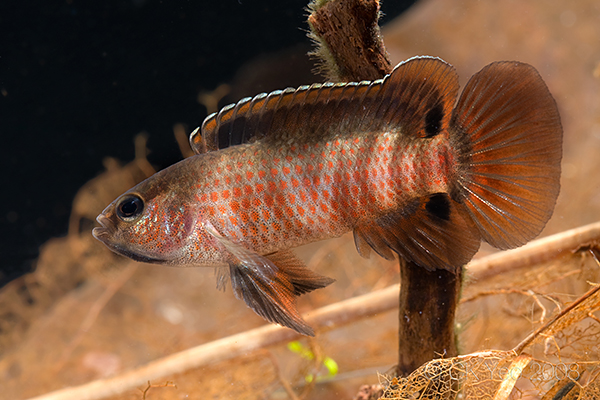
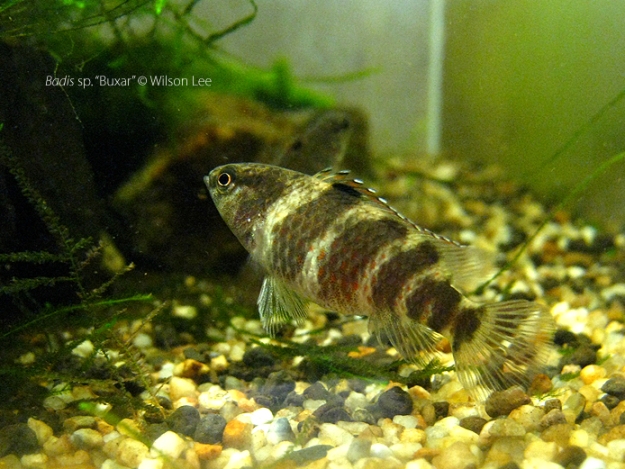
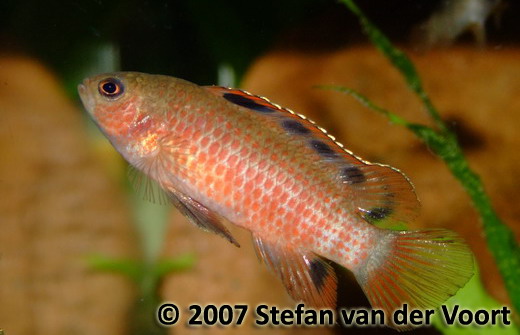
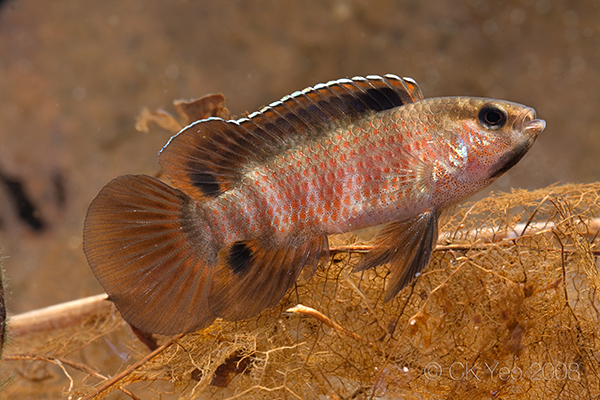
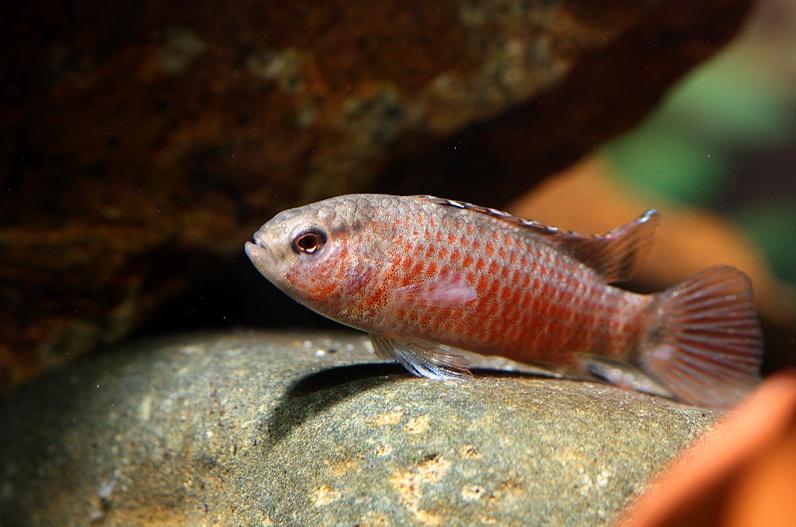
Badis sp. 'Buxar' 是以产地命名的未定种变色鲈,雄鱼鳞片中央呈红色,因此也曾以 Flame Dot 出售。其具体分类身份仍有争议,饲养时应保留产地与来源信息,不随意替换成外观近似的正式种名。
分布与栖息地
名称指印度西孟加拉邦、靠近不丹边界的 Buxa 国家公园,而不是比哈尔邦 Buxar 市。
具体栖地尚不明确。印度东北部近缘种常利用浅缓溪流和密集岸边或沉水植物,这只能作为近缘环境参考,不能当成此未定种已确认的采点描述。
饲养环境
沙砾底上放圆滑石、根木和枝条,形成多处藏身区;浮水植物、落叶及附生 Microsorum、Taxiphyllum、Anubias 可增加遮蔽。过滤和光照不必强。
用椰壳或带入口的陶盆提供洞穴,多雄时分散布置、隔断视线。可适应季节温度变化,室温全年适合时可不加热;促繁殖可在正常适温上部温和调整,不把短期耐受极限当作长期条件。
食性与喂食
Badis 属捕食小型水生甲壳类、蠕虫、昆虫幼体与浮游动物,可能拒绝干粮。即使逐渐驯食,也需规律供应丰年虾、水蚤等活、冻小饵,并确保慢食个体真正吃到。
红虫与颤蚓有肥胖及健康风险,宜避免放入日常菜单。
习性与混养
专养较适合照顾进食和繁殖。它不是群居鱼,有限空间以一对或一雄数雌为宜。雄鱼间争斗可能激烈,多雄需要各自领域、洞穴及视觉遮挡。
若混养,应选温和中上层鱼,避免大型活跃或强抢食同伴以及相似领地型底栖鱼。不同 Badis 可能杂交,应分开。观赏虾尤其幼虾可能被捕食。
雌雄区分
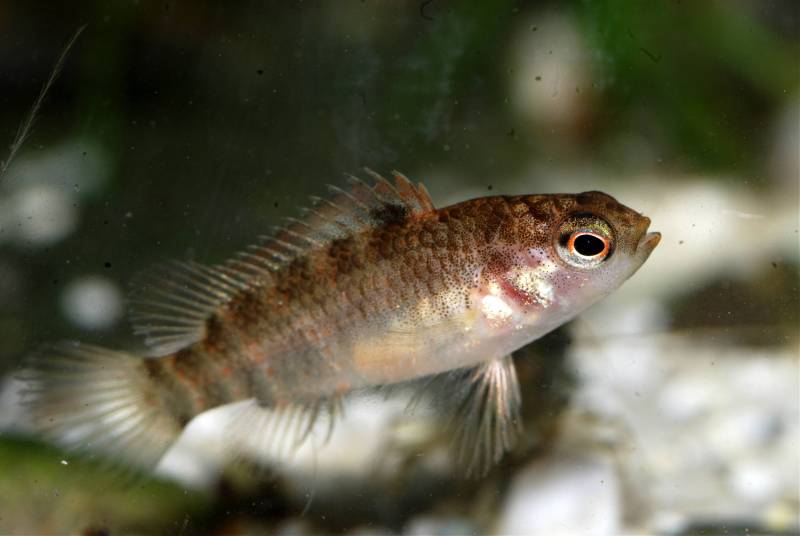
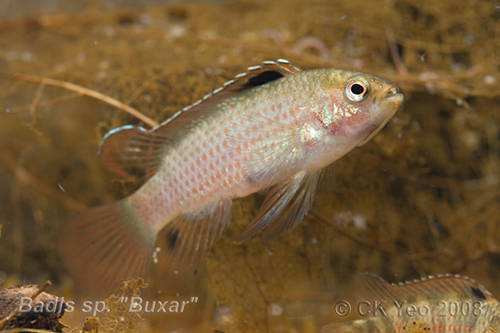
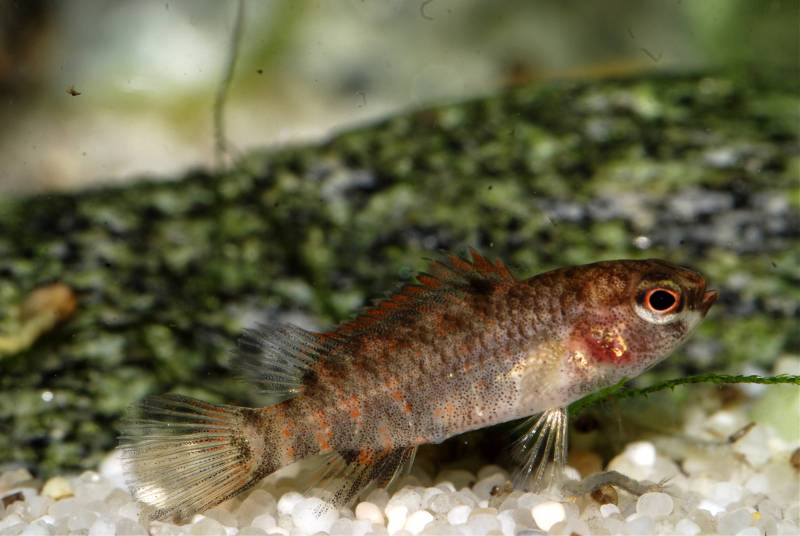
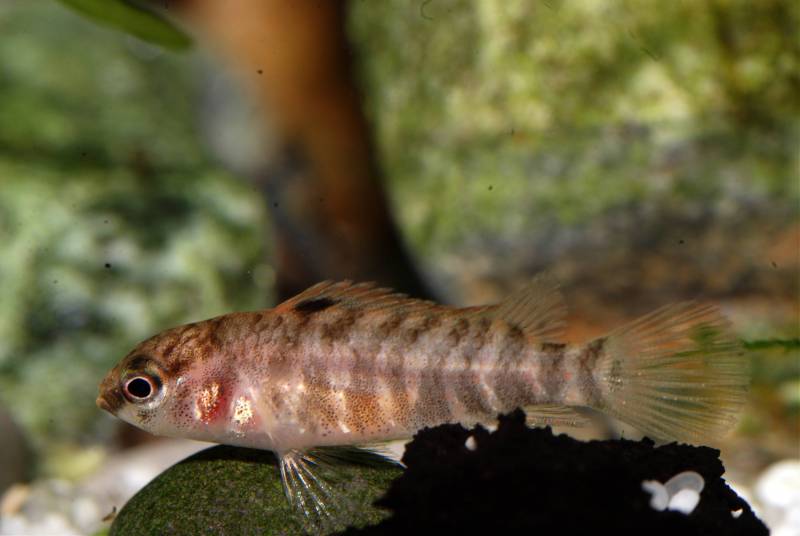
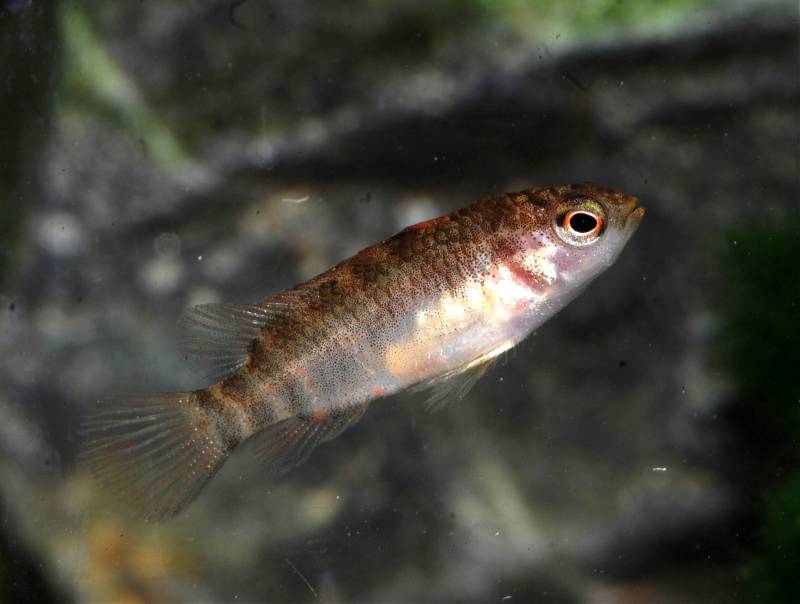
雌鱼较小、体纹淡,身体短圆;雄鱼成熟后鳍略延长,鳞片中心的鲜红色较有辨识价值。
繁殖
已有多次人工繁殖成功。此属通常洞穴产卵、短期配对,雄鱼护育;为提高鱼苗数量,宜专门繁殖并为各雄鱼独立设置洞穴。
调养后雄鱼可能近乎全黑、蓝鳍显色增强,求偶时会锁口引雌鱼入洞。常见过程为每窝约三十至一百枚卵,产后雌鱼被赶走,雄鱼守卵扇水。属级护育经验中,卵两三天孵化,幼鱼约六至八日龄自由游动,并可能继续在洞边待约一周。
之后成鱼包括父鱼可能吃苗,应分开。早期幼鱼活动少,先喂微虫,能游入水层后再加入丰年虾无节幼体。
补充说明
它可能属于 Badis corycaeus 近缘群。与 Badis singenensis 是否同种曾有猜测,因为二者都表现出背鳍基部三个暗斑及臀鳍基部一斑;但已知产地相距数百公里,描述材料也不足以确认活体对应关系,因此不能据这些斑点直接定名。
图片
图片来自 SeriouslyFish,版权归各摄影者所有。
English
Overview
Badis sp. 'Buxar' is an unresolved, locality-named badid. Red centers to male body scales have also led to the Flame Dot trade name. Preserve collection and supplier information rather than automatically assigning a similar-looking described species name.
Distribution & habitat
The name refers to Buxa National Park in West Bengal, India, near Bhutan. It does not refer to Buxar city in Bihar.
The precise habitat is uncertain. Related northeastern Indian badids often inhabit shallow, slow streams with dense marginal or submerged vegetation. That is a useful comparison, not a confirmed collection-site description for this fish.
Aquarium setup
Use sand or gravel with rounded stones, roots, and branches to create separate retreats. Floating plants, leaves, and attached Microsorum, Taxiphyllum, or Anubias provide additional cover. Light and filtration need not be powerful.
Include caves made from coconut shells or accessible clay pots, spreading them apart and interrupting sight lines between males. Seasonal temperature changes are tolerated. Heating can be unnecessary where room conditions remain suitable, while a gentle rise within the normal range can encourage breeding. Brief tolerance of extremes should not determine long-term care.
Diet & feeding
The genus captures small aquatic crustaceans, worms, insect larvae, and zooplankton, and may refuse dry foods. Even after acceptance improves, provide regular small live or frozen Artemia, Daphnia, and similar prey. Ensure that slow feeders actually receive food.
Bloodworms and Tubifex are associated with obesity and health problems and are best kept out of the regular menu.
Behaviour & compatibility
A species aquarium makes feeding and breeding easier to manage. This is not a shoaling fish. Use a pair or one male with several females where space is limited; several males need separate territories, caves, and visual barriers because rivalry can be intense.
If companions are included, choose peaceful upper-water fishes. Avoid large, active, strongly competitive feeders and similar territorial bottom dwellers. Keep other Badis species apart because hybridization is possible. Ornamental shrimp, especially their young, may be eaten.
Sexual dimorphism
Females are smaller, duller, and rounder in profile. Males develop slightly extended fins, and the bright red scale centers are particularly useful markings.
Breeding
Captive reproduction has succeeded several times. The genus generally forms temporary pairs for cave spawning, with male care. For greater fry survival, use a dedicated arrangement with an independent cave for every male.
Conditioned males can become almost black with more intense blue fins, and courtship may involve mouth-locking while drawing a female into shelter. Typical batches contain roughly 30–100 eggs, followed by the male expelling the female and guarding and fanning the brood. Generic observations give two to three days to hatch, free swimming around six to eight days old, and possibly another week near the cave.
Adults, including the father, may then eat dispersing fry. Separate them and begin with microworms for the initially inactive young, introducing Artemia nauplii when they swim in the water column.
Notes
Placement near the Badis corycaeus group has been suggested. Proposed identity with Badis singenensis rests partly on three dorsal-base blotches and one anal-base blotch. However, the known localities are separated by hundreds of kilometers, and the descriptive material does not confirm the connection with live fish. Those markings alone should not settle the name.
来源
- https://www.seriouslyfish.com/species/badis-sp-buxar(抓取于 2026-10-10)
badis-sp-buxar · 文件: data/species/badis-sp-buxar.md · 状态: 草稿