Badis ruber · Burmese Badis
概要
| 字段 | 值 |
|---|---|
| 类别 | 鱼 |
| 学名 | Badis ruber |
| 别名 | Badis badis ruber var. Schreitm、Badis badis burmanicus |
| 分类 | 攀鲈目 Anabantiformes › 变色鱼科 Badidae › Badis |
| 水体 | 淡水 |
| 原产地 | 老挝、缅甸、泰国 |
| 成体体长 | 5 cm |
| 饲养难度 | 中等 |
| 最小水体 | 54 L |
| 最小缸长 | 60 cm |
| 群居方式 | 成对 |
| 领地性 | 是 |
| 外部数据 | seriouslyfish badis-ruber;fishbase 60213 |
水质参数
| 参数 | 耐受范围 | 最适范围 | 单位 |
|---|---|---|---|
| 水温 | 15–25 | — | °C |
| pH | 6.5–7.5 | — | — |
| 总硬度 | 1–5 | — | dGH |
概述
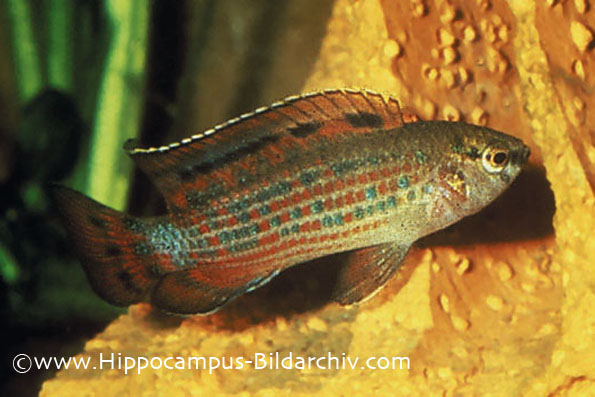
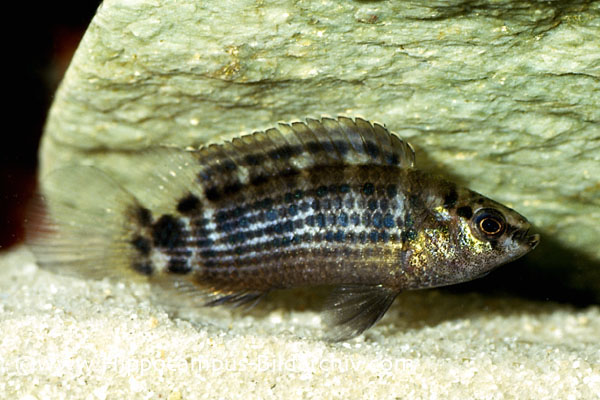
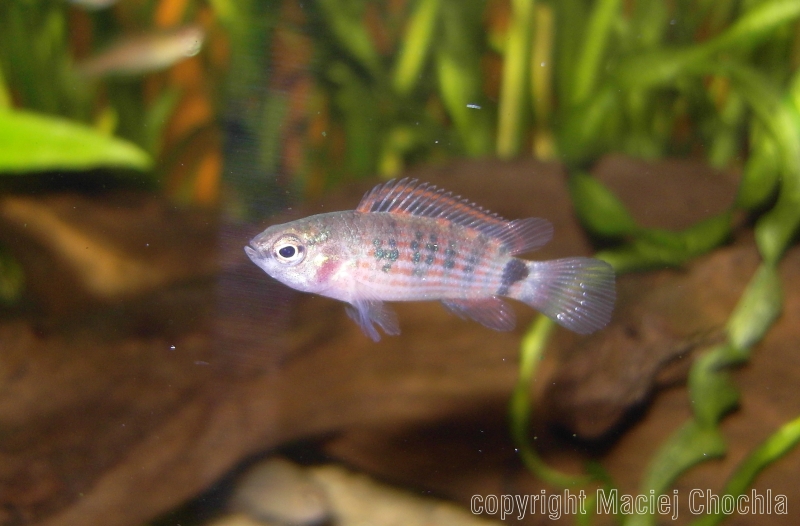
Badis ruber 是较常见于水族资料的变色鲈,体侧暗斑排列成竖向条纹,尾柄深斑较大。它较隐蔽、慢食,雄鱼之间却会强烈守地盘,不能因动作缓慢就忽略同种冲突。
分布与栖息地
广布于缅甸低地,包括伊洛瓦底江、其支流 Mu 河、锡当河,以及孟邦和德林达依沿海小河系,向南达 Tenasserim 河。湄公河流域的泰国廊开、清莱及老挝琅勃拉邦也有记录。
常见于路边沟渠、植被丰富的小溪等静缓水环境。新模式采点是稻田间的小沟,草同时伸入水中和岸上,水静、清而带绿色。伊洛瓦底江三角洲另一牛轭湖采点水深不足 30 cm,鱼藏在浮水植物和草丛间。
饲养环境
沙或砾石上布置圆滑石块、根木和枝条,形成多处藏身区。浮水植物、落叶及附生 Microsorum、Taxiphyllum、Anubias 可增加遮蔽,过滤和照明不必强烈。
椰壳或带入口的陶盆可作洞穴,多雄时把洞分散并隔开视线,不能全堆在一处。它经历季节温度变化,室温全年合适时可免加热;促繁殖可在正常适温上部温和调整。水仍应偏软,不因接近中性就提高硬度。
食性与喂食
此属以小型水生甲壳类、蠕虫、昆虫幼体及浮游动物为食。人工可能拒绝干粮,部分个体会逐渐驯食;仍需规律供应丰年虾、水蚤等小型活、冻饵。
观察慢食个体是否真正吃到。红虫和颤蚓有增加肥胖及健康问题的风险,宜排除出日常菜单。
习性与混养
可谨慎混养温和的小型中上层鱼,避免过大、活跃或强抢食伙伴。与其他小型底栖鱼是否合适还需观察,不能把所有小鲶都当作已验证安全搭配。
相似的领地型底栖鱼不适合普通大小的缸,不同 Badis 也不宜同养,以免可能杂交。观赏虾尤其幼虾有被捕食风险。
它不是群居鱼,小缸以一对或一雄数雌为宜。雄鱼间可激烈争斗,多雄仅适合每条都有领地、洞穴和视觉遮挡的较大缸。
雌雄区分
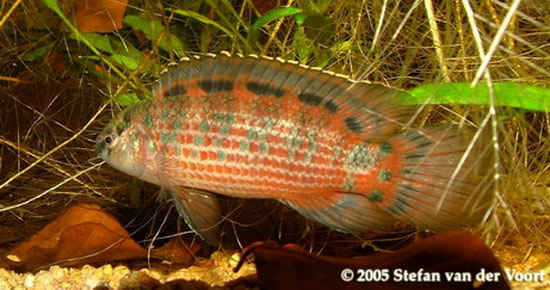
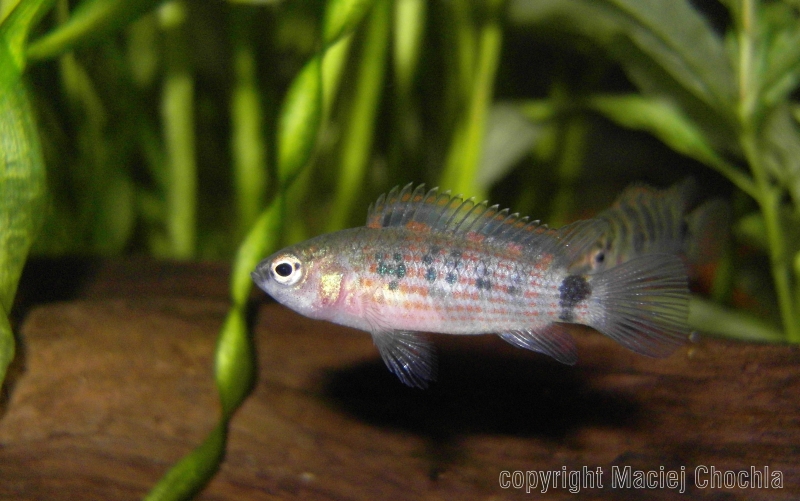
雌鱼较小,身体短圆,红色明显少于雄鱼;雄鱼成熟后鳍更延长、颜色更鲜艳。贸易中可能偏多雄鱼,组繁殖组合时应直接核对性别。
繁殖
此属洞穴产卵、临时配对,由雄鱼护育。若想提高鱼苗数量,最好用专门繁殖环境;多雄时各有洞穴,以活、冻饵调养。
常见过程包括雄鱼显色加强、争斗增加,可能锁口牵雌鱼入洞,一窝约三十至一百枚卵。产后雌鱼被驱离,雄鱼守卵并扇水。属级记录中卵两三天孵化,幼鱼约六至八日龄自由游动,还可能在洞边停留约一周。
此后成鱼可能吃苗,宜分开。初期幼鱼活动少,微虫适合作开口,明显进入水层游动后再加入丰年虾无节幼体。
补充说明
与 Badis siamensis 的水平成排暗纹、Badis khwae 缺少同类斑点不同,本种暗斑呈较明显竖列。尾柄斑较大并跨过背面,其后尾鳍基部还有三个较小暗点;这组特征比只看红色深浅更实用。
旧文献中可能沿用 Badis badis 的旧组合名,阅读时应注意同物异名与近似种混淆。
图片
图片来自 SeriouslyFish,版权归各摄影者所有。
English
Overview
The comparatively familiar badid Badis ruber has vertically arranged flank markings and a large dark tail-peduncle blotch. Its slow, retiring manner should not disguise the potential for strong territorial conflict between males.
Distribution & habitat
Its range covers much of lowland Myanmar, including the Ayeyarwady, the tributary Mu, the Sittaung, and smaller coastal systems of Mon and Tanintharyi south to the Tenasserim River. Mekong records also include Nong Khai and Chiang Rai in Thailand and Luang Prabang in Laos.
Typical settings are vegetated creeks, roadside ditches, and other still or slowly moving waters. The replacement type specimen came from a ditch among rice fields, with grasses growing above and below clear, greenish stagnant water. Another delta collection was made in an oxbow less than 30 cm deep among floating plants and grasses.
Aquarium setup
Create retreats with sand or gravel, rounded stones, roots, and branches. Floating plants, leaves, and attached Microsorum, Taxiphyllum, or Anubias add cover. Powerful light and filtration are unnecessary.
Coconut shells or clay pots with openings can serve as caves. For several males, distribute them widely and interrupt sight lines. Seasonal temperatures are part of its natural experience; heating may be unnecessary where room conditions remain suitable. A gentle rise within the established range can encourage breeding. Keep water soft rather than assuming near-neutral pH requires higher hardness.
Diet & feeding
The genus consumes small aquatic crustaceans, worms, insect larvae, and zooplankton. Dry food may be refused initially, although some fish learn to accept it. Regular small live or frozen Artemia, Daphnia, and similar prey remain important.
Check that deliberate feeders receive food. Bloodworms and Tubifex are associated with obesity and health problems and are best excluded from the routine diet.
Behaviour & compatibility
Carefully selected small, peaceful upper-water fishes can work. Avoid larger, busy, or strongly competitive feeders. Compatibility with other small bottom dwellers needs individual assessment rather than assuming that every small catfish is a proven partner.
Similar territorial bottom dwellers are unsuitable in ordinary aquariums. Keep different Badis species separate because hybridization is possible. Ornamental shrimp, particularly young ones, may be eaten.
It is not a shoaling fish. A pair or one male with several females suits restricted space. Multiple males can fight intensely and require a larger aquarium with separate territories, caves, and visual barriers.
Sexual dimorphism
Females are smaller and rounder, with much less red. Mature males have brighter colors and extended fins. Trade groups may contain disproportionately many males, so check sexes directly when assembling breeders.
Breeding
The genus uses temporary pair bonds and cave spawning, with males caring for the brood. A dedicated breeding setup improves fry survival. Provide each male a cave and condition the adults with live and frozen food.
Typical behavior includes intensified male color and rivalry, sometimes mouth-locking while a female is drawn into a cave, followed by roughly 30–100 eggs. The male excludes the female and guards and fans the brood. Generic accounts report hatching after two to three days, free swimming around six to eight days old, and another week or so spent near the cave.
Adults may then eat dispersing fry, making separation advisable. Start the initially inactive young on microworms and add Artemia nauplii once they swim in the water column.
Notes
The vertical arrangement of flank spots contrasts with horizontal rows in Badis siamensis and their absence in Badis khwae. Its larger tail-peduncle blotch extends across the upper surface, followed by three smaller spots at the caudal base. These features are more useful than the intensity of red alone.
Older publications may retain historical combinations under Badis badis, so distinguish old synonyms from similar-looking species.
来源
- https://www.seriouslyfish.com/species/badis-ruber(抓取于 2026-10-10)
badis-ruber · 文件: data/species/badis-ruber.md · 状态: 草稿