Badis juergenschmidti
概要
| 字段 | 值 |
|---|---|
| 类别 | 鱼 |
| 学名 | Badis juergenschmidti |
| 分类 | 攀鲈目 Anabantiformes › 变色鱼科 Badidae › Badis |
| 水体 | 淡水 |
| 原产地 | 缅甸 |
| 成体体长 | 5 cm |
| 饲养难度 | 中等 |
| 最小水体 | 54 L |
| 最小缸长 | 60 cm |
| 群居方式 | 成对 |
| 领地性 | 是 |
| 外部数据 | seriouslyfish badis-juergenschmidti;fishbase 65866 |
水质参数
| 参数 | 耐受范围 | 最适范围 | 单位 |
|---|---|---|---|
| pH | 6–7 | — | — |
| 总硬度 | 1–5 | — | dGH |
概述
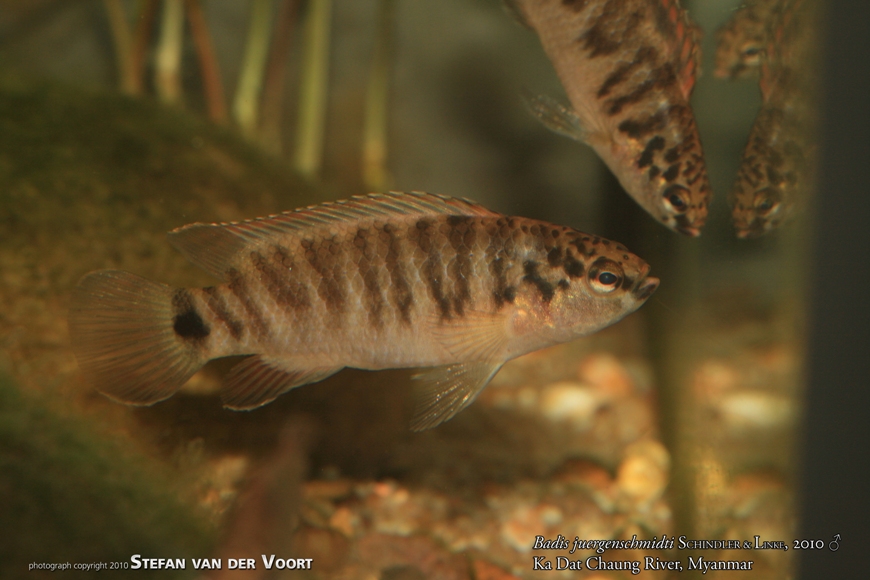
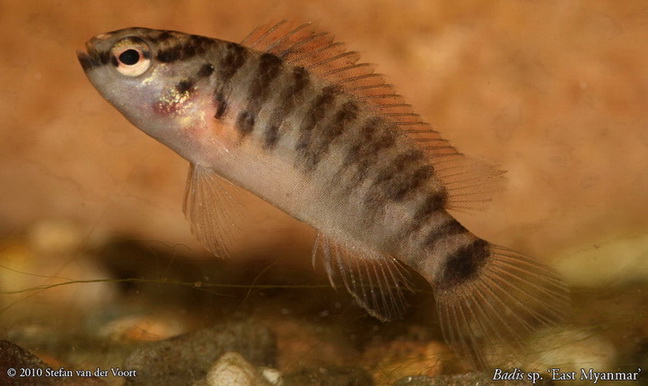
Badis juergenschmidti 来自缅甸东南部,早期以 East Myanmar 名称流通。雄鱼尾鳍基部有宽而完整的深带,尾鳍边缘带白色,没有一些近缘种常见的鳃盖斑和胸鳍基上方斑点。
它较隐蔽、慢食,雄鱼之间领域性强,专养便于照顾弱势个体并观察繁殖。
分布与栖息地
已知仅见于孟邦 Ka Dat Chaung 河系的模式产地,属锡当河流域。旱季采点是一条约 50 m 宽、仅约 20~30 cm 深的小河,流速慢,底部为大石、小石和沙,有些石面附有生物膜。
六月至十一月雨季到来后,河流水量、流速与浑浊度会明显增加,旱季的浅缓水况不能代表全年。三月采点曾测得水温 26.9 °C,这是一次野外记录,并不是完整的长期适温范围。
饲养环境
在沙砾上布置圆滑石块、根木和枝条,形成多处藏身区;浮水植物和落叶可增加遮蔽,附生 Microsorum、Taxiphyllum、Anubias 也可使用。
过滤、照明不需过强,水以软、略酸至中性为宜。放置椰壳或带入口的倒扣陶盆作为洞穴,并把多处洞分散布置,避免领地都集中在一个角落。
食性与喂食
此属捕食小型水生甲壳类、蠕虫、昆虫幼体和浮游动物。常挑食而不愿吃干粮,应规律投喂丰年虾、水蚤等小型活、冻饵,并确认慢食个体实际得到食物。
红虫和颤蚓存在导致肥胖及健康问题的风险,宜避免作为日常菜单。
习性与混养
优先专养,一对或一雄数雌适合较有限的空间。雄鱼会强烈争夺领域,多雄只有在空间充足、每条都有洞穴与视线遮挡时才适合共处。
若混养,选择温和、不抢食的中上层鱼,避免过大、过度活跃的同伴。它动作慢且胆怯,必须观察是否被长期压制而吃不到食物。
雌雄区分
雌鱼较小,颜色淡,身体轮廓更短圆。雄鱼成熟后鳍略延长,尾鳍上、下后缘的白边及深色尾基带较有辨识价值。
繁殖
2010 年首次采集之后已有人工繁殖成功。此属采用洞穴产卵和短期配对,雄鱼负责护育。若以育苗为目的,专门繁殖环境较有利,各雄鱼都需独立洞穴并用活、冻饵调养。
常见属级过程包括显色加深、雄间争斗增强,以及雄鱼锁口牵引雌鱼进洞;一窝通常约三十至一百枚卵。产后雌鱼被赶走,由雄鱼守卫并扇水。
卵约两三天孵化,幼鱼在约六至八日龄自由游动,还可能在洞边停留约一周。随后成鱼包括父鱼可能吃苗,应分开饲养。早期幼鱼少动,可先用微虫,明显游入水层后再提供丰年虾无节幼体。
补充说明
与 Badis kyar 比较,本种某些竖纹更完整、不纵向分裂,雄鱼有较明显白色鳍缘;尾鳍基部为完整宽带而不是中央单斑或三个分离斑。鉴定要结合这些结构和产地,不只看当时显色。
图片
图片来自 SeriouslyFish,版权归各摄影者所有。
English
Overview
First circulated as East Myanmar, Badis juergenschmidti comes from southeastern Myanmar. Males have a broad, solid dark tail-base bar and white caudal margins, without the opercular or upper pectoral-base blotches found in several relatives.
Its retiring, deliberate feeding and strong male territoriality favor a species aquarium where subordinate fish and breeding behavior can be monitored.
Distribution & habitat
It is known from the type locality in the Ka Dat Chaung system of Mon State, within the Sittaung drainage. During the dry-season collection, the small river was about 50 m wide but only 20–30 cm deep, flowing slowly over boulders, stones, and sand with patches of biofilm.
The June–November rainy season brings higher water, stronger flow, and increased turbidity, so the shallow dry-season setting is not a year-round description. A March water measurement was 26.9 °C. This is a field observation, not a complete long-term temperature range.
Aquarium setup
Arrange rounded stones, roots, and branches over sand or gravel to create multiple retreats. Floating plants and leaves add cover, while attached Microsorum, Taxiphyllum, and Anubias are optional.
Moderate illumination and gentle filtration suit the arrangement. Keep the water soft and mildly acidic to neutral. Include coconut shells or inverted clay pots with accessible openings, distributing caves across separate areas rather than concentrating territories in one corner.
Diet & feeding
The genus captures small aquatic crustaceans, worms, insect larvae, and zooplankton. Dry foods may be refused, making regular small live or frozen Artemia, Daphnia, and similar prey important. Confirm that slow individuals actually receive food.
Bloodworms and Tubifex are linked with obesity and health problems in these fishes and are best excluded from the regular menu.
Behaviour & compatibility
A dedicated aquarium is preferable. In limited space, keep a pair or one male with several females. Rival males can be highly aggressive; several require ample room, separate caves, and broken sight lines.
If companions are added, choose peaceful upper-water fishes that do not monopolize meals. Large or very active species can suppress this slow, shy fish. Watch for prolonged intimidation and missed feeding opportunities.
Sexual dimorphism
Females are smaller, duller, and rounder in profile. Mature males develop slightly extended fins. White edging along the upper and lower rear caudal margins and the dark tail-base band are useful male markings.
Breeding
Captive reproduction was achieved after the species was first collected in 2010. Members of the genus use caves and temporary pair bonds, with males caring for the brood. A dedicated breeding aquarium improves the prospects for raising young; provide an individual cave for each male and condition adults with live and frozen foods.
Typical generic observations include stronger color, increased male rivalry, and mouth-locking as a male leads a female into shelter. Batches commonly contain roughly 30–100 eggs. The male then expels the female and guards and fans the eggs.
Hatching takes about two to three days. Fry become free-swimming around six to eight days old and can stay near the cave for another week. Adults, including the father, may subsequently eat them, so separation becomes advisable. Initially inactive fry can take microworms, followed by Artemia nauplii when swimming in the water column.
Notes
Compared with Badis kyar, several body bars remain solid rather than splitting vertically, and male white fin margins are more conspicuous. The tail-base bar is broad and continuous instead of forming a central blotch or three separate spots. Combine these structural marks with collection locality rather than relying on temporary display color.
来源
- https://www.seriouslyfish.com/species/badis-juergenschmidti(抓取于 2026-10-10)
badis-juergenschmidti · 文件: data/species/badis-juergenschmidti.md · 状态: 草稿