Axelrodia riesei · Ruby Tetra
概要
| 字段 | 值 |
|---|---|
| 类别 | 鱼 |
| 学名 | Axelrodia riesei |
| 分类 | 脂鲤目 Characiformes › 脂鲤科 Characidae › Axelrodia |
| 水体 | 淡水 |
| 原产地 | 哥伦比亚梅塔河上游,属奥里诺科河水系 |
| 成体体长 | 2 cm |
| 饲养难度 | 中等 |
| 最小水体 | 54 L |
| 最小缸长 | 60 cm |
| 群居方式 | 群游 |
| 性情 | 温和 |
| 外部数据 | seriouslyfish axelrodia-riesei;fishbase 26439 |
| 领地性 | 是 |
| 繁殖方式 | 产卵 |
水质参数
| 参数 | 耐受范围 | 最适范围 | 单位 |
|---|---|---|---|
| 水温 | 20–28 | — | °C |
| pH | 4–6.5 | — | — |
| 总硬度 | 1–5 | — | dGH |
概述
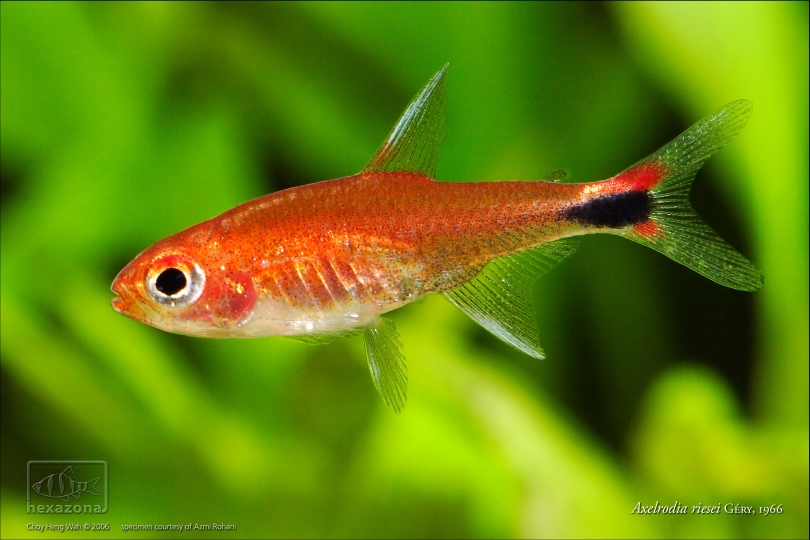
Axelrodia riesei 是体型极小、红色调醒目的灯鱼,适合柔和光线、成熟软水环境及同样温和的小伙伴。体型虽小,长期饲养仍需足够底部面积,不能因此压缩成缺少稳定性的微型容器。
分布与栖息地
已知于哥伦比亚比亚维森西奥以东的梅塔河上游,梅塔河属于奥里诺科水系。据称生活在黑水环境,可能偏向林荫小支流,具体栖地仍不宜写成已确认事实。
饲养环境
以砂底、沉木根枝和落叶构成遮蔽,腐叶上的微生物也能为幼鱼提供补充食物。灯光宜弱,可选耐阴水草及浮水植物。
繁殖尤其依赖低碳酸盐硬度、很低总硬度的酸性水,可用反渗透水等合适来源准备。它对有机废物波动敏感,只能进入已经成熟的系统,不能用新开缸承担其水质要求。
食性与喂食
天然可能捕食微小无脊椎动物和浮游动物。缸中通常接受足够细小的干粮,每天仍应搭配丰年虾无节幼体、小水蚤或小型蠕虫等活饵、冷冻饵。
习性与混养
对异种温和,但体型和水质要求使它不适合一般热闹混养缸。最好专种养,或仅搭配微型温和灯鱼及小型底栖鲶鱼。至少八至十尾可降低胆怯,雄鱼仍会占小领地、相互展示争斗;群居并不等于一直紧密整齐游动。
雌雄区分
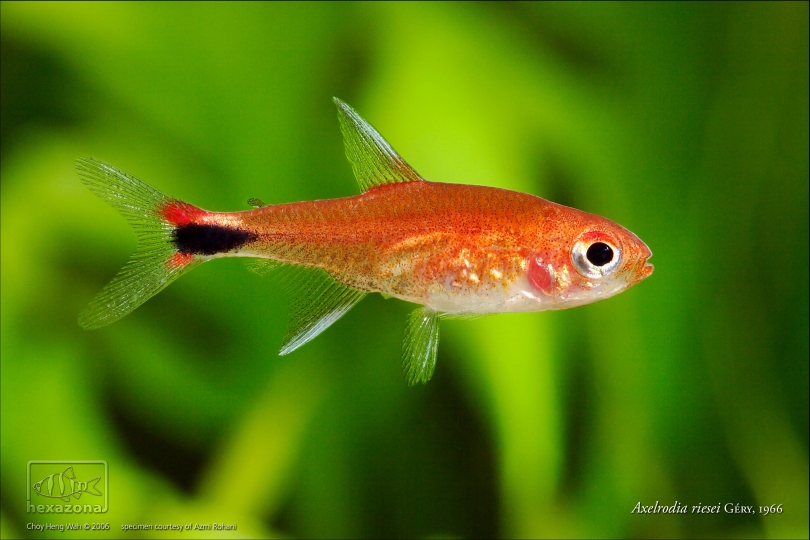
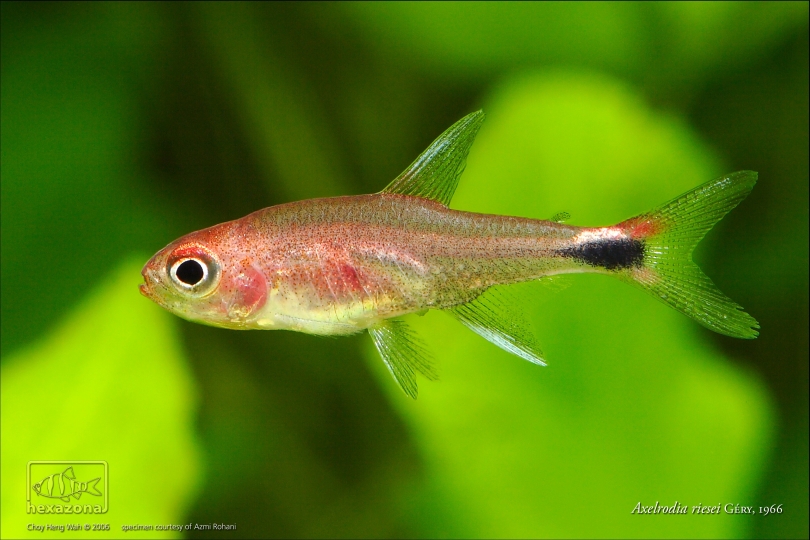
成年雄鱼略小、颜色通常更浓,成熟雌鱼更圆,抱卵时尤为明显。新到野鱼的颜色差异是否全由性别造成尚不确定。
繁殖
已有人工繁殖,在布置充分的成熟缸中可能自然出现少量幼鱼。提供柔软偏酸的水、细叶植物和落叶形成的微生物食物。状态好时亲鱼可每天产卵;控制繁殖可将一对或一雄数雌移入独立缸,数日后移出亲鱼,让卵和幼鱼在原缸继续发育。
补充说明
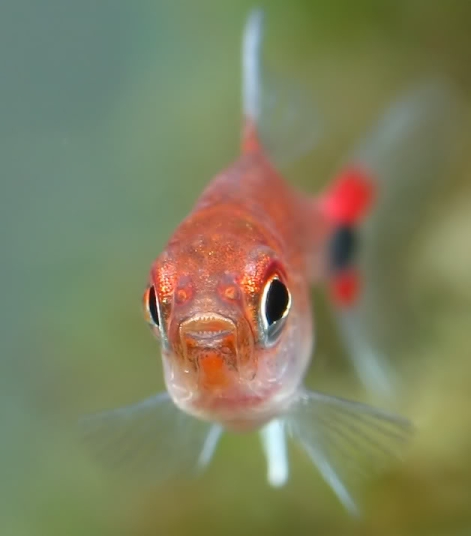
红色覆盖范围和浓淡存在变化,养一段时间后也可能褪淡。与近似种相比体形更高、红色更明显,但不要只凭到货时的一次颜色判断性别。
图片
图片来自 SeriouslyFish,版权归各摄影者所有。
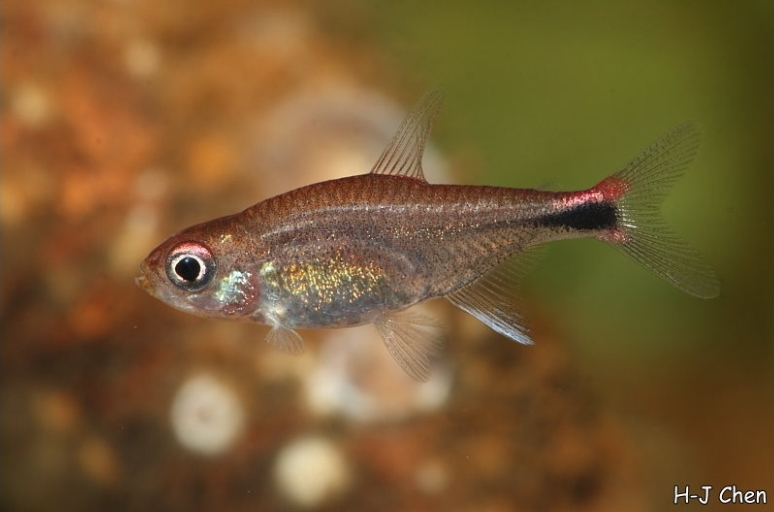
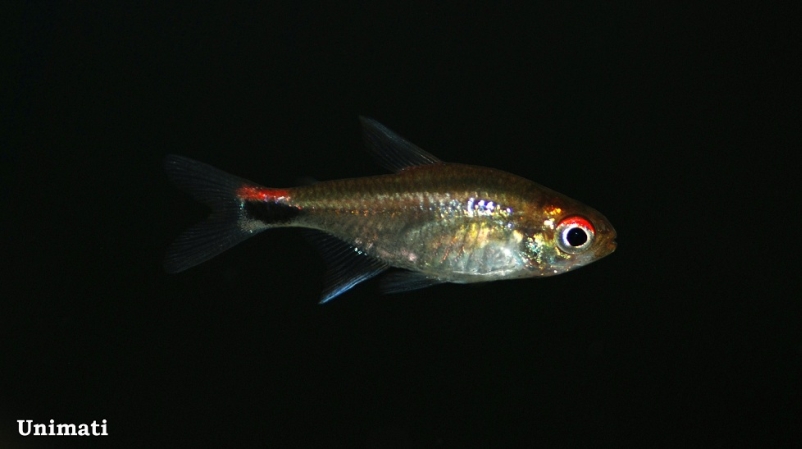
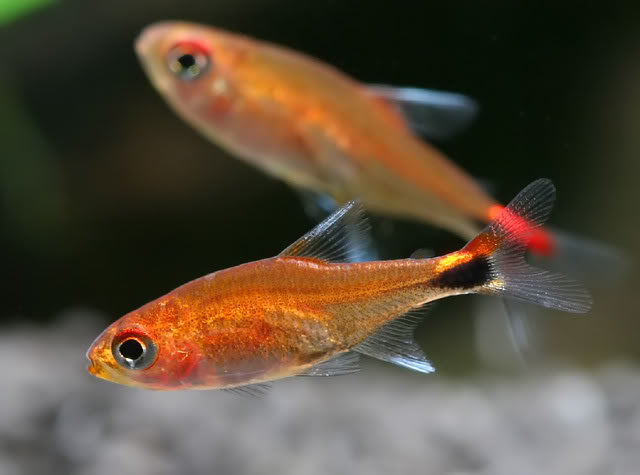
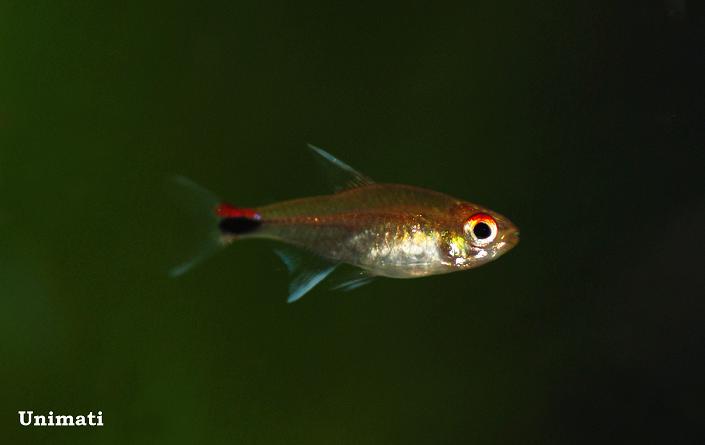
English
Overview
Tiny and red-toned, Axelrodia riesei suits subdued lighting, mature soft-water conditions, and equally gentle companions. Its size does not remove the need for adequate aquarium space and stability.
Distribution & habitat
Known records are confined to the upper Meta east of Villavicencio in Colombia, within the Orinoco system. Blackwater habitat is reported, with small forested tributaries considered more likely than large channels; detailed habitat preferences remain uncertain.
Aquarium setup
Use sand, wood, roots, and leaf litter for cover. Microorganisms developing on decaying leaves provide supplementary food for fry. Low light, shade-tolerant plants, and floating growth suit the setup.
Breeding particularly requires acidic water with negligible carbonate hardness and very low general hardness, which may call for reverse-osmosis water. Sensitivity to changing organic waste levels makes a biologically mature aquarium essential.
Diet & feeding
It probably takes tiny invertebrates and zooplankton in nature. Suitably fine dry foods are normally accepted, alongside daily small live or frozen items such as Artemia nauplii, tiny water fleas, or small worms.
Behaviour & compatibility
Its peaceful disposition does not make it an all-purpose community fish. A species setup, or a few equally small gentle characins and catfish, is preferable. At least eight to ten reduce shyness. Rival males occupy small territories and spar, so social life is not constant synchronized schooling.
Sexual dimorphism
Adult males are slightly smaller and usually more intensely colored. Mature females are rounder, especially when gravid. Color differences among newly imported wild fish are not securely attributable to sex alone.
Breeding
Captive breeding is established, and a few young may appear spontaneously in a well-structured mature aquarium. Soft acidic water, fine-leaved plants, and microorganisms on leaf litter support the process. Adults in condition can spawn daily. For controlled breeding, place a pair or one male with several females in a separate setup, then remove adults after several days while eggs and fry develop there.
Notes
Red coloration varies in extent and strength and may fade after time in captivity. A deeper body and redder appearance help distinguish it from a similar congener, but one color observation is insufficient for dependable sexing.
来源
- https://www.seriouslyfish.com/species/axelrodia-riesei(抓取于 2026-10-10)
axelrodia-riesei · 文件: data/species/axelrodia-riesei.md · 状态: 草稿