Aulonocara maylandi · Sulphurhead Peacock
概要
| 字段 | 值 |
|---|---|
| 类别 | 鱼 |
| 学名 | Aulonocara maylandi |
| 分类 | 慈鲷目 Cichliformes › 慈鲷科 Cichlidae › Aulonocara |
| 水体 | 淡水 |
| 原产地 | 马拉维湖东南部韦斯特礁、埃克尔斯礁及中西岸坎德岛 |
| 成体体长 | 10 cm |
| 饲养难度 | 中等 |
| 最小水体 | 108 L |
| 最小缸长 | 120 cm |
| 群居方式 | 群游 |
| 外部数据 | seriouslyfish aulonocara-maylandi-maylandi;fishbase 2186 |
| 性情 | 温和 |
| 繁殖方式 | 口孵 |
水质参数
| 参数 | 耐受范围 | 最适范围 | 单位 |
|---|---|---|---|
| 水温 | 25–29 | — | °C |
| pH | 7.5–9 | — | — |
| 总硬度 | 10–25 | — | dGH |
概述
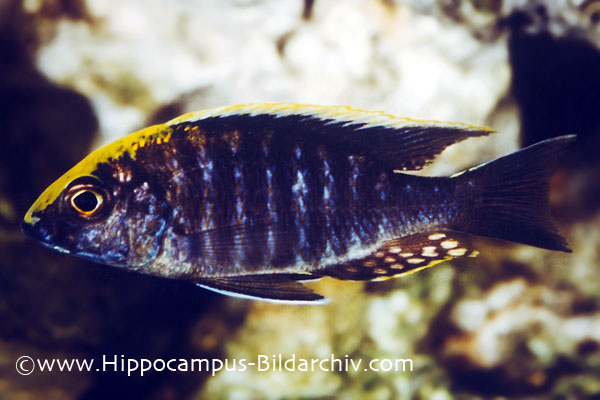
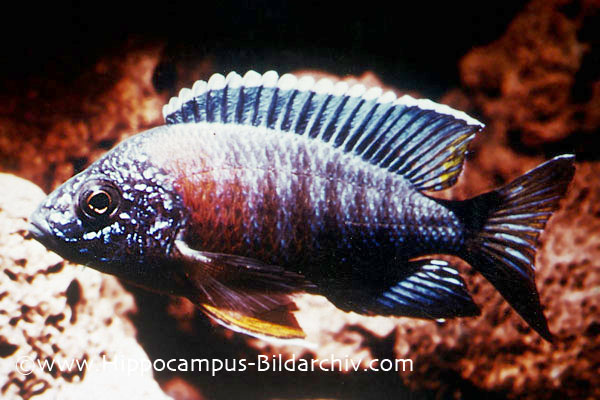
Aulonocara maylandi 在同属中相当温和且胆小,适合安静环境。它有两种主要产地外观:一种雄鱼从吻端到背鳍边缘带亮黄色条带,坎德岛型相应条带偏白,繁殖群应保留各自来源。
分布与栖息地
马拉维湖特有。黄色条带型见于东南部马坎吉拉岬附近的韦斯特礁和埃克尔斯礁,浅色条带型来自中西岸坎德岛。栖于岩石与沙底过渡区,坎德岛雄鱼会在交界占域,雌鱼在沙地结伴觅食。
饲养环境
细砂区与石堆交错,既有藏处又能自然觅食。粗颗粒底材可能妨碍筛食、伤鳃或被误吞,可配耐硬水植物。对水质恶化和突然变化敏感,成熟过滤配每周约三至五成换水,保持稳定清洁。
食性与喂食
属内鱼常借头部感觉孔寻找底部小食物,含砂后筛出可食部分。人工菜单可用细颗粒配小活饵、冷冻饵,如丰年虾、红虫和水蚯蚓;部分干粮应含植物性原料。一天分三四次小量喂,更利于持续觅食和稳定状态。
习性与混养
优先单种饲养,大缸中可谨慎搭配真正温和的鱼。多数岩栖慈鲷太强势,其他同属鱼还可能杂交。空间和结构合适时可以多雄群体,并可能不止一雄同时发色;但繁殖期仍需观察雌鱼是否被反复追赶。
雌雄区分
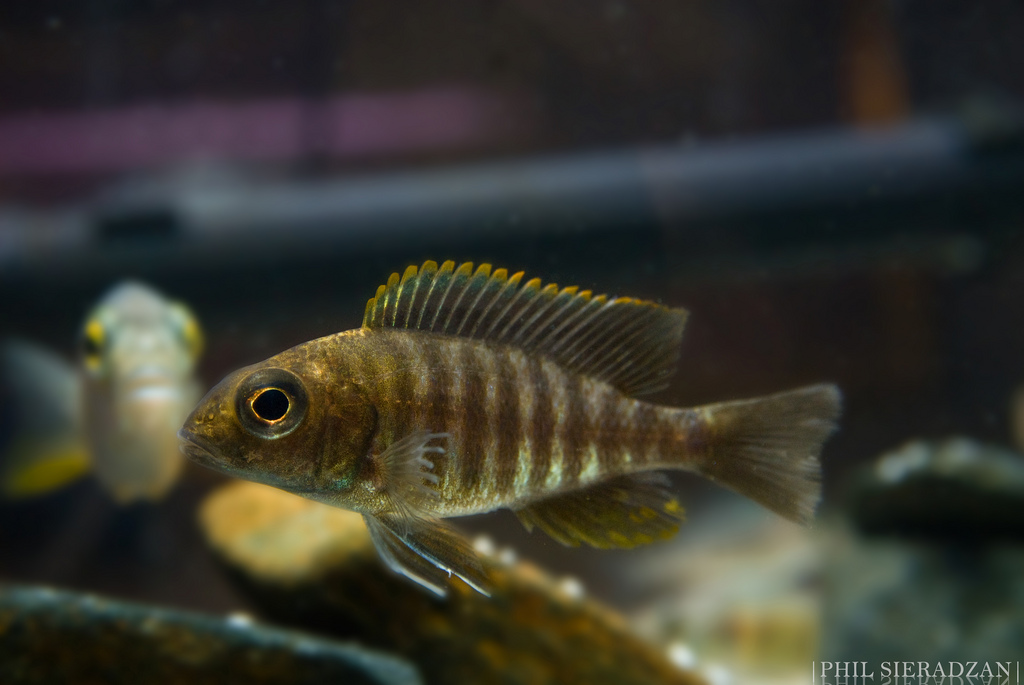
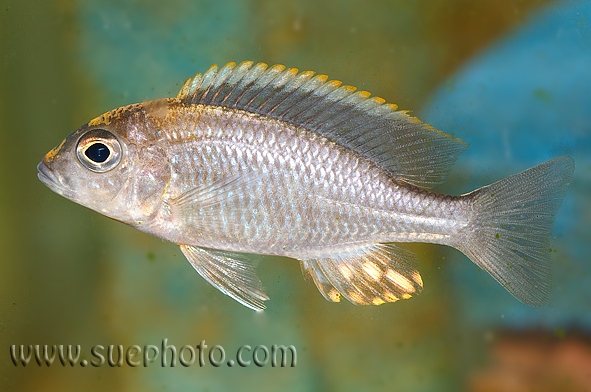
雄鱼更大、色彩更鲜明,头背条带颜色随产地型不同而变化。
繁殖
母系口孵,育苗可另设专缸。常用一雄配至少四雌来分散追逐,准备平石和开阔砂面。雌鱼产一批卵便含入口中,通过追啄雄鱼卵点的动作完成受精。
母鱼通常停食,含卵育幼最长约四周。受惊可能吞卵或过早吐出,因此是否移缸要兼顾骚扰程度与搬动压力,隔离太久也可能影响回群。卵黄未耗尽的鱼苗无需立即喂,之后可用丰年虾无节幼体,约四个月开始较易分辨性别。
图片
图片来自 SeriouslyFish,版权归各摄影者所有。
English
Overview
Among the more timid peacocks, Aulonocara maylandi needs calm company. Two principal locality forms differ in the male’s head-to-dorsal stripe: bright yellow in one, whitish in the Kande Island form. Preserve locality identity when breeding them.
Distribution & habitat
The yellow-striped form occurs at West and Eccles Reefs near Makanjila Point in southeastern Lake Malawi. The whitish-striped form comes from Kande Island off the central-western shore. At Kande, breeding males hold rock–sand boundaries while females forage in groups over sand.
Aquarium setup
Alternate fine-sand areas with rockwork, retaining both shelter and feeding space. Coarse substrate may obstruct sifting, damage gills, or be swallowed. Suitable hard-water plants can be added. Established filtration and weekly changes of about 30–50% protect against deteriorating water and abrupt shifts.
Diet & feeding
The genus uses head sensory pores to locate small food items and sift substrate. Provide fine prepared diets alongside tiny live or frozen Artemia, bloodworms, or Tubifex, including some plant-rich dry foods. Split food into three or four small daily portions.
Behaviour & compatibility
A species setup is safest, with carefully chosen nonaggressive companions possible in larger aquariums. Avoid most mbuna and other peacocks that may hybridize. Multiple males can coexist in a suitable colony and may display simultaneously, but still monitor females for concentrated courtship pressure.
Sexual dimorphism
Males are larger and more colorful, with stripe color differing between locality forms.
Breeding
This maternal mouthbrooder can reproduce in a community, but a dedicated aquarium improves fry retention. One male with several females spreads courtship pressure, with flat stones and sand available for spawning. Females collect successive batches and eggs are fertilized through the egg-spot sequence.
Brooding can last roughly four weeks, usually without feeding. Weigh protection from harassment against disturbance from moving females, and consider reintegration after long isolation. Once remaining yolk is absorbed, young can take Artemia nauplii. Sex differences often become apparent near four months.
来源
ID:aulonocara-maylandi · 文件: data/species/aulonocara-maylandi.md · 状态: 草稿