Aulonocara baenschi · New Yellow Regal Peacock
概要
| 字段 | 值 |
|---|---|
| 类别 | 鱼 |
| 学名 | Aulonocara baenschi |
| 分类 | 慈鲷目 Cichliformes › 慈鲷科 Cichlidae › Aulonocara |
| 水体 | 淡水 |
| 原产地 | 马拉维湖西岸的乌西西亚、恩科莫礁、班加、马莱里群岛及奇波卡等地 |
| 成体体长 | 12 cm |
| 饲养难度 | 中等 |
| 最小水体 | 243 L |
| 最小缸长 | 120 cm |
| 群居方式 | 群游 |
| 性情 | 温和 |
| 外部数据 | seriouslyfish aulonocara-baenschi;fishbase 2179 |
| 繁殖方式 | 口孵 |
水质参数
| 参数 | 耐受范围 | 最适范围 | 单位 |
|---|---|---|---|
| 水温 | 25–29 | — | °C |
| pH | 7.5–9 | — | — |
| 总硬度 | 10–25 | — | dGH |
概述
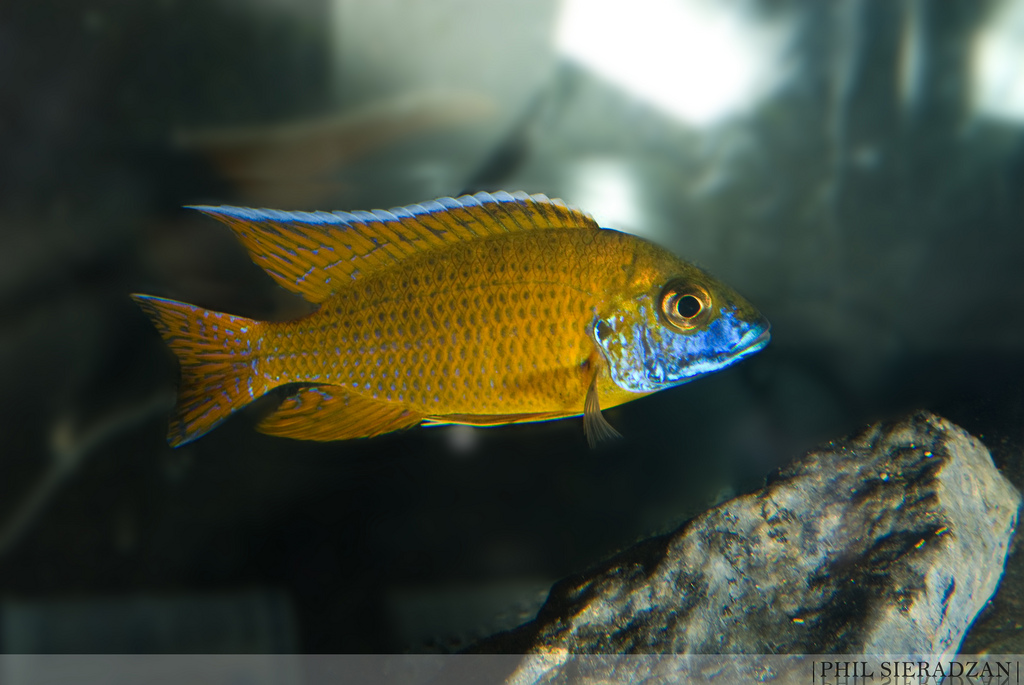
Aulonocara baenschi 是马拉维湖中相对温和的孔雀类慈鲷,雄鱼色彩醒目,吻部侧面轮廓较陡而弯。它需要细砂才能顺利进行自然取食,干净、稳定的硬碱水同样重要。
分布与栖息地
特有于马拉维湖,已知点位位于西岸,包括乌西西亚、恩科莫礁、班加、马莱里群岛和奇波卡。通常在岩岸与散石沙底的过渡带,常见于较浅水域,也有较深记录。
饲养环境
用细砂作底床,石堆之间留开阔沙区。粗砾和小卵石可能妨碍筛食、损伤鳃部或被吞入,细砂不是纯粹装饰选择。可种耐硬水植物,本种通常不会破坏它们。
不要放入未成熟缸,对水质恶化及化学条件突变很敏感。可靠外滤或底滤配合每周约三至五成换水,保持稳定。
食性与喂食
孔雀类所属属的鱼会利用头部感觉孔探测底部细小动静,再含砂筛选食物。人工投喂可用细颗粒优质饲料配红虫、水蚯蚓、丰年虾及蚊幼虫等活饵或冷冻饵,其中部分干粮宜含螺旋藻等植物成分。一天分三四次小量喂,比一次大量更贴近持续觅食。
习性与混养
雄鱼可能针对颜色花纹相似的鱼,混养应选择外观不同且温和的伙伴。多数岩栖慈鲷过分强势,其他同属鱼还存在杂交风险。除极大缸外,通常一雄配四至六雌,避免多雄竞争。
雌雄区分
成年雄鱼更大,也比雌鱼鲜艳。
繁殖
母系口孵,混养缸也可能产卵,但专缸更利于保留鱼苗。至少四雌分散雄鱼求偶压力,准备平石和开阔砂区。雌鱼分批产卵并含入口中,在追啄雄鱼卵点时接受精子。
含卵育幼最长约四周,母鱼通常停食,嘴部鼓起并出现咀嚼状动作。受惊可能失卵,若移缸应减少干扰,也需考虑长期隔离后回群受压。幼鱼若仍有卵黄无需立即喂,卵黄耗尽后可给丰年虾无节幼体;约四个月开始较易辨性别。
图片
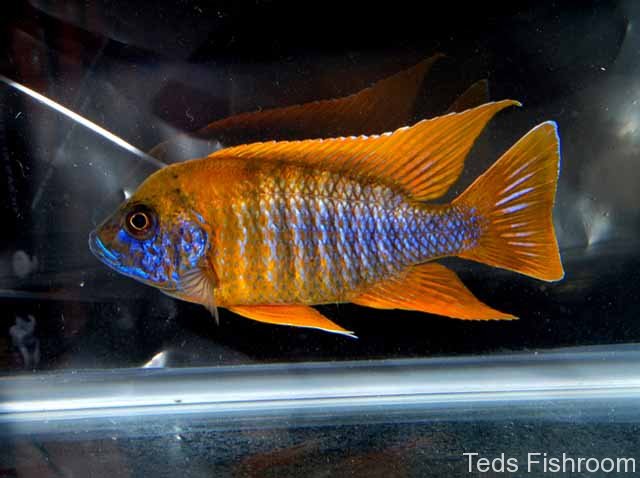
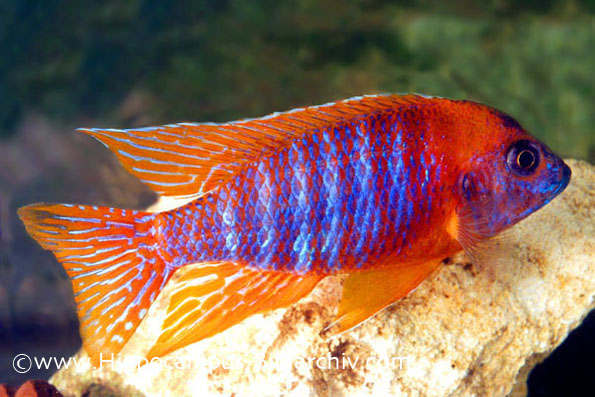
图片来自 SeriouslyFish,版权归各摄影者所有。
English
Overview
The relatively peaceful Lake Malawi cichlid Aulonocara baenschi has colorful males and a comparatively steep, curved snout profile. Fine sand supports natural feeding, while clean, stable hard alkaline water is essential.
Distribution & habitat
Known sites lie along Lake Malawi’s western shore, including Usisya, Nkhomo Reef, Benga, the Maleri Islands, and Chipoka. It occupies transitions between rock and sand with scattered stones, usually in relatively shallow water but occasionally deeper.
Aquarium setup
Use fine sand with open areas between rock piles. Coarse gravel can obstruct sifting, injure gills, or be swallowed, making substrate choice functional. Hard-water-tolerant plants can be included.
Avoid immature aquariums and sudden changes in chemistry. Effective external or sump filtration and weekly changes of roughly 30–50% maintain stability and cleanliness.
Diet & feeding
Members of the genus detect tiny substrate movements with enlarged head sensory pores and sift mouthfuls of sand. Offer fine prepared foods with live or frozen invertebrates such as bloodworms, Tubifex, Artemia, and mosquito larvae. Include plant-rich prepared products, such as spirulina-containing foods, and divide feeding into three or four small portions.
Behaviour & compatibility
Males may challenge fishes with similar patterns. Choose differently colored, peaceful companions; most mbuna are too forceful. Other members of the genus also present hybridization risks. Outside exceptionally large aquariums, keep one male with four to six females.
Sexual dimorphism
Adult males are larger and much more colorful than females.
Breeding
This maternal mouthbrooder may spawn in a community, though a dedicated tank improves fry survival. Several females spread courtship pressure; flat stones and open sand provide spawning sites. Eggs are collected in batches and fertilized during the egg-spot display.
Females normally fast while brooding for up to about four weeks. Stress can cause brood loss, and prolonged separation can complicate reintegration. Newly released fry with remaining yolk need no immediate food; once it is absorbed, offer Artemia nauplii. Sex differences usually begin to become evident around four months.
来源
- https://www.seriouslyfish.com/species/aulonocara-baenschi(抓取于 2026-10-10)
aulonocara-baenschi · 文件: data/species/aulonocara-baenschi.md · 状态: 草稿