鳄雀鳝 · Alligator Gar
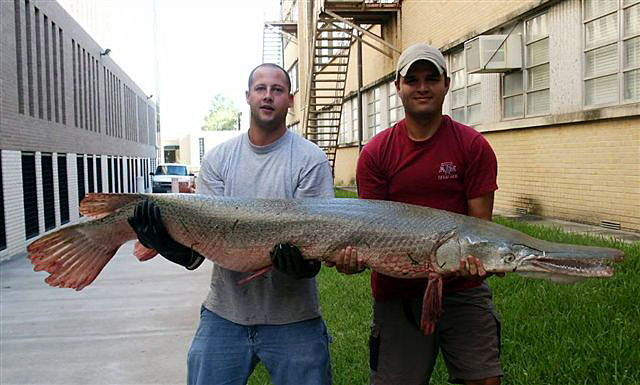
概要
| 字段 | 值 |
|---|---|
| 类别 | 鱼 |
| 学名 | Atractosteus spatula |
| 别名 | 紡錘骨雀鱔、鱷雀鱔、纺锤骨雀鳝 |
| 分类 | 雀鳝目 Lepisosteiformes › 雀鳝科 Lepisosteidae › Atractosteus |
| 水体 | 淡水 |
| 原产地 | 墨西哥、美国 |
| 成体体长 | 305 cm |
| 饲养难度 | 中等 |
| 群居方式 | 独居 |
| 水流偏好 | 低 |
| 外部数据 | seriouslyfish atractosteus-spatula;fishbase 1073 |
| 繁殖方式 | 产卵 |
水质参数
| 参数 | 耐受范围 | 最适范围 | 单位 |
|---|---|---|---|
| 水温 | 11–23 | — | °C |
| pH | 6–8 | — | — |
| 总硬度 | 5–25 | — | dGH |
概述
鳄雀鳝(Atractosteus spatula)是巨型淡水鱼,寿命可明显超过五十年,不适合家庭鱼缸。市场里的幼鱼只是早期阶段,最终体型和数十年的饲养需求都指向大型公共设施,不能把短期装得下当作适合购买。
分布与栖息地
原生于美国中部、东南部及墨西哥北部、中部,北方不少旧分布已消失,主要记录集中于密西西比河下游和墨西哥湾沿岸,向南至韦拉克鲁斯。可生活在淡水及咸淡水中,偏好带广阔洪泛平原的大河,也见于湖泊、缓流支流与回水区,通常避开急流。
饲养环境
仅适合极大型公共展示设施。水流不宜过强,照明也不宜过亮;这两点之外最关键的仍是足够长期容纳成鱼的规模。
食性与喂食
雀鳝类采用伏击捕食,常吃小鱼和水生甲壳动物。人工养护可参考适口冷冻虾和鱼类,长大后使用大小合适的整鱼;幼鱼每天喂,成年则每周一两餐即可。
新鱼转非活饵可能困难,只有体况足够时才考虑短暂调整供饵,不应让消瘦个体继续耗损。若不得不用活饵鱼作过渡,应事先隔离观察至少两周并充分调理,仍需留意病原风险,之后逐步转食。不要使用牛心、禽肉等陆生动物肉。
习性与混养
最好单养,若在大型设施中混养,只考虑体型相近、无攻击性且绝不会被吞食的鱼。
雌雄区分
雌鱼被认为能长得更大,但这一差别尚未确认为可靠辨别方法。
繁殖
野外春季进入短期淹水湿地或洪泛区繁殖,一尾雌鱼可与多尾雄鱼同时交配,卵产在近水面或较深处的水下植物间。约 48–72 小时孵化,幼体随后附着在水下表面 5–10 天,直到卵黄吸收完。
卵对人类、甲壳动物及鱼类以外的其他脊椎动物有毒,不可食用。这里描述的是野外繁殖,不能当作家庭缸繁殖方案。
补充说明
雀鳝类有能辅助呼吸空气的血管化鳔。贸易中还存在杂交雀鳝,“鳄鱼雀鳝”等相似商品名不一定对应纯种身份,购入记录应写清楚。
图片
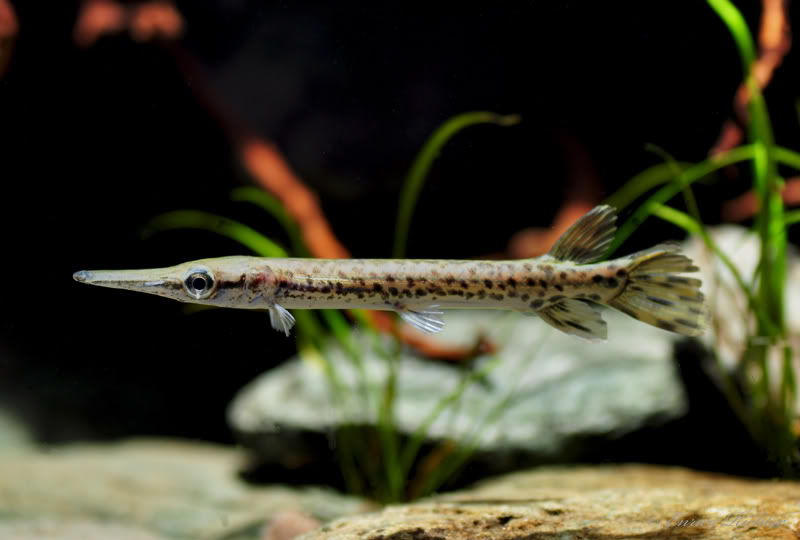
图片来自 SeriouslyFish,版权归各摄影者所有。
English
Overview
A giant freshwater fish capable of living well beyond fifty years, Atractosteus spatula is unsuitable for home aquaria. Juveniles in the trade represent only the beginning of an exceptional space and time commitment. Very large public facilities are the appropriate scale.
Distribution & habitat
Native range covers central and southeastern parts of the United States and northern to central Mexico, with losses from much of the former northern range. Remaining distribution centers on the lower Mississippi and Gulf Coast toward Veracruz. It uses fresh and brackish water, favoring large rivers and floodplains rather than fast currents.
Aquarium setup
Only very large public installations are appropriate. Avoid strong current and bright lighting, while recognizing that these simple preferences do not lessen the enormous adult housing requirement.
Diet & feeding
Gar-feeding practice centers on aquatic animal foods, using suitably sized frozen shrimp and fish before progressing to whole fish for larger specimens. Juveniles are fed daily, with adult meals reduced to once or twice weekly.
Conversion to dead food can be difficult. Any brief withholding requires adequate body condition. Where live fish are temporarily necessary, quarantine and condition them for at least two weeks before use, then work toward alternatives; this does not eliminate pathogen risk. Mammalian and avian meats are inappropriate.
Behaviour & compatibility
Keep it alone, or only with similarly sized, nonaggressive fish safely beyond swallowing size in sufficiently large facilities.
Sexual dimorphism
Females are thought to grow larger, but this is not a confirmed reliable sexing distinction.
Breeding
Wild spawning takes place in temporarily flooded habitat during spring. A female may mate with several males, placing eggs among submerged vegetation at different depths. Hatching follows in about 48–72 hours, with larvae attached to submerged surfaces for another 5–10 days while yolk is absorbed.
The eggs are toxic to humans, crustaceans, and other nonfish vertebrates and must not be eaten. This describes natural reproduction rather than a home-aquarium method.
Notes
A vascularized swim bladder allows gars to supplement aquatic respiration with air breathing. Hybrids also occur in the trade, so similarly worded common names do not guarantee a pure species identity.
来源
- https://www.seriouslyfish.com/species/atractosteus-spatula(抓取于 2026-10-10)
atractosteus-spatula · 文件: data/species/atractosteus-spatula.md · 状态: 草稿