点鳍红眼脂鲤 · African Red-eyed Tetra
概要
| 字段 | 值 |
|---|---|
| 类别 | 鱼 |
| 学名 | Arnoldichthys spilopterus |
| 别名 | 點鰭紅眼脂鯉 |
| 分类 | 脂鲤目 Characiformes › 非洲脂鲤科 Alestidae › Arnoldichthys |
| 水体 | 淡水 |
| 原产地 | 尼日利亚 |
| 成体体长 | 10 cm |
| 饲养难度 | 入门 |
| 最小水体 | 108 L |
| 最小缸长 | 120 cm |
| 群居方式 | 群游 |
| 性情 | 温和 |
| 外部数据 | seriouslyfish arnoldichthys-spilopterus;fishbase 5247 |
| 繁殖方式 | 散卵 |
水质参数
| 参数 | 耐受范围 | 最适范围 | 单位 |
|---|---|---|---|
| 水温 | 24–27 | — | °C |
| pH | 6–7.5 | — | — |
| 总硬度 | 1–15 | — | dGH |
概述
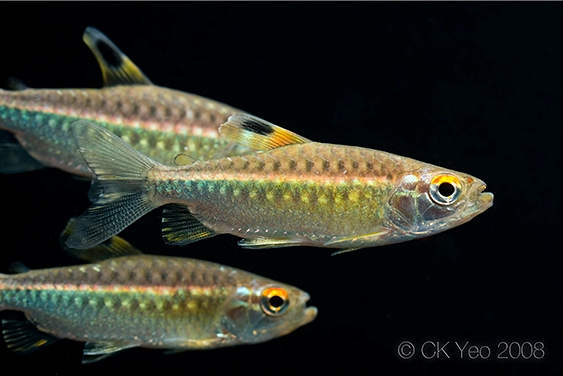
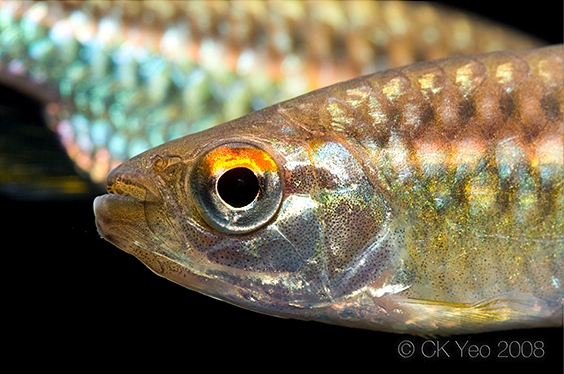
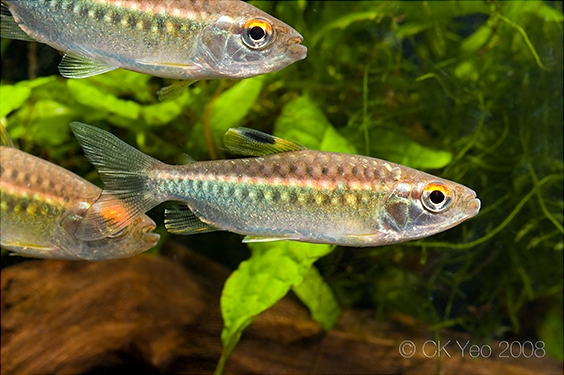
点鳍红眼脂鲤(Arnoldichthys spilopterus)是来自尼日利亚的活跃群游鱼,鳞片比许多近缘鱼更大。适应稳定环境后较健壮,但它的活动强度不适合胆小、容易紧张的缸友。
分布与栖息地
为尼日利亚特有鱼,见于奥贡河及尼日尔河下游水系的溪流和河道。相关地区的森林砍伐与污染会损害其栖息环境。
饲养环境
底面积至少约 120 × 30 cm。沉木枝根、光滑石块和水草均可使用,但要留足开阔泳道。自然水体常受腐败有机物释放的单宁染色,布局可以体现这一遮蔽、有色水环境。
食性与喂食
多数食物都能接受,尤其喜爱小型活饵和冷冻饵。多样搭配有助保持良好状态,不能将“不挑食”理解成只吃单一干粮即可。
习性与混养
温和但十分活跃,适合同样健壮、需求相容的西非群落鱼,避免胆小的伙伴。建议至少十尾共同饲养;年轻时群游明显,年长后群体队形可能不那么紧密。
雌雄区分
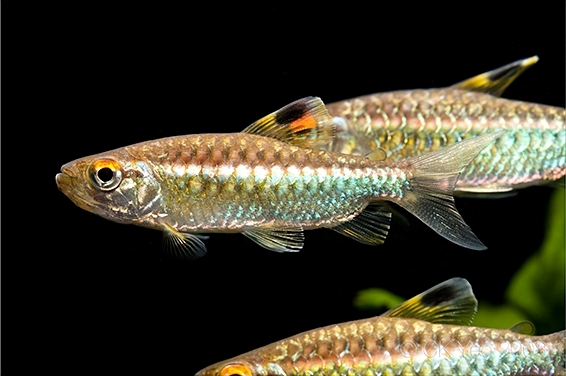
雄鱼通常稍鲜艳、身形较瘦,臀鳍带深色条纹。成熟雌鱼更丰满。
繁殖
繁殖报道并不完全一致,但通常认为能够人工诱发散卵。以活饵和冷冻饵调养,再选色泽好的雄鱼与饱满雌鱼进入偏暗、软水且略酸的繁殖环境。底部隔卵网能降低亲鱼吃卵的风险,少量植物可作产卵媒介。
雄鱼追逐后双方并列颤动产卵,雌鱼一次可能释放多达约一千枚。鱼卵约三十小时孵化,卵黄约再经一天耗尽,先喂微型食物,之后两至三天可尝试丰年虾无节幼体或微虫。
补充说明
野外记录较少并面临环境压力,不能以贸易中常见就判断野生数量充足。养护良好可存活多年,但缺少可可靠填写的具体寿命范围。
图片
图片来自 SeriouslyFish,版权归各摄影者所有。
English
Overview
Arnoldichthys spilopterus is an energetic Nigerian schooling fish with comparatively large scales. It becomes robust after settling into suitable conditions, but its constant activity makes timid companions a poor choice.
Distribution & habitat
Endemic to Nigeria, it inhabits streams and rivers of the Ogun and lower Niger systems. Deforestation and pollution affect the surrounding habitat.
Aquarium setup
Provide at least about 120 × 30 cm of base area. Wood, roots, smooth stones, and aquatic plants are suitable, provided open swimming lanes remain. Natural waters are often tannin-stained by decomposing organic matter, a useful consideration for the layout.
Diet & feeding
Most foods are accepted, with small live and frozen items particularly favored. A varied menu helps maintain condition; easy acceptance should not become dependence on one dry food.
Behaviour & compatibility
Peaceful but highly active, it suits robust compatible members of a West African community rather than shy fishes. Keep at least ten. Schooling becomes less pronounced in older specimens.
Sexual dimorphism
Males are slightly brighter and slimmer, with dark anal-fin stripes. Mature females are fuller-bodied.
Breeding
Accounts differ, although induced aquarium spawning is generally considered achievable. Condition adults with live and frozen foods, then select a strongly colored male and full female. A dim breeding setup with soft, slightly acidic water, plants, and an egg-separating mesh reduces parental egg predation.
After vigorous pursuit, the pair quivers side by side while scattering eggs. A female may release up to around a thousand. Hatching takes approximately thirty hours, followed by about another day of yolk use. Begin with microscopic food, progressing to brine-shrimp nauplii or microworms after two or three days.
Notes
Trade familiarity should not be equated with abundant wild populations. Habitat pressure and limited known sites remain relevant. Several years of life are possible under good care, but a precise supported lifespan range is unavailable.
来源
- https://www.seriouslyfish.com/species/arnoldichthys-spilopterus(抓取于 2026-10-10)
arnoldichthys-spilopterus · 文件: data/species/arnoldichthys-spilopterus.md · 状态: 草稿