Aristochromis christyi
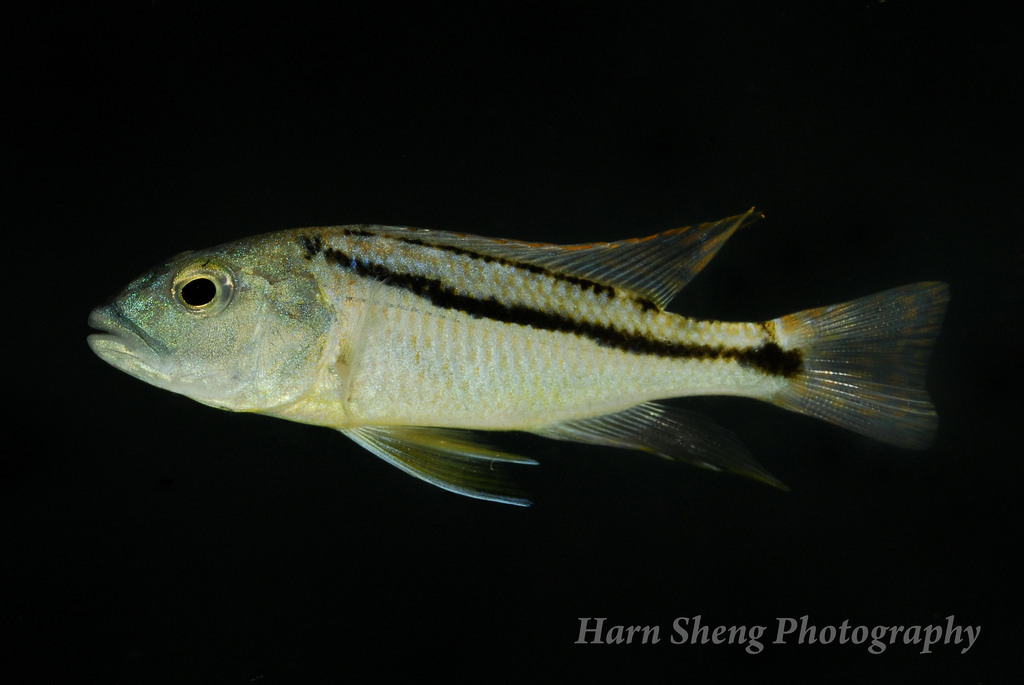
概要
| 字段 | 值 |
|---|---|
| 类别 | 鱼 |
| 学名 | Aristochromis christyi |
| 分类 | 慈鲷目 Cichliformes › 慈鲷科 Cichlidae › Aristochromis |
| 水体 | 淡水 |
| 原产地 | 马拉维湖,涉及马拉维、莫桑比克和坦桑尼亚沿岸 |
| 成体体长 | 30 cm |
| 饲养难度 | 中等 |
| 最小水体 | 648 L |
| 最小缸长 | 180 cm |
| 群居方式 | 独居 |
| 特征 | 吃小鱼: 是 |
| 外部数据 | seriouslyfish aristochromis-christyi;fishbase 2260 |
| 食性 | 肉食 |
| 繁殖方式 | 口孵 |
水质参数
| 参数 | 耐受范围 | 最适范围 | 单位 |
|---|---|---|---|
| 水温 | 24–26 | — | °C |
| pH | 7.5–9 | — | — |
| 总硬度 | 10–30 | — | dGH |
概述
Aristochromis christyi 是大型食鱼慈鲷,嘴部能伸展,既能从石缝猎取小鱼,也会慢慢接近后突然侧向突袭。饲养它首先要规划充足游泳空间和可靠过滤,混养鱼必须大到无法被吞下。
分布与栖息地
特有于马拉维湖,全湖都有分布,以岩岸过渡为开阔沙底的区域较常见,涉及马拉维、莫桑比克及坦桑尼亚。
饲养环境
保留大片开放水域,用砂底配局部石堆,石堆可提供遮蔽和景观变化。体型和摄食量都会带来较多废物,过滤必须足够大且高效,不能让造景挤占主要游泳空间。
食性与喂食
天然主要捕食其他慈鲷,但通常能训练接受非活体饵。虾、贻贝、鸟蛤和适口小鱼肉等都可选用;许多个体会吃颗粒,但不宜只以干颗粒作为饮食基础。
习性与混养
任何能装入口中的伙伴都有风险。可考虑体型相近、同样需要硬碱水的大型鱼。野外以独处为主,缸中可单雄饲养,或在适当空间中一雄配数雌,不宜因繁殖需要便随意增加雄鱼。
雌雄区分
雄鱼体表有蓝色光泽,繁殖时显著增强,原有深色体侧条纹也会消失。
繁殖
已有人在水族箱中繁殖,属于母系口孵。专缸以一雄配至少三雌较合适,提供充分藏处,避免未准备产卵的雌鱼被持续追逐。雄鱼清理并展示产卵点,雌鱼分批产卵后立即收入嘴内,追啄雄鱼臀鳍卵点时完成受精过程。
雌鱼可含卵育幼约三至四周,期间不进食。受惊可能提早吐卵或吞卵,若必须移缸要谨慎,隔离太久也可能影响回群后的地位。幼鱼释放时可吃丰年虾无节幼体,母鱼还可能继续守护约一周,遇险再次将幼鱼含入口中。
图片
图片来自 SeriouslyFish,版权归各摄影者所有。
English
Overview
A large piscivorous cichlid, Aristochromis christyi uses its protrusible mouth to hunt among rocks and strike from ambush. Ample swimming room, efficient filtration, and tankmates beyond swallowing size are fundamental requirements.
Distribution & habitat
Endemic to Lake Malawi, it occurs around the lake, particularly where rocky shores transition to open sand, across Malawi, Mozambique, and Tanzania.
Aquarium setup
Leave broad open swimming areas over sand, with limited rock piles providing cover and variation. Its size and feeding produce considerable waste, so filtration must be large and efficient without allowing décor to consume the main swimming area.
Diet & feeding
Other cichlids form much of its natural prey. Aquarium fish can usually be trained onto nonliving foods such as prawns, mussels, cockles, and suitable fish portions. Pellets are often accepted but should not dominate the diet.
Behaviour & compatibility
Do not combine it with fishes that fit in its large mouth. Similarly sized species sharing its water requirements are possible. It is mainly solitary in nature and can be kept as one male or as a male with several females where space permits.
Sexual dimorphism
Males show a blue sheen that becomes much stronger in breeding condition, when the dark flank stripe disappears.
Breeding
Aquarium breeding has been achieved. This maternal mouthbrooder is best attempted in a species setup with one male and at least three females, plus ample shelter from courtship harassment. The male prepares and displays over a spawning site. Females collect successive egg batches, with fertilization occurring as they investigate his anal-fin egg spots.
Brooding lasts about three to four weeks without feeding. Stress may cause premature release or loss of the brood; relocation also risks disrupting the female’s social position. Released fry can take Artemia nauplii. The mother may continue guarding for about a week and retrieve young when threatened.
来源
- https://www.seriouslyfish.com/species/aristochromis-christyi(抓取于 2026-10-10)
aristochromis-christyi · 文件: data/species/aristochromis-christyi.md · 状态: 草稿