Apricaphanius saourensis · Sahara Toothcarp
概要
| 字段 | 值 |
|---|---|
| 类别 | 鱼 |
| 学名 | Apricaphanius saourensis |
| 别名 | Aphanius saourensis |
| 分类 | 鳉形目 Cyprinodontiformes › Aphaniidae › Apricaphanius |
| 水体 | 淡水 |
| 原产地 | 阿尔及利亚 |
| 成体体长 | 4.5 cm |
| 饲养难度 | 中等 |
| 最小水体 | 108 L |
| 最小缸长 | 120 cm |
| 群居方式 | 群游 |
| 外部数据 | seriouslyfish aphanius-saourensis;fishbase 62763 |
| 繁殖方式 | 产卵 |
| 领地性 | 是 |
水质参数
| 参数 | 耐受范围 | 最适范围 | 单位 |
|---|---|---|---|
| 水温 | 2–30 | — | °C |
| pH | 7.5–9 | — | — |
| 总硬度 | 10–30 | — | dGH |
概述
Apricaphanius saourensis 来自阿尔及利亚撒哈拉边缘的封闭流域,银蓝斑驳的雄鱼与一些呈规则条纹的近亲不同。专养繁育、保留种源,以及对雌鱼和弱势雄鱼的遮蔽,是养护重点。
分布与栖息地
原生于 Oued Saoura 流域,河流不通海,最终进入撒哈拉,下游常干涸。历史记录包括 Igli 附近的 Oued Zousfana、El Ouata、Kerzaz 和 Mazzer;早期调查已显示分布缩减,外来食蚊鱼、取水和污染构成压力。
模式地影像显示浅而缓流的溪水,岸边植被缺少,水下植物却较密。不能因地处沙漠,就把无植物裸缸视为理想环境。
饲养环境
群体建议至少约 120 × 30 cm 底面积。细毛产卵拖把和丝状藻能遮断视线并提供附卵处,雌鱼及弱势雄鱼应有逃离优势雄鱼的空间。
需使用约 1–3 g/L 海水盐维持适宜环境,莫丝及金鱼藻等细叶植物可能不耐这种条件。底砂并非必须,可用惰性砂砾,过滤保持温和。气候适合时可室外养护,并接受每天数小时自然光。每年安排数月低温冬季,避免恒暖饲养影响繁殖力和寿命,酸性水不合适。
食性与喂食
近亲会取食微型水生动物,同时摄入藻及植物。缸内干粮应搭配丰年虾、水蚤和红虫等小型活饵或冻饵,繁殖季尤其不能忽略食物质量。没有丝状藻时补含螺旋藻配方。
习性与混养
适合专养群体,每雄配两至三雌。繁殖追逐较强,水质需求也特殊,不宜放入普通混养缸;繁育中应保持独立来源,不与外观相似的近亲混并。
雌雄区分
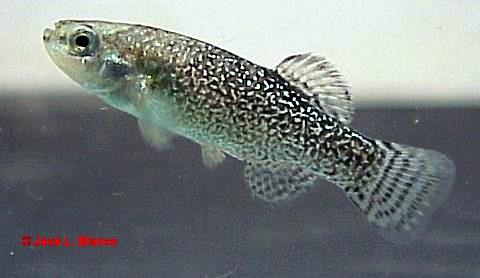
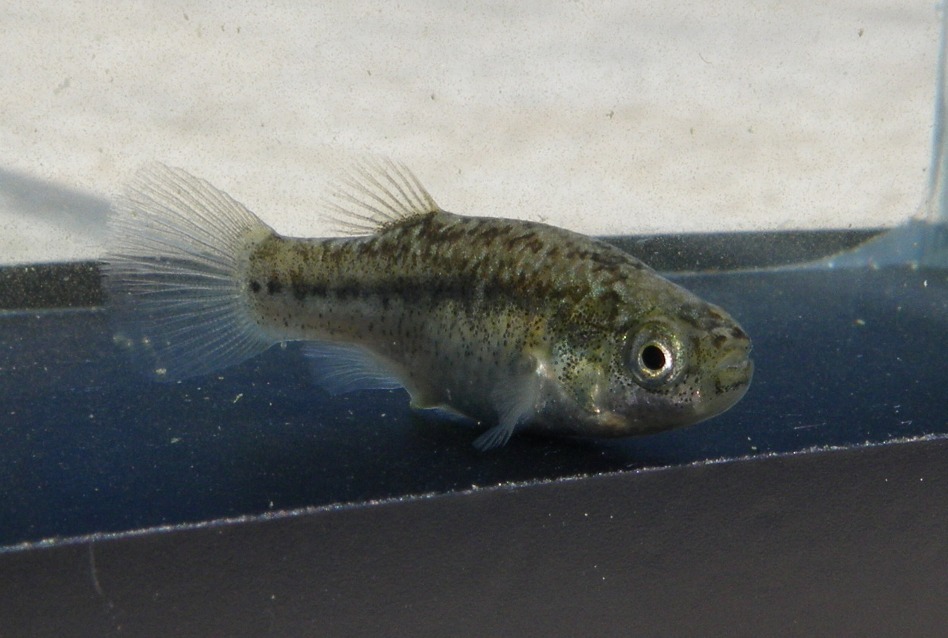
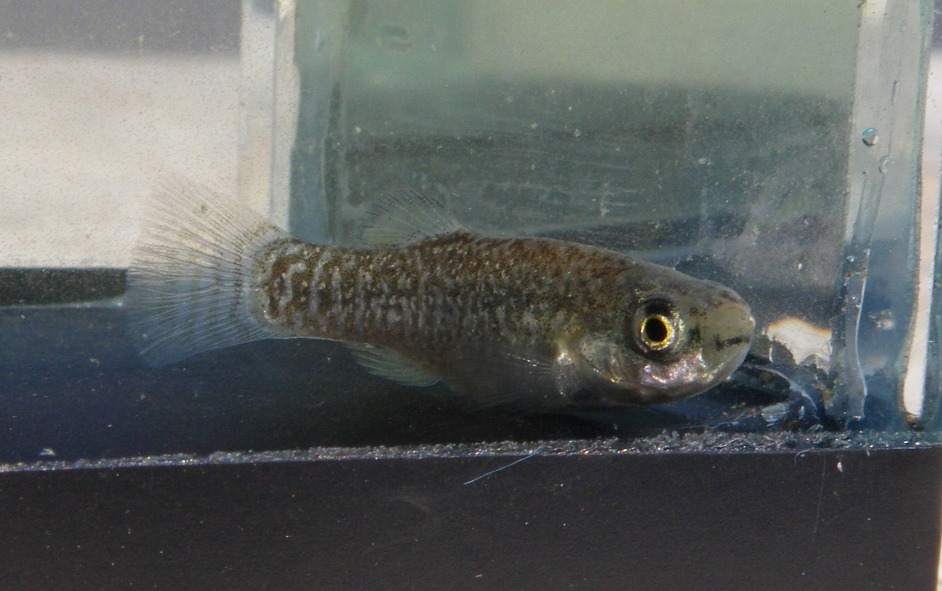
雄鱼体侧银蓝斑驳,有的个体在尾柄前形成不规则带,背鳍、尾鳍和臀鳍有暗纹及淡蓝色,成对鳍透明。雌鱼更大、颜色素,体侧带棕色斑驳,多数尾柄有一个暗点,各鳍透明。
繁殖
通常四至十一月持续分批产卵,雄鱼形成临时领域。卵单枚或少量排出,以细丝黏附在藻或其他表面,亲鱼可能吃卵及仔鱼。
繁殖季每天检查拖把等介质,夹取附卵材料时避开卵本身,也可每隔几天更换整束。保持孵化水与亲鱼缸的水质和温度一致,通常七至十四天孵化。自由游动后可用丰年虾无节幼体和微虫开口。
补充说明
本种过去被并入 Apricaphanius iberus,2006 年获得正式描述。斑驳图案有助于与呈明显竖带或斑点的近亲区分,但其他阿尔及利亚未明种群不能直接都认作本种。
图片
图片来自 SeriouslyFish,版权归各摄影者所有。
English
Overview
Apricaphanius saourensis comes from a closed drainage at the Saharan margin of Algeria. Males have silver-blue mottling instead of the regular bars seen in some relatives. Dedicated breeding, provenance records, and shelter for females and subordinate males are practical priorities.
Distribution & habitat
The Oued Saoura basin does not reach the sea; it drains toward the Sahara and often dries in its lower sections. Historical localities include the Oued Zousfana near Igli, El Ouata, Kerzaz, and Mazzer. Earlier surveys already indicated contraction, with introduced mosquitofish, water extraction, and pollution creating pressure.
Images of the type locality show a shallow slow stream with little marginal vegetation but dense submerged plants. A desert setting therefore does not imply that a bare, coverless aquarium is appropriate.
Aquarium setup
Provide at least about 120 × 30 cm for a group. Fine spawning mops and filamentous algae break sightlines and offer egg attachment sites. Females and subordinate males need refuge from dominant fish.
Use marine salt at about 1–3 g/L; moss and hornwort may not thrive under these conditions. Substrate is optional, with inert sand or gravel suitable, and filtration should be gentle. Outdoor care and several hours of natural light can work where the climate is appropriate. Give fish a cool winter lasting several months, since continuous warmth may impair fecundity and lifespan. Acidic water is unsuitable.
Diet & feeding
Relatives consume tiny aquatic animals along with algae and plant matter. Supplement dry foods with small live or frozen brine shrimp, Daphnia, and bloodworms, particularly during reproductive activity. Include a spirulina-enriched product if filamentous algae are absent.
Behaviour & compatibility
Keep a dedicated group with two or three females per male. Strong breeding pursuit and particular water requirements make general community housing inappropriate. Preserve distinct origins instead of combining similar relatives for reproduction.
Sexual dimorphism
Males show silver-blue mottling, sometimes forming irregular bands toward the tail base. Dorsal, tail, and anal fins carry dark markings and faint blue, while paired fins are clear. Larger, plain females have brownish flank mottling, usually one dark tail-base spot, and transparent fins.
Breeding
Repeated spawning usually continues from April to November. Males establish temporary territories. Single eggs or small batches attach to algae and other surfaces by fine threads. Adults may eat eggs and fry.
Inspect mops daily during the season. Transfer egg-bearing material without touching the eggs, or replace entire mops every few days. Match incubation temperature and chemistry to adult conditions. Eggs generally hatch after seven to fourteen days, and free-swimming fry can take newly hatched brine shrimp and microworms.
Notes
Previously included with Apricaphanius iberus, this species was described in 2006. Mottling assists comparison with distinctly barred or spotted relatives, but other unidentified Algerian populations cannot automatically be assigned to it.
来源
- https://www.seriouslyfish.com/species/aphanius-saourensis(抓取于 2026-10-10)
apricaphanius-saourensis · 文件: data/species/apricaphanius-saourensis.md · 状态: 草稿