维杰隐带丽鱼 · Red Edge Apisto
概要
| 字段 | 值 |
|---|---|
| 类别 | 鱼 |
| 学名 | Apistogramma viejita |
| 别名 | 維傑隱帶麗魚、Apistogramma sp. |
| 分类 | 慈鲷目 Cichliformes › 慈鲷科 Cichlidae › Apistogramma |
| 水体 | 淡水 |
| 原产地 | 哥伦比亚 |
| 成体体长 | 8 cm |
| 饲养难度 | 入门 |
| 最小水体 | 54 L |
| 最小缸长 | 60 cm |
| 群居方式 | 成对 |
| 性情 | 温和 |
| 外部数据 | seriouslyfish apistogramma-viejita;fishbase 46716 |
| 食性 | 肉食 |
| 繁殖方式 | 附着产卵 |
| 领地性 | 是 |
水质参数
| 参数 | 耐受范围 | 最适范围 | 单位 |
|---|---|---|---|
| 水温 | 22–28 | — | °C |
| pH | 4.5–6.5 | — | — |
| 总硬度 | 0–2 | — | dGH |
概述
维杰隐带丽鱼(Apistogramma viejita)在贸易中常被其他相似种冒名,确认身份尤其重要。真正本种适合安静混养环境,但成熟雄鱼仍有领地行为,护幼期需足够分隔。
分布与栖息地
原产哥伦比亚奥里诺科水系梅塔河上游,许多饲养个体祖先来自盖坦港附近。偏爱浅、缓的岸边水域,岸生和挺水植物浓密;不少产地位于稀树草原环境,模式地点为清水,并非都来自密林黑水。
饲养环境
一对至少考虑 60 × 30 厘米底面。细沙、沉木、洞穴和落叶提供遮蔽,陶罐等人工结构也适用。弱光、浮水植物和耐阴水草可补充,海绵过滤保持轻缓水流。避免未成熟新缸与有机废物波动;已繁殖适应的个体对水质偏离天然值通常有一定耐受。
食性与喂食
主要肉食,日常用丰年虾、水蚤、红虫等活饵或冷冻饵料,逐步提供适口干颗粒作为补充。
习性与混养
总体温和,适合安静的小型鱼混养缸。野生个体宜单种或只配小型伴游鱼,避免其他隐带丽鱼。成年雄鱼会驱赶附近雄鱼,通常可以容忍数尾雌鱼,但空间安排必须充分。
雌雄区分
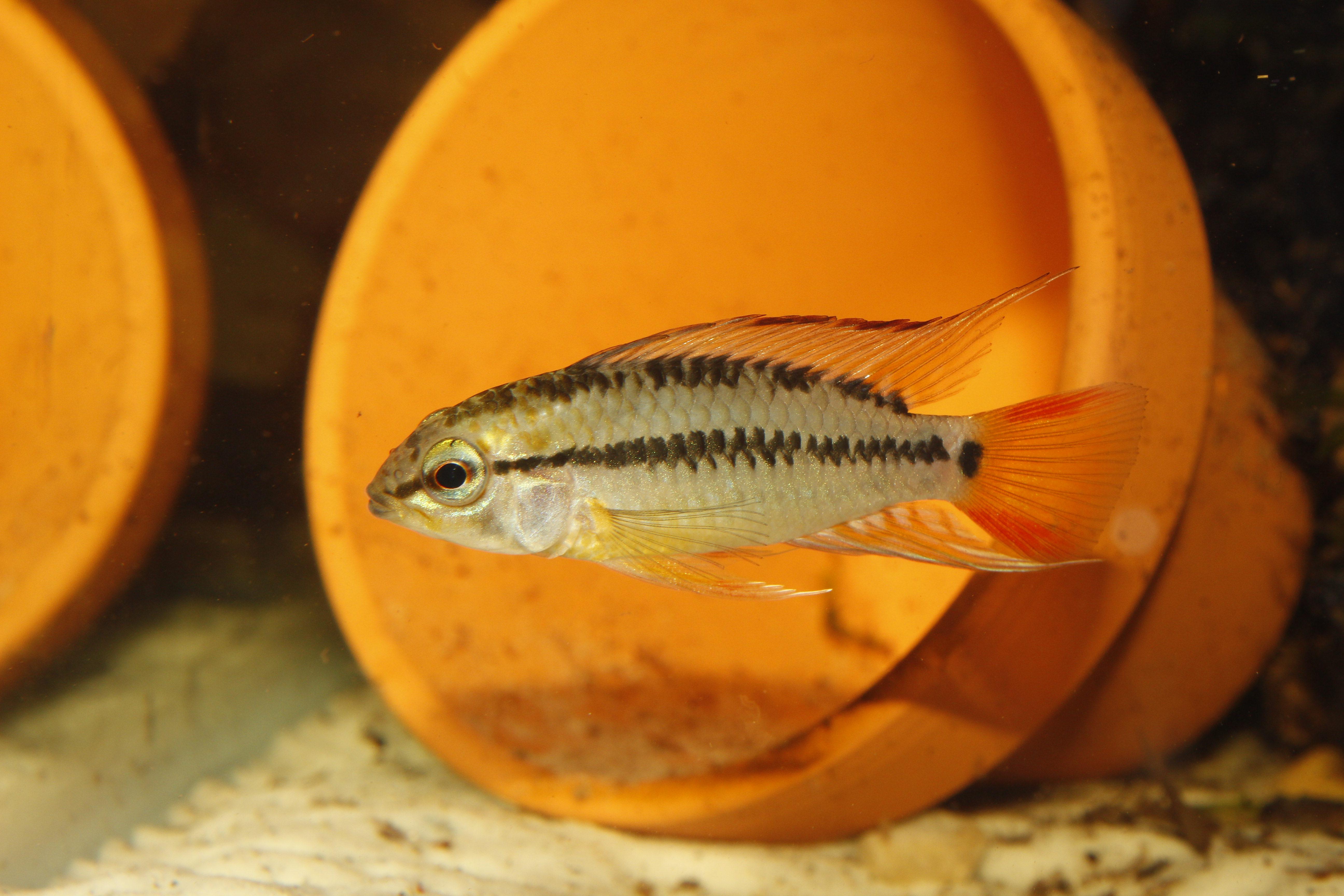
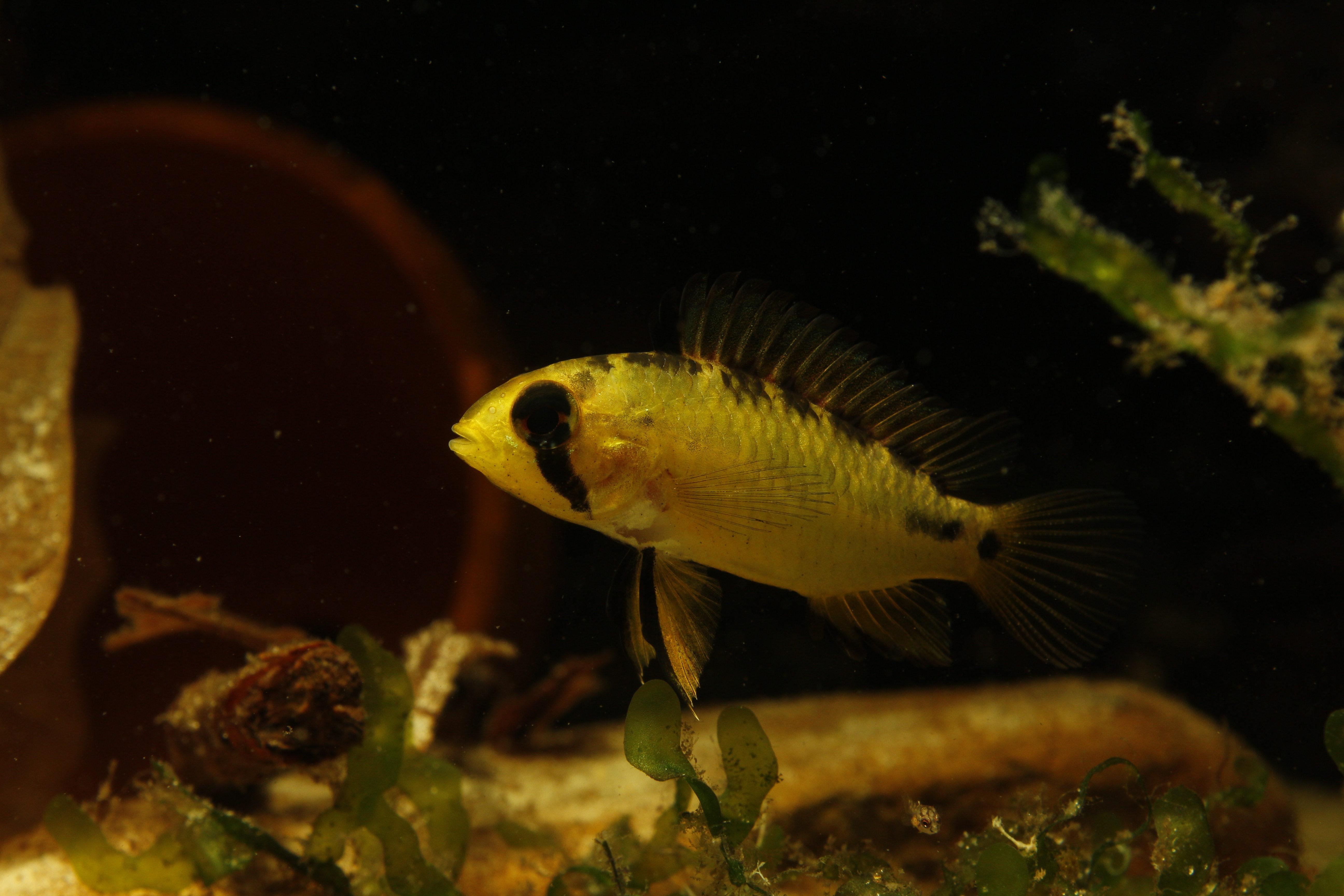
雄鱼更大、体色更浓,鳍延长;雌鱼繁殖和护幼时变鲜黄色,身体、面部及腹鳍前缘出现黑纹。
繁殖
洞穴或缝隙基面产卵,雌鱼照顾卵和幼鱼,雄鱼通常负责较大领地;单对饲养时也可能协助保护平游鱼苗。卵约 36~72 小时孵化,再过数天平游,具体随温度而变。
补充说明
雄鱼背鳍上缘深色,是辨认真正本种的重要线索,尾斑还可呈矩形、梯形或新月形。部分地域型和未描述近似鱼关系未明,保留产地记录比只看商品名可靠。
图片
图片来自 SeriouslyFish,版权归各摄影者所有。
English
Overview
Mislabeling is a major issue with Apistogramma viejita: similar fishes frequently enter trade under its name. Correctly identified specimens can suit a calm community, while mature males still require territorial space and breeding cover.
Distribution & habitat
It is native to the upper Meta basin in Colombia. Much captive stock descends from fish collected near Puerto Gaitán. Shallow, slow shoreline water with dense emergent vegetation is favored, often in savanna country rather than closed forest. The type locality contained clear water.
Aquarium setup
Allow at least a 60 by 30 cm footprint for a pair. Sand, wood, leaves and caves provide cover, with simple artificial shelters also suitable. Use low light and gentle filtration. Maintain an established system without fluctuating waste levels. Captive-bred fish can tolerate some departure from natural chemistry when overall conditions remain good.
Diet & feeding
Offer a largely animal-based menu with live or frozen invertebrates. Appropriate pellets may be accepted as an additional food.
Behaviour & compatibility
It generally settles into a quiet community with small peaceful fishes. Wild specimens are better kept separately or with small reassuring companions. Mature males exclude nearby males while usually tolerating several females, provided space is adequate.
Sexual dimorphism
Males are larger and longer-finned. Breeding and brood-tending females become bright yellow with contrasting dark markings on the body, face and pelvic-fin edges.
Breeding
Eggs are laid on a sheltered substrate. Females tend the brood while males usually defend a wider area; a singly housed male may help protect mobile fry. Incubation commonly takes thirty-six to seventy-two hours, followed by several more days before swimming.
Notes
A dark upper edge to the male dorsal fin is a useful diagnostic clue, alongside variable tail-spot shapes. Geographic forms and similar undescribed fishes remain incompletely resolved, making locality records valuable.
来源
- https://www.seriouslyfish.com/species/apistogramma-viejita(抓取于 2026-10-10)
apistogramma-viejita · 文件: data/species/apistogramma-viejita.md · 状态: 草稿