三带隐带丽鱼 · Three-striped Apisto
概要
| 字段 | 值 |
|---|---|
| 类别 | 鱼 |
| 学名 | Apistogramma trifasciata |
| 别名 | 三帶隱帶麗魚、A204、Biotodoma trifasciatus、Heterogramma trifasciatum maciliense、Apistogramma trifasciatum haraldschultzi |
| 分类 | 慈鲷目 Cichliformes › 慈鲷科 Cichlidae › Apistogramma |
| 水体 | 淡水 |
| 原产地 | 阿根廷、巴西、巴拉圭 |
| 成体体长 | 5.5 cm |
| 饲养难度 | 入门 |
| 最小水体 | 41 L |
| 最小缸长 | 45 cm |
| 群居方式 | 成对 |
| 外部数据 | seriouslyfish apistogramma-trifasciata;fishbase 46712 |
| 食性 | 肉食 |
| 繁殖方式 | 附着产卵 |
| 领地性 | 是 |
水质参数
| 参数 | 耐受范围 | 最适范围 | 单位 |
|---|---|---|---|
| 水温 | 20–25 | — | °C |
| pH | 5–7 | — | — |
| 总硬度 | 1–10 | — | dGH |
概述
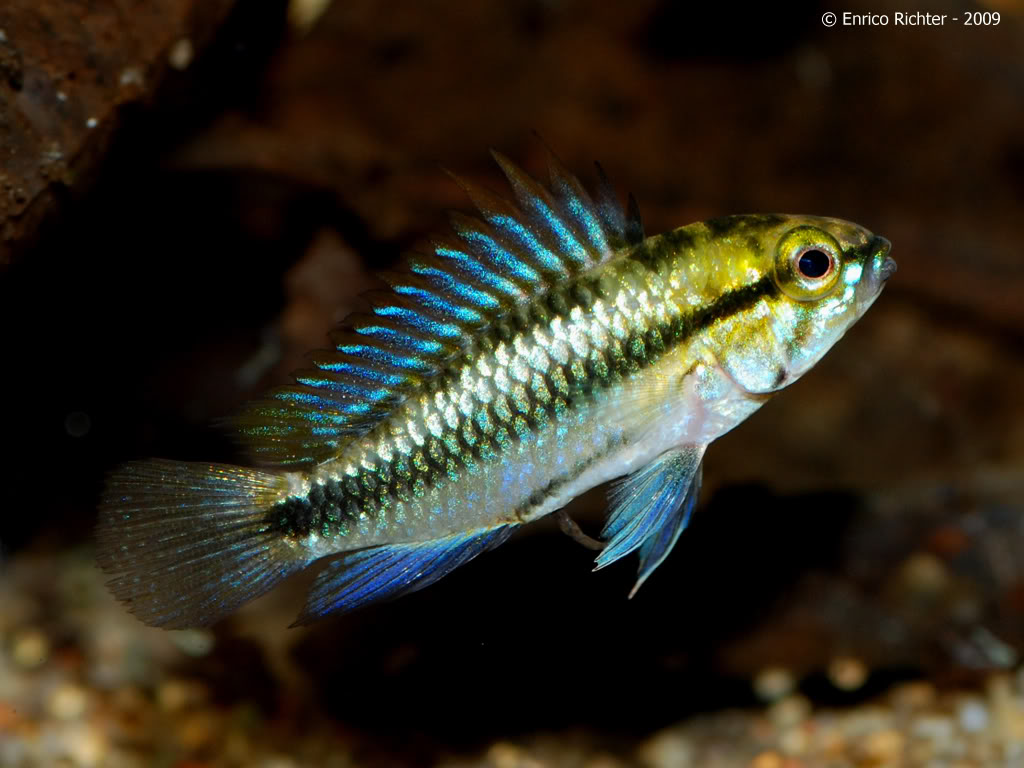
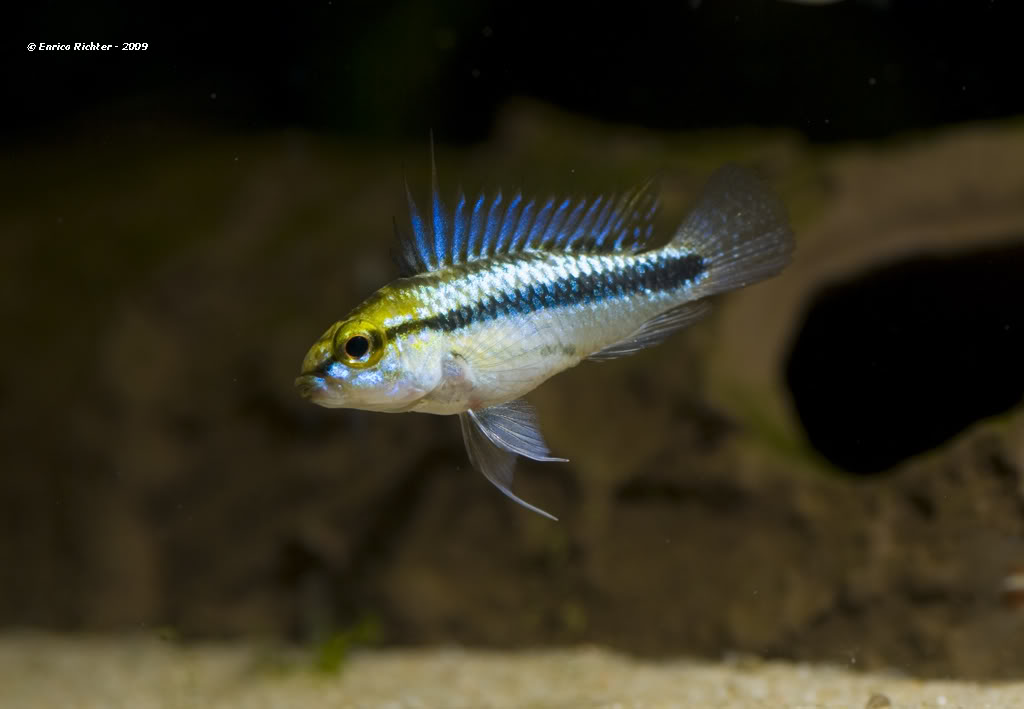
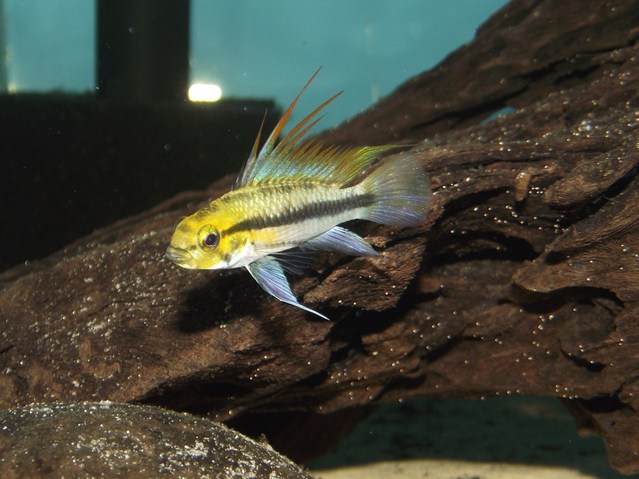
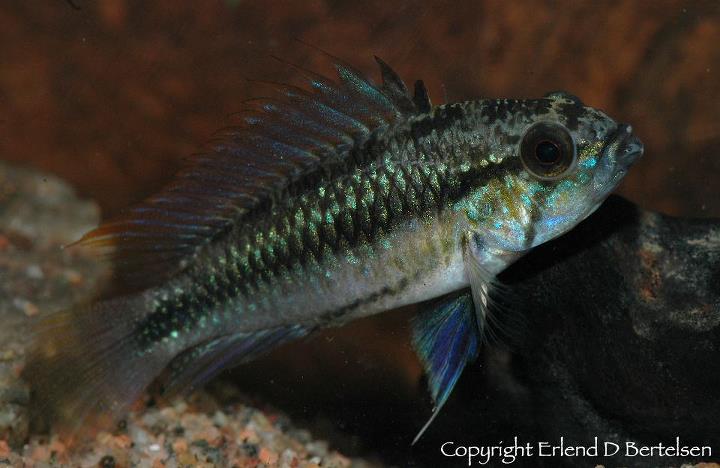
三带隐带丽鱼(Apistogramma trifasciata)腹侧从胸鳍基部延向臀鳍的细暗带,是识别“三带”的关键。它需要成熟软水环境和多处洞穴,成年雄鱼有领地性,人工繁殖鱼的适应性通常更好。
分布与栖息地
范围从巴西南部亚马孙流域的瓜波雷河,经巴拉圭河水系延伸至阿根廷巴拉那河中段。常见于落叶聚集的缓流小溪、支流和小河。
饲养环境
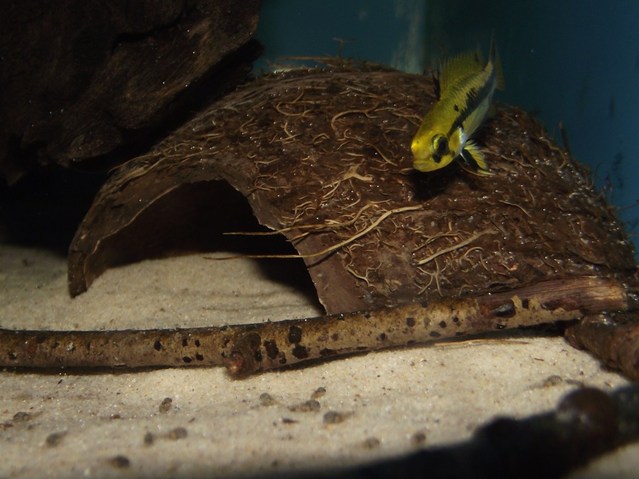
一对可从 45 × 30 厘米底面考虑,更多个体需扩大。细沙、沉木、落叶与洞穴提供遮蔽和产卵处,弱光配浮水植物、耐阴水草。轻缓海绵过滤可用,避免未成熟系统与积污。以软、偏酸且低碳酸盐硬度为主,也能耐受较软的中性水,人工鱼往往更宽容。
食性与喂食
主要肉食,常提供丰年虾、水蚤、红虫等小型活饵或冷冻饵料,部分个体能学会接受颗粒,通常优于薄片。
习性与混养
人工鱼更适合混养。野生鱼宜单种或只配小型温和鱼,避免其他隐带丽鱼。成熟雄鱼会划分领地并攻击附近雄鱼,通常容忍数尾雌鱼,但群养不能沿用单对缸空间。
雌雄区分
雄鱼更大、更鲜艳,鳍延长也更明显。
繁殖
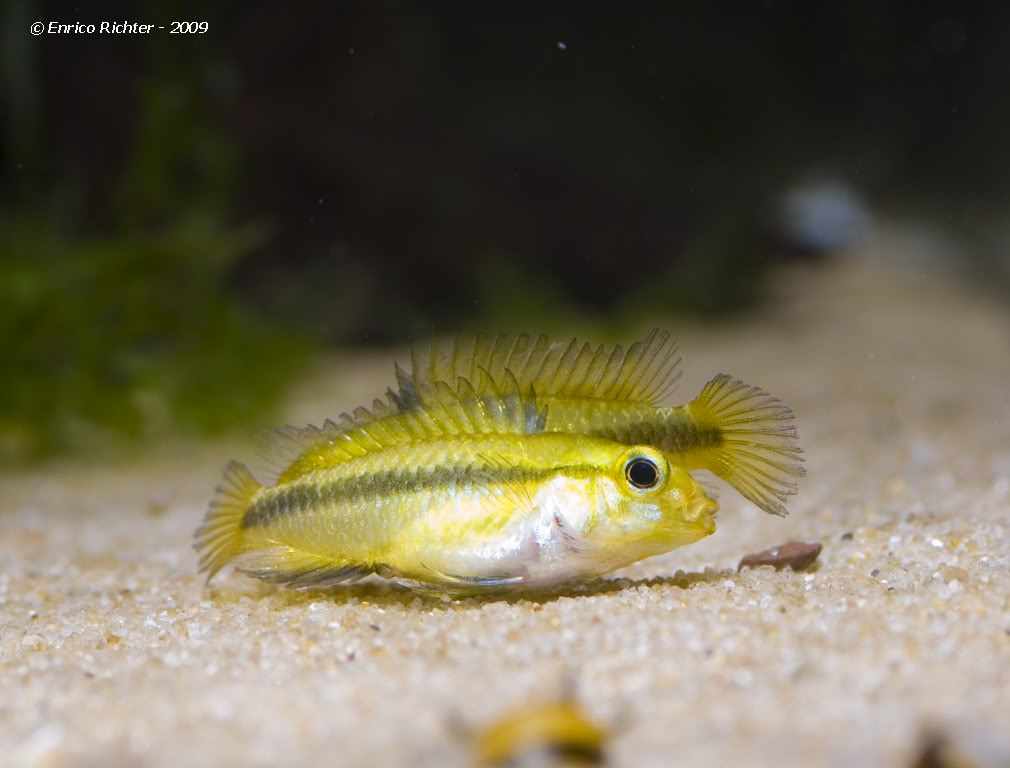
在洞穴或缝隙基面产卵。雌鱼守卵、带苗,雄鱼通常保卫较大领地并继续向其他雌鱼求偶。卵约 36~72 小时孵化,受温度影响,再过数天平游。
补充说明
本种编号 A204,阿根廷和瓜波雷的近似型分别为 A205、A206,是否完全同种仍需保留余地。瓜波雷型有红、蓝色型,似乎可在野外共同出现。
图片
图片来自 SeriouslyFish,版权归各摄影者所有。
English
Overview
A narrow additional stripe between the pectoral region and anal-fin origin helps identify Apistogramma trifasciata. Provide an established soft-water aquarium with several shelters. Mature males defend territory, while captive-bred stock is generally more adaptable to aquarium conditions.
Distribution & habitat
The range extends from the Guaporé through the Paraguay drainage to the middle Paraná basin, spanning Brazil, Paraguay and Argentina. Sluggish small rivers and creeks with leaf accumulations are typical.
Aquarium setup
A pair can be kept from a 45 by 30 cm footprint, with more room for groups. Use sand, wood, leaves and caves beneath subdued lighting. Gentle sponge filtration can suffice in an established system. Prefer soft acidic water with little carbonate hardness; somewhat soft neutral water can also be tolerated, especially by aquarium-bred fish. Keep organic waste under control.
Diet & feeding
Regular small live or frozen invertebrates suit its chiefly carnivorous feeding. Many fish can learn to accept pellets, generally more readily than flakes.
Behaviour & compatibility
Choose captive-raised stock for a community. Wild fish are better housed alone or with small reassuring companions. Territorial males react aggressively to nearby males but generally tolerate several females; group housing requires more space than a pair setup.
Sexual dimorphism
Males grow larger and develop stronger coloration and longer fins.
Breeding
Sheltered substrate spawning is followed by female care of eggs and fry. The male generally resumes defense of a larger territory and courts other females. Eggs hatch after roughly thirty-six to seventy-two hours, depending on temperature; swimming follows several days later.
Notes
A204 refers to the species, with A205 and A206 denoting related populations from Argentina and the Guaporé. Their boundaries are not fully settled. Red and blue Guaporé forms apparently coexist in nature.
来源
- https://www.seriouslyfish.com/species/apistogramma-trifasciata(抓取于 2026-10-10)
apistogramma-trifasciata · 文件: data/species/apistogramma-trifasciata.md · 状态: 草稿