Apistogramma sp. 'breitbinden' · A164
概要
| 字段 | 值 |
|---|---|
| 类别 | 鱼 |
| 学名 | Apistogramma sp. 'breitbinden' |
| 别名 | A165、A167 |
| 分类 | 慈鲷目 Cichliformes › 慈鲷科 Cichlidae › Apistogramma |
| 水体 | 淡水 |
| 原产地 | 巴西西北部内格罗河上游、委内瑞拉奥里诺科河中上游及哥伦比亚伊尼里达河水系 |
| 成体体长 | 7 cm |
| 饲养难度 | 中等 |
| 最小水体 | 54 L |
| 最小缸长 | 60 cm |
| 群居方式 | 成对 |
| 外部数据 | seriouslyfish apistogramma-sp-breitbinden |
| 繁殖方式 | 附着产卵 |
| 领地性 | 是 |
| 特征 | 翻底砂: 是 |
水质参数
| 参数 | 耐受范围 | 最适范围 | 单位 |
|---|---|---|---|
| 水温 | 22–29 | — | °C |
| pH | 4–6.5 | — | — |
| 总硬度 | 1–5 | — | dGH |
概述
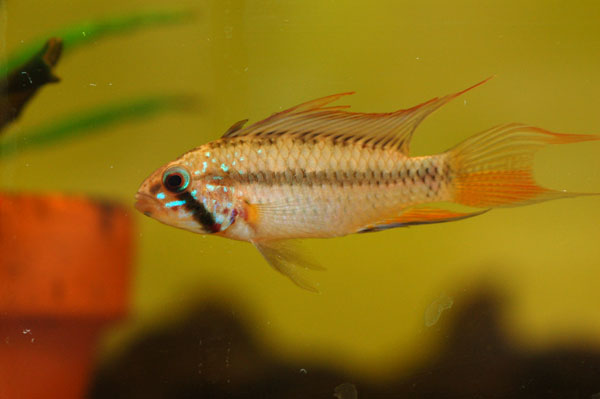
Apistogramma sp. ‘breitbinden’ 的商品称呼源于雄鱼眼下较宽的暗带,不同产地常附 A 编号。它是需要极软酸性水和清楚藏处分区的短鲷,雄鱼守域,繁殖时雌鱼也需要独立洞穴。
分布与栖息地
已知范围包括巴西西北部内格罗河上游及乌奥佩斯河附近,委内瑞拉西部奥里诺科河中上游,以及哥伦比亚东部伊尼里达河。通常处于落叶聚集的缓流支流、小溪和回水地段。
饲养环境
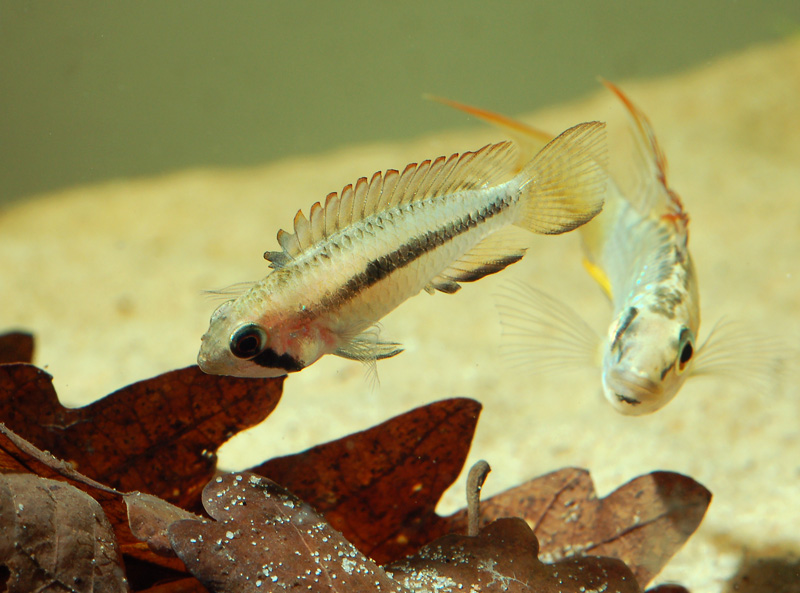
软砂与沉木枝根形成阴影、洞穴及多个退路,人工花盆洞和管段也适用。干落叶提供额外藏处、产卵位置及微生物,能补充鱼苗觅食。柔和照明搭配莫丝、耐阴植物和浮水植物即可。
用成熟、轻流的过滤系统,不能放进刚开缸的水体。需要酸性、很软且碳酸盐硬度很低的条件,必要时使用反渗透水等可靠软水来源,避免有机废物突然波动。
食性与喂食
隐带丽鱼属总体以底部小型无脊椎动物为主食。可规律喂丰年虾、水蚤、裸腹蚤和红虫等活饵、冷冻饵;部分鱼可逐步接受小颗粒干饲料,但须观察个体反应。
习性与混养
单种展示或少量小型陪游鱼较合适,避免与其他同属鱼混养。雄鱼对邻近雄鱼会守域,通常可容忍数雌,但要确保各雌鱼都有隐蔽产卵位置。
雌雄区分
雄鱼更大、更鲜艳,成熟时背鳍前部鳍条逐渐拉高,有些年长个体整排鳍条都会延长。
繁殖
在洞穴或缝隙表面产卵。雌鱼常会挖掘自己的洞,缸中出现小砂堆可能预示产卵临近。产后雄鱼多守外围并继续求偶,雌鱼照卵及鱼苗。依温度不同,卵约 36–72 小时孵化,再数天起游。
补充说明
不同产地与编号不要随意混并,A164、A165、A167 等标签应连同来源保留。曾归在相近商品群中的其他编号已有不同分类处理,仅凭“宽带”名称不能保证同种。
图片
图片来自 SeriouslyFish,版权归各摄影者所有。
English
Overview
The trade designation Apistogramma sp. ‘breitbinden’ refers to the male’s broad suborbital band. Different local forms carry identification codes. Very soft acidic water and clearly separated shelters suit its territorial breeding behavior.
Distribution & habitat
Records span the upper Negro and Uaupés region of northwestern Brazil, the middle and upper Orinoco in western Venezuela, and the Inirida system of eastern Colombia. Fish favor slow tributaries, creeks, and backwaters where leaves accumulate.
Aquarium setup
Soft sand, wood, and roots should create shaded cavities and escape routes; artificial caves are equally useful. Leaf litter adds cover, spawning sites, and microorganisms for fry. Use dim lighting, moss, suitable plants, and floating shade.
Maintain gentle, established filtration and avoid newly set-up tanks. Very soft acidic water with low carbonate hardness may require reverse-osmosis water or another suitable source. Prevent fluctuations in organic waste.
Diet & feeding
The genus generally relies on small benthic invertebrates. Offer regular live or frozen Artemia, Daphnia, Moina, and bloodworms. Small pellets can be introduced if individual fish accept them.
Behaviour & compatibility
A species display or small dither companions is preferable to mixing related cichlids. Males defend against nearby rivals while usually tolerating several females; each female needs access to sheltered spawning space.
Sexual dimorphism
Males are larger and more colorful. Anterior dorsal rays develop pronounced extensions with maturity, and some older males show elongation across the fin.
Breeding
Eggs are attached in cavities or crevices. Females may excavate a cave, leaving small piles of substrate before spawning. The male generally patrols a broader territory and courts other females, while the mother tends eggs and fry. Incubation lasts about 36–72 hours, with free swimming several days later.
Notes
Keep locality information together with labels such as A164, A165, and A167. Other codes formerly grouped nearby in trade have received different taxonomic treatment, so a shared broad-band label does not establish species identity.
来源
ID:apistogramma-sp-breitbinden · 文件: data/species/apistogramma-sp-breitbinden.md · 状态: 草稿