Apistogramma pantalone · A186
概要
| 字段 | 值 |
|---|---|
| 类别 | 鱼 |
| 学名 | Apistogramma pantalone |
| 别名 | Pantaloon Cichlid、Pantalone Zwergbuntbarsch |
| 分类 | 慈鲷目 Cichliformes › 慈鲷科 Cichlidae › Apistogramma |
| 水体 | 淡水 |
| 原产地 | 秘鲁北部纳奈河水系,可能为该水系特有 |
| 成体体长 | 5 cm |
| 饲养难度 | 入门 |
| 最小水体 | 54 L |
| 最小缸长 | 60 cm |
| 群居方式 | 成对 |
| 性情 | 温和 |
| 外部数据 | seriouslyfish apistogramma-pantalone;fishbase 63228 |
| 繁殖方式 | 口孵 |
水质参数
| 参数 | 耐受范围 | 最适范围 | 单位 |
|---|---|---|---|
| 水温 | 21–26 | — | °C |
| pH | 4–6.5 | — | — |
| 总硬度 | 0–3 | — | dGH |
概述
Apistogramma pantalone 是对水质和开口饵要求较高的小型慈鲷,通常温和,却不宜按普通易养短鲷处理。它能采用兼性口孵,求偶也可能持续很久;新到鱼需要特别仔细地观察进食与适应情况。
分布与栖息地
可能特有于秘鲁北部亚马孙支流纳奈河水系。栖地为森林中的浅溪,水带淡茶色而酸性很强,溪底与林地都有厚落叶层。
饲养环境
应尽量维持接近其需要的极软、酸性条件,不能随意放宽水质。软砂、枝根、洞穴和落叶提供密集遮蔽,人工花盆洞或管段也可使用。落叶微生物还能为鱼苗提供补充食物。
用柔和光线、耐阴水草、莫丝及浮水植物,过滤轻柔且必须成熟。对有机废物波动敏感,未成熟的新缸不适合。
食性与喂食
属内天然食物总体以底部无脊椎动物为主。本种很少接受干饲料,应规律准备丰年虾、水蚤、裸腹蚤或红虫等活饵、冷冻饵。刚进口的鱼更挑食,活饵往往必要,水蚯蚓可作适应期食物之一;不能仅靠投下干粮便判断已经喂养成功。
习性与混养
可在安静群落中与小型温和鱼同养,也能群体维持,但应有充足藏处。野生个体更适合单种或少量小型陪游鱼,并避免与其他同属鱼混合。
雌雄区分
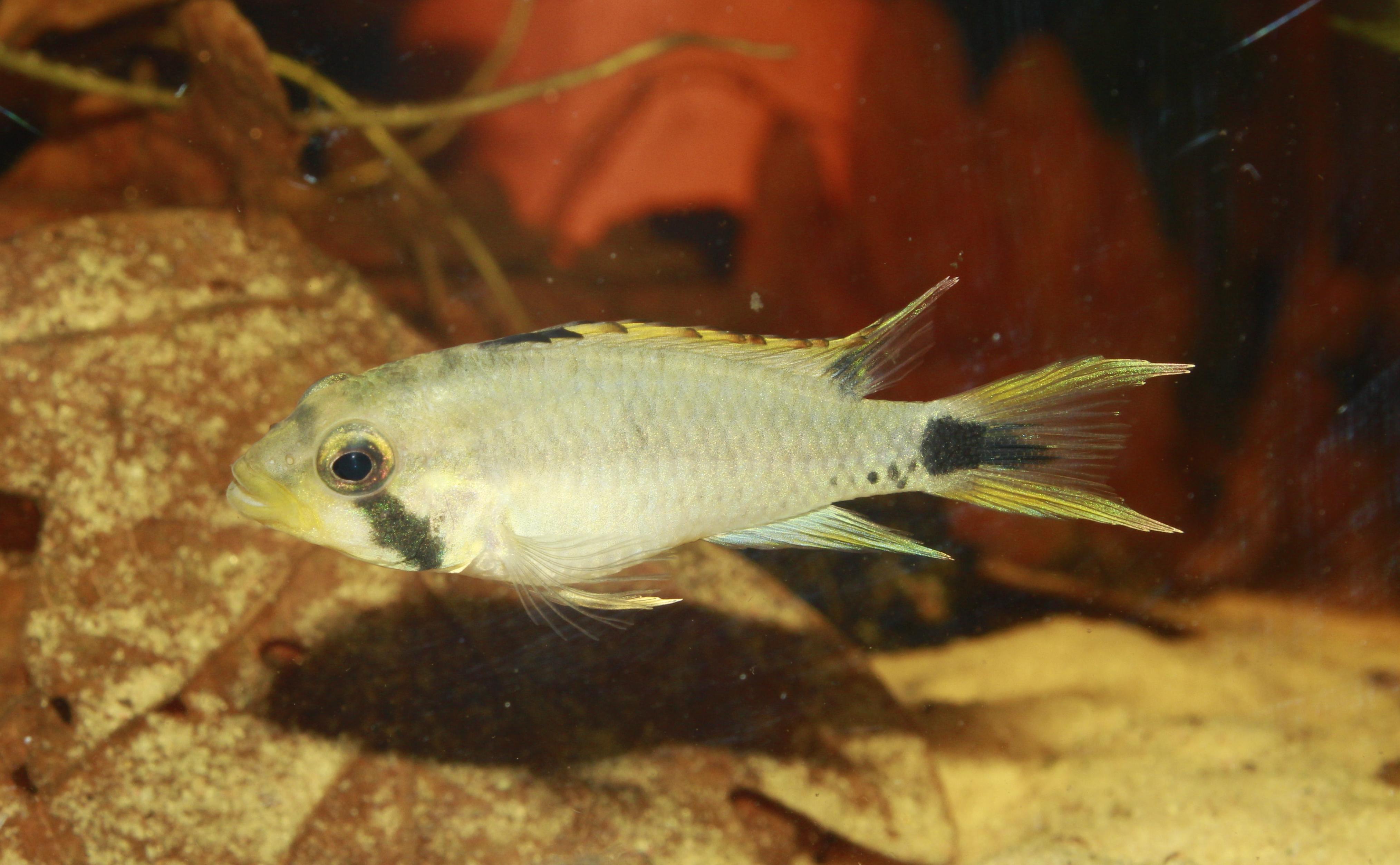
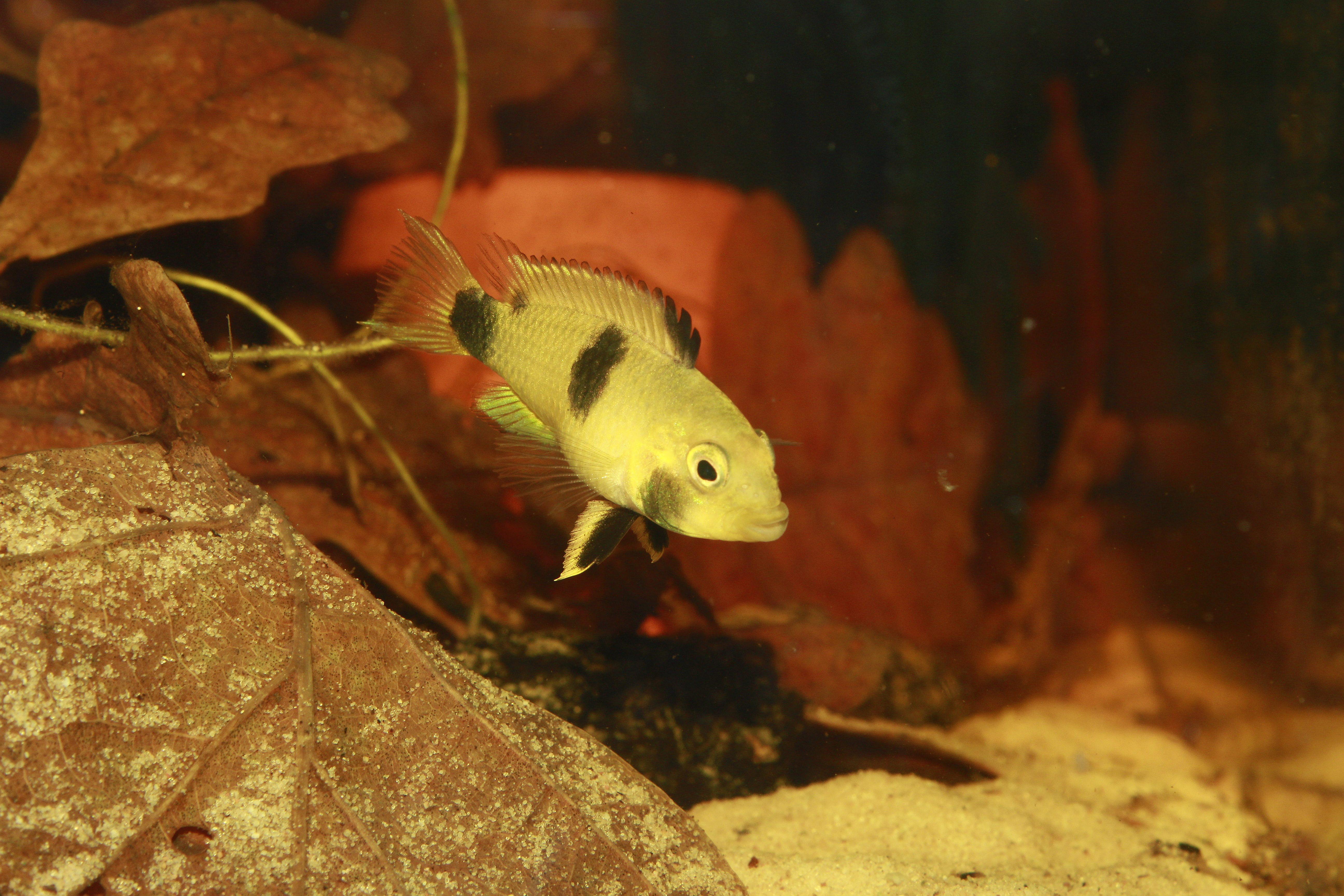
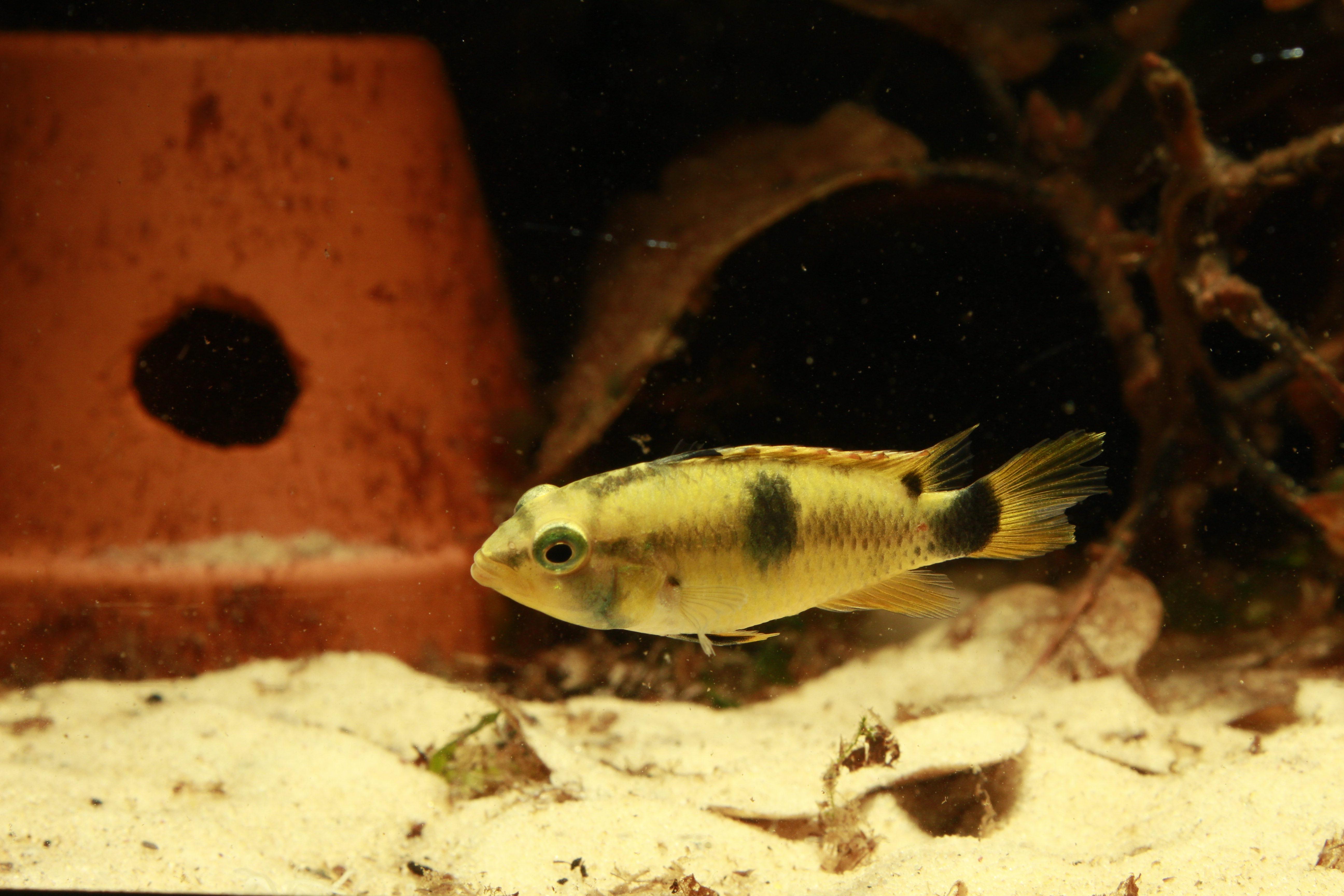
可靠辨别往往要等完全成年的鱼。雌鱼腹部纯白,腹鳍前缘黑色明显,并常年保持较强黄色;雄鱼腹部有点纹或暗色,较大雄鱼的尾柄斑伸入尾鳍更远,鳍延长也更明显。
繁殖
先在洞穴或缝隙表面产卵,随后可以按常规底质方式育幼,也可能在孵化后不久把幼鱼含入口中。卵依温度约 36–72 小时孵化,数天后起游。
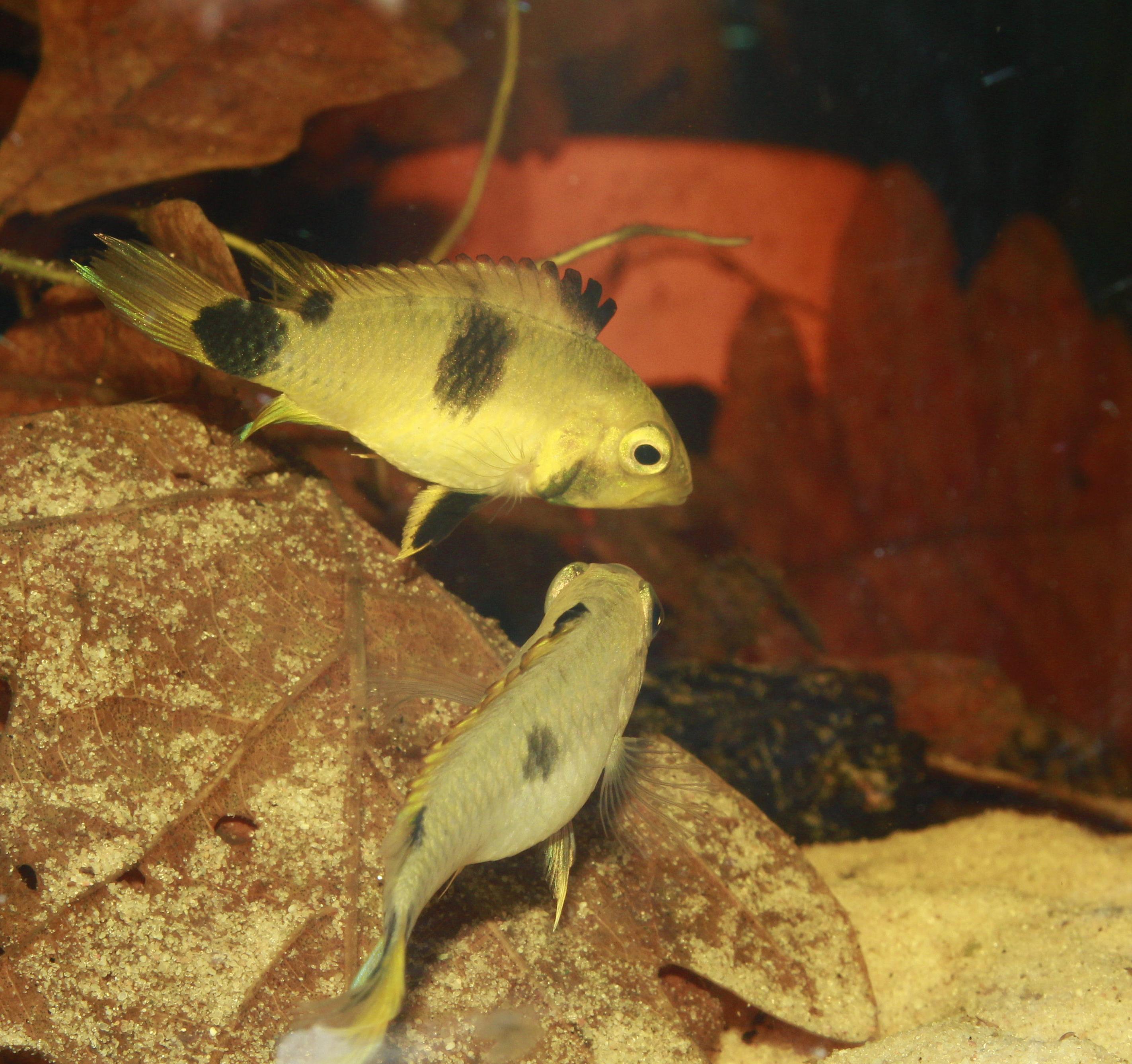
求偶可持续数天甚至数周,雄鱼反复向雌鱼接近、点头并追逐,最后双方进入洞穴。雌鱼躲避时应有可退让的空间。是否形成一雄多雌的繁殖体系尚不明确,不能因能群养便直接作出这种推断。
图片
图片来自 SeriouslyFish,版权归各摄影者所有。
English
Overview
Usually peaceful, Apistogramma pantalone is nevertheless demanding about water and feeding, especially after import. It can use facultative mouthbrooding, and courtship may be prolonged. Careful attention to acclimation and actual food intake is essential.
Distribution & habitat
It is probably endemic to the Nanay system in northern Peru. Shallow forest streams contain lightly tinted, strongly acidic water, with extensive leaf litter covering the streambed and surrounding forest floor.
Aquarium setup
Maintain the very soft acidic conditions it requires rather than assuming broad tolerance. Soft sand, wood, cavities, and leaf litter create dense shelter; artificial caves also work. Microorganisms developing in litter can supplement fry feeding.
Use subdued lighting, suitable shade-tolerant plants, moss, and floating cover. Filtration should be gentle and fully established. Avoid immature systems and changes in organic-waste loading.
Diet & feeding
The genus generally consumes benthic invertebrates. This species rarely accepts dry alternatives, so provide suitable live and frozen Artemia, Daphnia, Moina, or bloodworms. Newly imported fish may require live food, with Tubifex useful during settling. Food entering the tank does not establish that the fish is eating it.
Behaviour & compatibility
Calm communities with small peaceful fishes can work, and groups of this species are possible with enough cover. Wild specimens are better kept in a dedicated setup or with small dither fishes, avoiding other members of the genus.
Sexual dimorphism
Reliable sexing generally requires fully grown adults. Females have a plain white belly, dark front pelvic-fin margins, and strong yellow color beyond the breeding season. Males show darker abdominal pigment or spots, with more extensive tail markings and longer fin extensions in large individuals.
Breeding
Eggs are attached in cavities or crevices. Parents may continue ordinary substrate care or take larvae into the mouth shortly after hatching. Incubation lasts roughly 36–72 hours, followed by free swimming several days later.
Courtship can last days or weeks. Males repeatedly approach with head movements and pursue retreating females before both enter a cave. Females need room to withdraw. Whether harem breeding occurs remains unresolved and cannot be inferred simply from the possibility of group housing.
来源
- https://www.seriouslyfish.com/species/apistogramma-pantalone(抓取于 2026-10-10)
apistogramma-pantalone · 文件: data/species/apistogramma-pantalone.md · 状态: 草稿